

15 African American History Coloring Pages That Teach Kids Cultural Pride, Community, and History
History taught well doesn’t end with a bulletin board. It shows up in a kid’s ordinary Tuesday, long after February ends.
That’s the idea behind this set of african american history coloring pages — fifteen hand-drawn pages built as one continuous arc instead of a stack of unrelated portraits. An inventor’s hands at work. A teacher’s classroom. A community’s joy. A vision of the future built on what came before.
Each page connects to the next, so a child colors their way through a story instead of memorizing a series of disconnected facts.
A Note from Louisa (Founder of MyKidColors)
Growing up, I sometimes heard comments like “hiking is a white person’s activity” — little assumptions about what Black people do or don’t do, said so casually nobody questioned them.

Less searching. More MEANINGFUL moments.
When kids recognize themselves on the page, coloring changes.
The Inclusive Family Coloring Collection includes 25 human-drawn illustrations centered on everyday moments — designed to make inclusion feel normal, joyful, and intentional.
Because representation shouldn’t be reserved for one month.
I didn’t grow up in the US, so I can’t speak to African American history from the inside. What I can speak to is knowing what it feels like to be handed a narrow box and told to fit inside it.
This set exists so a child sees a much bigger picture instead — invention, joy, leadership, vision — because no history, and no person, is that small.
Conversation Corner: 3 Questions to Ask While Coloring
Turn this activity into a meaningful bonding moment. While your child colors, try asking questions that encourage curiosity, observation, and thoughtful conversation.
- For “Learning from Frederick Douglass” (Page 1):
“Why do you think reading and learning were so important to people like Frederick Douglass? What is something you’ve learned recently that made you feel proud?” - For “Marching Together for Peace and Unity” (Page 3):
“What does it mean to stand up for kindness and fairness? Can you think of a time when you helped someone feel included?” - For “Grandma’s Storytime” (Page 14):
“What is your favorite story someone in our family has shared with you? What stories would you like future generations to remember about our family?”
The Collection: 15 Free African American History Coloring Pages
We’ve organized these 15 free African American history coloring pages into three groups to help children build understanding step by step—from discovering inspiring people and everyday learning to celebrating community, culture, and the ongoing story of African American history.
For Little Hands: Learning, Curiosity & Big Dreams (Pages 1–5)
Best for toddlers, preschoolers, and early elementary learners. These pages introduce the importance of reading, learning, working together, and asking questions through simple, engaging illustrations.
- Page 1: A thoughtful young boy looks up at a portrait of Frederick Douglass in a library, reminding children that books and education can open doors to endless opportunities.
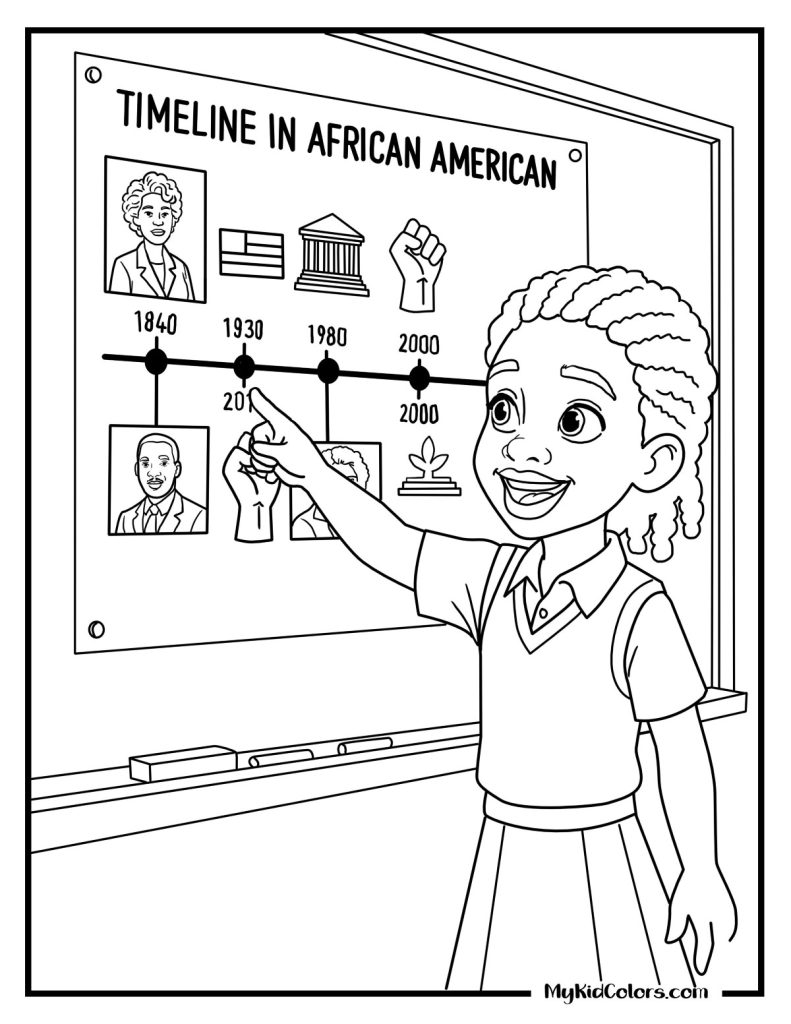
- Pages 2 & 3: A schoolgirl proudly explores an African American history timeline while another page shows children marching together with “Peace” and “Unity” signs, encouraging conversations about kindness, fairness, and working together.
- Pages 4 & 5: Young inventors and eager students discover the power of learning as one boy builds a light bulb while another classroom works together with their teacher, celebrating curiosity, innovation, and education.



Music, Family & Community (Pages 6–10)
Perfect for elementary-aged children. These pages celebrate creativity, family traditions, cultural expression, and the many ways communities grow stronger together.
- Page 6: Three joyful children play musical instruments and dance together, celebrating the rich musical traditions that have shaped African American culture for generations.
- Pages 7 & 8: Students gather around a globe to learn about the world while a multigenerational family shares smiles and holds hands, highlighting the importance of education, family, and belonging.
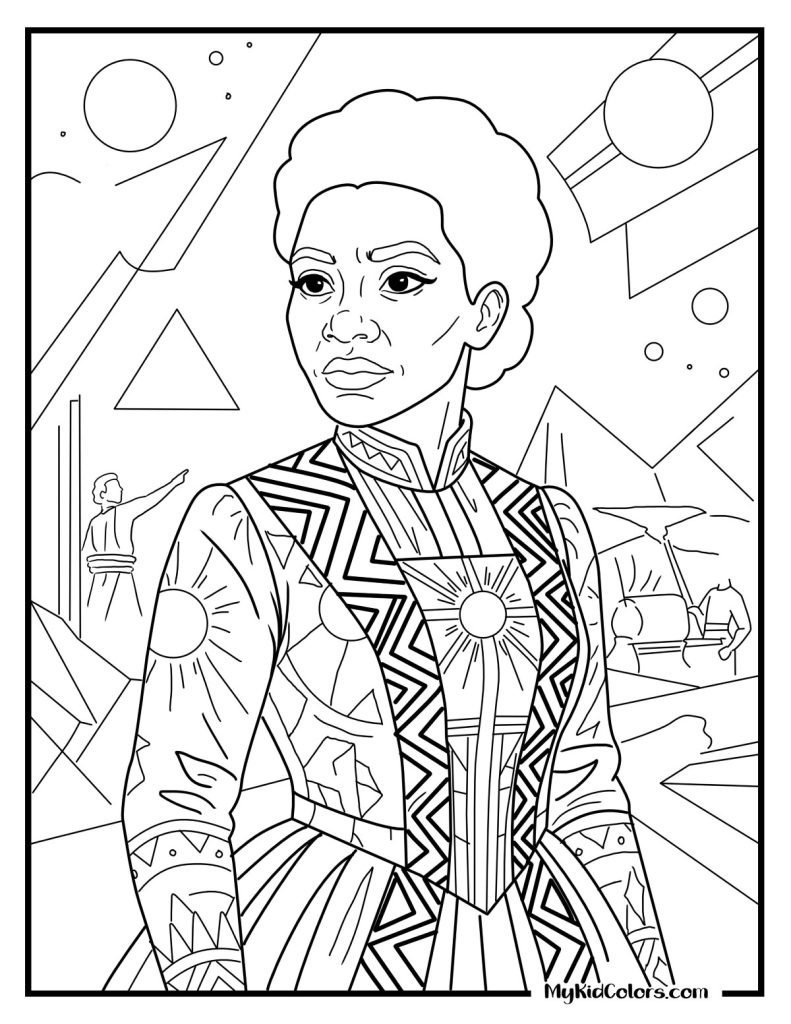
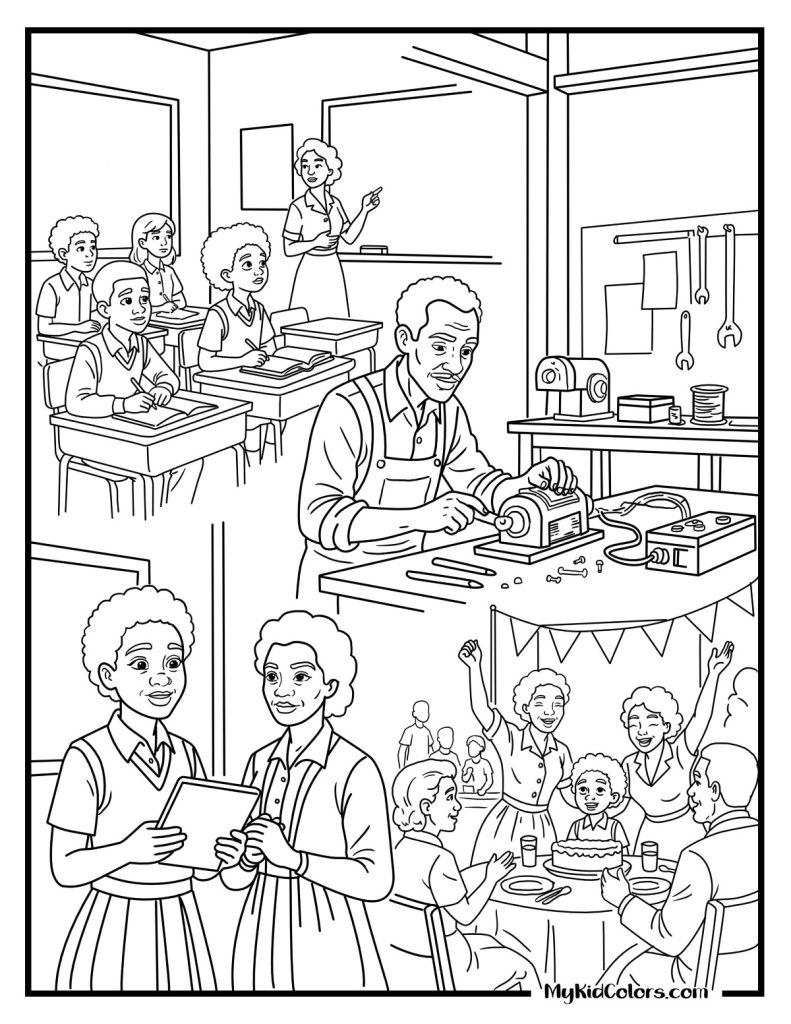
- Pages 9 & 10: A beautifully dressed African American woman represents heritage and cultural pride, while a collage of classroom learning, engineering, mentorship, and family celebrations reminds children that history is built through everyday acts of learning, leadership, and love.


The Journey Continues (Pages 11–15)
Designed for older children, family discussions, and classroom reflection. These pages explore how African American history connects the past, present, and future through resilience, education, community, and hope.
- Page 11: A visual timeline traces the African American journey from agricultural labor to education, migration, innovation, and the Civil Rights Movement, helping children understand that history is made one generation at a time.
- Pages 12 & 13: A historical family gathers to read together outside a log cabin while a modern neighborhood filled with families and solar-powered homes celebrates progress, community, and dreams for future generations.
- Pages 14 & 15: A grandmother shares stories with her granddaughter before children finish the collection with a celebratory collage honoring African American leaders, scientists, musicians, educators, inventors, and changemakers whose legacies continue to inspire young learners today.


Perfect for Homeschool, Classrooms & Family Learning
Parents, teachers, and homeschool families love using these African American history coloring pages as engaging Black History activities, social studies coloring pages, and educational coloring pages that go beyond simply coloring. Here are a few creative ways to extend the learning.
Create a History Gallery Walk
After your child finishes coloring several pages, display them around the room in chronological or thematic order. Invite children to walk through the “gallery” and describe what they notice about learning, family, innovation, music, community, and leadership. This simple activity encourages observation skills while reinforcing important historical themes.
Story Sequencing Activity
Use Pages 11, 12, 13, and 14 to discuss how communities grow across generations. Start with the historical family reading together, follow the illustrated historical timeline, move to the modern neighborhood, and finish with the grandmother sharing stories. Children can explain how education, perseverance, and family traditions help shape future generations.
Black History Reflection Journal
Invite children to choose one completed coloring page and write or dictate three things they learned, one question they still have, and one way they can make their own community a kinder place. This activity pairs beautifully with Black History Month activities, homeschool history activities, and classroom discussions.
Why Humans Illustrate Our Coloring Pages
Getting a historical likeness right — the actual shape of Frederick Douglass’s face, the specific texture of natural hair across a century of styles — takes real research, not a generated approximation trained on whatever images happened to be easy to find.
One illustrator worked through all fifteen pages, moving between different visual styles — a soft family portrait, a bold Afrofuturist vision, a detailed multi-scene timeline — while keeping every face specific and dignified throughout.
That range only holds together with a human tracking the whole arc; a generator switches styles by resetting, not by building on what came before.
Frequently Asked Questions
Can I use these African American history coloring pages throughout the year, not just during Black History Month?
Absolutely! While they’re perfect for Black History Month, these printables are designed for year-round learning. African American history is an essential part of American history, making these pages a wonderful addition to homeschool lessons, classroom social studies units, library programs, family learning time, and cultural heritage celebrations throughout the year.
How can I use these coloring pages to start meaningful conversations with young children?
Instead of focusing only on historical facts, ask children what they notice in each illustration. Encourage conversations about kindness, perseverance, family traditions, learning, music, community, and helping others. This helps children connect emotionally with history while building empathy and critical thinking skills.
We already have a lot of Black History Month portrait pages at home. What makes this set different?
Most sets are a stack of separate single-figure portraits. This one is built as one connected story — inventors, educators, families, and future vision all tied together, so it reads as a narrative instead of a worksheet pile.
Download Your Free Set
These free African American history coloring pages celebrate learning, family, culture, community, and the incredible journey of African American history through thoughtful, hand-drawn illustrations created to inspire meaningful conversations at home and in the classroom.
Built to be colored any month, not put away after February. Grab all 15 pages free for your classroom or home.
You might also like:
- 15 Free Martin Luther King Coloring Pages (Free PDF Bundle)
- 15 Free Black History Month Coloring Pages (Hand-Drawn PDF)
- 15 Women’s History Month Coloring Pages That Teach Kids Confidence & Courage
- 30 Women in STEM Coloring Pages — 15 Free Hidden Figures Printables for Kids
- 15 Free Nigerian Women Leaders Coloring Pages That Show Girls Who They Can Become

