
15 Free Negro Leagues Baseball Coloring Pages From the Dugout to the Stands
A child might come for the bat, the ball, or the big slide into a base. These Negro Leagues baseball coloring pages give you something more to explore together: the players, coaches, organizers, and fans who helped build Black baseball history.
The 15 hand-drawn scenes connect early baseball play with a pitcher’s windup, dugout coaching, a busy league office, and crowded stands. Five simple, five medium, and five detailed designs offer different amounts of space and detail to color.
Use them beside a short biography or museum resource to talk about the game’s skill and excitement, and the racism that kept Black players out of the National and American Leagues for decades.
All 15 pages. One easy download. Get the complete human-drawn, ready-to-print PDF for $1.99, available instantly with a download link emailed to you for easy access anytime.
Prefer free JPGs? Right-click any coloring page and select “Save image as,” or press and hold the image on your phone to save it.
A Note from Louisa (Founder of MyKidColors)
At my elementary school in Africa, Fridays often began with sports activities and dancing, sometimes to the Macarena. I still remember that more active, enjoyable start to the school day.

Less searching. More MEANINGFUL moments.
When kids recognize themselves on the page, coloring changes.
The Inclusive Family Coloring Collection includes 25 human-drawn illustrations centered on everyday moments — designed to make inclusion feel normal, joyful, and intentional.
Because representation shouldn’t be reserved for one month.
That is the childhood feeling I connect with in the early pages: moving, trying something, and joining in. With this collection, I also want to make room for the history behind the game.
As you color together, I hope you’ll pause over a name, look up a player, or ask a question you don’t yet know the answer to. You don’t have to know every fact before you begin learning with your child.
Conversation Corner: 3 Questions to Ask While Coloring
Choose one question for the page your child is coloring. They can answer with words, pointing, signs, drawing, or their usual communication device.
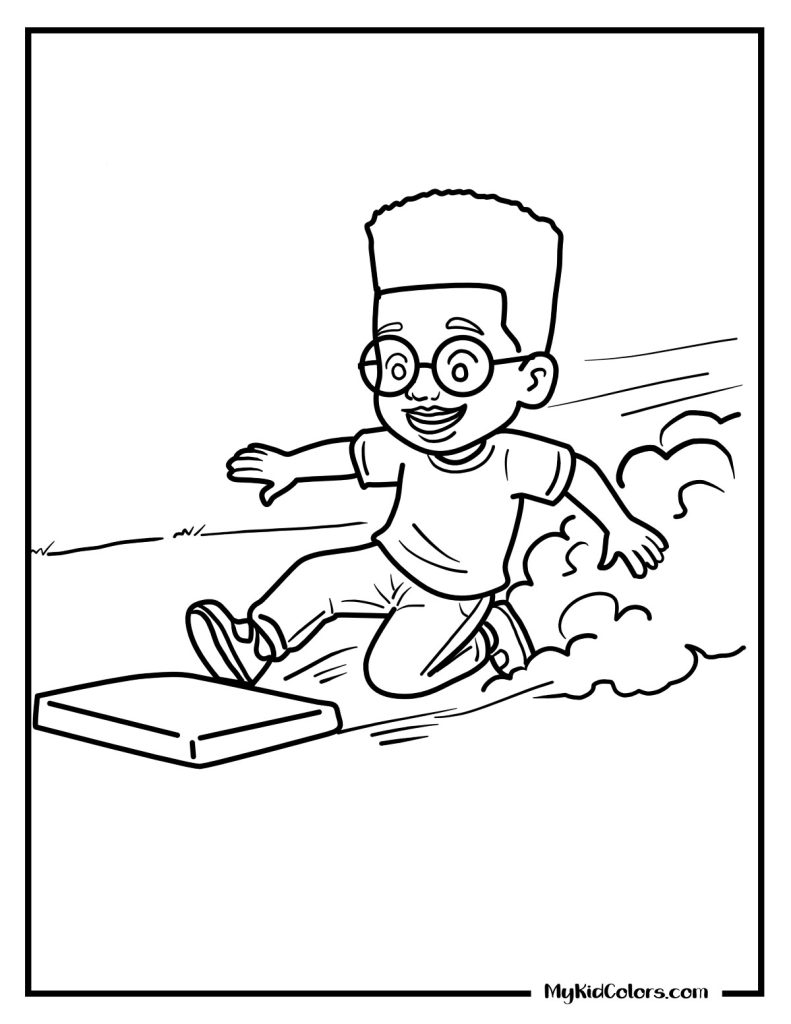
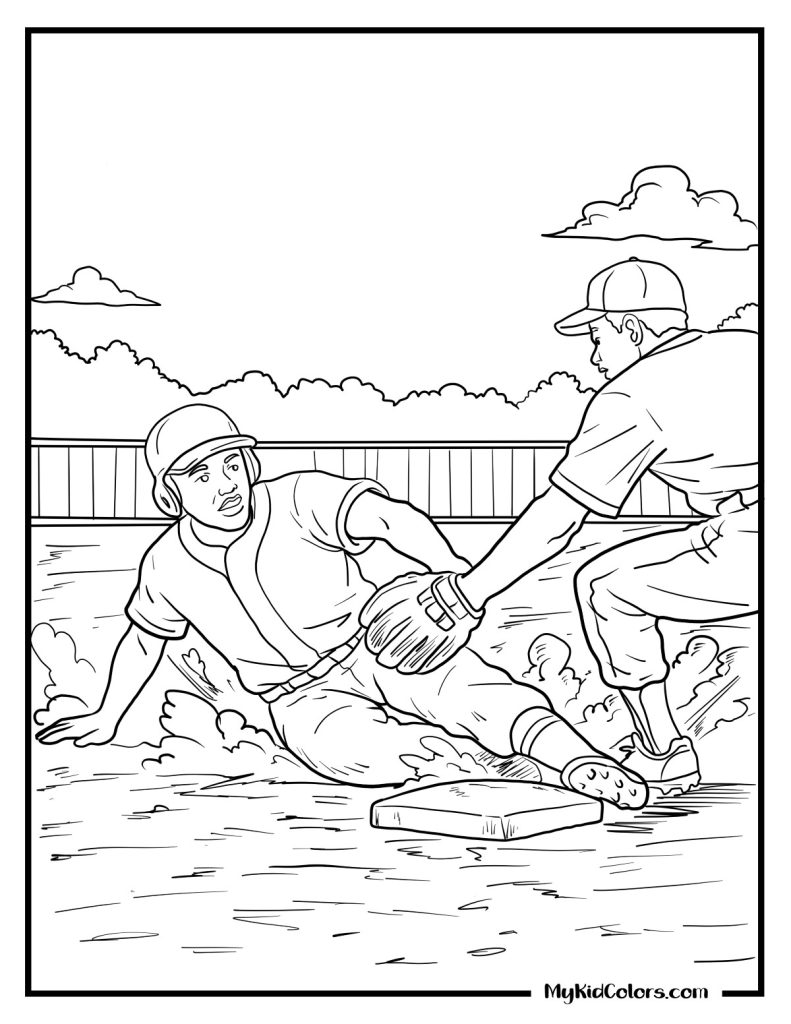
- For “Sliding Into a Base” (Page 4): “What do you notice about how this player is moving?”
- For “A Glove in the Stands” (Page 10): “What would you like to do at a baseball game?”
- For “The Coach and Young Player” (Page 11): “Who has helped you learn something new?”
For younger children, point to the bat, ball, or glove and let them choose an object to color.
The Collection: 15 Negro Leagues Baseball Coloring Pages
The Negro Leagues were professional baseball leagues in which Black players and other players excluded by baseball’s racial barriers competed. There was more than one league across the history. In 1920, Rube Foster helped establish the Negro National League in Kansas City.
Their story includes outstanding baseball, team ownership, travel, community support, and resistance to discrimination. The Negro Leagues Baseball Museum offers a starting point for learning about that history.
These are imagined Negro Leagues-inspired scenes alongside present-day childhood and family activities. They are not verified portraits of named players or exact reconstructions of particular games. Use a biography or historical photograph to introduce a real person, and keep the illustration distinct from that source.
For Little Hands: First Steps to the Diamond (Pages 1–5)
The first group keeps the focus on one child and a baseball object or action. Bold outlines and simpler backgrounds leave larger areas to color.
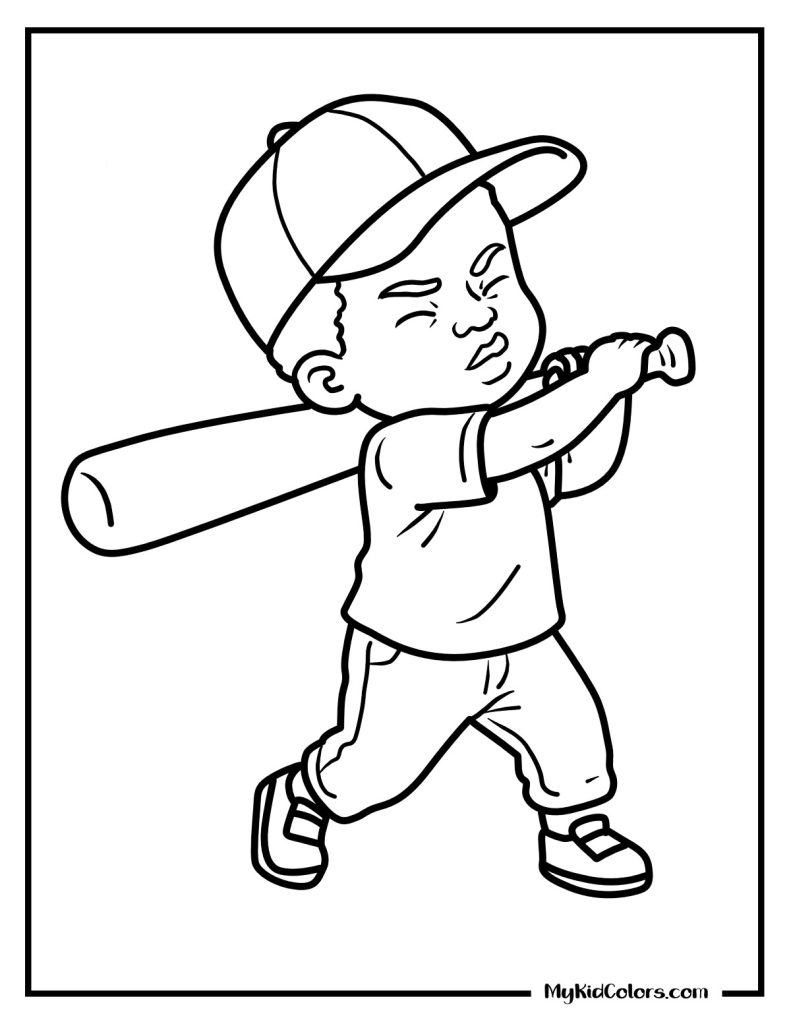
- Page 1: A child in an oversized cap swings a bat, with eyes squeezed shut and feet planted apart. The bat, cap, and clothing give the picture a few clear shapes.
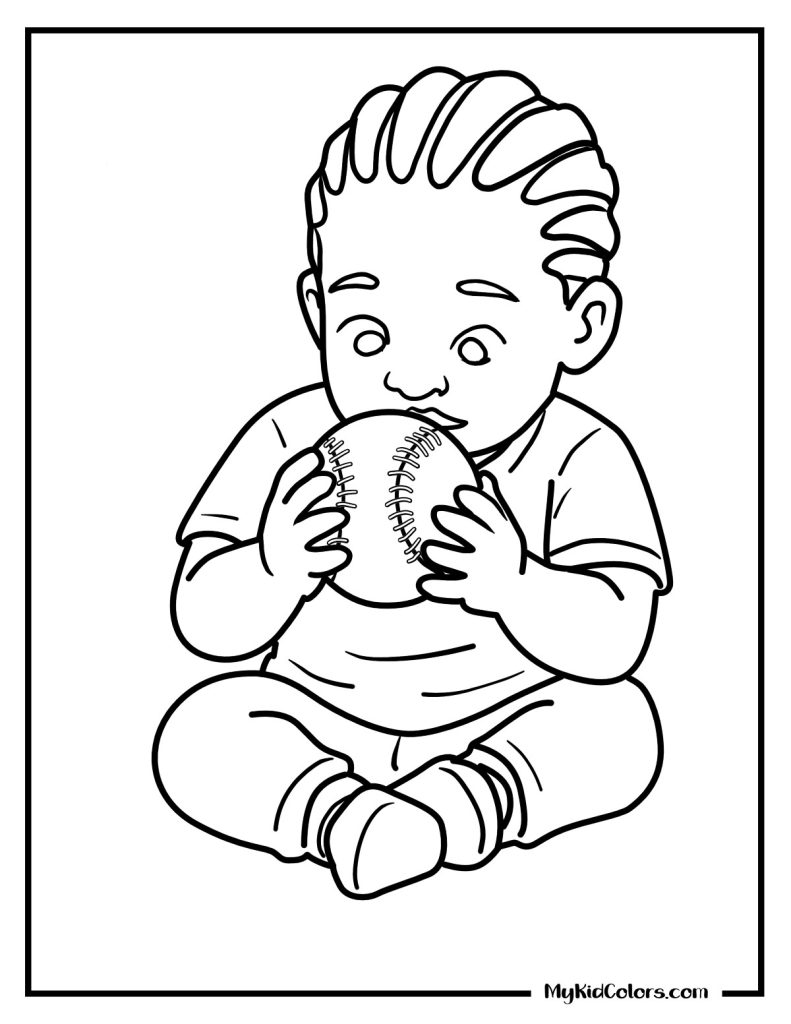
- Pages 2 & 3: A girl with puffs reaches up with a glove, followed by a boy with cornrows studying the stitching on a baseball held in both hands. One picture stretches upward; the other stays small and close.
- Pages 4 & 5: A boy wearing glasses slides feet-first toward a base. A girl then cheers with a foam finger, showing another way children take part in game day.

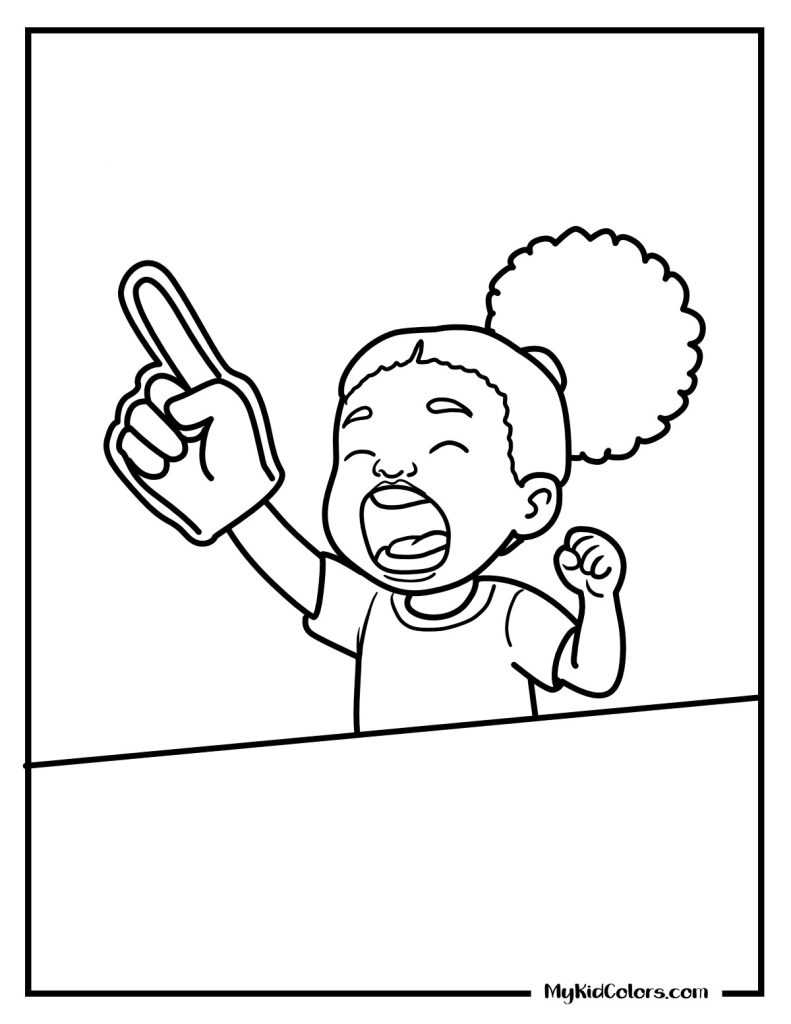
Life on the Field: Players and Fans (Pages 6–10)
The medium scenes introduce the pitcher, batter, baserunners, and spectators, with more people and background detail.
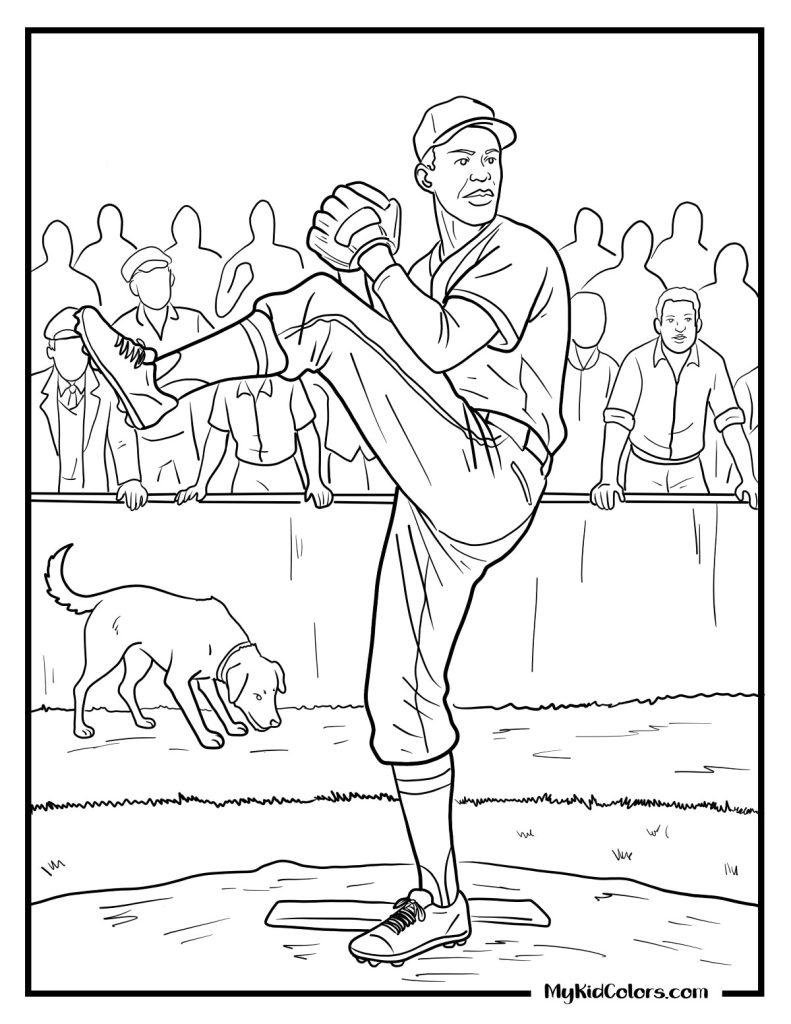
- Page 6: A pitcher lifts one leg high during a windup, with people watching beyond the field and a dog near the boundary. The pose gives children a clear action to notice.
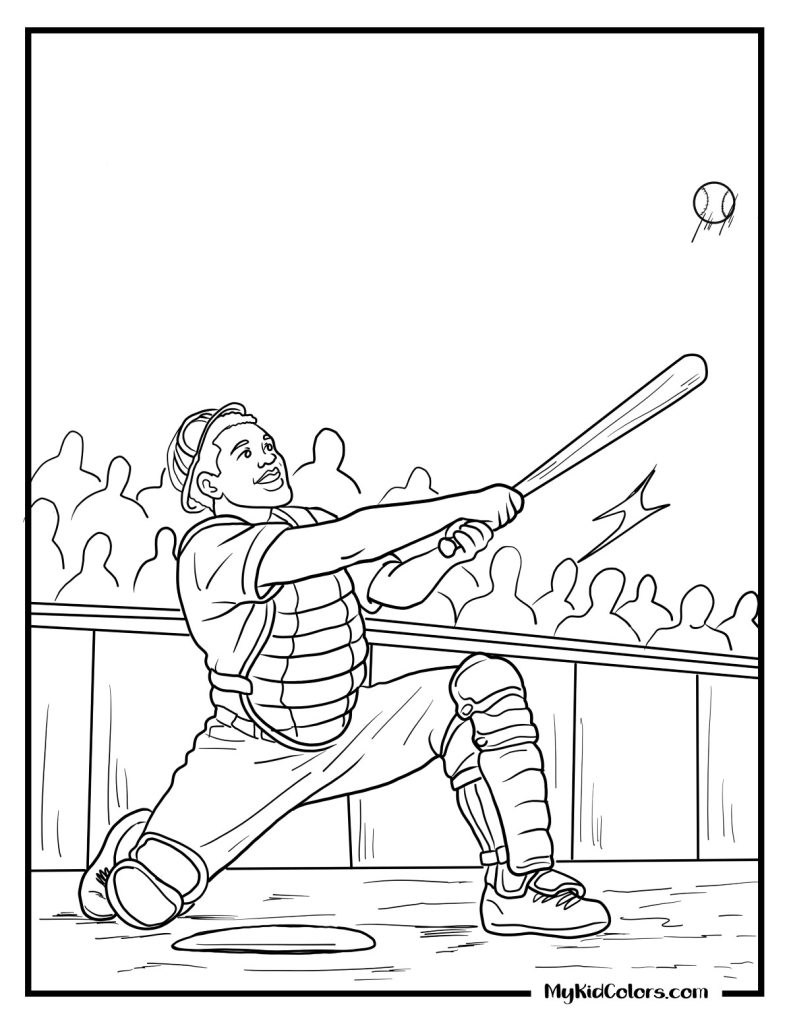
- Pages 7 & 8: A player follows through with a bat as a ball travels overhead. The next scene shows a runner sliding toward a base while a fielder reaches with a glove.
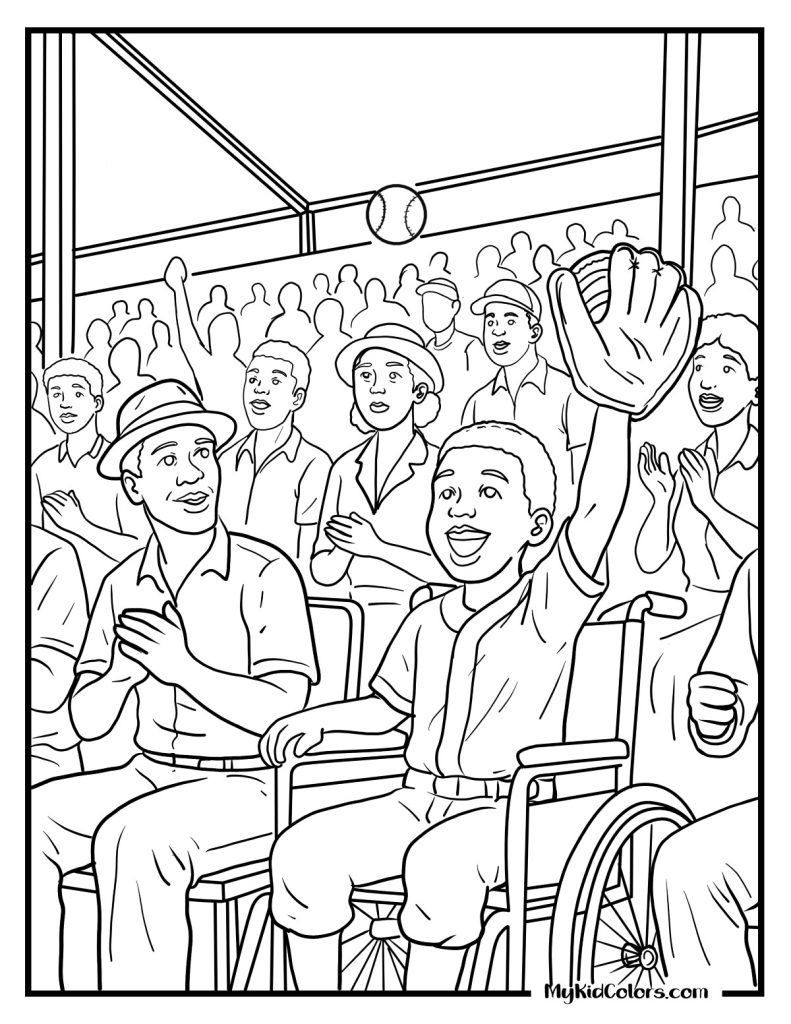
- Pages 9 & 10: A runner passes a base as teammates lean out of the dugout. A young fan using a wheelchair raises a glove from the stands, with spectators gathered all around.

The Bigger Story: Mentors, Organizers, and Family (Pages 11–15)
The detailed pages include the people and work around baseball, as well as fuller stadium scenes.
- Page 11: A coach kneels beside a young player and helps with the grip on a bat. Equipment fills the dugout, and both caps carry “KC” lettering.
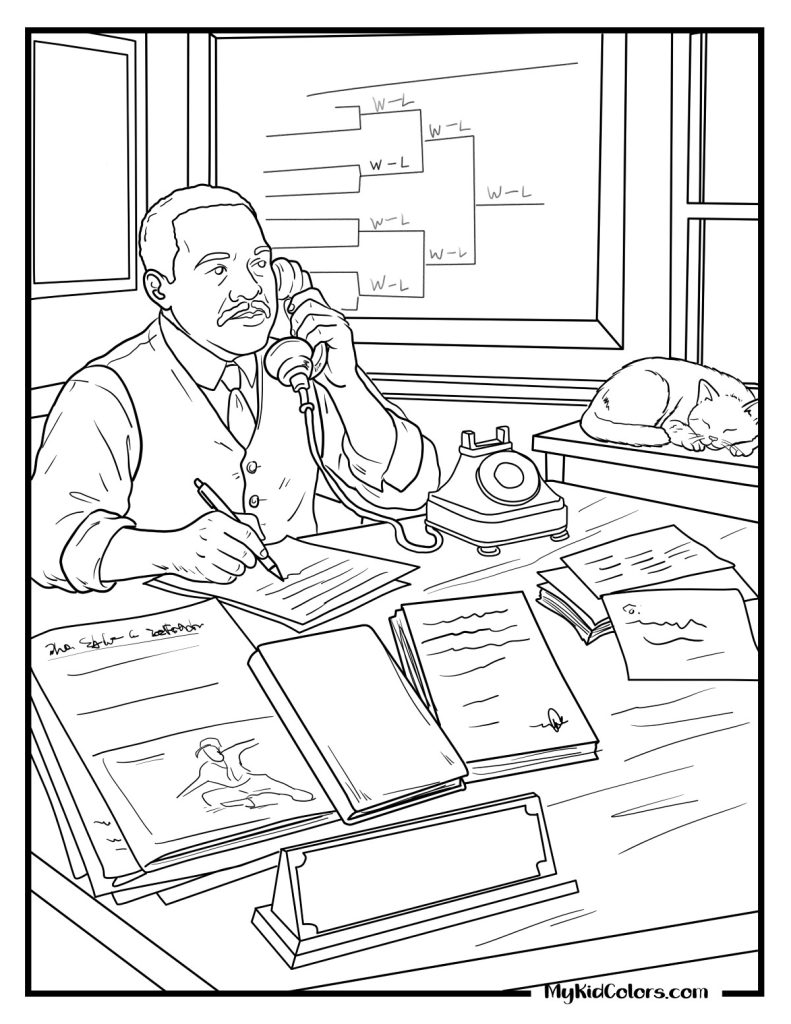
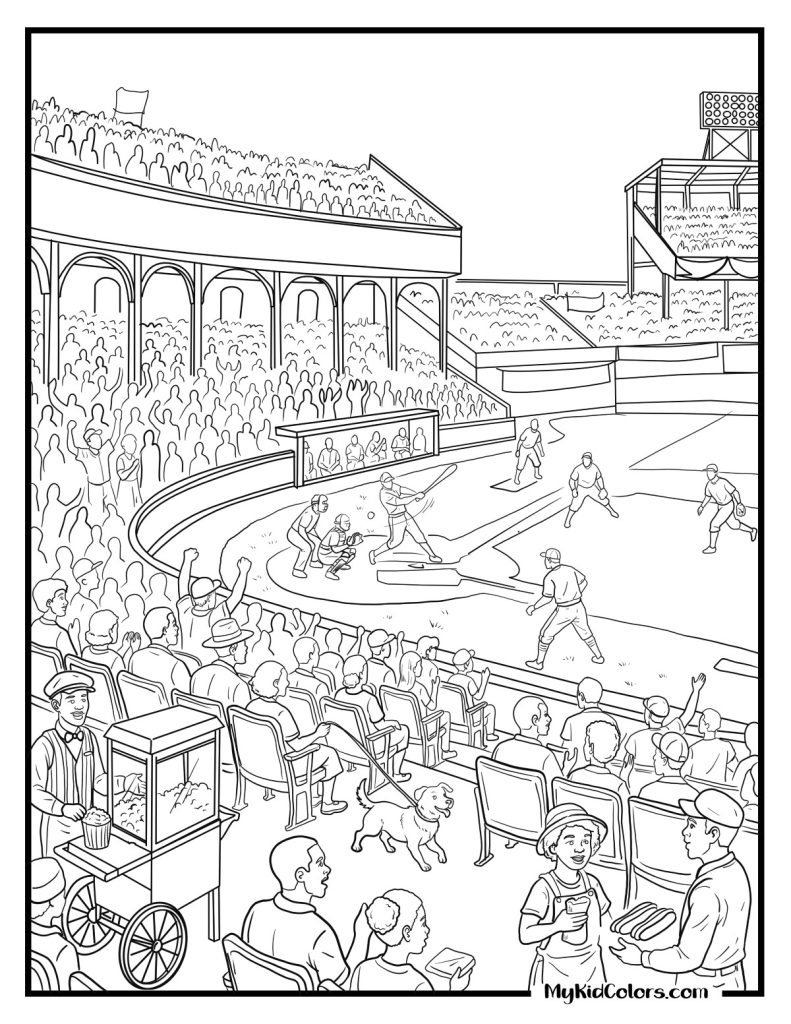
- Pages 12 & 13: A man works at a desk with papers, a telephone, and a chart behind him while a cat sleeps nearby. The ballpark scene adds crowded seating, vendors, players, and a dog among the spectators.
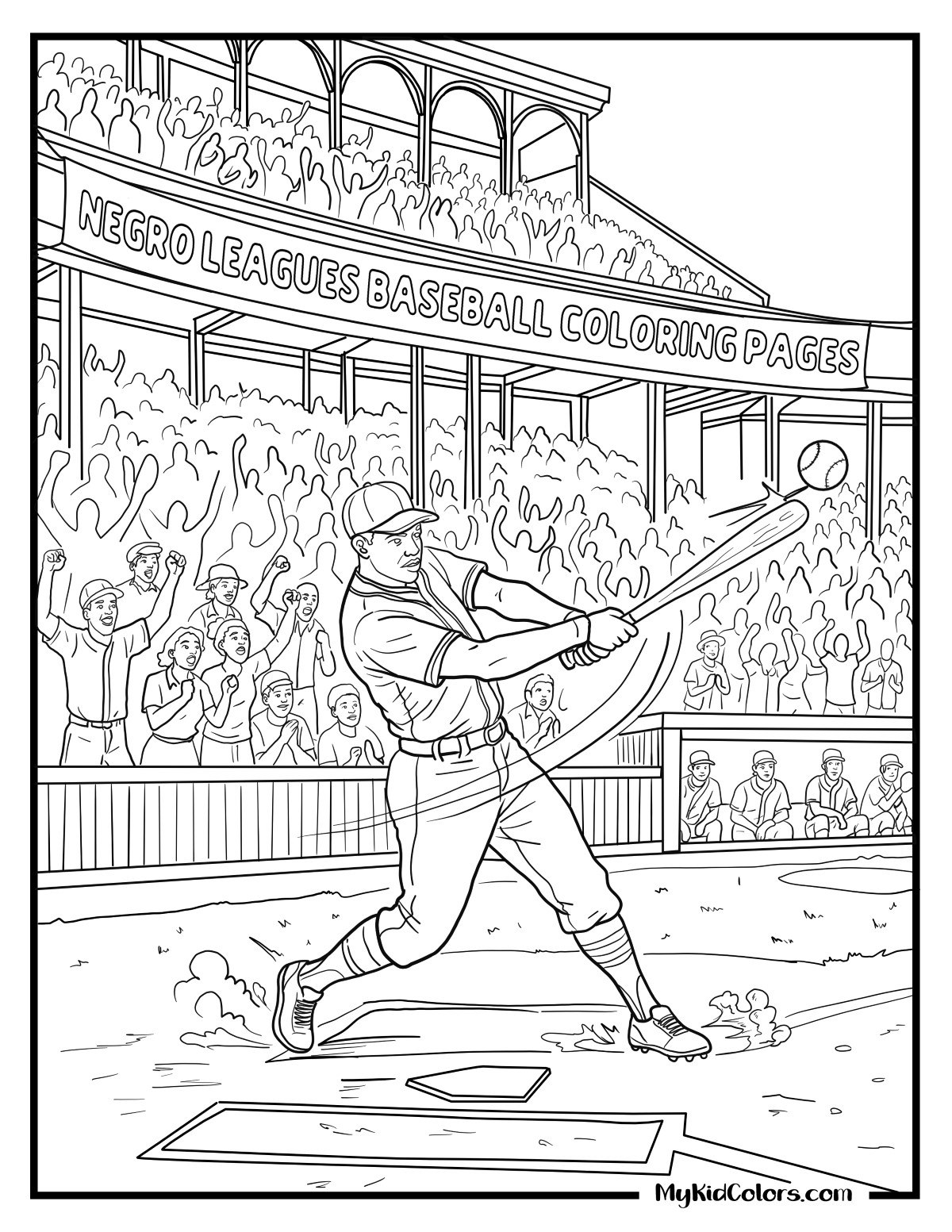
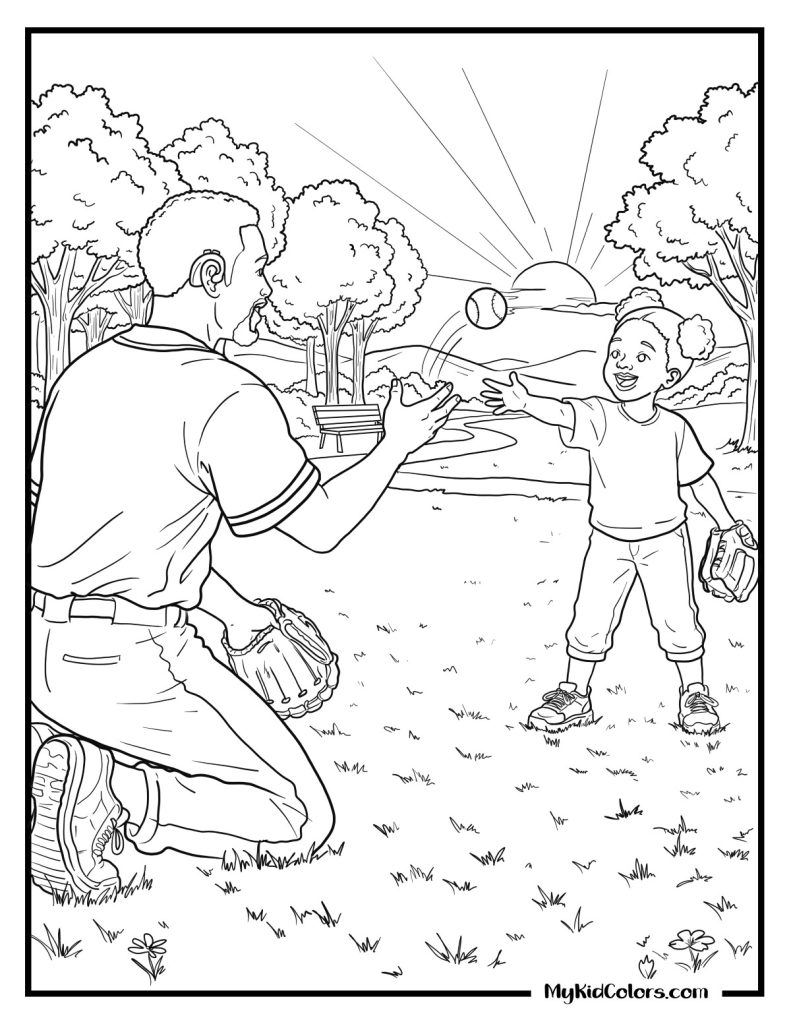
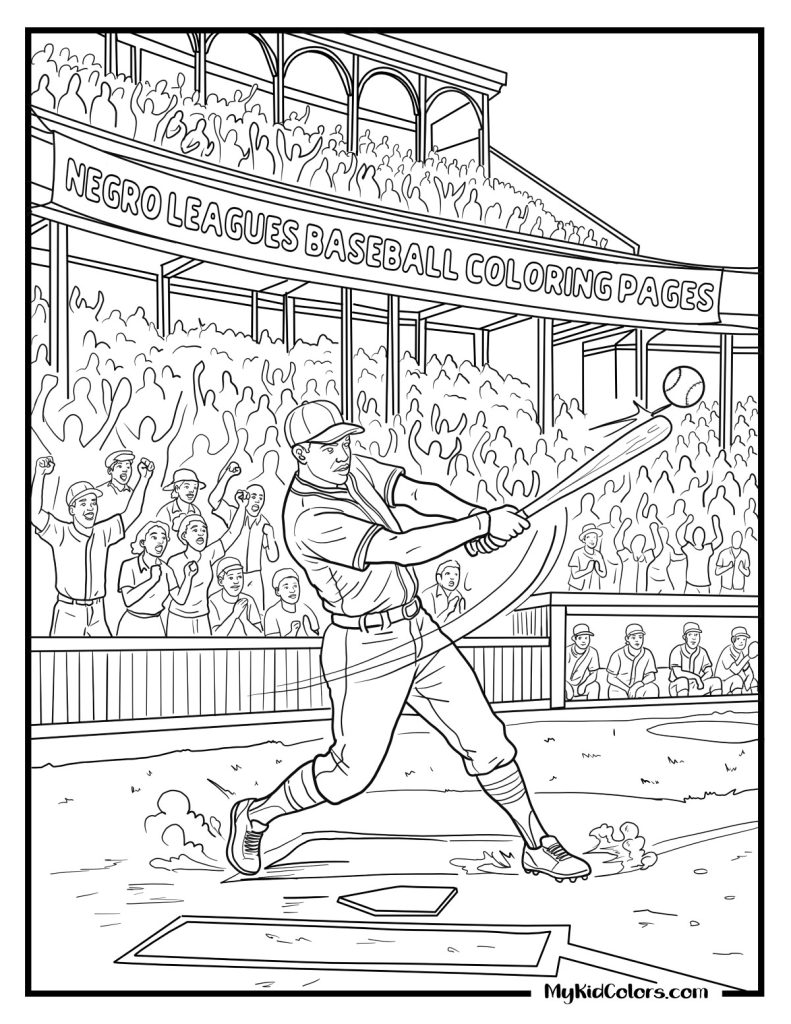
- Pages 14 & 15: A father wearing a hearing aid plays catch with his daughter in a park. The final page brings a batter’s swing into the foreground beneath the “Negro Leagues Baseball Coloring Pages” banner.

Perfect for Black History Month, Game Day, and Beyond
- Make one history card. Pair Page 8 with a short biography of Jackie Robinson. On a separate card, write “Kansas City Monarchs, 1945” and “Brooklyn Dodgers, 1947.” Explain that Robinson played for the Monarchs before his historic Dodgers debut. The National Baseball Hall of Fame’s Robinson resource provides background. The pictured runner is not a verified portrait of him.
- Find the work behind the game. Look at Page 12 and name what the person might use a telephone, papers, and schedule for. Then introduce Rube Foster using the Negro Leagues Baseball Museum’s biography. Children can design a pretend team card with a name, a meeting place, and a game time.
- Build a display with facts attached. Place a colored page beside one adult-checked fact about a player, team, or league. Add the source beneath the fact. Our African American history coloring pages offer a broader companion collection.
- Notice coaching beyond sport. After coloring Page 11, ask your child to draw someone who has helped them learn. They can dictate a caption naming what that person taught them.
- Compare childhood play and professional baseball. Put Pages 1 and 6 side by side. Ask what equipment and actions are similar and what is different. Keep pretend play separate from a lesson in actual batting, throwing, or sliding technique.
For a simple family activity, color Page 14 together and talk about a game you could play. Your family does not need to follow baseball already to enjoy looking, asking, and learning.
Human-Drawn Baseball Beyond the Big Swing
This collection includes the lifted glove in the stands, the coach’s attention to a young player, and the papers on an organizer’s desk. Those details make space for more of baseball than the moment a bat meets a ball.
One of our illustrators drew these pages by hand. The scenes include children with puffs and cornrows, a child wearing glasses, a fan using a wheelchair, and a father with a hearing aid. They appear within ordinary baseball activities: learning, watching, cheering, and playing catch.
The first group leaves more open space around the figures. Later pages add equipment, woodwork, seats, and crowds for a longer coloring session. The art can begin a conversation; historical sources provide the names, dates, and context.
Frequently Asked Questions
Can these pages be used for a Black History Month classroom display?
Yes. Page 15’s banner scene works especially well as a centerpiece, with the other 14 pages arranged around it as a “wall of the game” that students can add their names or a fact to as they finish coloring.
How can I use these pages to introduce younger kids to players like Jackie Robinson and Roberto Clemente?
Start with Pages 1 through 3, which focus on the simple joy of the game, and use them to talk about how those players felt the same excitement as kids, even before they became legends. Save the historical names for a short read-aloud afterward so the coloring stays playful
What’s a fun way to use the leftover cutout pieces?
Cut out the players from Pages 4, 8, and 9 to make simple story cards kids can use to act out a full inning, from wind-up to slide to home run.
Download Your Negro Leagues Baseball Coloring Pages
The first question might be about a glove or a slide. Let it lead to a person’s name, a team, and a story worth knowing. You can color beside your child and learn together, one page and one question at a time.
Save your favorite pages as free JPGs, or get the complete 15-page PDF for $1.99. Your purchase helps support our human illustrators and the work of creating more collections that give Black history and everyday childhood room on the page.
If this collection helps your family or class begin a conversation, share the post with someone who would use it too. Every purchase and share helps our small team keep drawing.
You might also like:
- 15 African American History Coloring Pages That Teach Kids Cultural Pride and Community
- 15 Free Black Cowboys Coloring Pages From Ranch Life to City Riding
- 15 Free Black Wall Street Coloring Pages Exploring Greenwood’s Community

