
15 Free Big Feelings Coloring Pages That Teach Kids Emotional Awareness and Calm
Big feelings can seem overwhelming—for kids and parents alike. But sometimes the simplest tools can open the biggest conversations.
These big feelings coloring pages help children understand emotions in a safe, gentle, and engaging way. From recognizing emotions and faces to learning calming strategies and coping skills, these pages turn creative time into moments of healing, connection, and growth.
A Note from Louisa (Founder of MyKidColors)
Coming soon…
Conversation Corner: 3 Questions to Ask While Coloring
Turn this activity into a bonding moment. While your child colors, try asking these questions:

Less searching. More MEANINGFUL moments.
When kids recognize themselves on the page, coloring changes.
The Inclusive Family Coloring Collection includes 25 human-drawn illustrations centered on everyday moments — designed to make inclusion feel normal, joyful, and intentional.
Because representation shouldn’t be reserved for one month.
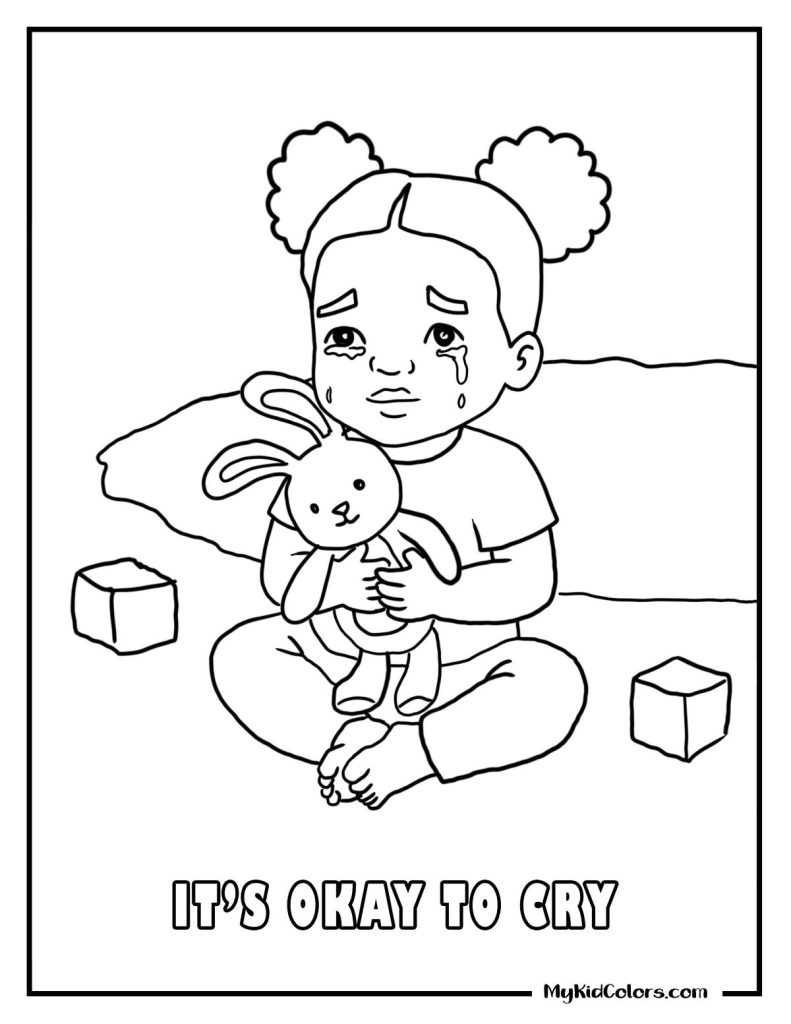
- For “It’s Okay to Cry” (Page 3): “What helps you feel better when you are sad or crying, and who do you like to talk to when you need comfort?”
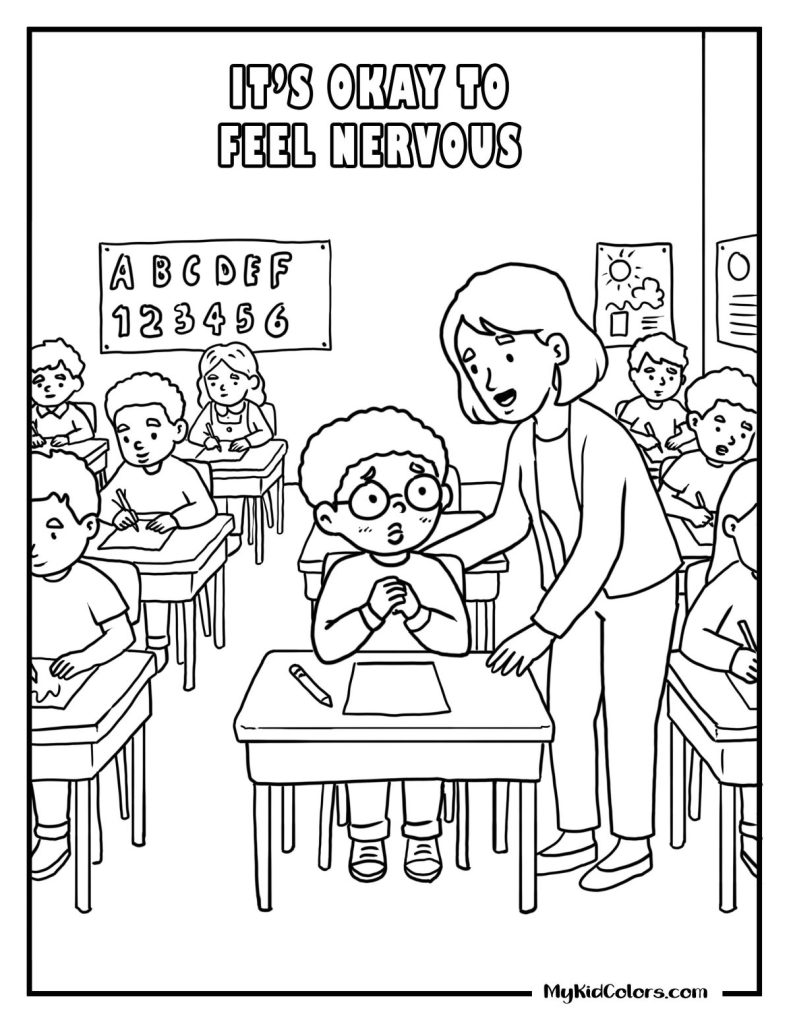
- For “It’s Okay to Feel Nervous” (Page 9): “Can you remember a time you felt nervous or scared, and what helped you feel brave again afterward?”
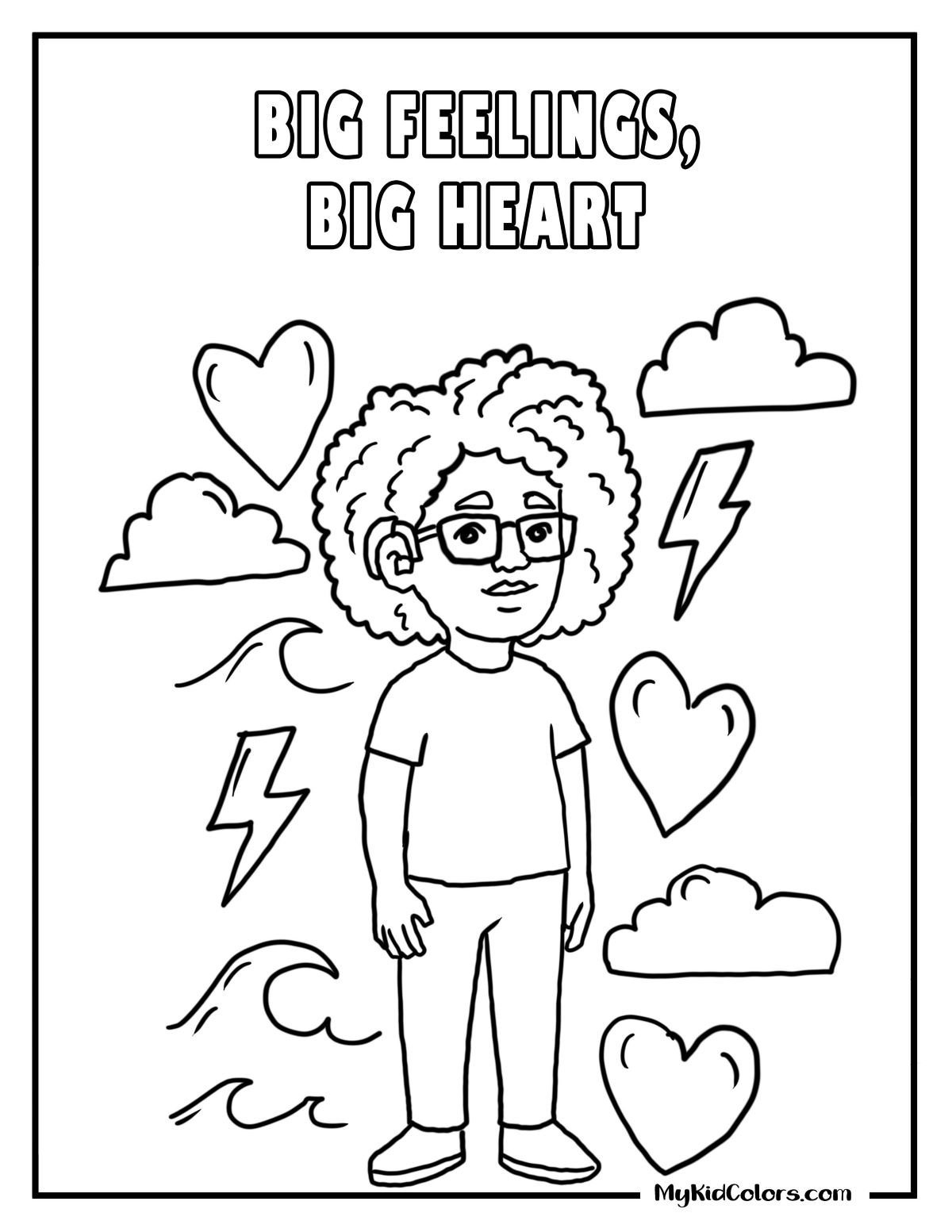
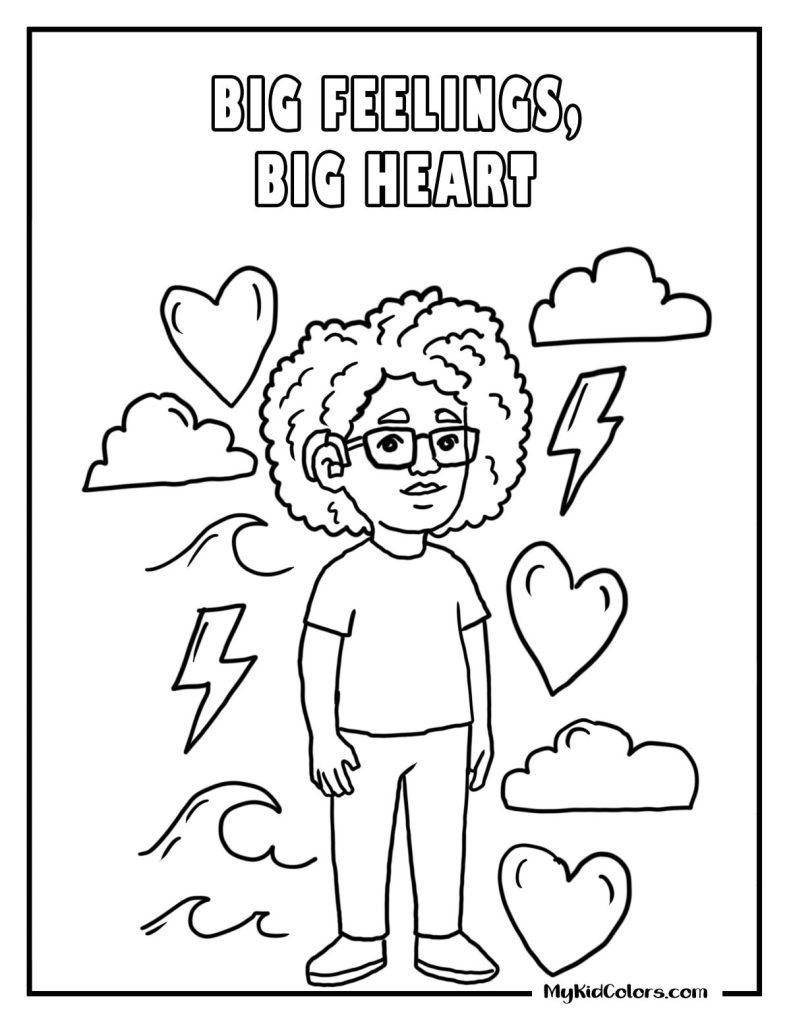
- For “BIG FEELINGS, BIG HEART” (Page 15): “What do you think it means to have a big heart, even when you have big feelings inside sometimes?”
The Collection: 15 Free Big Feelings Coloring Pages
We have organized these into three sets to help you teach emotional awareness, coping skills, and self-regulation—from recognizing feelings to learning how to calm down.
For Little Hands: Understanding Feelings First (Pages 1–5)
Best for toddlers and preschoolers. These pages focus on simple emotions, bold shapes, and emotional safety.
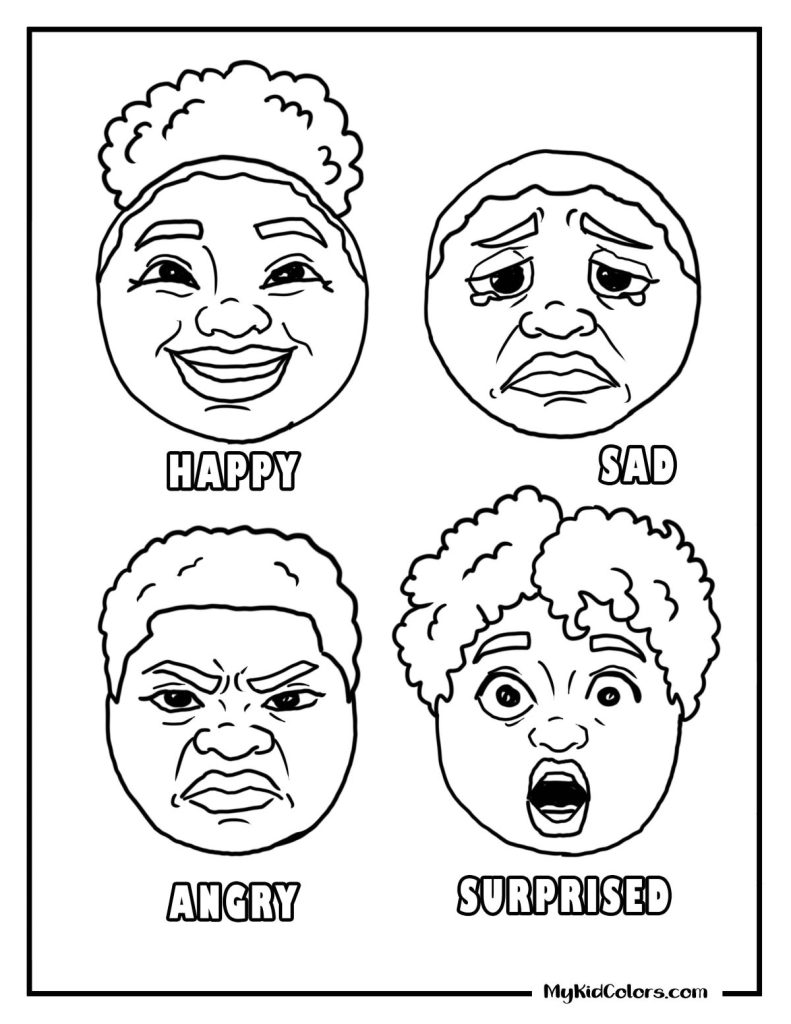
- Page 1: introduces “Happy, Sad, Angry, and Surprised,” where children begin recognizing common emotions through easy-to-read emoji-style faces.
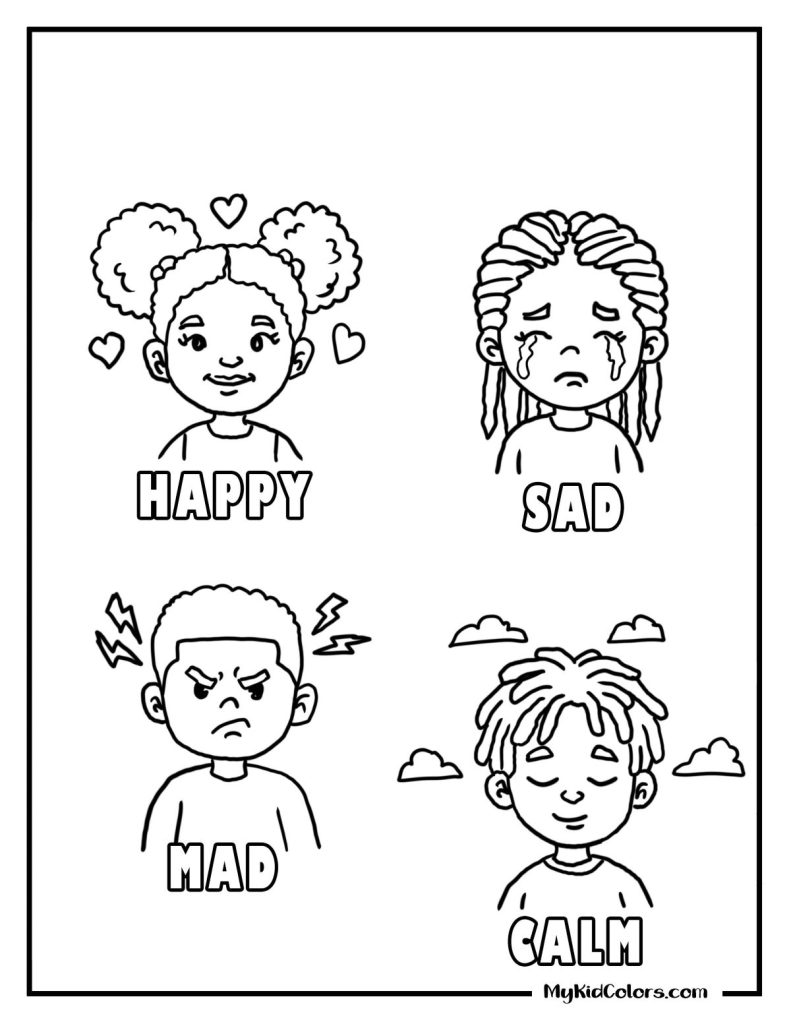
- Pages 2 & 3: explore “MY FEELINGS” and “It’s Okay to Cry,” helping children identify emotions and understand that crying is normal and healthy.
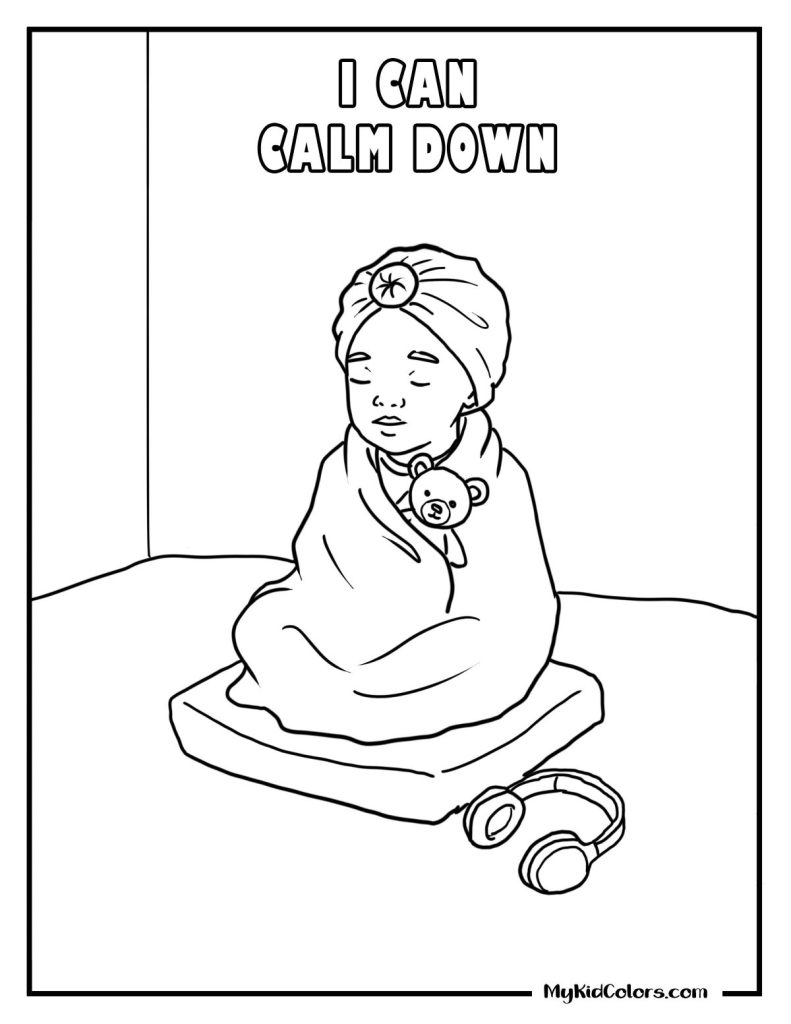
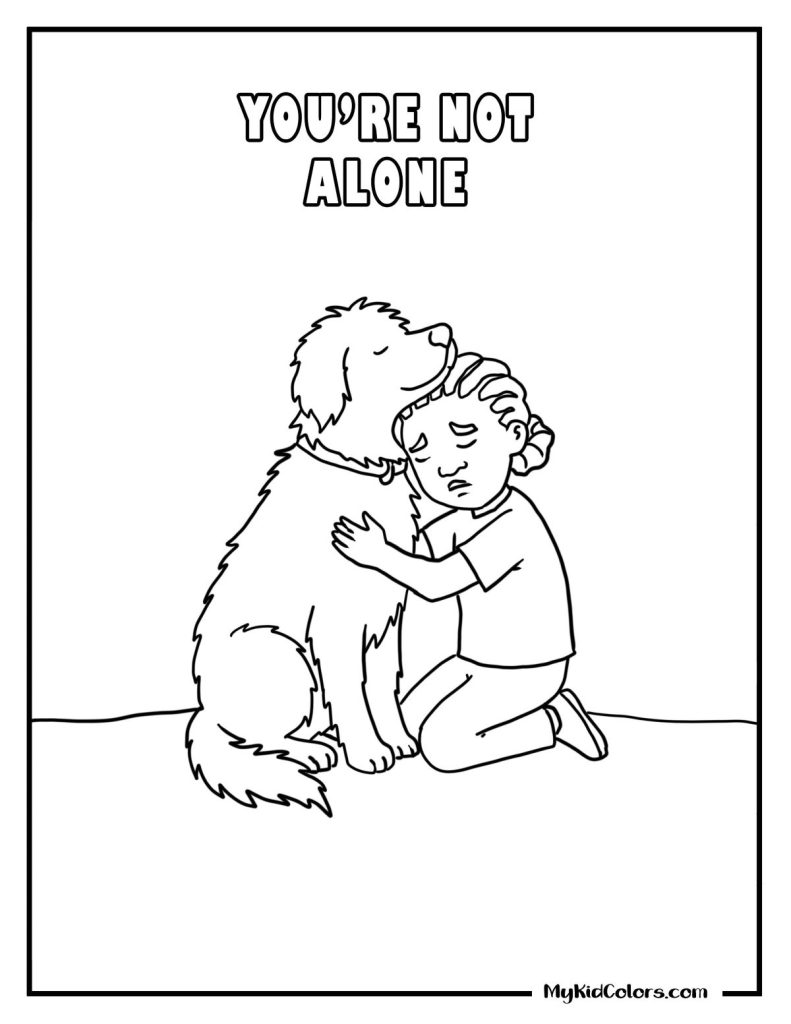
- Pages 4 & 5: show “I Can Calm Down” and “You’re Not Alone,” introducing calming tools and emotional comfort in simple, supportive ways.
Learning Calm, Coping & Emotional Growth (Pages 6–10)
Perfect for elementary kids. These pages highlight emotional regulation, breathing, and resilience.
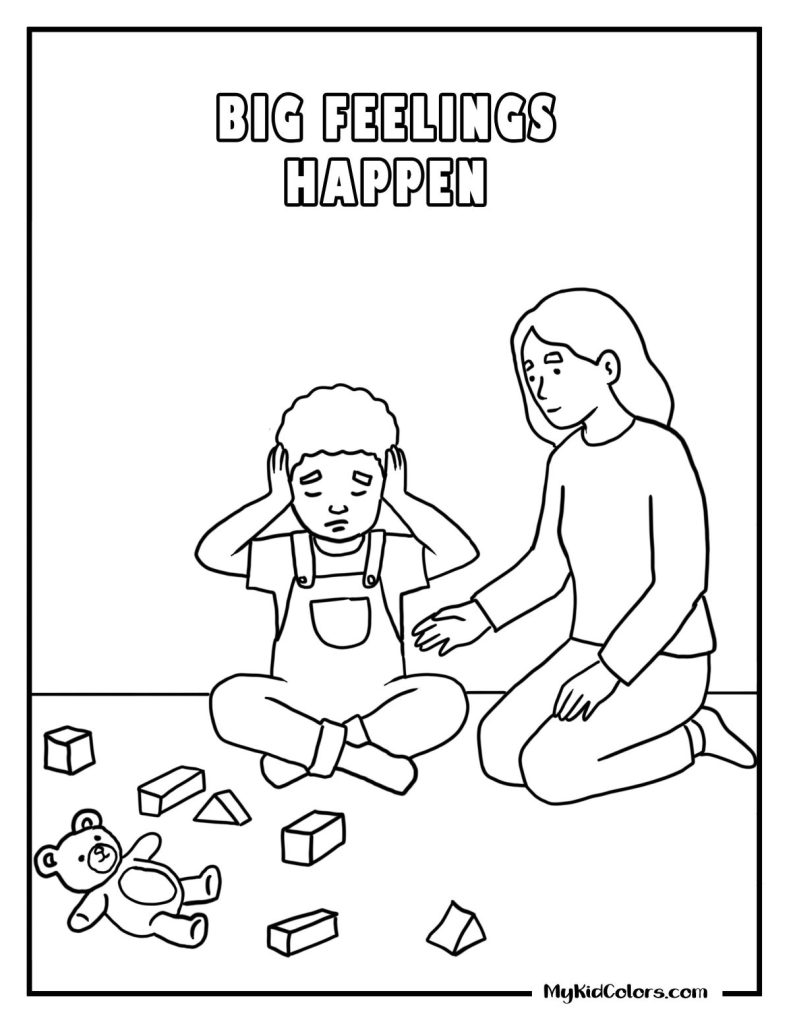
- Page 6: “Big Feelings Happen,” shows a real-life meltdown moment and a calm, supportive adult response.
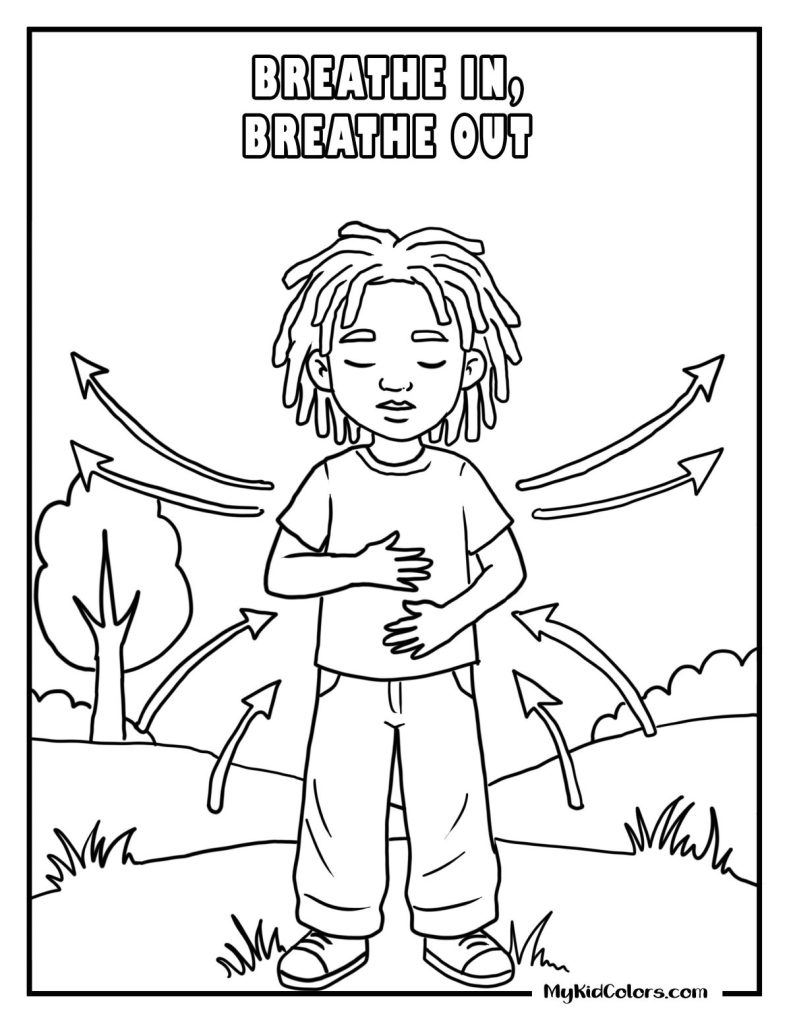
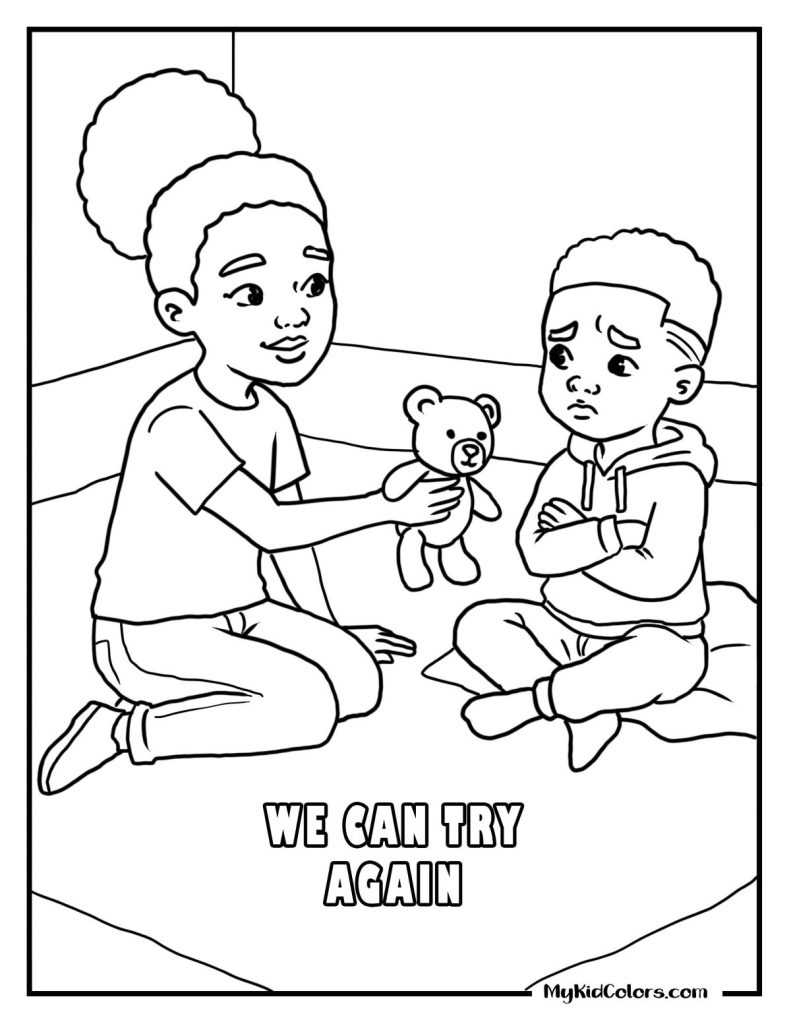
- Pages 7 & 8: “Breathe In, Breathe Out” and “We Can Try Again,” emphasize mindfulness colouring, deep breathing, and sibling repair.
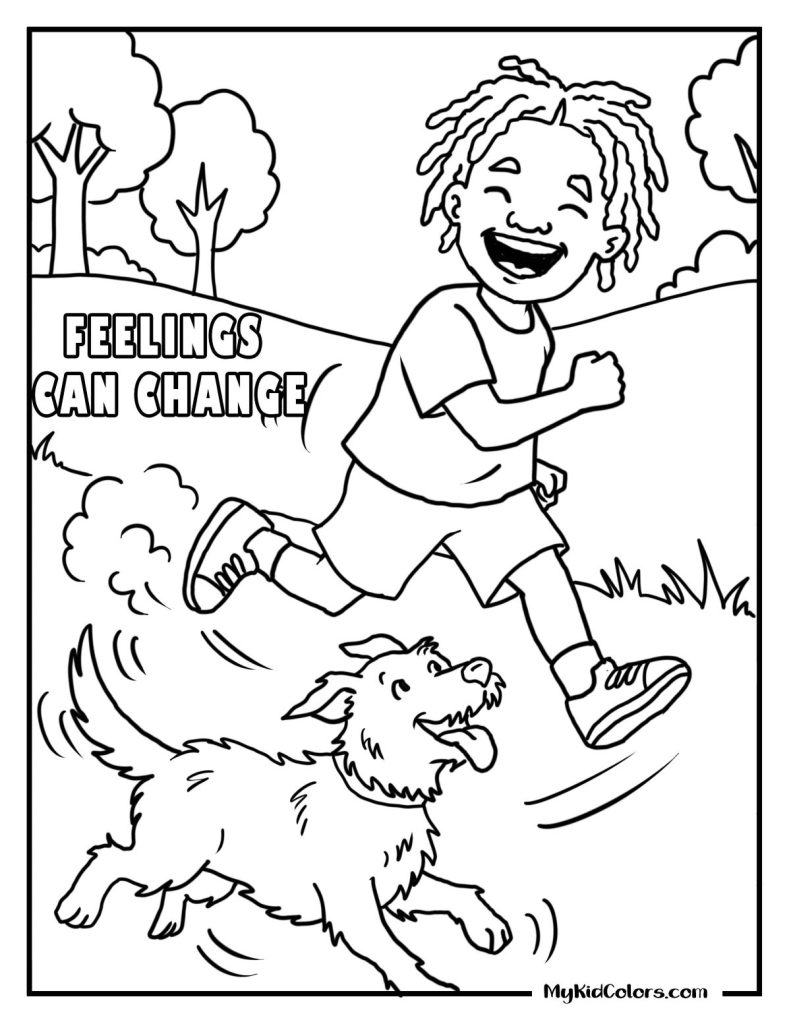
- Pages 9 & 10: “It’s Okay to Feel Nervous” and “Feelings Can Change,” connect emotions to school life and emotional recovery.
The Full Story & Emotional Confidence (Pages 11–15)
Designed for older kids or deeper reflection. These pages expand emotional understanding, identity, and self-esteem.
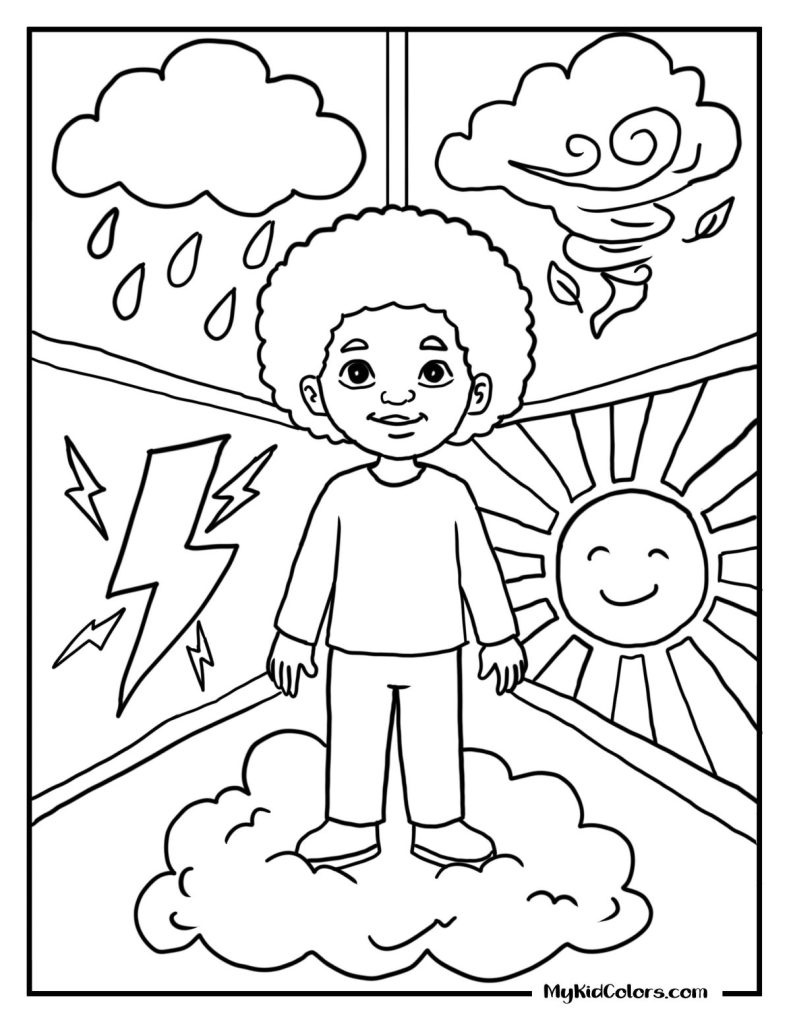
- Page 11: “Feelings as Weather,” shows emotions through symbolic weather patterns to help children visualize feelings.
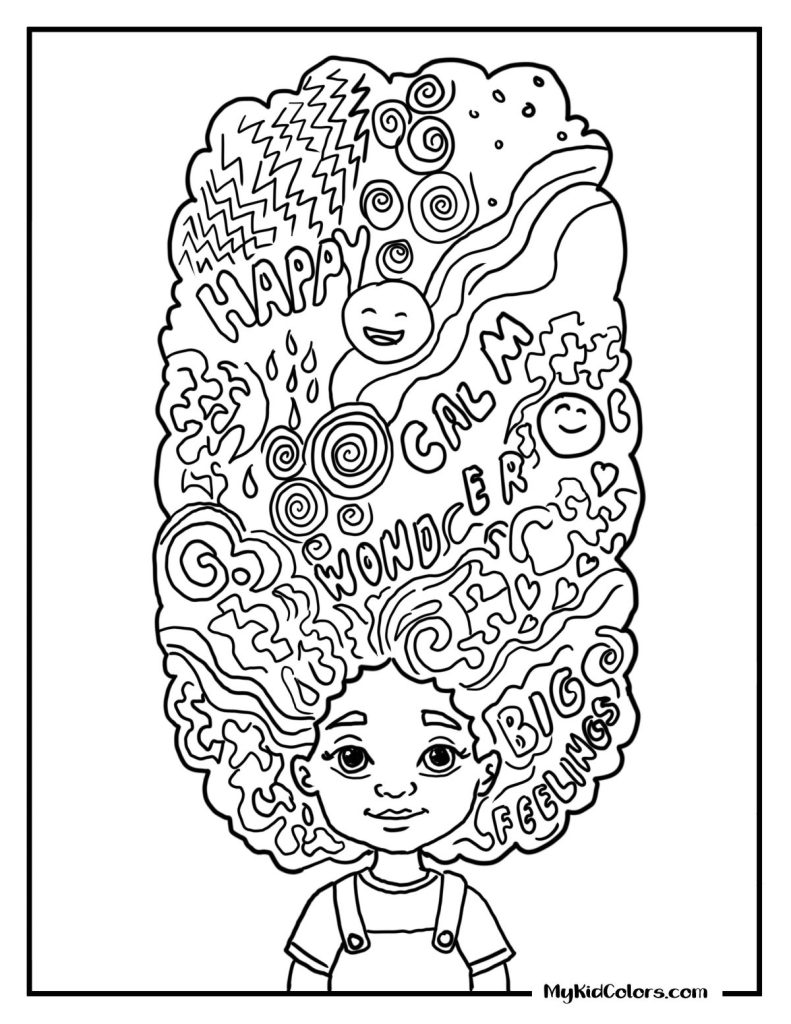
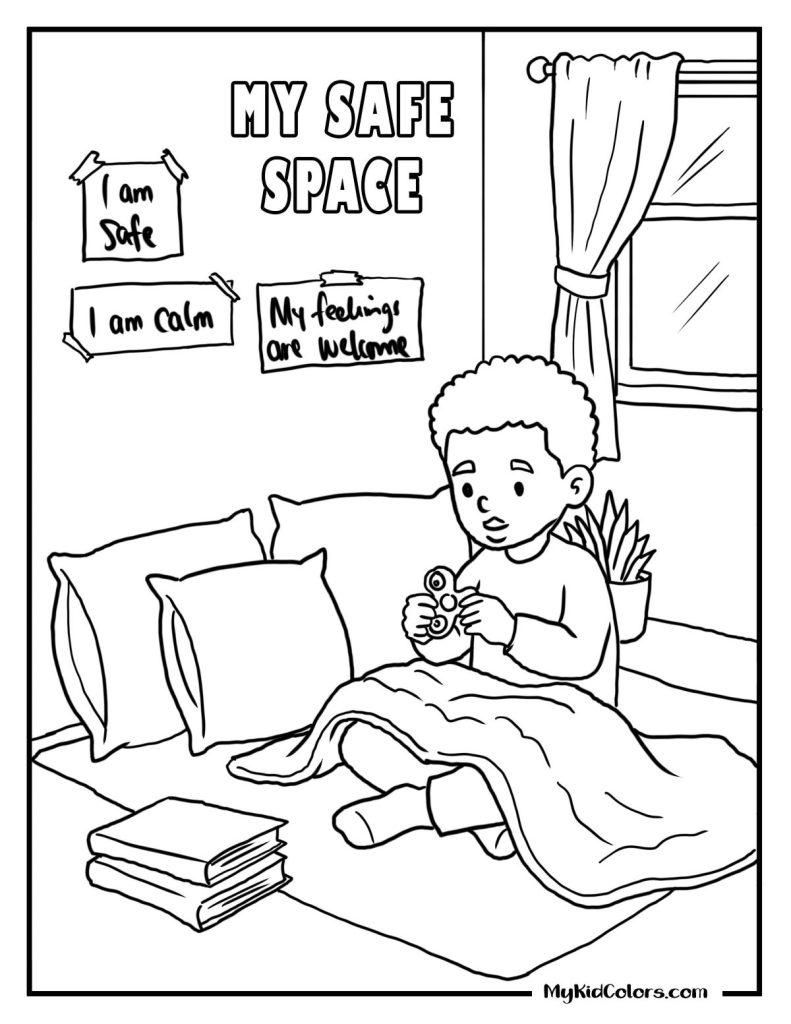
- Pages 12 & 13: “Big Feelings Hair” and “My Safe Space,” highlight emotional storytelling, cultural identity, and safe calming environments.
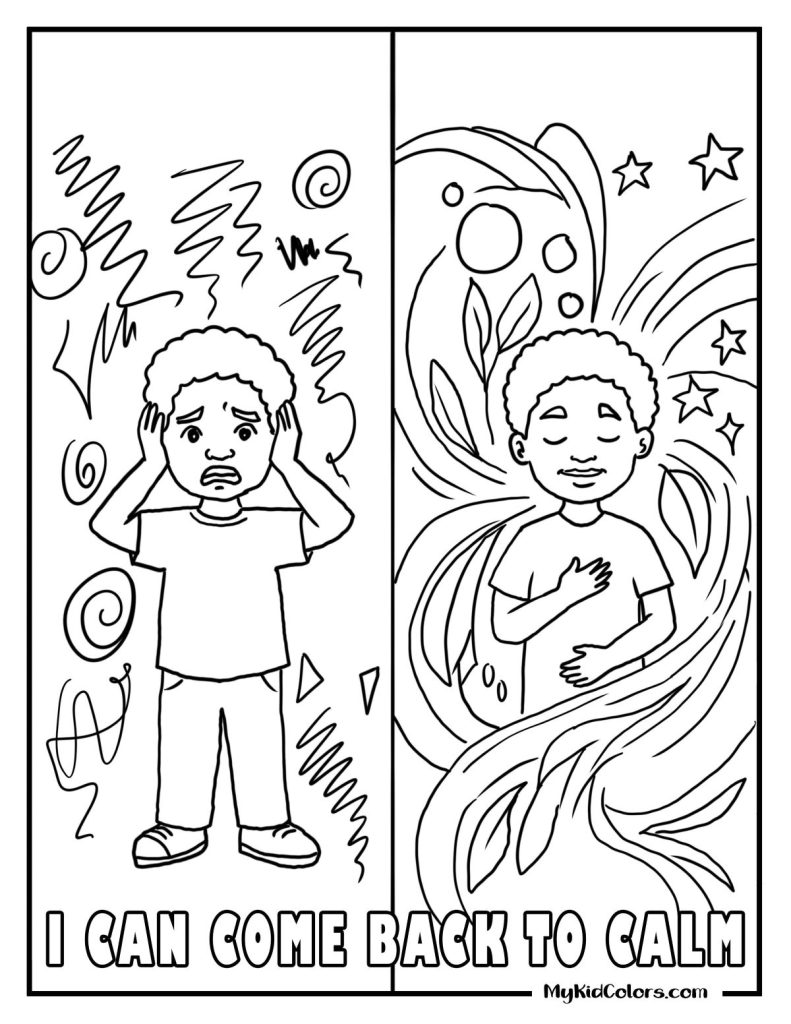
- Pages 14 & 15: “I Can Come Back to Calm” and the hero page bring everything together with a powerful message about regulation, confidence, and self-love.
Perfect for Calm Activities, Therapy & Homeschool
Teachers and parents love using these as feelings worksheets for kids, calming coloring pages for kids, and child therapy support tools. Here are a few ways to extend the lesson:
- Feelings Talk Time: Let kids color while talking about how each emotion feels in their body and what helps them feel calm.
- Story Sequencing: Use Pages 3, 6, 10, and 14 to guide children through sadness, overwhelm, recovery, and calm.
- Create a Calm Corner: Use pages like “My Safe Space” and “Breathe In, Breathe Out” as part of a quiet emotional regulation area.
Why We Choose Hand-Drawn Over AI
Our children deserve to see gentle, real-life moments—like a child crying safely, siblings repairing after conflict, or a child learning to breathe through overwhelm.
They deserve to see comfort, calm, courage, and resilience reflected in faces that look like them.
At MyKidColors, we collaborate with real human illustrators. Every Big Feelings coloring page in this set was thoughtfully created to center dignity, emotional truth, and cultural awareness.
Frequently Asked Questions
How can I use these pages to teach emotional awareness?
Pair coloring with open-ended conversations and ask your child to describe times they felt happy, sad, nervous, or angry.
Are these suitable for therapy or classroom use?
Yes! These work well as free printable art therapy worksheets for kids, emotions worksheets for kindergarten, and classroom SEL tools.
How can I make these pages more interactive?
You can also cut out the feelings faces to create flashcards, use the pages in a calm-down binder, or frame the hero page as a daily encouragement reminder.
Download Your Free Set
Big feelings are normal—and every child deserves support, understanding, and safe ways to express them. Join our family for free, hand-drawn inclusive pages sent to your inbox.
You Might Also Like
- 15 Self Love Coloring Pages That Teach Kids Confidence and Self-Worth
- 15 Free Human-Drawn Heart Coloring Pages (PDF Printables)
- 15 Free ADHD Coloring Pages Collection (Free Printable PDFs)
- 15 Emotions Coloring Pages That Help Kids Understand Their Feelings
- 15 Mindfulness Coloring Pages That Help Kids Slow Down and Feel Calm

