

15 Free George Washington Carver Coloring Pages for Curious Kids
A handful of peanuts is a starting point for a much bigger story. These George Washington Carver coloring pages introduce children to a scientist who explored what plants could do, shared what he learned with farmers, and made time to paint flowers.
Across 15 free designs, your child can move from planting a seed to exploring a laboratory, a traveling classroom, and an artist’s easel. Pair a page with a Black History Month lesson, a science project, or a closer look at something growing near your home.
Every illustration is human-drawn, with no AI-generated artwork. Alongside scenes inspired by Carver’s life, diverse children tend plants at home and school, including a young gardener using a wheelchair.
Five simple, five medium, and five detailed pages give you room to follow your child’s interests, whether they want one little pot to color or a laboratory full of things to notice.

Less searching. More MEANINGFUL moments.
When kids recognize themselves on the page, coloring changes.
The Inclusive Family Coloring Collection includes 25 human-drawn illustrations centered on everyday moments — designed to make inclusion feel normal, joyful, and intentional.
Because representation shouldn’t be reserved for one month.
All 15 pages. One easy download. Get the complete human-drawn, ready-to-print PDF for $1.99, available instantly with a download link emailed to you for easy access anytime.
Prefer free JPGs? Right-click any coloring page and select “Save image as,” or press and hold the image on your phone to save it.
The PDF pages are US Letter size. Select “Fit” in your print settings if needed.
A Note from Louisa (Founder of MyKidColors)
I loved the little farm behind our house in Nigeria. I planted yams and tomatoes, and I enjoyed watching things grow. Science was something I enjoyed at school, too. My mother studied chemistry; I preferred biology. Plants gave me something I could see and care for myself.
I was fortunate that my school had a science lab, even if we didn’t have all the bells and whistles. Some children weren’t that fortunate. Their experiments happened through chalkboard drawings and explanations of what the reaction or result would be.
That’s part of what draws me to this collection: the garden, the laboratory, and the chance to look closely. You don’t need a fully equipped lab to begin exploring with your child. A seed in a pot or a leaf on the table gives you something real to observe alongside the page.
Conversation Corner: 3 Questions to Ask While Coloring
Pick one question that fits the page your child is coloring. Give them time to answer in their own way.
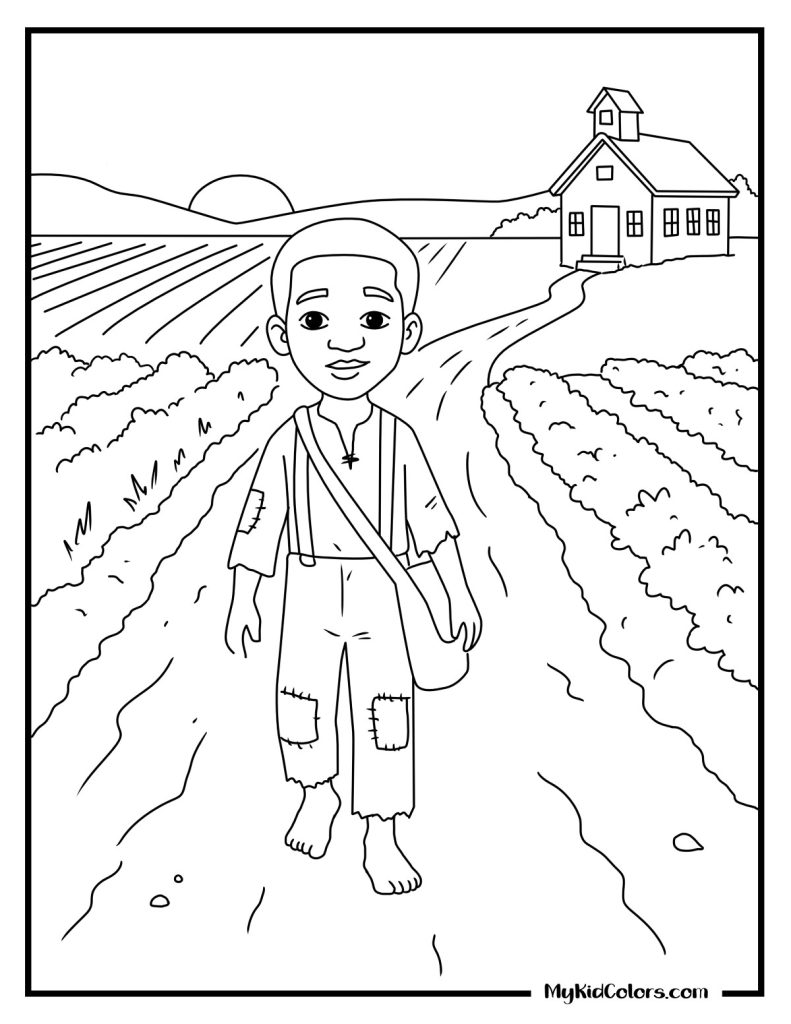
- For “Walking to School” (Page 7): “What is something you would like to learn?” The schoolhouse gives you a place to begin a separate conversation about Carver seeking an education when Black children faced barriers to schooling.
- For “The Traveling Classroom” (Page 9): “What could you show someone how to do?”
- For “The Artist at Work” (Page 12): “What would you paint on this easel?”
For a child who prefers choosing or pointing, offer two options: “Would you paint a flower or a tree?” They can point to the flower on the page, use their communication system, or draw their answer.
The Collection: 15 George Washington Carver Coloring Pages
George Washington Carver was an African American agricultural scientist, educator, and artist. At Tuskegee Institute, he researched crops and shared practical farming knowledge. His work included encouraging crop rotation and exploring uses for crops such as peanuts and sweet potatoes. The National Park Service’s introduction to Carver offers more background for adults preparing a lesson.
These illustrations combine scenes inspired by his life with modern gardening and classroom scenes. The children on the first five pages are present-day characters exploring related activities, rather than five portraits of Carver as a child.
For Little Hands: Planting and Noticing (Pages 1–5)
The simpler designs offer larger areas to color, although the smaller leaves, peanuts, and basket details may suit children who enjoy more careful coloring. Use your child’s interest and comfort with the page as your guide.
- Page 1: A boy kneels beside a small seedling, holding sticks near the soil. There are just a few plants and patches of grass around him, leaving plenty of open space.
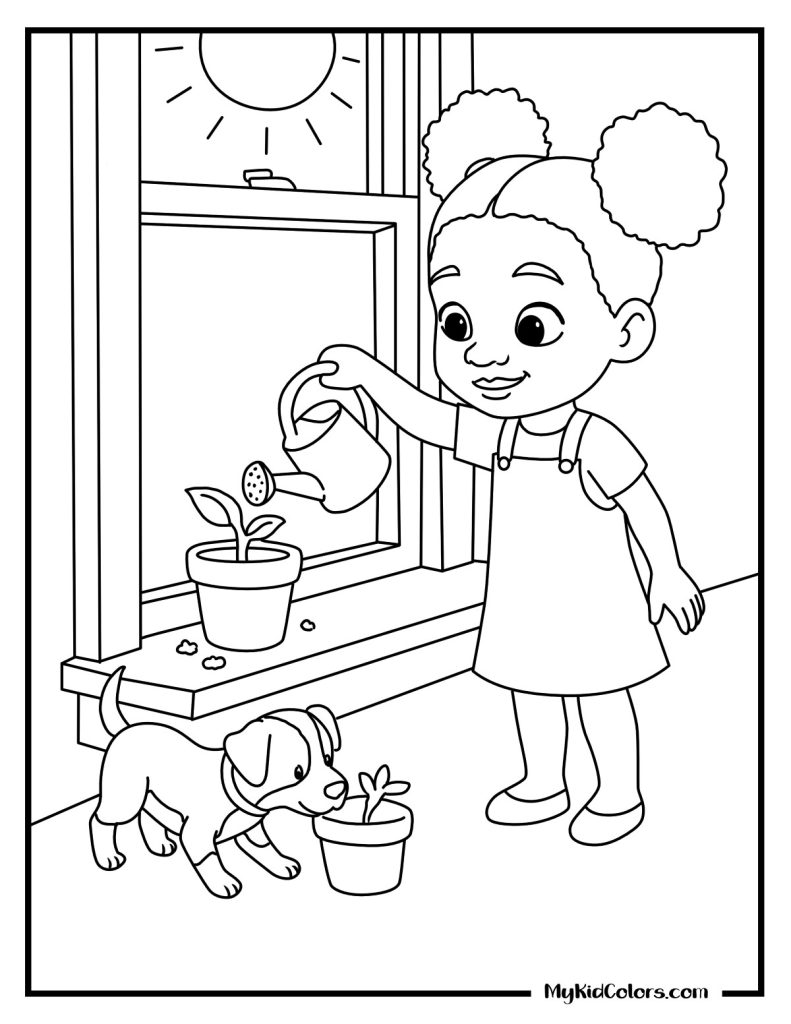
- Pages 2 & 3: A girl waters a windowsill plant while her dog investigates another pot. On the next page, a boy with cornrows studies the peanuts cupped in his hands.
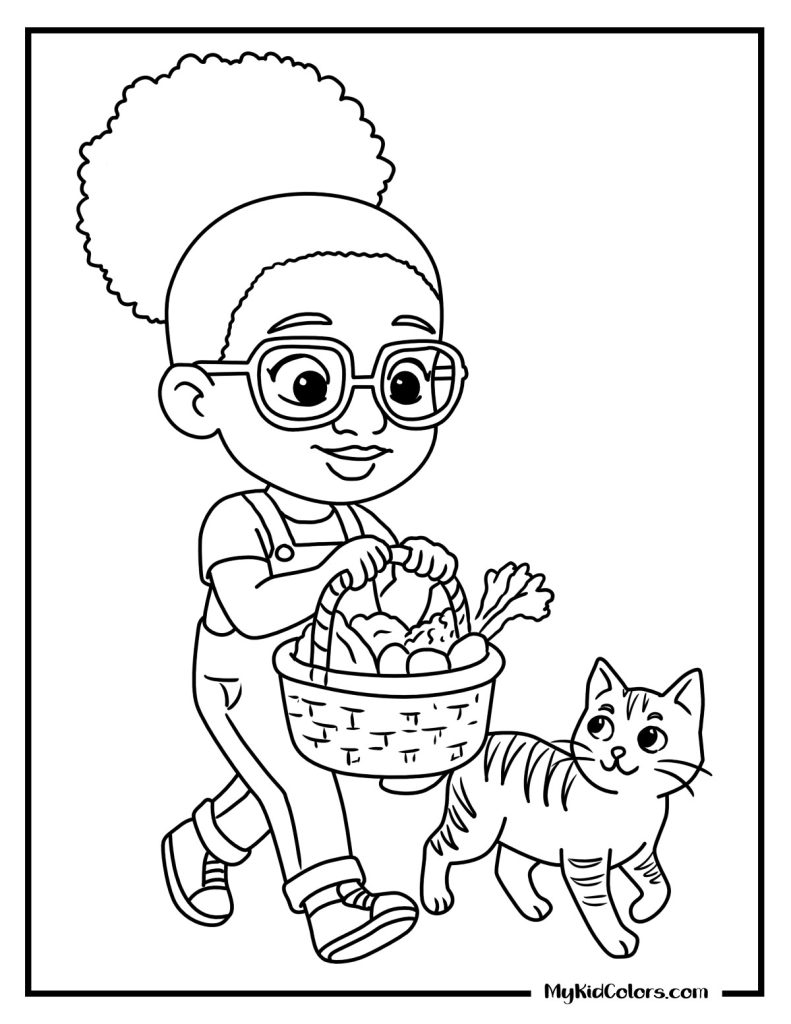
- Pages 4 & 5: A girl wearing glasses carries a basket of vegetables beside her cat, followed by a close-up of a boy planting in a pot. These pages pair easily with a look at vegetables or seeds you already have at home.



All 15 pages. One easy download. Get the complete human-drawn, ready-to-print PDF for $1.99, available instantly with a download link emailed to you for easy access anytime.
Prefer free JPGs? Right-click any coloring page and select “Save image as,” or press and hold the image on your phone to save it.
Learning, Discovering, and Sharing (Pages 6–10)
These medium designs introduce scenes connected to Carver’s story, followed by a present-day child carrying that interest in plants into his own learning.
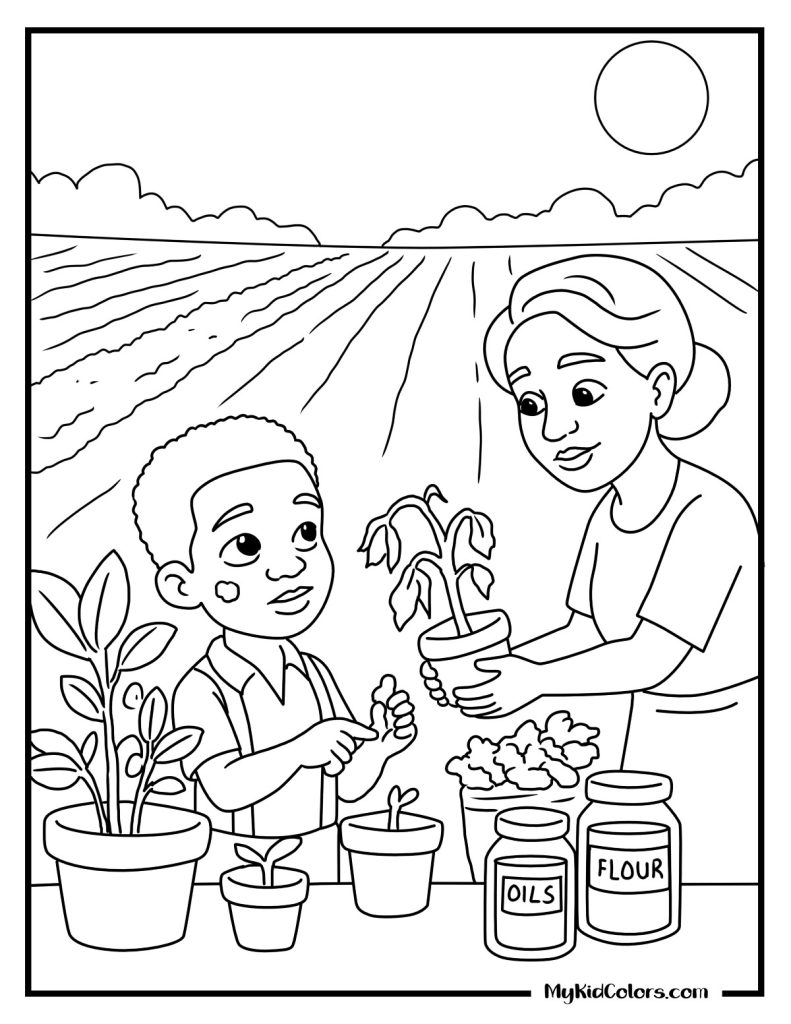
- Page 6: A woman holds a drooping potted plant beside a boy, with other plants and jars nearby. Compare the leaves in the different pots without assuming the picture shows a particular documented meeting.
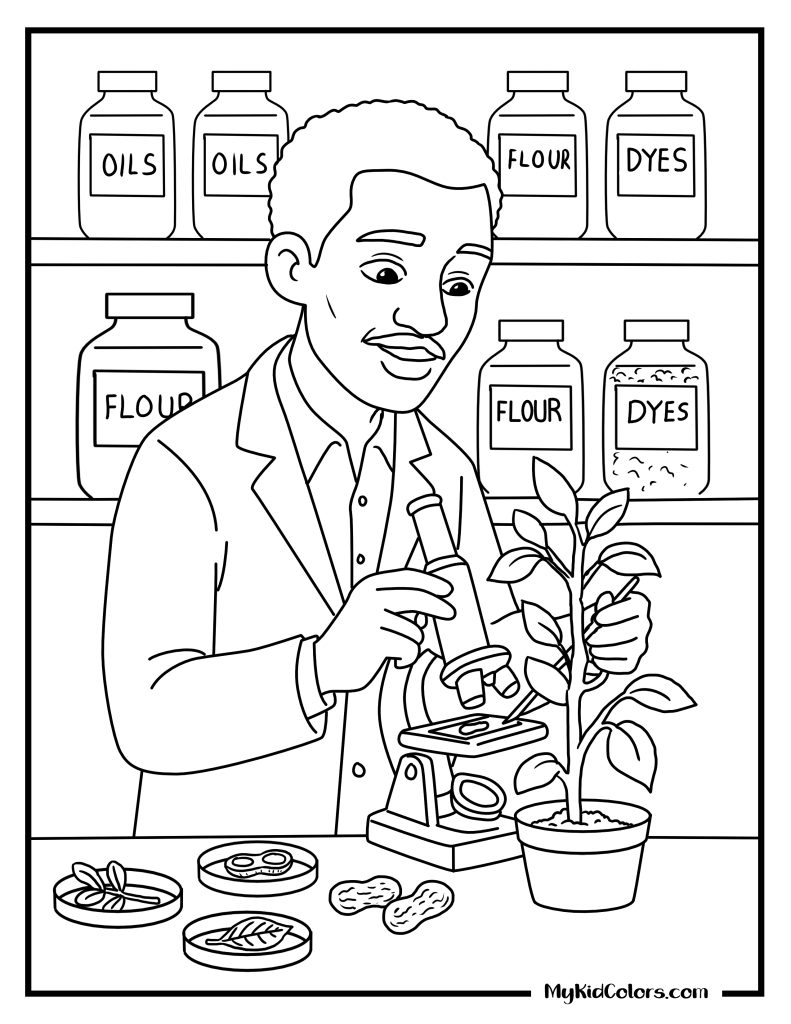
- Pages 7 & 8: A barefoot boy walks along a dirt road toward a schoolhouse. The next scene shows Carver at a microscope, surrounded by plants, peanuts, and jars in a laboratory.
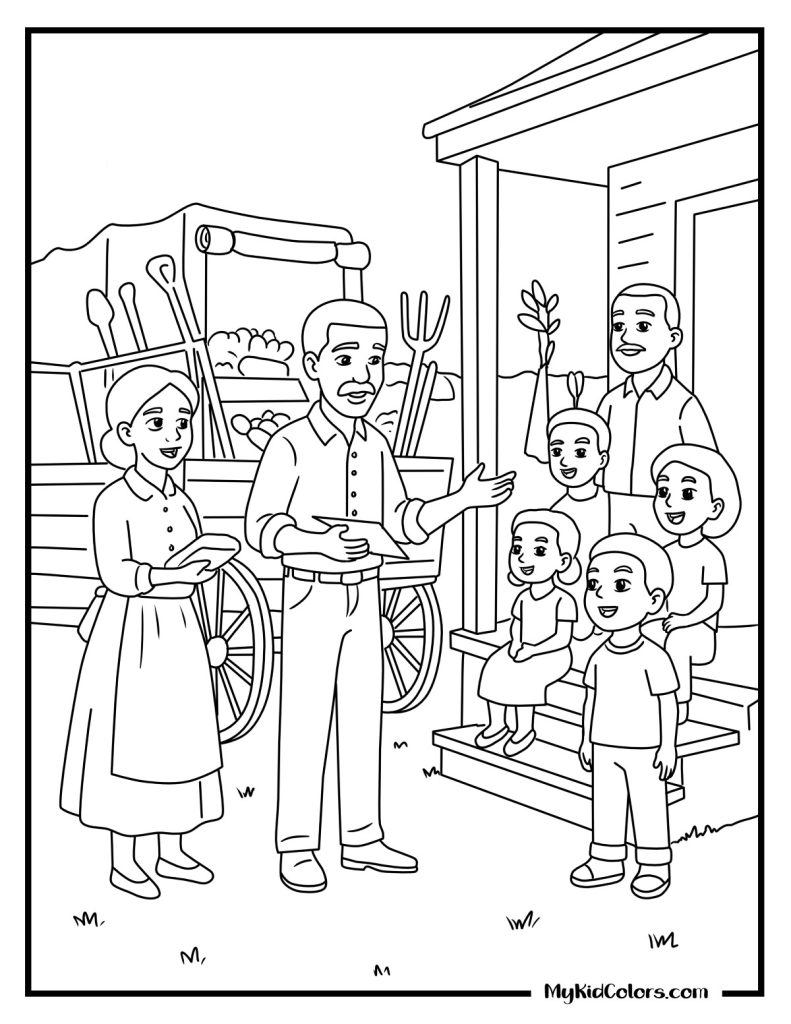
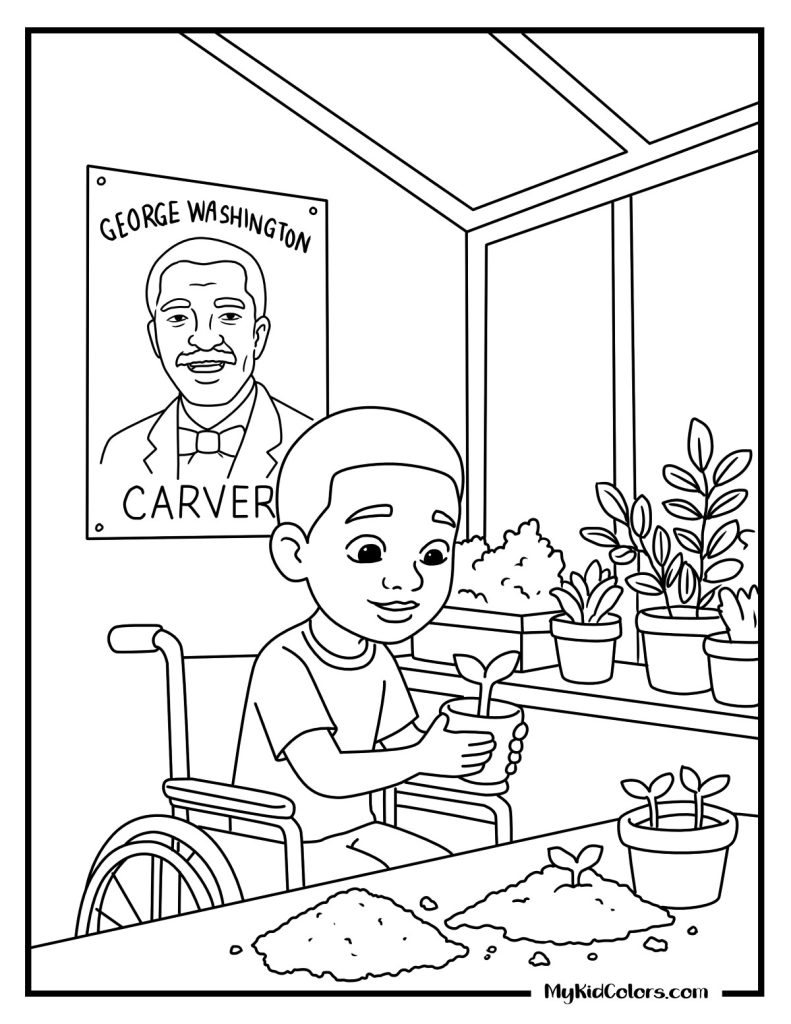
- Pages 9 & 10: Carver demonstrates beside a wagon loaded with farming supplies as adults and children gather around. On page 10, a modern boy using a wheelchair tends a potted plant beneath a poster of Carver.
All 15 pages. One easy download. Get the complete human-drawn, ready-to-print PDF for $1.99, available instantly with a download link emailed to you for easy access anytime.
Prefer free JPGs? Right-click any coloring page and select “Save image as,” or press and hold the image on your phone to save it.
The Full Story and Connections Today (Pages 11–15)
The detailed pages bring together farming, art, teaching, and family gardening. They offer more small objects and background areas for children who like spending longer on a picture.
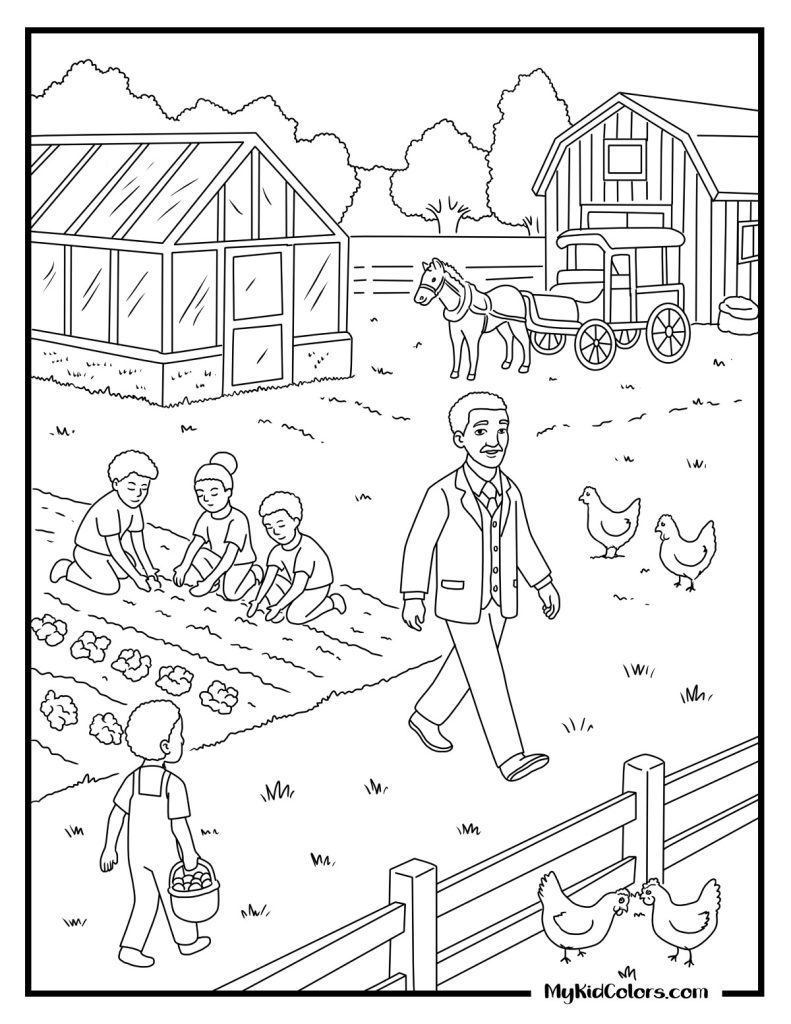
- Page 11: Carver walks through a busy agricultural scene with garden beds, a greenhouse, a horse-drawn wagon, and chickens. Look for the different places where people are growing or tending plants.
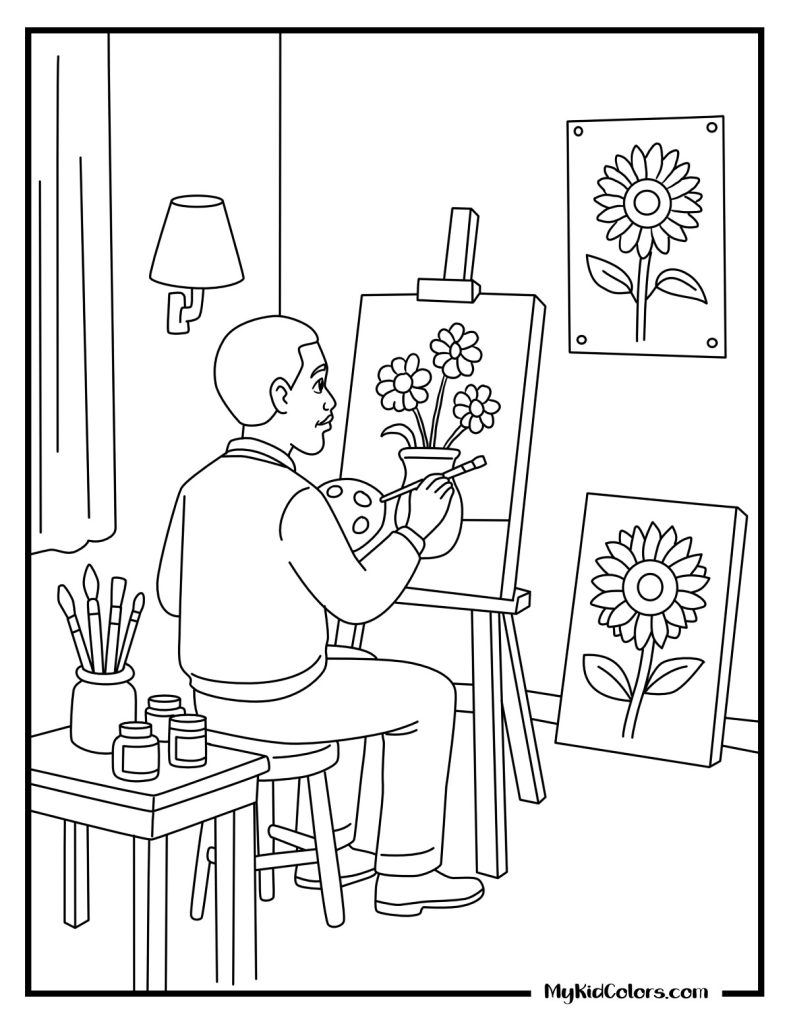
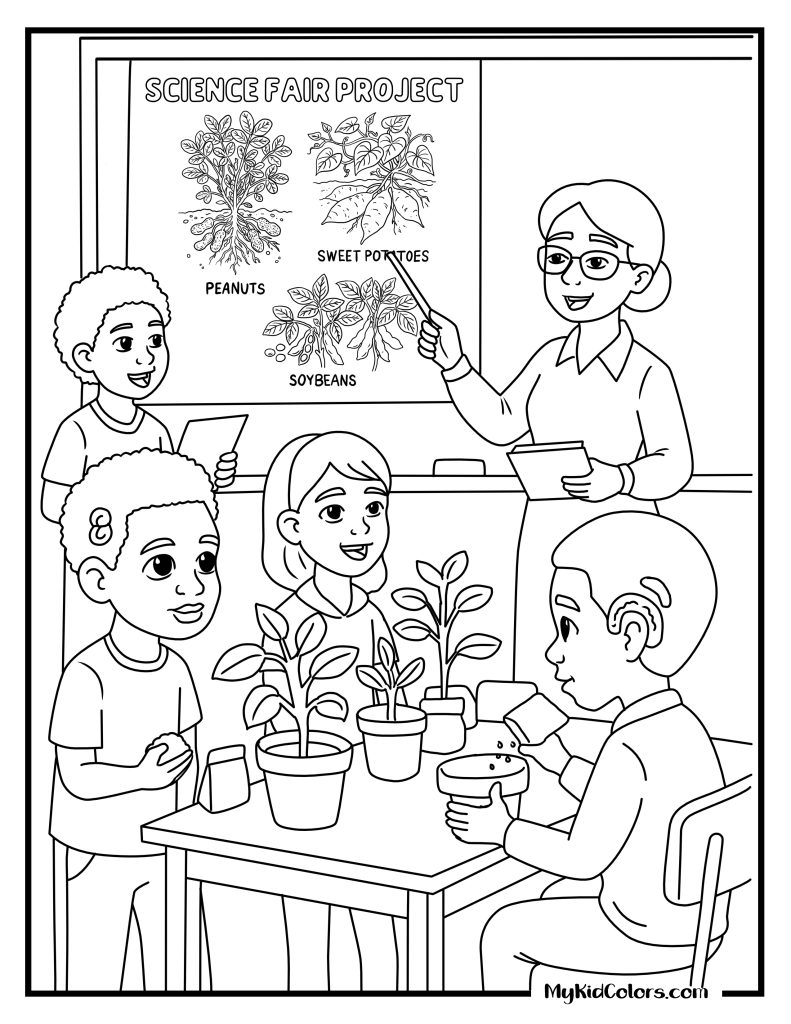
- Pages 12 & 13: Carver paints flowers at an easel in a room with brushes and finished artwork. The next page moves to a modern classroom, where children work with potted plants beside a science fair display.
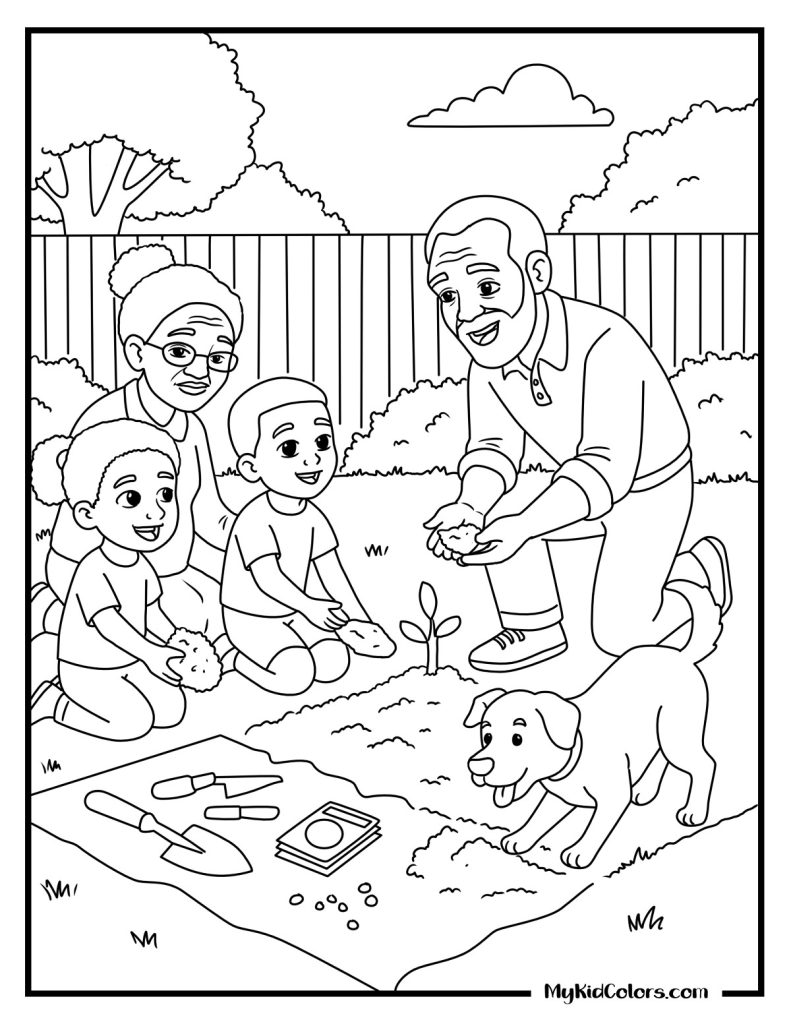
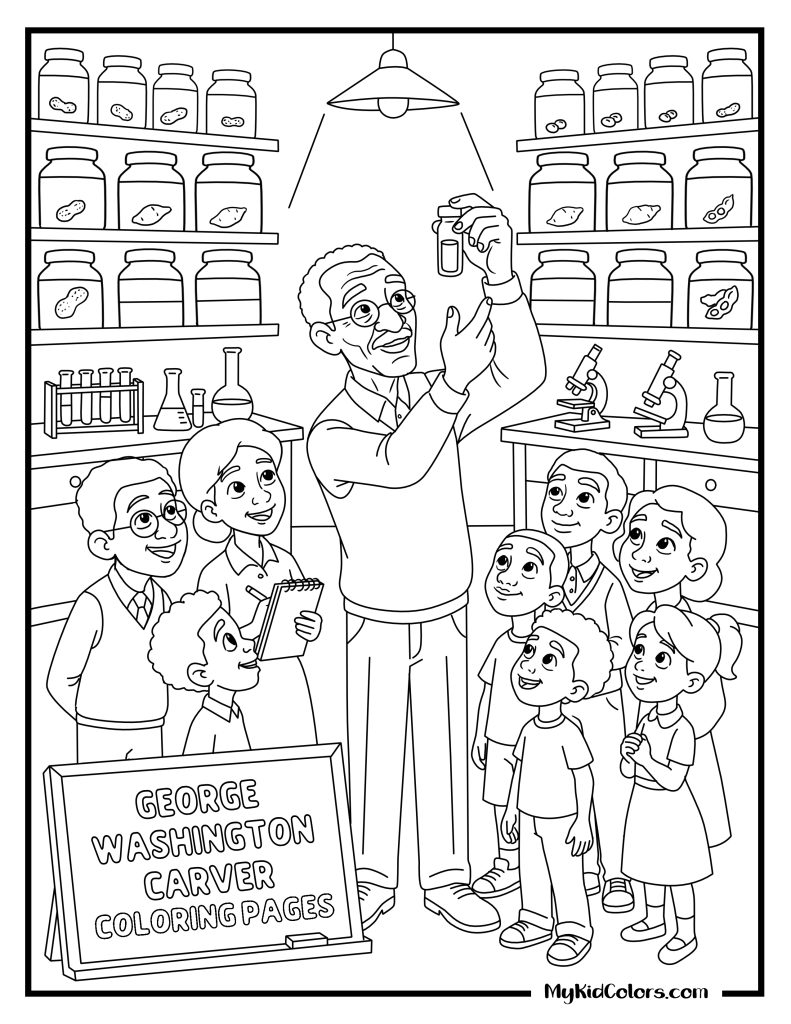
- Pages 14 & 15: A family gardens together while a dog rests nearby. The final page returns to Carver’s laboratory, where students watch him hold up a small bottle among shelves of jars.
All 15 pages. One easy download. Get the complete human-drawn, ready-to-print PDF for $1.99, available instantly with a download link emailed to you for easy access anytime.
Prefer free JPGs? Right-click any coloring page and select “Save image as,” or press and hold the image on your phone to save it.
Simple Activities for Home, Homeschool, and the Classroom
Use one page with one activity. You do not need to turn the entire collection into a project.
- Plant and observe with Page 5. Plant a bean seed in a small pot following the packet instructions. After coloring, draw the pot on another sheet and add the date. Return every few days to draw what has changed.
- Make a plant observation card with Page 8. Put a leaf beside the laboratory picture. Look at its edge, veins, and shape, using a magnifying glass if you have one. Children can draw what they notice or dictate one observation. Our science coloring pages offer more laboratory and discovery scenes for another day.
- Explain crop rotation beside Page 13. Draw one field on a separate sheet, then show cotton growing there one season and peanuts in a later season. Explain that farmers can change the crops they grow in a field to help manage soil health. Use your own clearly labeled example alongside the decorative classroom chart.
- Try science and art together with Page 12. Place a flower or leaf on the table. Draw it, then name or point to one detail you noticed. Carver studied art as well as agriculture, so the painting scene belongs alongside his scientific work.
- Share a skill with Page 9. After looking at the wagon, invite each child to demonstrate a small task, such as folding paper or filling a plant pot. Connect this to the traveling school bringing useful knowledge to farming communities.
For a wider history unit, pair this collection with our African American history coloring pages. Keep Carver’s name and contributions clear within the broader discussion.
Human-Drawn Scenes of Carver at Work and Children Learning Today
This collection was drawn by human illustrators (non-AI coloring pages). The scenes give Carver several roles: studying a specimen, explaining farming, painting flowers, and showing students his laboratory work.
The modern pages bring those interests into familiar settings. A girl waters a plant in her home. A family works in a garden. A boy using a wheelchair tends his own pot beneath Carver’s portrait. Cornrows, locs, puffs, and glasses appear across the children’s designs, alongside ordinary details such as pets, watering cans, and scattered tools.
The line work changes with the scene, too. The early pages leave larger spaces around a child and a single activity. The later farm and laboratory pictures fill the page with smaller details. That variety lets families select a design for the time and attention they have available.
Frequently Asked Questions
How can I pair these coloring pages with a real planting activity?
Use page 5 with a seed, a pot, and soil. Follow the seed packet’s growing instructions, then let your child draw or describe changes as the plant grows. Page 1 also works as a starting point for looking closely at a seedling.
How do I explain the traveling classroom on Page 9?
You could say, “Carver helped bring a wagon full of farming tools and examples to people where they lived, so they could learn useful ways to grow and use crops.” Known as the Jesup Wagon, the traveling school brought agricultural education to rural communities. The illustration is an artist’s interpretation of that work.
Can I use these pages with a STEM or science fair lesson?
The laboratory on page 8 and the modern classroom on page 13 can accompany a plant science lesson. Add a real observation task, such as recording a seedling’s growth, to build a project around the coloring. The set includes coloring illustrations rather than ready-made experiment worksheets or a complete science curriculum.
Download Your Set
One seedling, one question, one shared discovery. That’s how it always starts.
Join our family for hand-drawn inclusive pages sent straight to your inbox.
All 15 pages. One easy download. Get the complete human-drawn, ready-to-print PDF for $1.99, available instantly with a download link emailed to you for easy access anytime.
Prefer free JPGs? Right-click any coloring page and select “Save image as,” or press and hold the image on your phone to save it.
You might also like:
- 15 Free Science Coloring Pages (Free PDF Printables)
- 15 African American History Coloring Pages About Cultural Pride and Community
- 15 Gardening Coloring Pages That Teach Kids Patience, Tending, and Real Growth

