

15 Free Ghanaian Landmarks Coloring Pages Beyond the Flag Worksheet
Geography can sometimes feel like memorizing places on a map—but kids connect more when they can see, color, and experience it in a way that feels real.
A Ghana coloring page should show more than a flag. These free Ghanaian landmarks coloring pages help children explore Ghana through maps, landmarks, kente-inspired patterns, history, markets, music, and cultural scenes.
They are designed for parents and teachers who want country-specific printables that feel warm, human, and useful. Kids can color while learning that Ghana is not just a place on a map, but a country with its own stories, creativity, communities, and cultural pride.

A Note from Louisa (Founder of MyKidColors)
After moving to North America, one thing that stood out to me was how often Africa gets treated like one giant place instead of a continent filled with different countries, cultures, languages, and identities.

Less searching. More MEANINGFUL moments.
When kids recognize themselves on the page, coloring changes.
The Inclusive Family Coloring Collection includes 25 human-drawn illustrations centered on everyday moments — designed to make inclusion feel normal, joyful, and intentional.
Because representation shouldn’t be reserved for one month.
That’s part of what inspired these Ghanaian landmarks coloring pages. I wanted children to learn that every country has its own stories, architecture, traditions, and cultural pride.
These Ghana coloring pages are about more than famous places — they’re about helping kids grow into thoughtful global citizens who understand that the world is much bigger and more connected than they may realize.
Conversation Corner: 3 Questions to Ask While Coloring
Turn this activity into a bonding moment. While your child colors, try asking these questions:
- For “Black Star Square” (Page 2): “Why do you think countries create special places like this, and what do you think the Black Star represents?”
- For “Market Day” (Page 8): “What do you notice people are doing here, and how is this similar or different from markets you’ve seen before?”
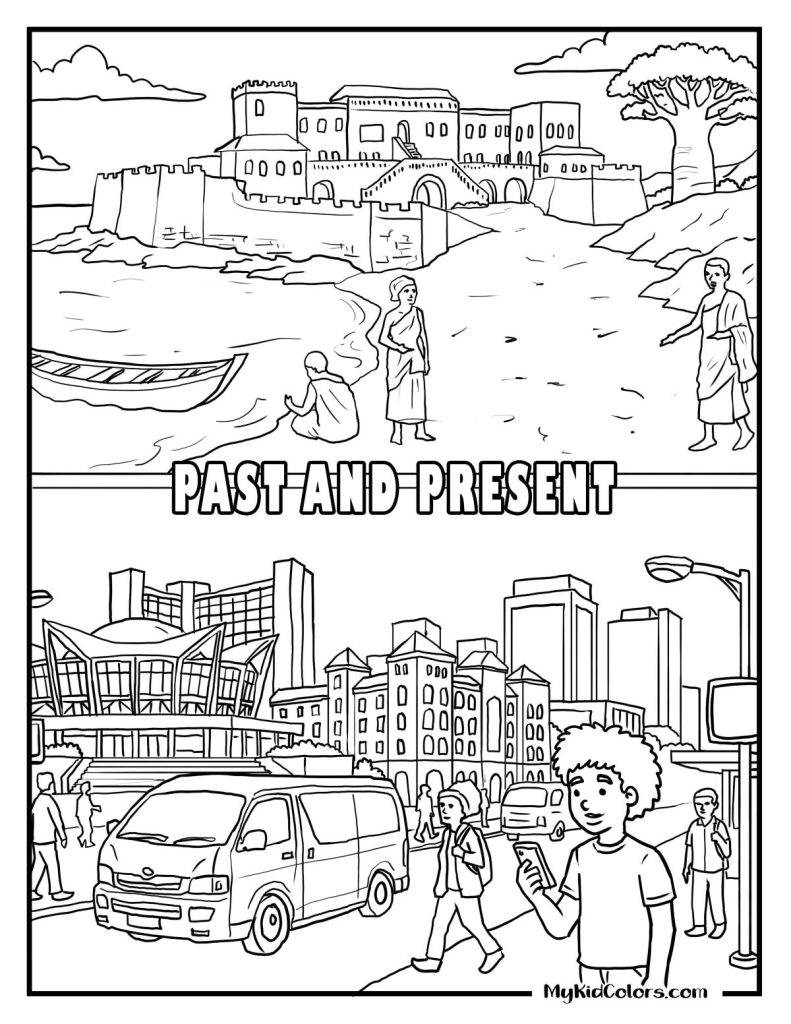
- For “Past and Present” (Page 14): “What differences do you see between the past and today, and what do you think stayed the same?”
The Collection: 15 Free Ghanaian Landmarks Coloring Pages
We have organized these into three sets to help you teach world geography and cultural awareness—from simple introductions to deeper understanding of history and identity.
For Little Hands: Discovering Ghana (Pages 1–5)
Best for toddlers and preschoolers. These pages focus on simple visuals, national symbols, and early recognition.
- Page 1: A welcoming “Welcome to Ghana” scene introduces the Ghana outline map and helps children begin recognizing the country through simple, bold shapes and friendly visuals.
- Pages 2 & 3: “Black Star Square” and “Cape Coast Castle” introduce important landmarks and early national symbols, helping children connect places with meaning and identity.
- Pages 4 & 5: “Lighthouse by the Sea” and “Kente Patterns” highlight coastal life and cultural design, making learning feel visual, creative, and easy to understand.


Understanding Culture & Daily Life (Pages 6–10)
Perfect for elementary kids. These pages explore leadership, community, and everyday life.
- Page 6: The Kwame Nkrumah Memorial introduces leadership and national pride, helping children understand important figures in Ghana’s history.
- Pages 7 & 8: “Elmina Castle” and “Market Day” connect history with daily life, showing both past experiences and present-day community activity.
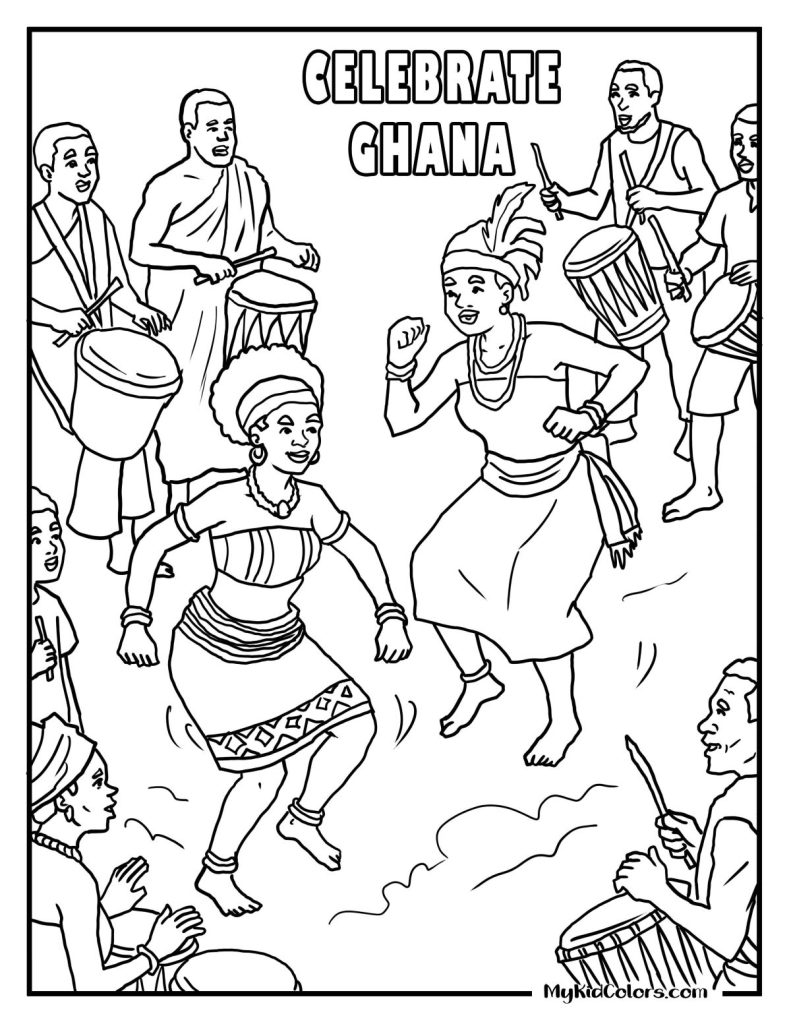
- Pages 9 & 10: “Coastal Life” and “Feel the Rhythm” highlight fishing communities and traditional drumming, bringing culture and lifestyle together through engaging scenes.


The Full Story & Identity Connection (Pages 11–15)
Designed for older kids or deeper reflection. These pages connect history, identity, and modern life.
- Page 11: “Accra Life” introduces city living and modern Ghana, helping children understand how culture evolves over time.
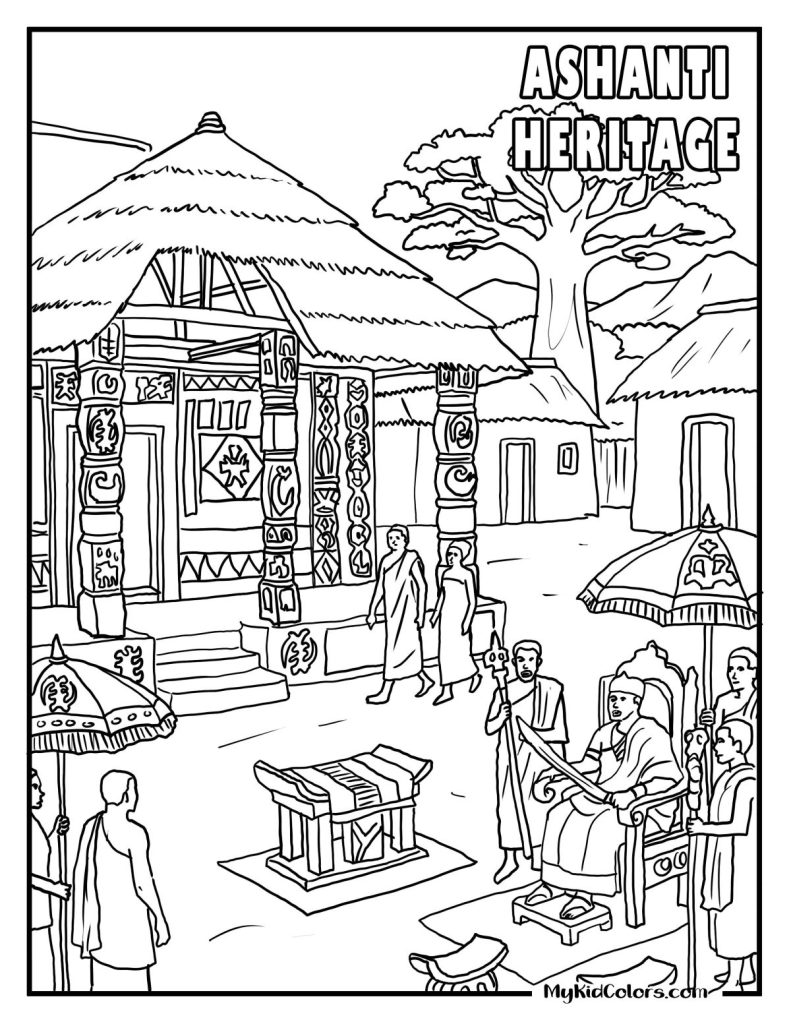
- Pages 12 & 13: “Ashanti Heritage” and “Celebrate Ghana” explore tradition, festivals, and cultural pride through detailed and meaningful scenes.
- Pages 14 & 15: “Past and Present” and the hero page bring everything together, connecting history, identity, and the idea that Ghana is a place of pride and legacy.


Perfect for Everyday Calm Activities & Homeschool
Teachers and parents love using these as Africa coloring pages for kids, world geography worksheets, and creative learning tools. Here are a few ways to extend the lesson:
- Map Exploration Activity: Use pages with the Ghana map outline, Ghana map silhouette, and Ghana flag coloring page to help children understand where Ghana is located and how maps represent real places.
- Story Sequencing: Combine Pages 1, 6, 11, and 15 to guide children through Ghana’s journey—from introduction to leadership, modern life, and identity.
- Create Your Own Landmark: Encourage kids to design their own landmark using ideas from the pages, combining simple line drawings and imagination to build creative confidence.
Why We Choose Hand-Drawn Over AI
When teaching about Ghana landmarks and culture, it’s important that children connect with what they see.
They should recognize real places, meaningful traditions, and everyday life in a way that feels familiar, engaging, and true. They should feel curiosity, pride, and connection as they learn.
At MyKidColors, we collaborate with real human illustrators—not machines. Every Ghanaian coloring page is thoughtfully created to reflect culture, identity, and lived experience.
Frequently Asked Questions
How can I use these pages to teach geography effectively?
Turn each coloring page into a mini geography lesson. After coloring, show the child where the place is on a map, introduce the country (like Ghana), and connect it with simple visuals such as the flag or outline map. This helps children link what they are coloring to real locations in the world, making learning more meaningful and memorable.
My family is Ghanaian-American — how do I use these to help my kids feel connected to home?
Pair each page with a memory or person. “This is the kind of cloth your grandma sends us at Christmas” (Page 5). “This is where Auntie Akua grew up” (Page 11). Pages aren’t enough on their own—the connection lives in the stories you add.
I’m teaching a Black History Month unit and want to include pre-colonial African civilizations beyond Egypt — does this fit?
Yes. The Ashanti Empire is one of the largest and most influential African civilizations and is regularly underrepresented in US curricula. Page 12 (Ashanti heritage) and Page 13 (festival) are the strongest fits for that unit. Pair with our Edo Kingdom set for a fuller pre-colonial picture.
My child asked what Cape Coast Castle was — how do I answer for an 8-year-old?
Honestly: “It’s a real place along the coast in Ghana. It’s beautiful from the outside, but very sad things happened there a long time ago—people were taken from their homes and forced onto ships. Many Black Americans today have ancestors who left from here.” Don’t over-explain. Let their next question lead. Page 7 is the right page to color while having that conversation.
Download Your Free Set
Learning about the world becomes more meaningful when children can see it, explore it, and connect with it.
Click below to download the free, hand-drawn Ghana coloring pages. The coloring sheets will be sent directly to your inbox.
You Might Also Like
- 15 Africa Coloring Pages That Show Kids the Continent
- 15 Free Nigerian Landmarks Coloring Pages (Printable PDFs)
- 15 Free African Coloring Pages for Kids (Free PDF Printable)
- 15 Free African Musical Instruments Coloring Pages for Kids
- 15 Free Kenyan Landmarks Coloring Pages Beyond Safari Animals

