
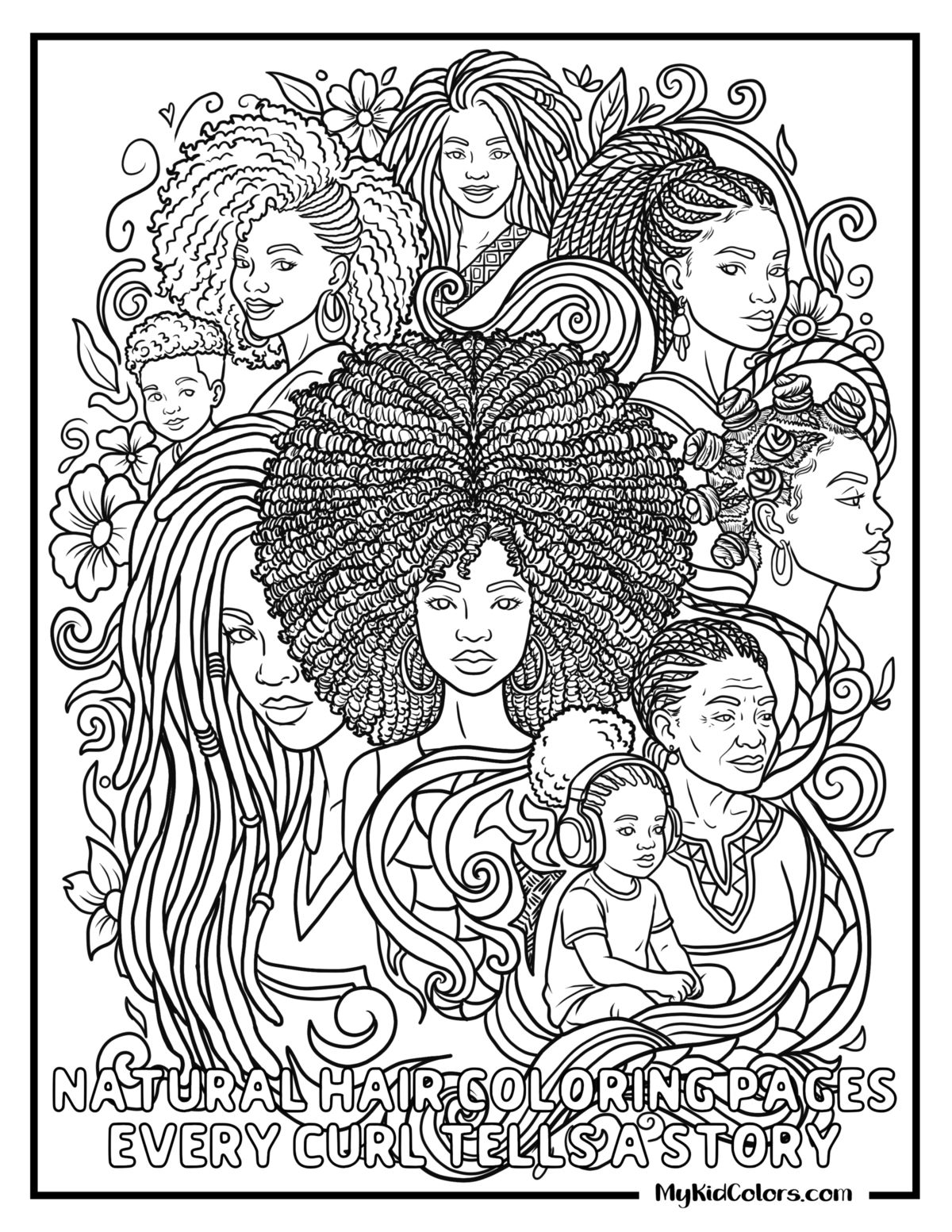
15 Free Natural Hair Coloring Pages That Help Kids Celebrate Identity, Beauty, and Self-Love
Most coloring pages show hair—but not our hair.
Children don’t just learn about identity by being told… they learn by seeing themselves reflected.
These natural hair coloring pages are designed to help kids recognize their beauty, celebrate their uniqueness, and feel proud of who they are—from afros and braids to twists and locs.
Instead of generic hair coloring pages for kids, this set blends Black hair coloring pages, afro coloring pages, braids coloring pages, and meaningful everyday moments into something children can truly connect with.

Less searching. More MEANINGFUL moments.
When kids recognize themselves on the page, coloring changes.
The Inclusive Family Coloring Collection includes 25 human-drawn illustrations centered on everyday moments — designed to make inclusion feel normal, joyful, and intentional.
Because representation shouldn’t be reserved for one month.
A Note from Louisa (Founder of MyKidColors)
Coming soon…
Conversation Corner: 3 Questions to Ask While Coloring
Turn this activity into a bonding moment. While your child colors, try asking these questions:
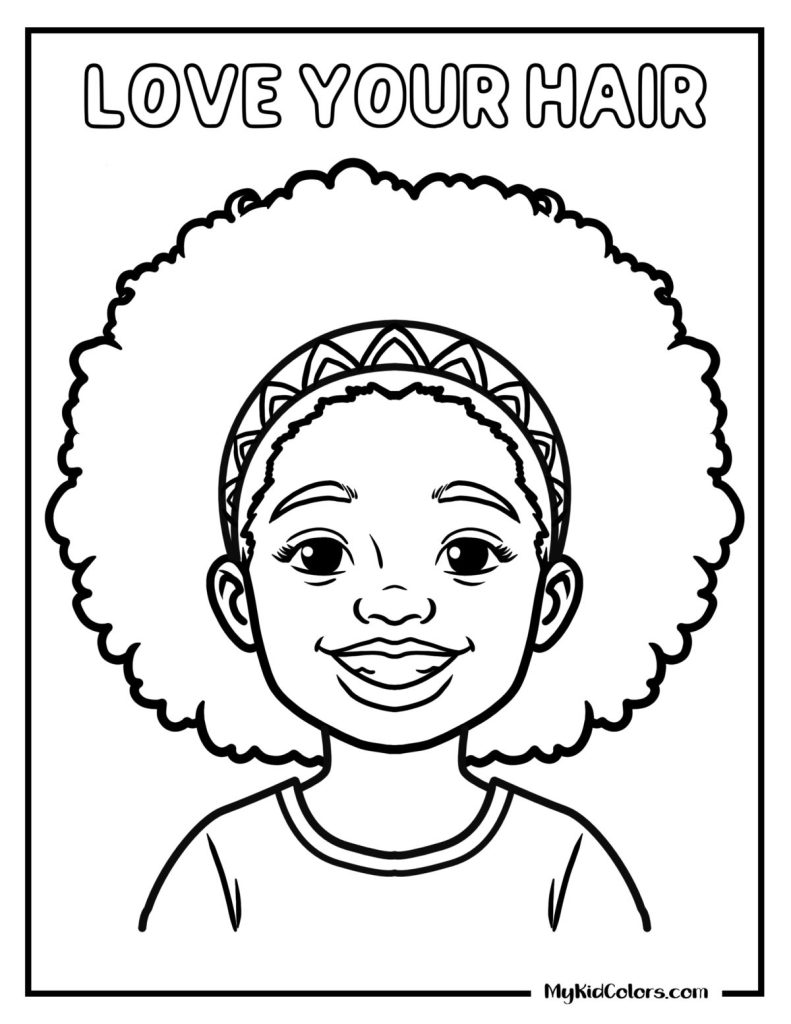
- For “Love Your Hair” (Page 1): “What do you love most about your hair, how does it make you different from others in a beautiful way, and how do you feel when you take care of it?”
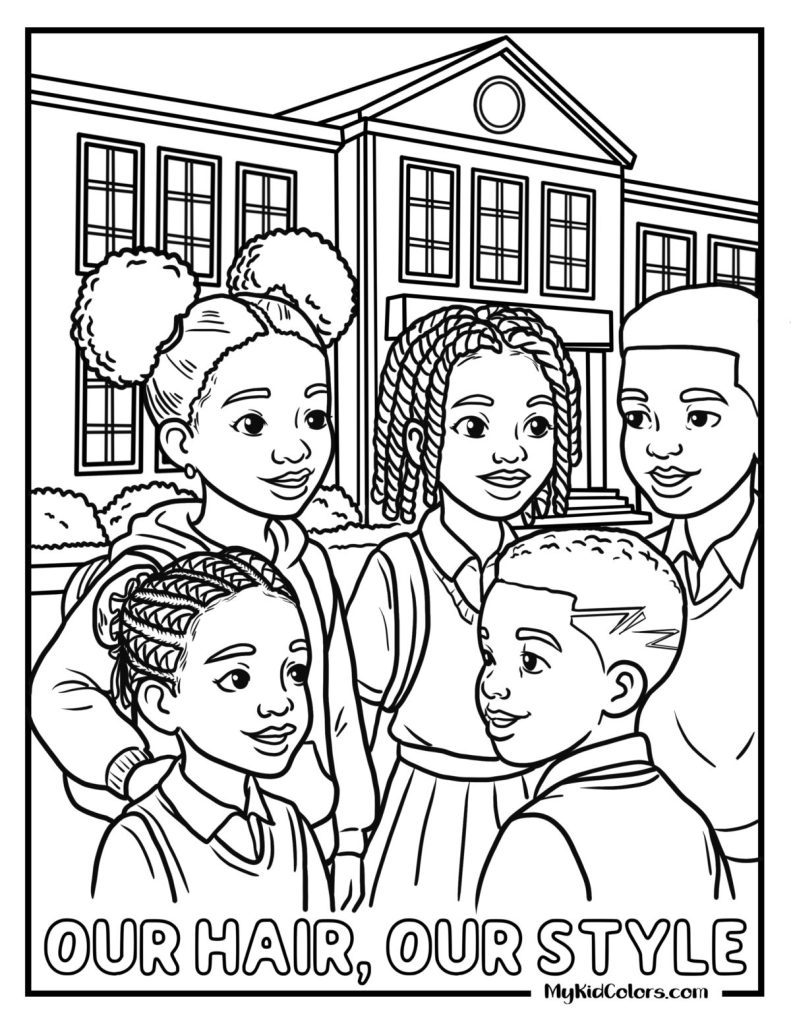
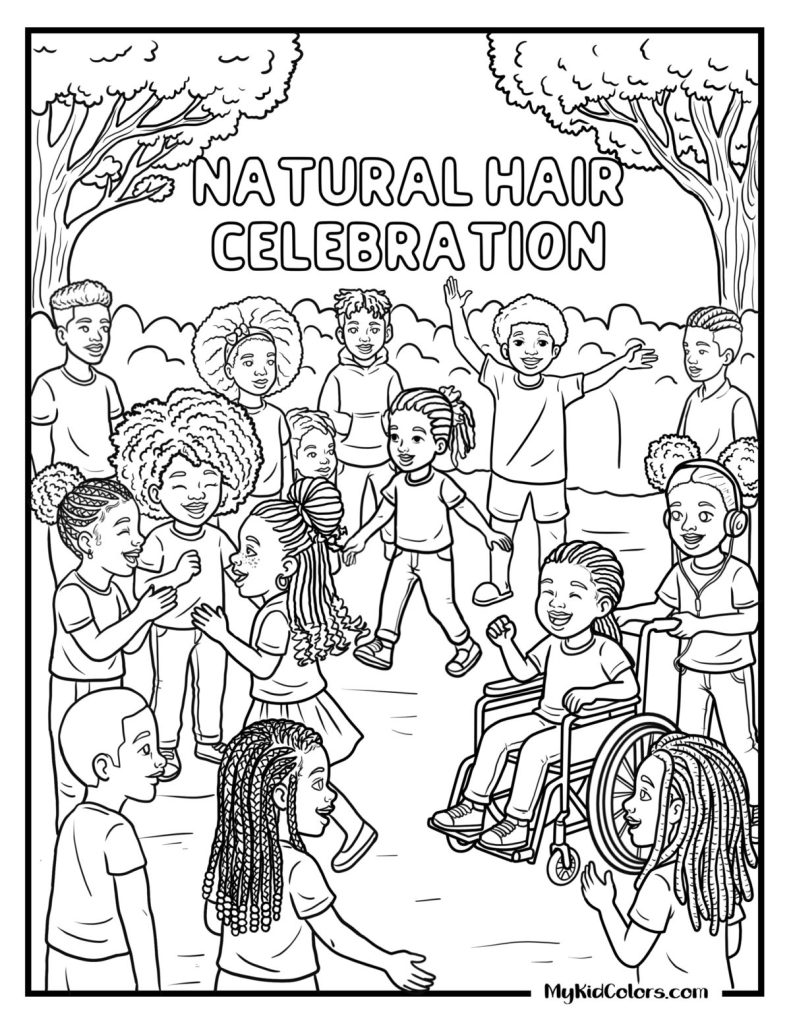
- For “Our Hair, Our Style” (Page 7): “Why do you think people have different hair textures and styles, what styles do you enjoy the most, and how can we celebrate everyone’s uniqueness?”
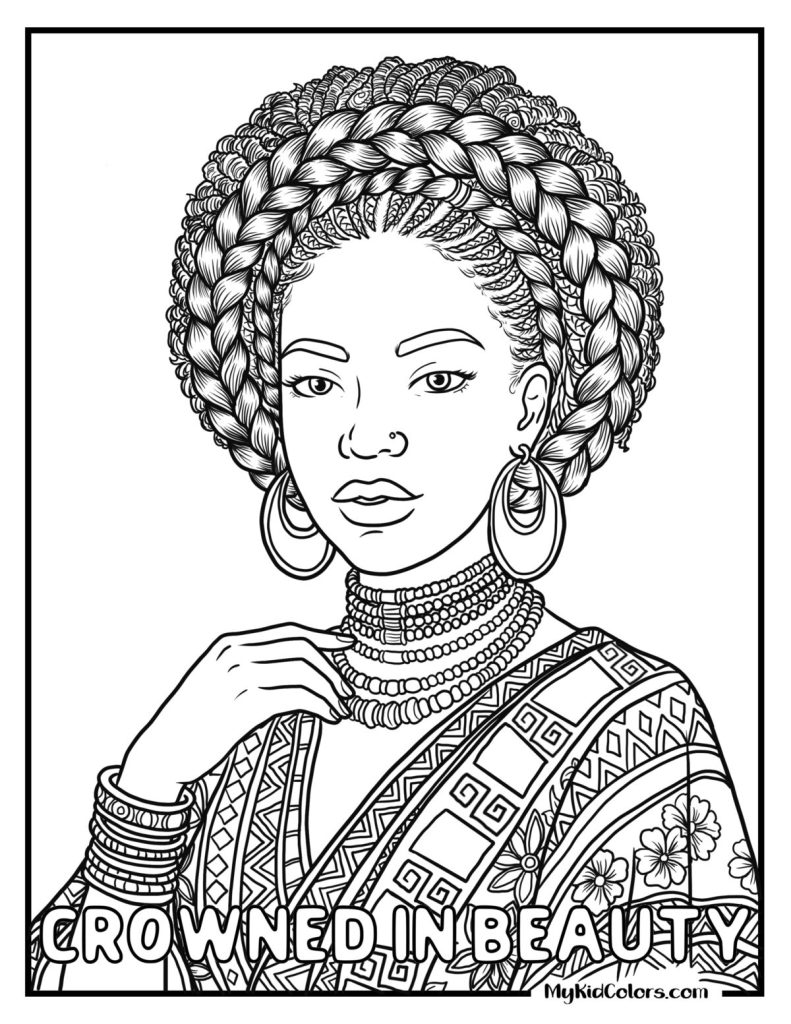
- For “Crowned in Beauty” (Page 14): “What does it mean to feel proud of who you are, how does your hair connect to your identity, and how can you show confidence in your own way every day?”
The Collection: 15 Free Natural Hair Coloring Pages
We have organized these into three sets to help you teach identity, self-expression, and cultural pride—from awareness to confidence and celebration.
For Little Hands: Discovering My Hair (Pages 1–5)
Best for toddlers and preschoolers. These pages focus on recognition, self-love, and simple everyday moments using hair coloring pages for kids, afro coloring pages, and curly hair coloring pages.
- Page 1: A joyful portrait with a big afro and the affirmation “Love Your Hair” helps children begin with self-acceptance and pride.
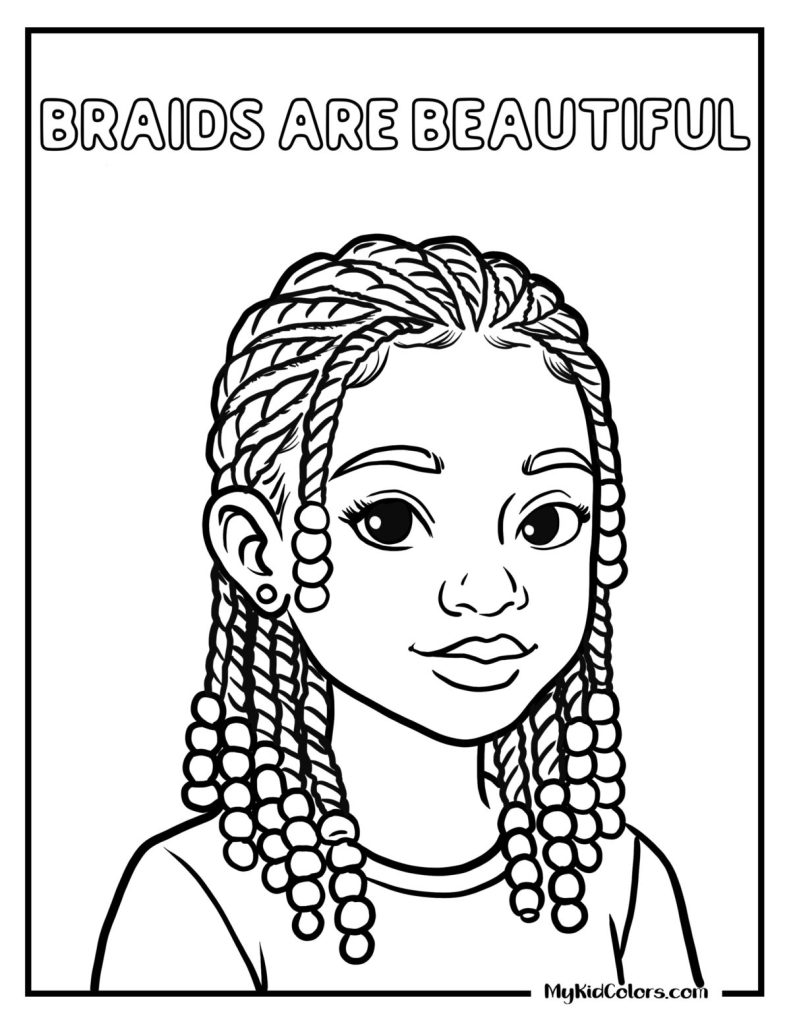
- Pages 2 & 3: Braids with beads and puff hairstyles introduce children to natural styles in a fun and relatable way.
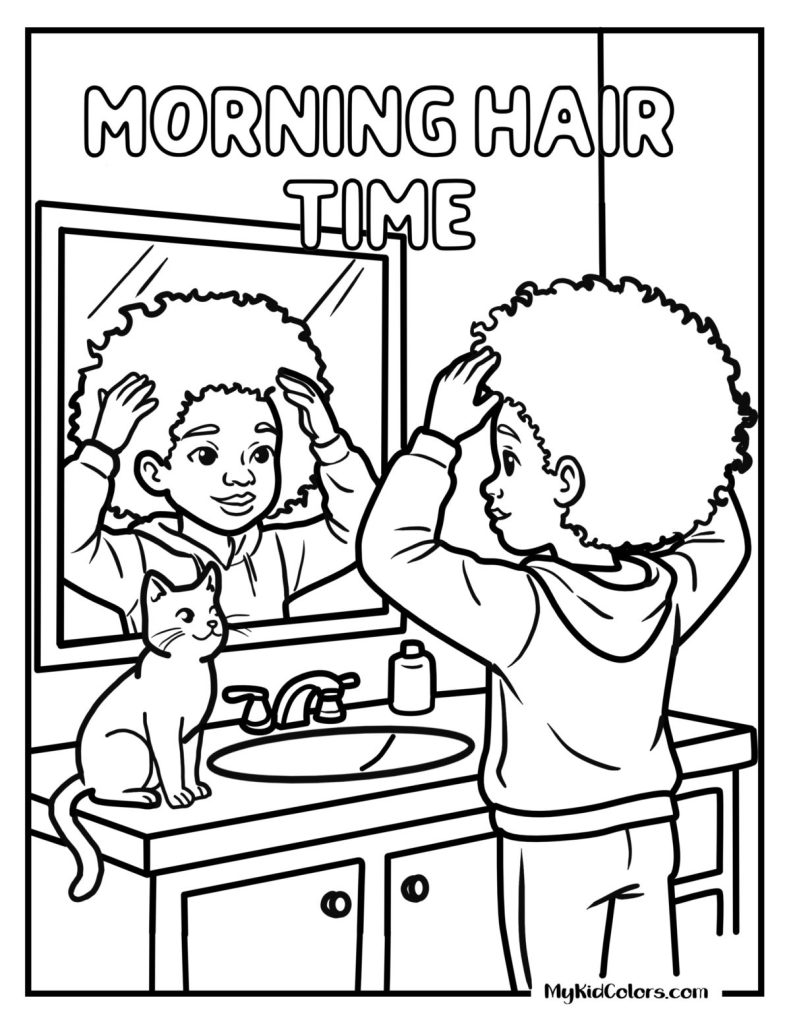
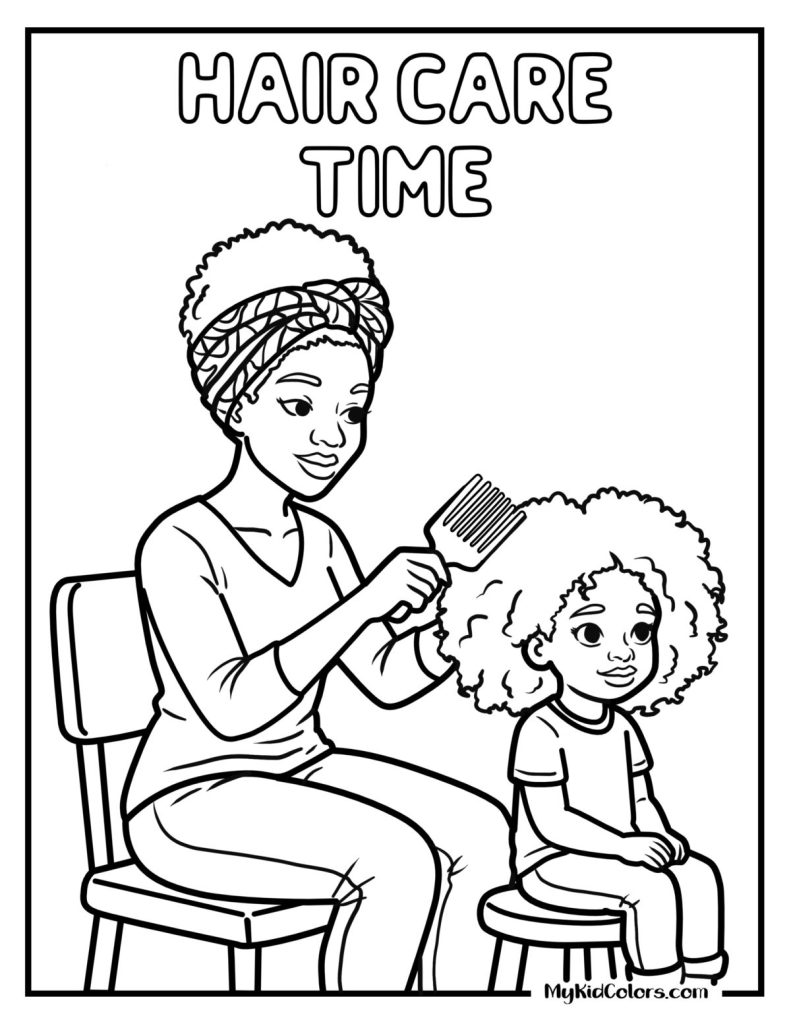
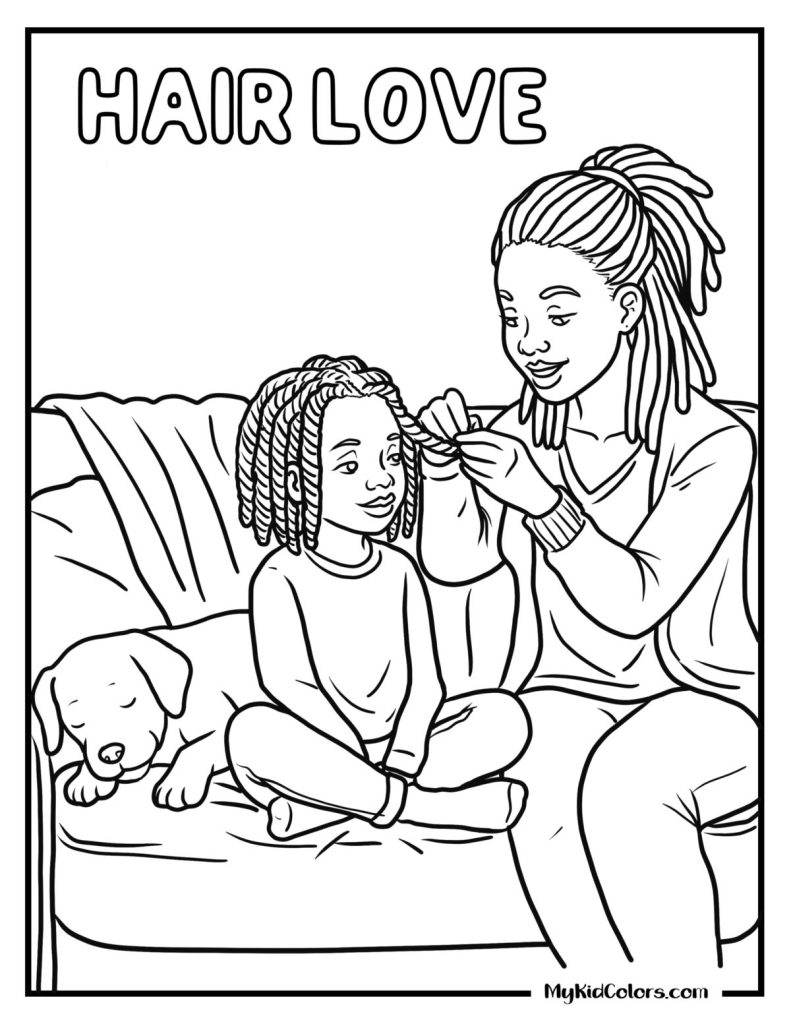
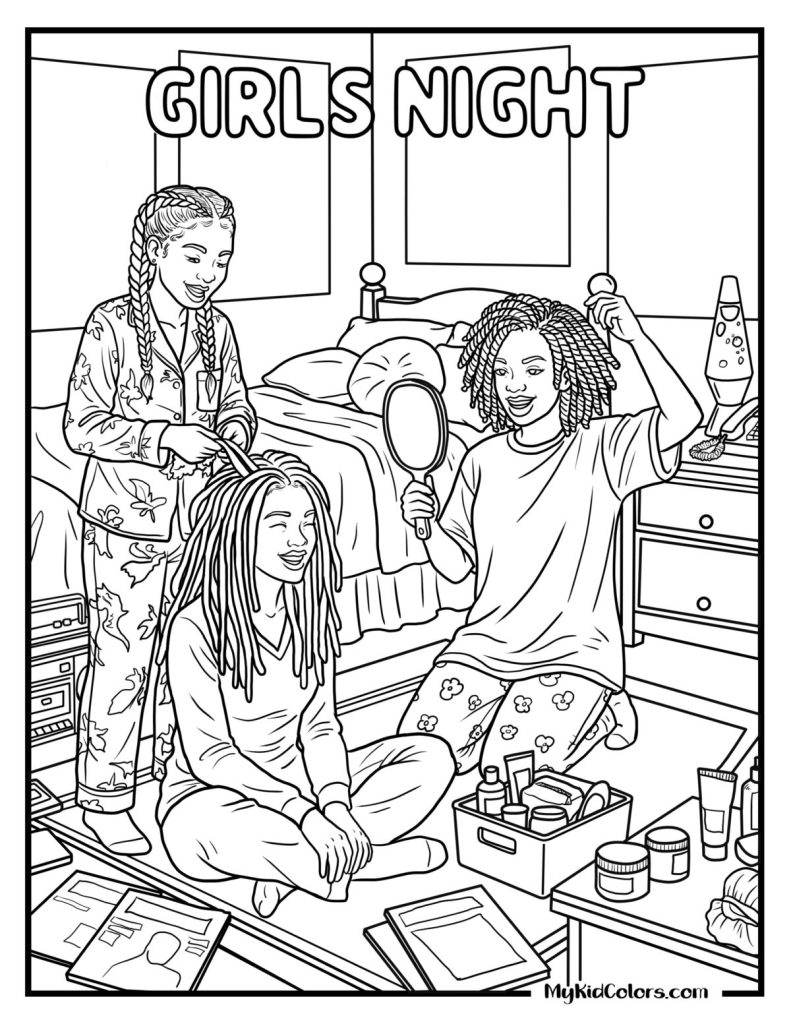
- Pages 4 & 5: Everyday routines like mirror moments and hair care time help children connect hair with love, care, and family bonding.

Growing in Identity: Hair in Everyday Life (Pages 6–10)
Perfect for preschool and early elementary kids. These pages bring real-life experiences and representation into learning.
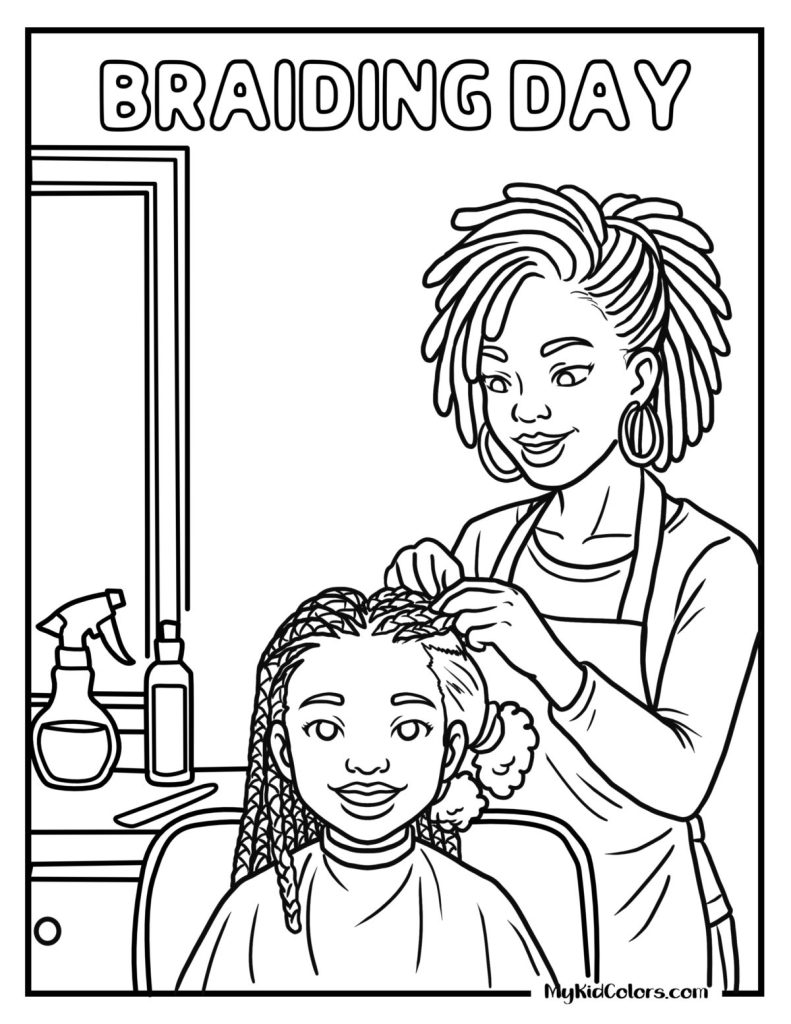
- Page 6: A hair salon braiding scene introduces cultural routines and community connection through hair care.
- Pages 7 & 8: School and play scenes show kids confidently wearing different hairstyles, reinforcing inclusion and self-expression.
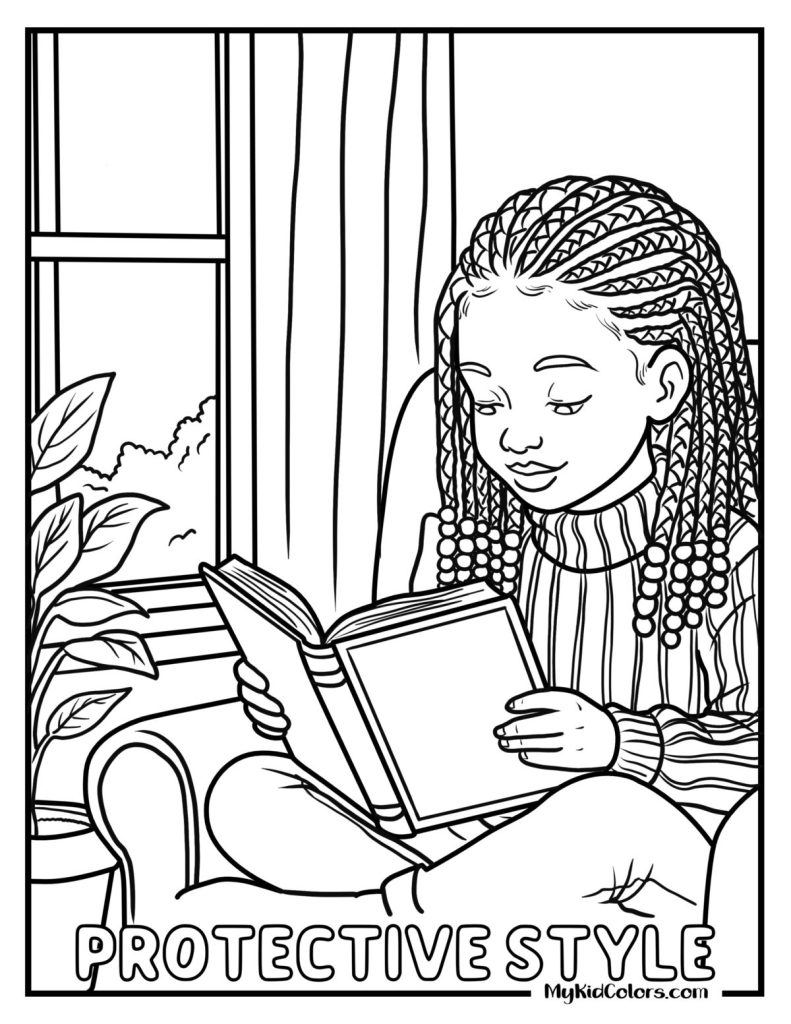
- Pages 9 & 10: Protective styles and family care moments teach children the importance of maintenance, love, and tradition.

Celebration & Expression: The Full Story (Pages 11–15)
Designed for older kids or deeper reflection. These pages highlight creativity, identity, and cultural pride.
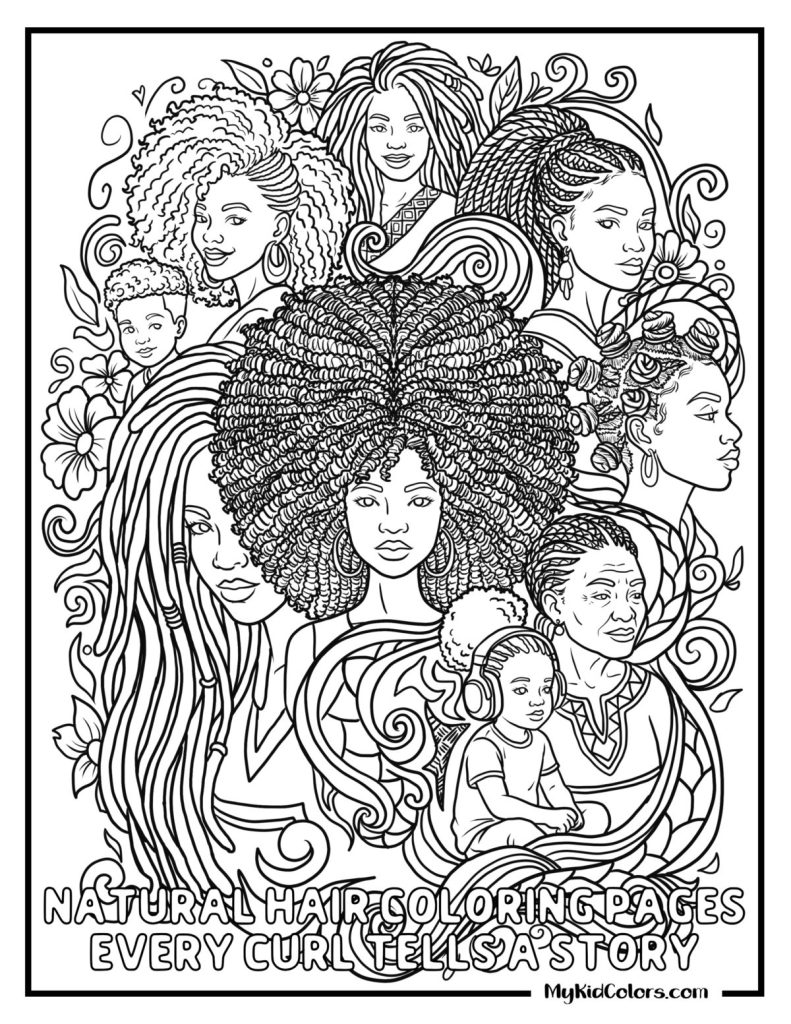
- Page 11: A vibrant natural hair celebration shows many hairstyles together, reinforcing diversity and unity.
- Pages 12 & 13: Creative and artistic scenes transform hair into storytelling and design, encouraging imagination.
- Pages 14 & 15: Cultural pride portraits and the hero page bring everything together, showing that every curl, braid, and coil tells a story.

Perfect for Creative Learning & Homeschool
Parents and teachers love using these as hair coloring pages, afrocentric coloring pages, hairstyle coloring pages, and identity-based art activities for kids. Here are a few ways to extend the lesson:
- Hair Storytelling Activity: Let children describe their hair journey—who styles it, how it feels, and what styles they love—using pages like “Hair Love” and “Morning Hair Time.”
- Style Recognition Game: Use different pages to identify hairstyles like braids, afros, twists, and locs while building vocabulary and cultural awareness.
- Create Your Own Style Page: Encourage children to draw and design their own hairstyle inspired by the coloring pages to build creativity and self-expression.
Why We Choose Hand-Drawn Over AI
When it comes to natural hair and identity, the details show.
Kids should be able to see themselves caring for their hair, trying styles, and moving through everyday moments that feel familiar. Twists, locs, puffs, braids. Wash day. Getting ready. Playing, learning, just being.
They should also see joy, creativity, pride, and ease in faces and textures that reflect their world.
That’s why every page at MyKidColors is created with real illustrators. Thoughtfully drawn with care, lived perspective, and attention to what makes each moment feel true.
Because sometimes it’s not about the big story. It’s about the small, everyday scenes that quietly feel right.
Frequently Asked Questions
How can I use these coloring pages to teach children about different hairstyles?
Use each page to introduce a hairstyle—afro, braids, twists, locs—and talk about how they are created and cared for, helping children build knowledge and appreciation.
Are these suitable for older kids or teens?
Yes. The more detailed pages work well as coloring pages for teens and adults, especially those interested in art, fashion, and identity expression.
How can I extend learning beyond coloring?
Turn the pages into a discussion or journaling activity where children describe their hair, their favorite styles, and what makes them feel confident and unique.
Download Your Free Set
The more children see themselves, the more they believe in themselves. Join our family for free, hand-drawn inclusive pages sent to your inbox.
You Might Also Like
- 15 Free Melanin Coloring Pages That Build Pride and Belonging
- 15 Free Nigerian Landmarks Coloring Pages Featuring Famous Places in Nigeria
- 15 Then and Now Coloring Pages That Show Kids How Everyday Life Has Changed
- 15 Free Reading Coloring Pages That Help Kids Fall in Love with Books
- 15 Free Big Feelings Coloring Pages That Teach Kids Emotional Awareness and Calm
- 15 Teachers’ Day Coloring Pages That Teach Kids Gratitude, Respect & Appreciation

