
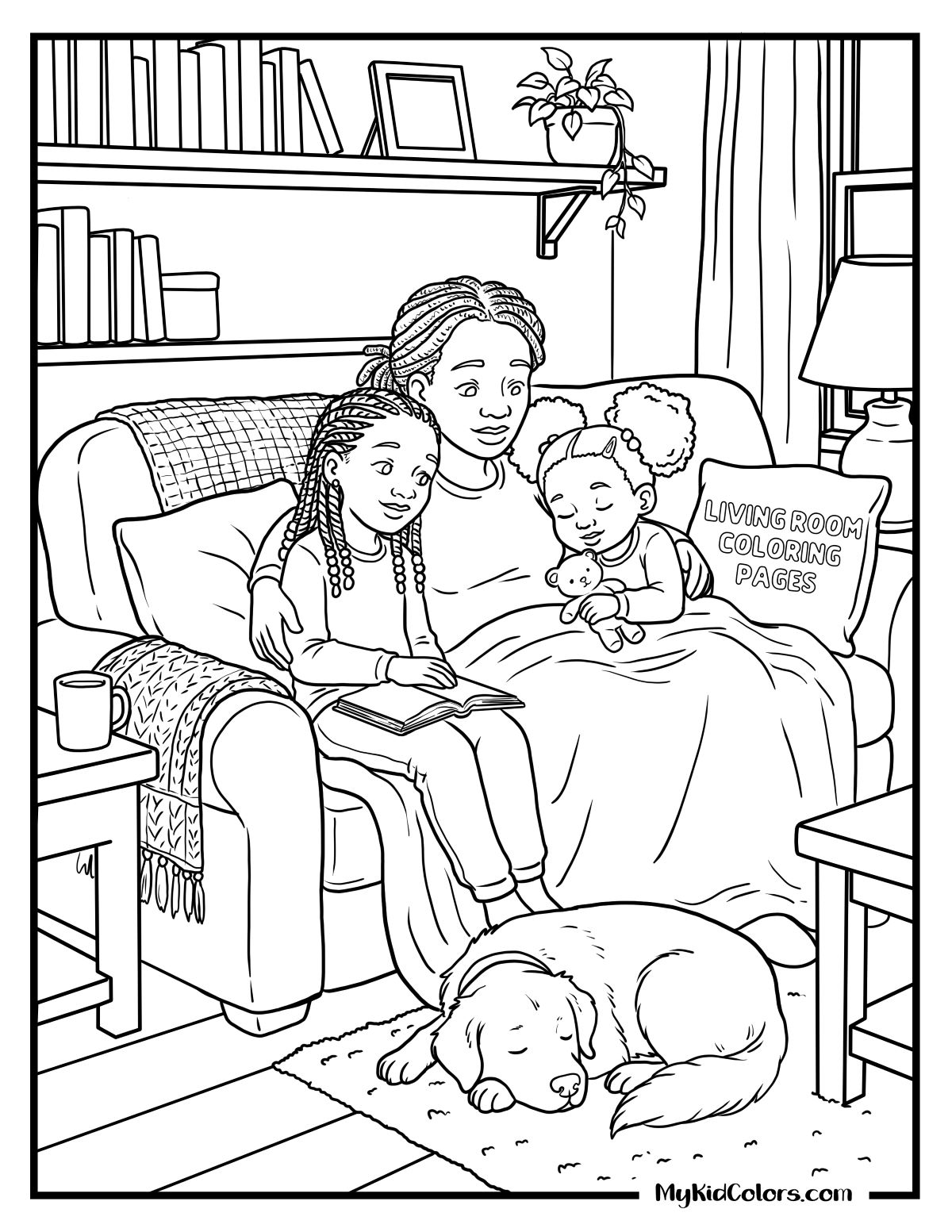
15 Free Living Room Coloring Pages Where Every Family Looks a Little Like Yours
Living rooms are where family life actually happens. Not the posed parts — the real parts. A toddler treating her stuffed animal like a patient. Two siblings turning couch cushions into a castle. A child lost in a book while the dog snores nearby.
These free living room coloring pages were designed for those moments. Every page in this set features a Black or brown child in a scene that feels lived-in and familiar — not a staged interior, not a furniture catalog. Whether your child is two or ten, there is a page here that looks like their world.
Print them. Color them. Tape them on the fridge. These are their stories.
A Note from Louisa (Founder of MyKidColors)
The living room and kitchen in my childhood home were where everything happened. You could smell the jollof rice from down the hall — that was the signal to come gather.

Less searching. More MEANINGFUL moments.
When kids recognize themselves on the page, coloring changes.
The Inclusive Family Coloring Collection includes 25 human-drawn illustrations centered on everyday moments — designed to make inclusion feel normal, joyful, and intentional.
Because representation shouldn’t be reserved for one month.
We’d eat at the dining table or in the living room, TV on, everyone talking at once. Those weren’t fancy rooms. But they hold most of my memories.
Now I watch my own daughter carry her little security blanket through our living room, feeding it, talking to it, trying to teach it how to dance. Different country, different decade, same room.
Turns out, childhood looks like this no matter where you’re from — messy, warm, and happening on the couch.
Conversation Corner: 3 Questions to Ask While Coloring
Turn this activity into a bonding moment. While your child colors, try asking these questions:
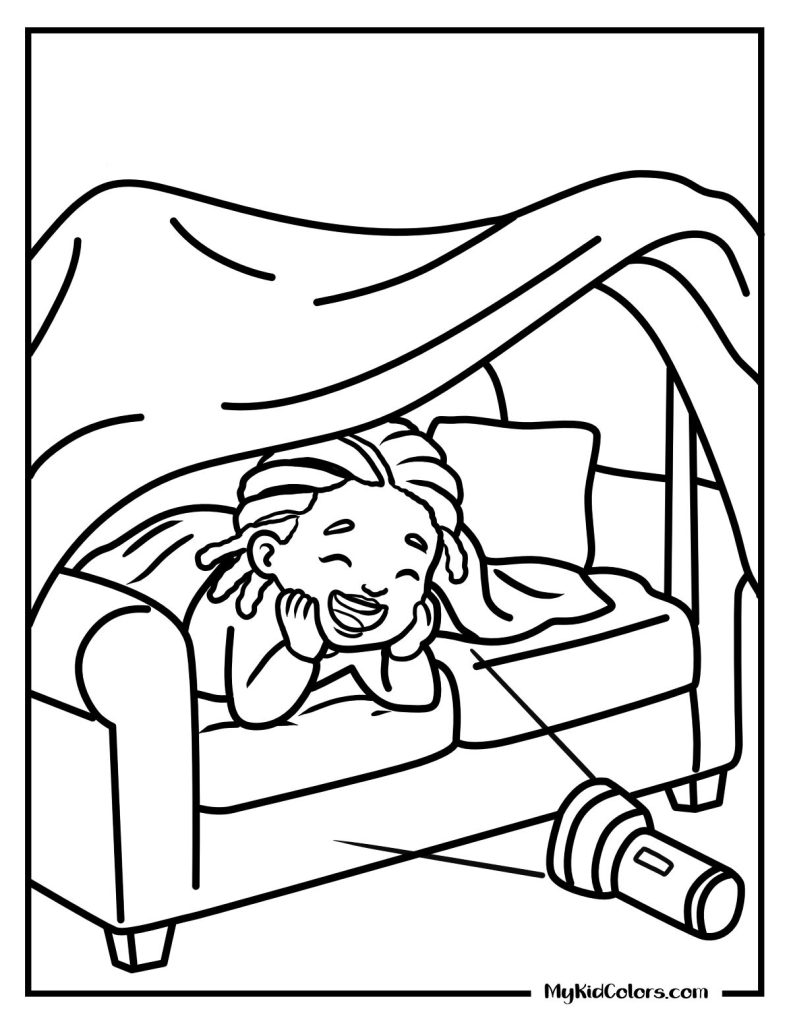
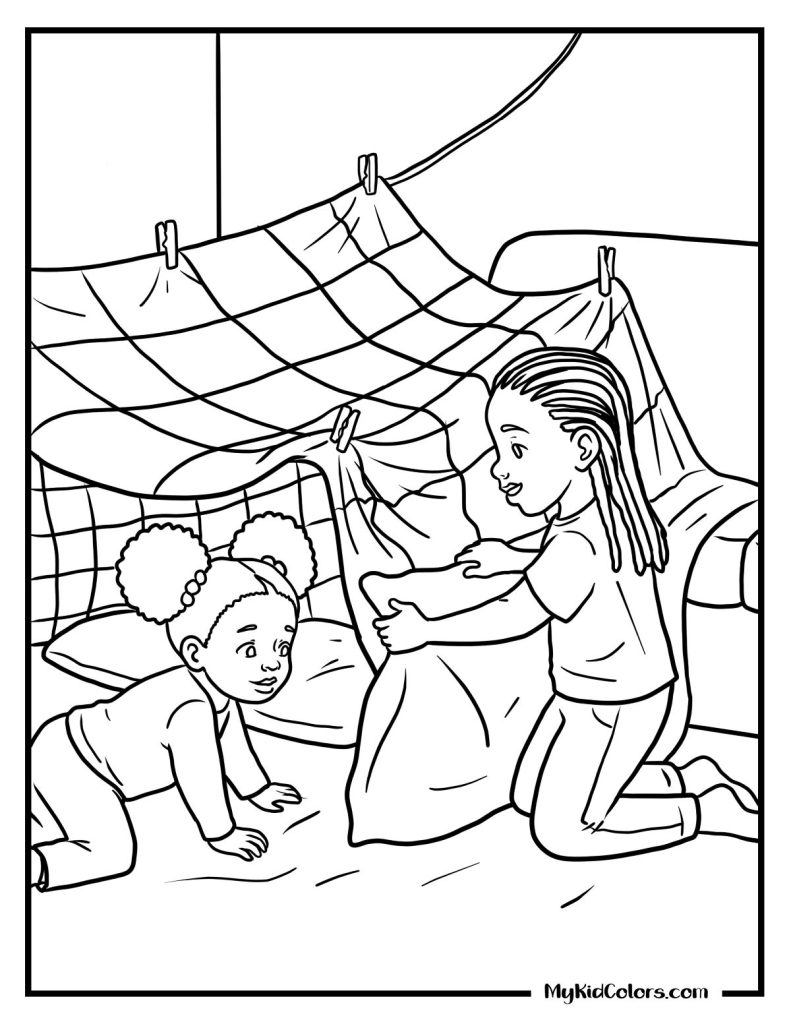
- For “Blanket Fort Adventure” (Page 7): “If you could build the ultimate blanket fort, what special rooms would it have inside?”
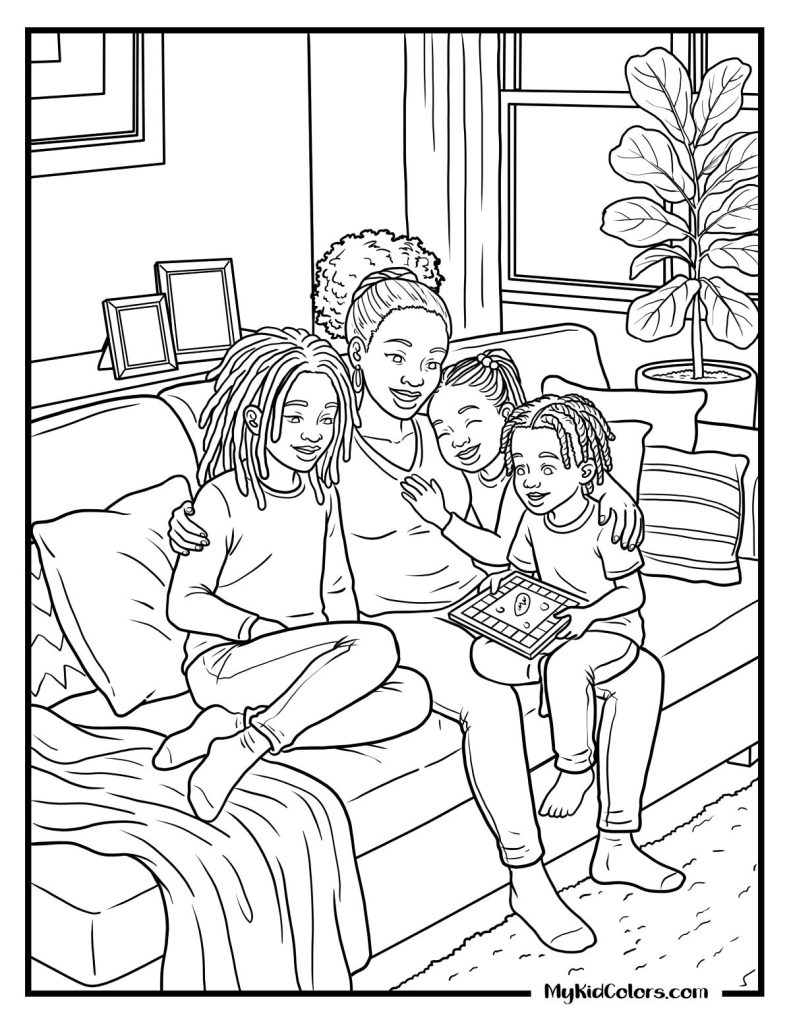
- For “Family Gathering” (Page 12): “What is your favorite thing to do together as a family?”
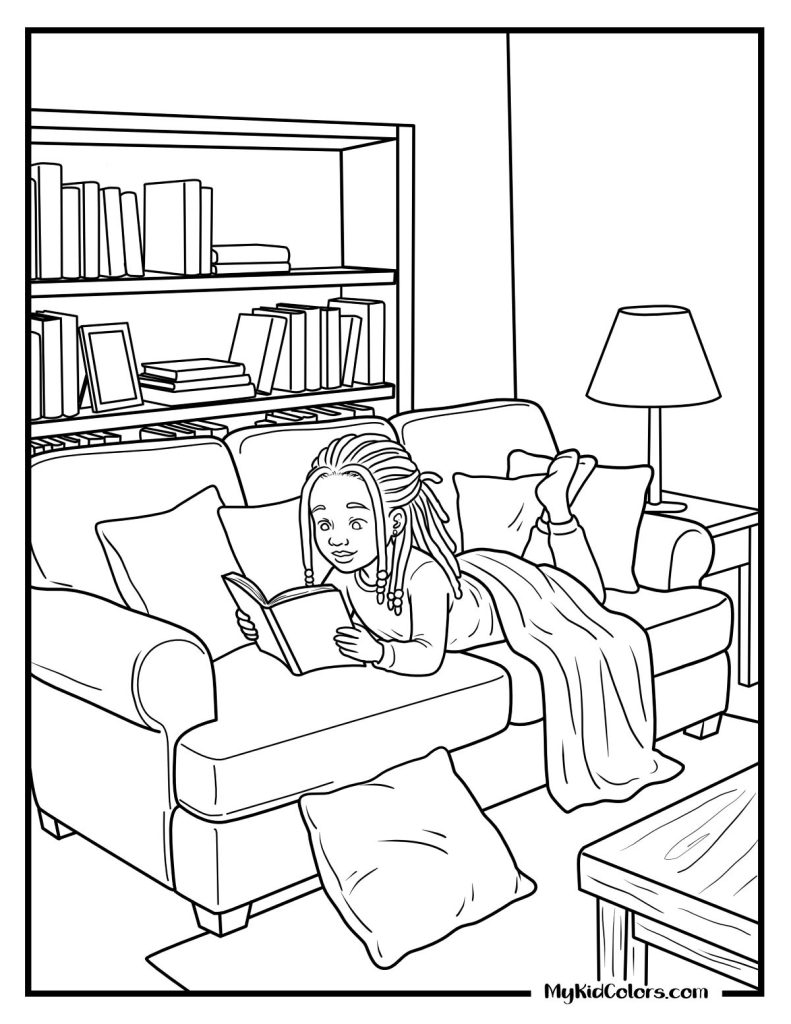
- For “Cozy Reading Corner” (Page 11): “If you could spend an entire day reading any book you wanted, what would you choose?”
The Collection: 15 Free Living Room Coloring Pages
We have organized these into three sets to help children explore what makes a home feel welcoming—from simple moments of comfort to family connection and belonging.
For Little Hands: Cozy Everyday Moments (Pages 1–5)
Best for toddlers and preschoolers. These pages focus on comfort, family connection, and simple indoor activities.
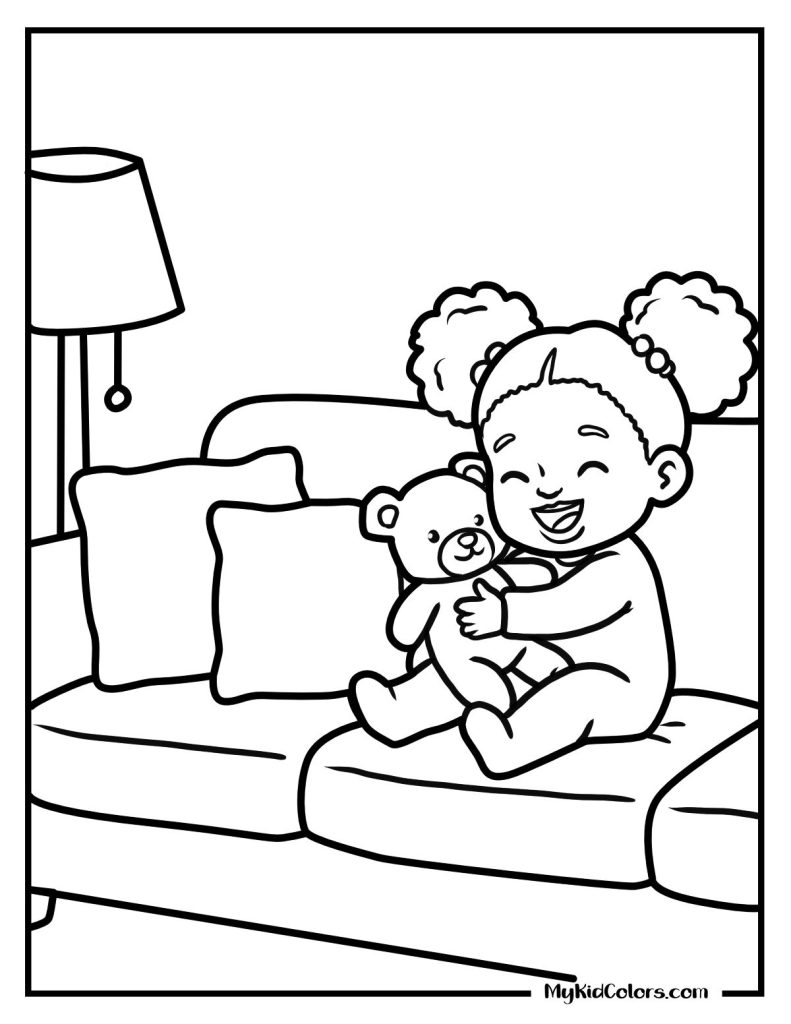
- Page 1: Couch and Teddy Bear Cuddles — A happy toddler relaxing with a favorite stuffed animal introduces children to cozy living room spaces and feelings of safety and comfort.
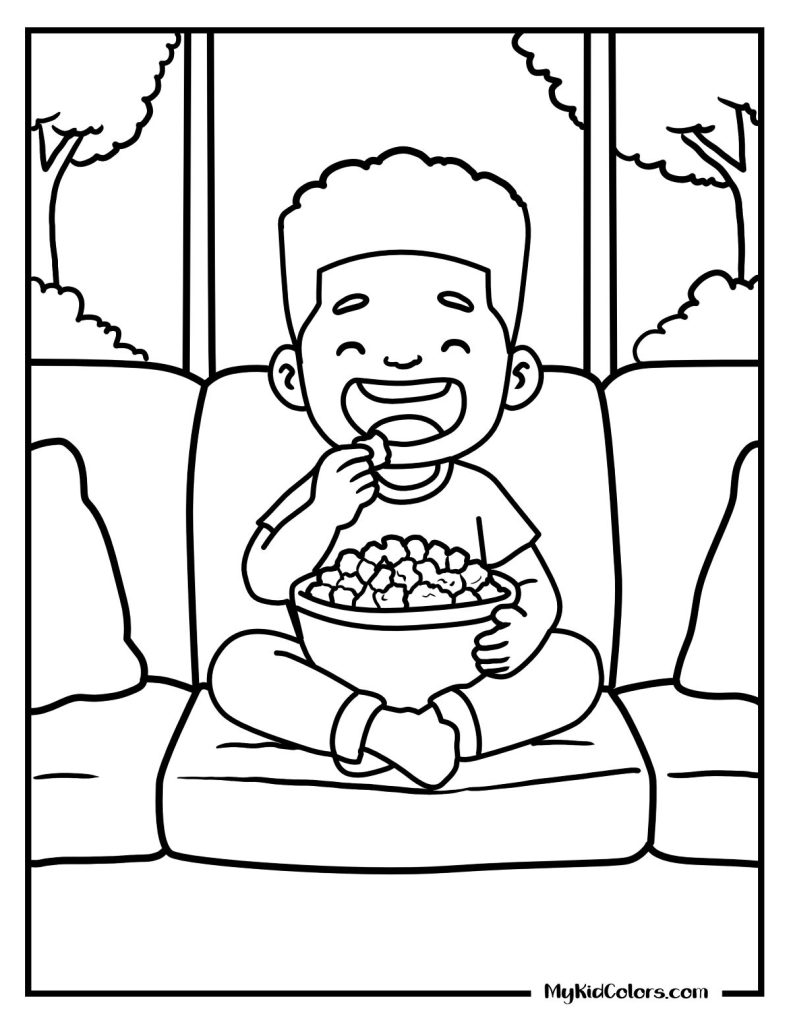
- Pages 2 & 3: Blanket Fort Fun + Popcorn Movie Time — A playful blanket fort and a cheerful movie snack moment celebrate imagination, creativity, and family fun at home.
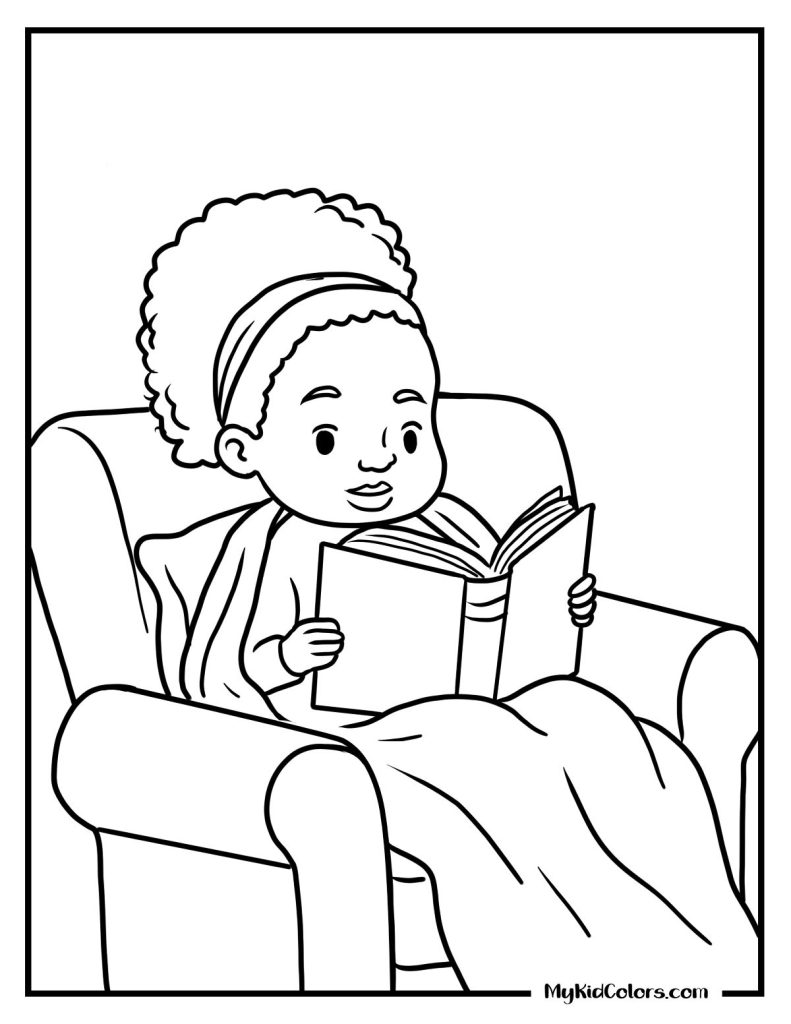
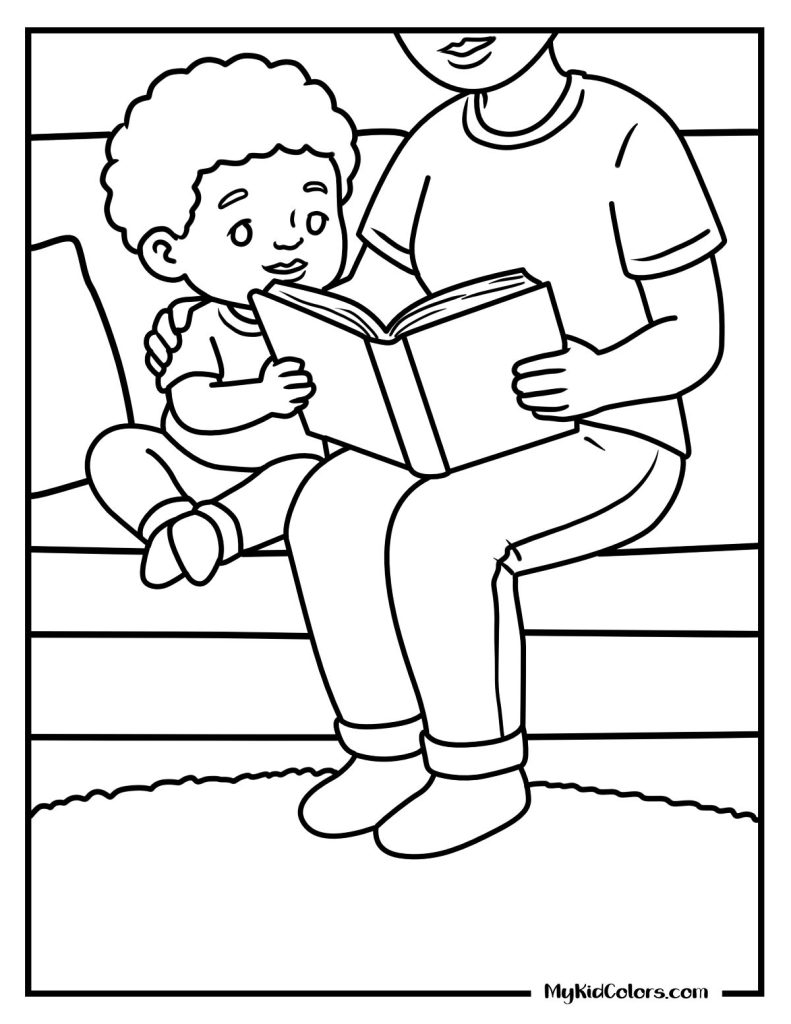
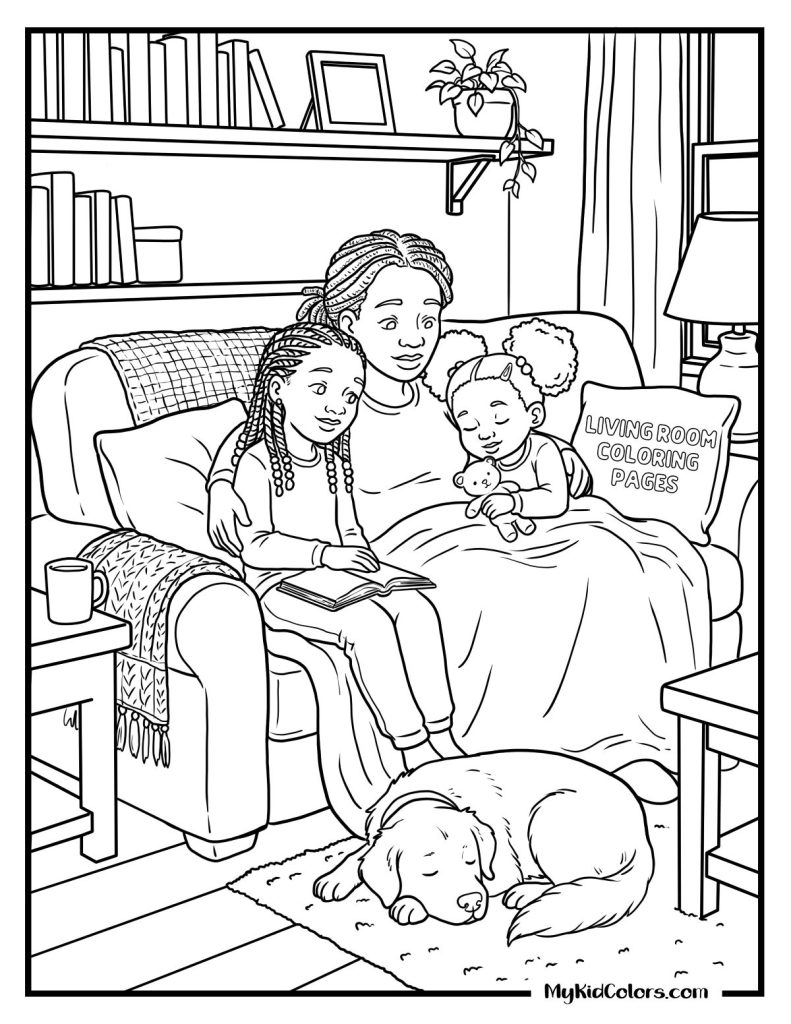
- Pages 4 & 5: Reading Chair Retreat + Story Time Together — A peaceful reading corner and a caregiver sharing a book highlight the importance of literacy, connection, and quiet moments.
Living Rooms as Gathering Spaces (Pages 6–10)
Perfect for elementary kids. These pages celebrate companionship, play, and belonging.
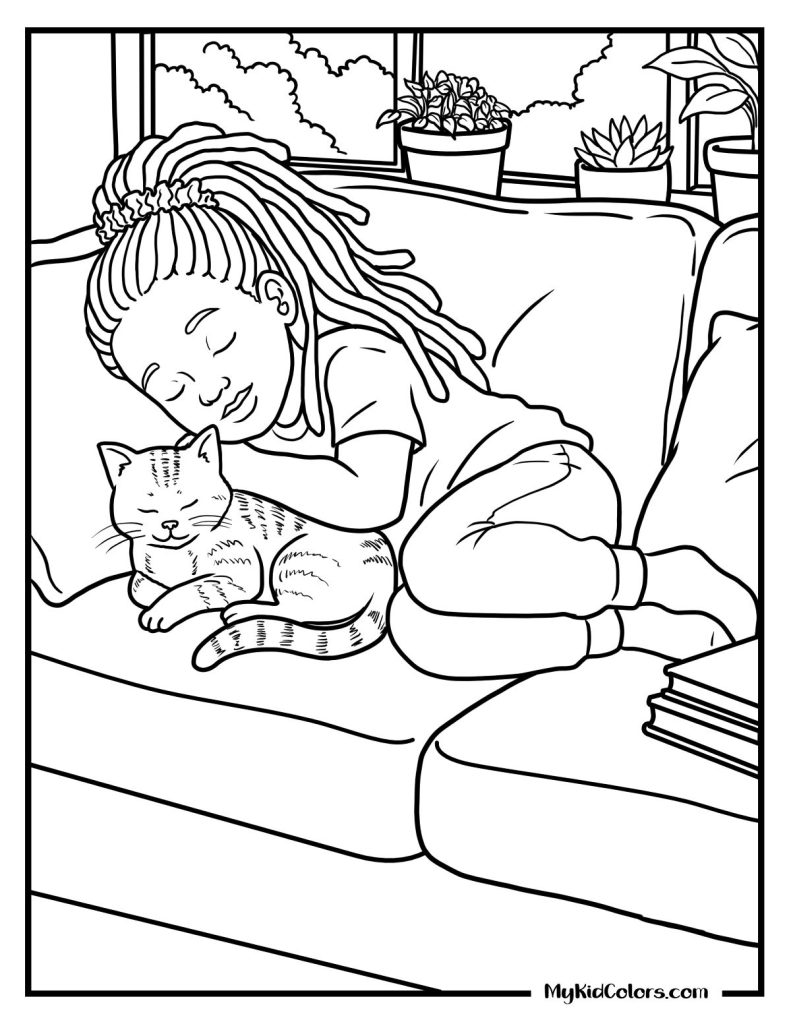
- Page 6: Reading with a Cat Companion — A cozy afternoon with a pet and a favorite book showcases comfort, relaxation, and quiet friendship.
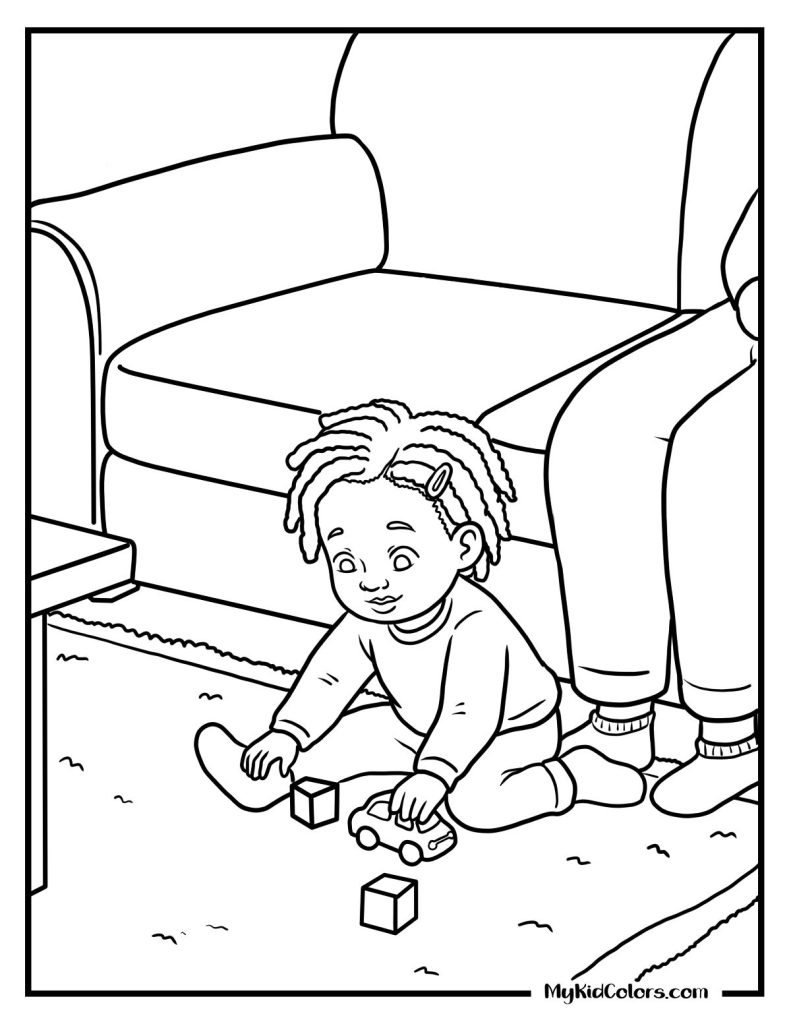
- Pages 7 & 8: Sibling Blanket Fort + Floor Play Adventure — Children working together on a fort and a child immersed in imaginative play demonstrate creativity, cooperation, and joyful exploration.
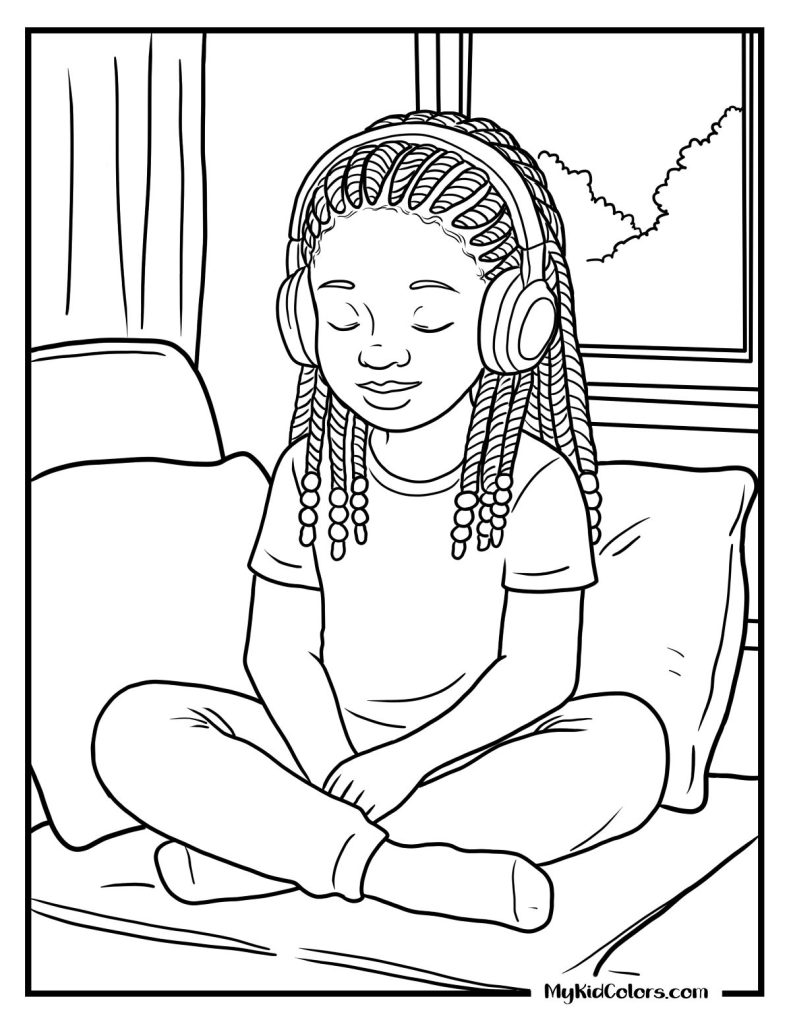
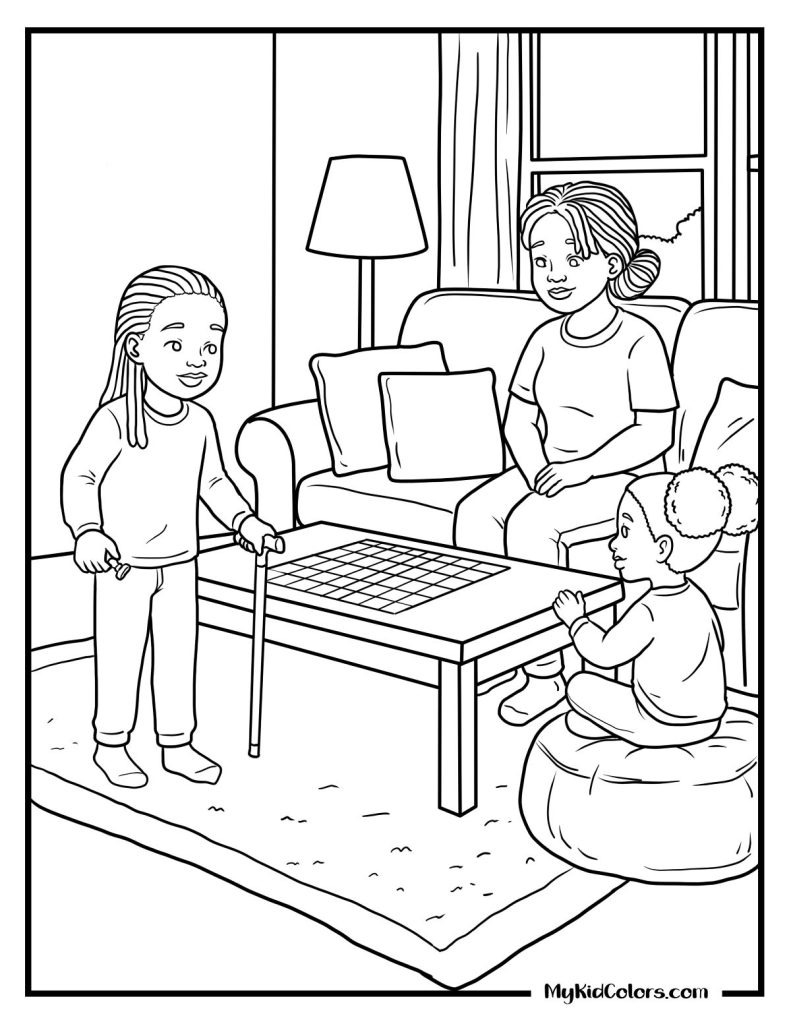
- Pages 9 & 10: Music and Relaxation + Inclusive Family Game Time — A calming music moment and an accessible family activity scene show how living rooms support both personal comfort and shared experiences.
From Cozy Spaces to Family Belonging (Pages 11–15)
Designed for older kids or quiet reflection. These scenes celebrate reading, family relationships, accessibility, and the meaning of home.
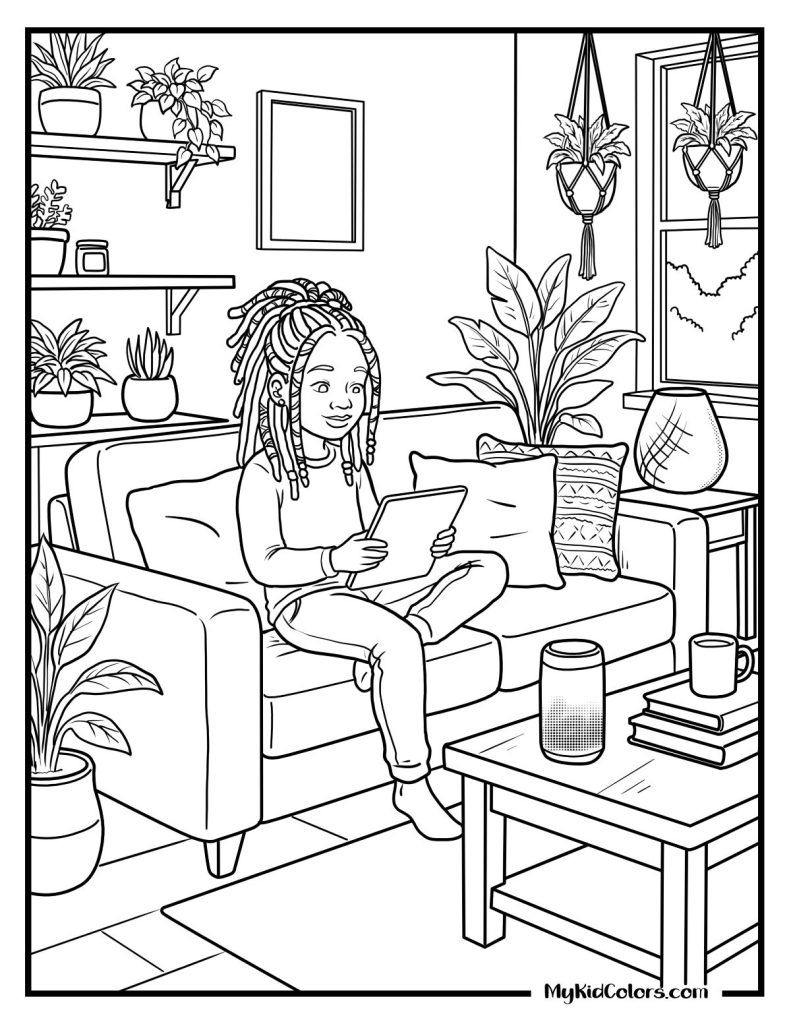
- Page 11: Cozy Reading Sanctuary — A child completely absorbed in a book surrounded by pillows and shelves highlights the living room as a place for imagination and learning.
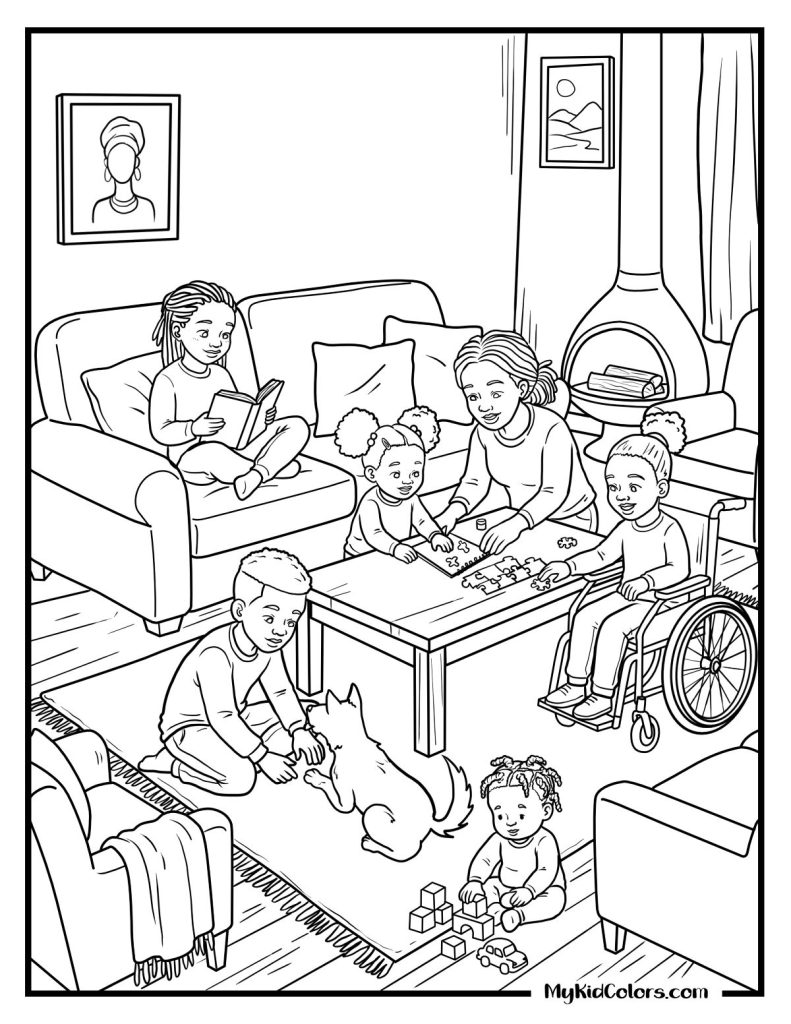
- Pages 12 & 13: Family Togetherness + Busy Living Room Wimmelbilder — A warm family gathering and a detailed scene full of simultaneous activities show how living rooms become the heart of family life.
- Pages 14 & 15: Modern Cozy Living + Hero Family Moment — A contemporary cultural living room and a heartwarming family scene celebrate connection, belonging, and the comfort of being together.
Perfect for Cozy Family Time, Homeschool Home Units & SEL Conversations
- Parents of toddlers and early readers (ages 2–8) who want printable activities that reflect their child’s everyday world — not just holidays or lesson themes.
- Homeschool families running a home or community unit — Pages 5, 10, and 12 work especially well as discussion anchors for lessons about family roles, routines, and belonging.
- SEL facilitators and school counselors — the headphones page (Page 9), the mobility aid page (Page 10), and the family gathering page (Page 12) open natural conversations about comfort, inclusion, and full participation.
- Children’s ministry leaders and VBS teachers using the themes of home, family, or hospitality — these pages work alongside lessons about community, belonging, and being seen.
Why We Use Human Illustrators
Living rooms are personal. The exact way a child tucks their legs underneath them on a couch, the dog curled at someone’s feet, the angle of a picture book in small hands — these details matter because children notice them.
Our illustrator drew every page in this set by hand. You can see it in the afro puffs framing a toddler’s face on the sofa, and in the careful warmth of a parent reading aloud. These pages weren’t generated. They were made for families who know that real life looks different than stock art.
Frequently Asked Questions
My child pointed at one of these pages and said “that looks like me.” What do I say?
That’s exactly the moment these pages were made for. You can simply say, “I wanted to find coloring pages that looked like our family.” Then let them keep coloring. You don’t need a lesson — the page is already doing the work. Some of the most powerful moments happen quietly, while crayons are still moving.
Which pages work best for teaching children about accessibility and inclusion?
Pages 10 and 13 are especially valuable because they show children with different abilities participating fully in family activities. They provide natural opportunities to discuss inclusion, empathy, and how families and communities can create welcoming spaces for everyone.
Can these pages be used for social-emotional learning activities?
Absolutely. Many scenes focus on comfort, relaxation, family relationships, and emotional well-being. Pages 4, 6, 9, and 11 are particularly useful for discussing self-care, quiet activities, emotional regulation, and creating personal spaces where children feel safe and calm.
Grab Your Free Living Room Coloring Pages
Print the living room scene that feels most like your home today — the blanket fort, the couch snuggle, the reading chair, or the toy-covered floor.
These pages are a gentle reminder that ordinary family rooms often hold the memories kids carry longest.
You Might Also Like
- 15 Free Family Coloring Pages Kids See Themselves In (PDF)
- 15 Free Bedroom Coloring Pages Where a Real Child Actually Lives
- 15 Free Furniture Coloring Pages Where Kids Are the Main Character
- 15 Free Cozy Coloring Pages (Hand-Drawn PDF Printables)
- 15 Free Movie Night Coloring Pages for the Kids Who Won’t Sit Still

