

15 Free Native American Coloring Pages That Celebrate Living Cultures, Family & Community
Some of the most meaningful lessons a child learns never come from a textbook.
They come from watching a grandparent patiently teach a new skill. Listening to a story told around a fire. Helping plant a garden. Celebrating a community achievement. Seeing adults work together to preserve traditions while building a better future.
These free Native American coloring pages were created to celebrate those moments.
Not the version of Native Americans that many adults remember from old history books. Not simplified symbols or one-size-fits-all traditions. Real people. Real communities. Real families living full, vibrant lives today.

Less searching. More MEANINGFUL moments.
When kids recognize themselves on the page, coloring changes.
The Inclusive Family Coloring Collection includes 25 human-drawn illustrations centered on everyday moments — designed to make inclusion feel normal, joyful, and intentional.
Because representation shouldn’t be reserved for one month.
A Note from Louisa (Founder of MyKidColors)
I spent five years living in Alaska, and one of the moments I still think about is interviewing a colleague about her life as an Alaska Native woman. Before we even started talking, she dressed me in her kuspuk. It wasn’t a performance for me — it was her, specifically, sharing something specific to her family and her nation.
That’s the same instinct behind this set. Native life in this country isn’t one story or one image. It’s hundreds of nations, each with their own patterns, foods, and everyday moments worth showing a child.
Conversation Corner: 3 Questions to Ask While Coloring
Turn this activity into a bonding moment. While your child colors, try asking these questions.
- For “Stories Around the Campfire” (Page 8): “Long before books were common, many Indigenous communities shared history, values, and traditions through storytelling. If someone in our family could tell you one story from their childhood, who would you choose? What kinds of stories do you hope your family tells about you one day?”
- For “Heritage & New Beginnings” (Page 5): “This page shows someone preserving a traditional craft while another person works in a modern career. How can people honor where they come from while still following new dreams? Is there something your family has taught you that you’ll always want to remember?”
- For “Native America Is Alive” (Page 15): “Every community changes over time while keeping traditions alive. What do you notice about the families, artists, students, and leaders on this page? Why do you think it’s important to learn about people as they live today—not only how they lived long ago?”
The Collection: 15 Free Native American Coloring Pages
We’ve organized these into three collections to help children explore Indigenous life—from everyday family moments to cultural traditions, leadership, and the communities that continue to thrive today.
For Little Hands: Family, Home & Growing Together (Pages 1–5)
Best for toddlers and preschoolers. These pages celebrate childhood, family relationships, caring for the land, and the traditions that shape everyday life.
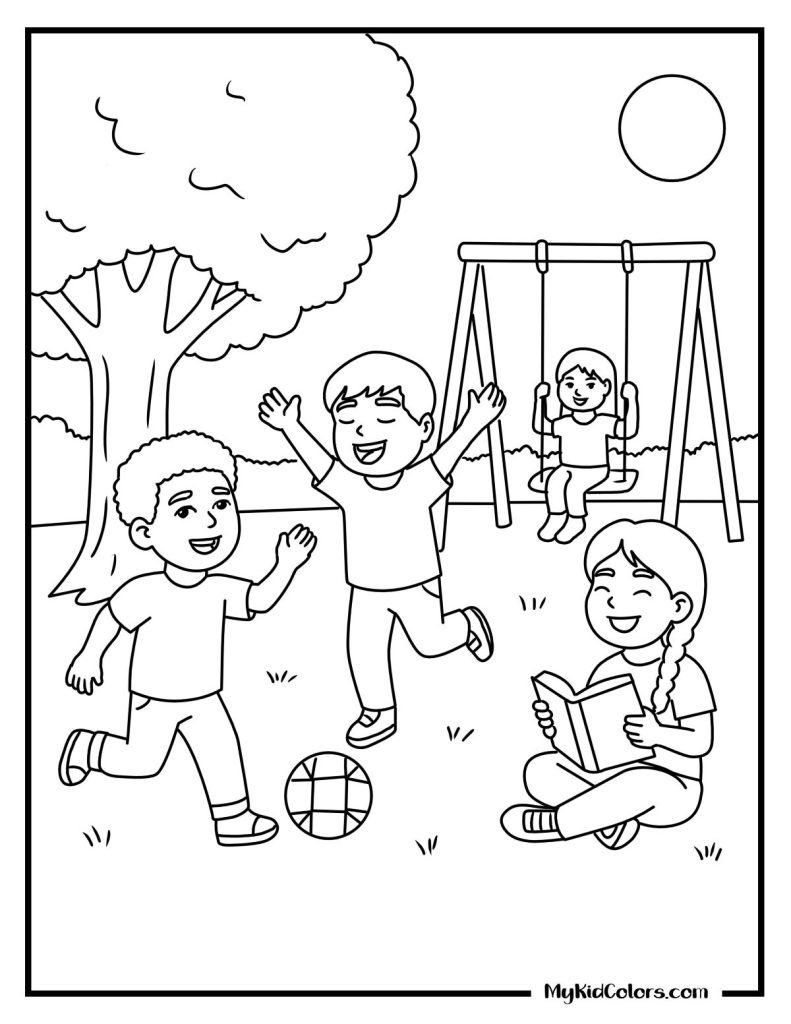
- Page 1: Community Park Day — Four children laugh, play soccer, read together, and swing beneath the sunshine, reminding us that childhood joy looks wonderfully familiar across every culture.
- Pages 2 & 3: Three Generations + Family Together — Grandmothers, parents, babies, and young children stand together in scenes that celebrate the strength of family, cultural identity, and the wisdom passed from one generation to the next.
- Pages 4 & 5: Growing Together + Heritage Meets Tomorrow — Gardening, harvesting, basket weaving, and modern careers beautifully illustrate that honoring tradition and embracing the future can exist side by side.


Creativity, Culture & Community (Pages 6–10)
Perfect for elementary-aged children. These illustrations celebrate craftsmanship, storytelling, celebration, learning, and the many ways Indigenous knowledge continues to be shared today.
- Page 6: Artists at Work — Pottery and weaving remind children that beautiful art often begins with patience, practice, and generations of shared knowledge.
- Pages 7 & 8: Celebration Dance + Stories by the Fire — Traditional dancing, drumming, and storytelling highlight how music, movement, and oral traditions help communities preserve culture while bringing people together.
- Pages 9 & 10: Harvest Celebration + Student Success — Families proudly gather the fruits of their labor while students celebrate academic, athletic, artistic, and personal achievements that strengthen their communities.


Leadership, Wisdom & Living Heritage (Pages 11–15)
Designed for older children and quiet reflection. These pages celebrate Indigenous leadership, civic engagement, lifelong learning, and the many ways Native communities continue to shape the future.
- Page 11: Indigenous Leaders Then & Now — Historical leaders stand beside modern scientists, educators, speakers, and professionals, showing children that leadership continues to grow across every generation.
- Pages 12 & 13: Wisdom Shared + Community Leadership — Elders teach traditional knowledge while community members participate in local democracy, reminding children that every voice has the power to strengthen a community.
- Pages 14 & 15: Quiet Reflection + Native America Is Alive — A peaceful moment beside a flowing river leads into a joyful community celebration where families create art, learn together, and proudly declare that Native cultures continue to flourish today.


Perfect for Native American Heritage Month, Meaningful Classrooms & Family Conversations
- Parents of children ages 3–10 who want more than stereotypical “Pilgrims and Indians” activities will find something refreshingly different here. These pages center Native families as they are today—raising children, celebrating milestones, creating art, preserving traditions, and contributing to their communities. They invite children to appreciate Indigenous cultures through everyday life rather than outdated caricatures.
- Homeschool families exploring Indigenous history, geography, or cultural studies can use Pages 4 and 5 to discuss caring for the land, sustainability, and how traditions continue across generations. Pages 10 and 11 naturally extend into conversations about education, leadership, and the many ways Indigenous people continue shaping science, government, healthcare, and the arts.
- Libraries, museums, and community organizations can use Pages 7, 8, and 15 during cultural celebrations. Traditional music, storytelling, and community gatherings naturally encourage children to ask questions about Indigenous cultures while recognizing that Native traditions continue to evolve today.
- School counselors and SEL facilitators may especially appreciate Pages 3, 8, and 14. A grandmother comforting a baby, an elder sharing stories around a fire, and a young girl quietly reflecting beside a river create gentle opportunities to discuss identity, resilience, gratitude, emotional wellbeing, and the importance of listening across generations.
Why Every My Kid Colors Page Is Made by Hand
Too many Native American coloring pages still rely on shortcuts.
The same feathered headdress appears again and again. Anonymous figures stand beside tipis that don’t represent every Nation. Entire cultures are reduced to symbols that many children grow up believing tell the whole story. This collection intentionally takes a different path.
You can see it in the grandmother gently supporting a new baby while parents smile nearby in Page 3. In the careful hands shaping clay beside another artist weaving on a traditional loom in Page 6. In the students proudly celebrating graduation in Page 10 instead of remaining frozen somewhere in the distant past.
Every illustration begins with a child, a family, or a community—not a stereotype.
Frequently Asked Questions
My child has only learned about Native Americans during Thanksgiving. Will these pages help expand that understanding?
Yes. One of the goals of this collection is to show that Native communities are living, growing, and contributing today. Alongside traditional arts and storytelling, children will see scientists, teachers, students, families, community leaders, and artists. It encourages a much fuller understanding of Indigenous life than a single seasonal lesson can provide.
Which pages work best for teaching that traditions and modern life can exist together?
Page 5 is an excellent place to begin. It intentionally places traditional basket weaving alongside modern technology to show that honoring cultural traditions and pursuing contemporary careers are not opposites. Pages 10 and 11 continue that idea by highlighting students, educators, scientists, and leaders who carry their heritage into every part of modern life.
Can these pages be used respectfully with children from many different Indigenous Nations?
Absolutely—but they should be viewed as an introduction rather than a complete representation of every Nation. Indigenous cultures are incredibly diverse, each with its own history, languages, traditions, and artistic practices.
Download Your Free Native American Coloring Pages
The strongest cultures don’t survive because they’re remembered.
They thrive because they’re lived.
In family meals shared after long days. In stories told beneath the stars. In songs, dances, classrooms, elections, artwork, gardens, and children growing into tomorrow’s leaders.
We hope these free hand-drawn native american coloring pages help children see Indigenous cultures the way they deserve to be seen—alive, diverse, resilient, and deeply connected to community.
Join our family for free, hand-drawn inclusive coloring pages that celebrate belonging, cultural pride, and the everyday moments that help every child feel seen.
You Might Also Like
- 15 Free Family Coloring Pages Kids See Themselves In (PDF)
- 15 Then and Now Coloring Pages That Show Kids How Everyday Life Has Changed
- 15 Africa Coloring Pages That Show Kids the Continent You Never See in Textbooks
- 15 Free Habitat Coloring Pages Beyond Basic Animal Worksheets (Human-Drawn PDFs)
- 15 Free Hispanic Heritage Coloring Pages That Don’t Flatten 500 Million People Into One

