
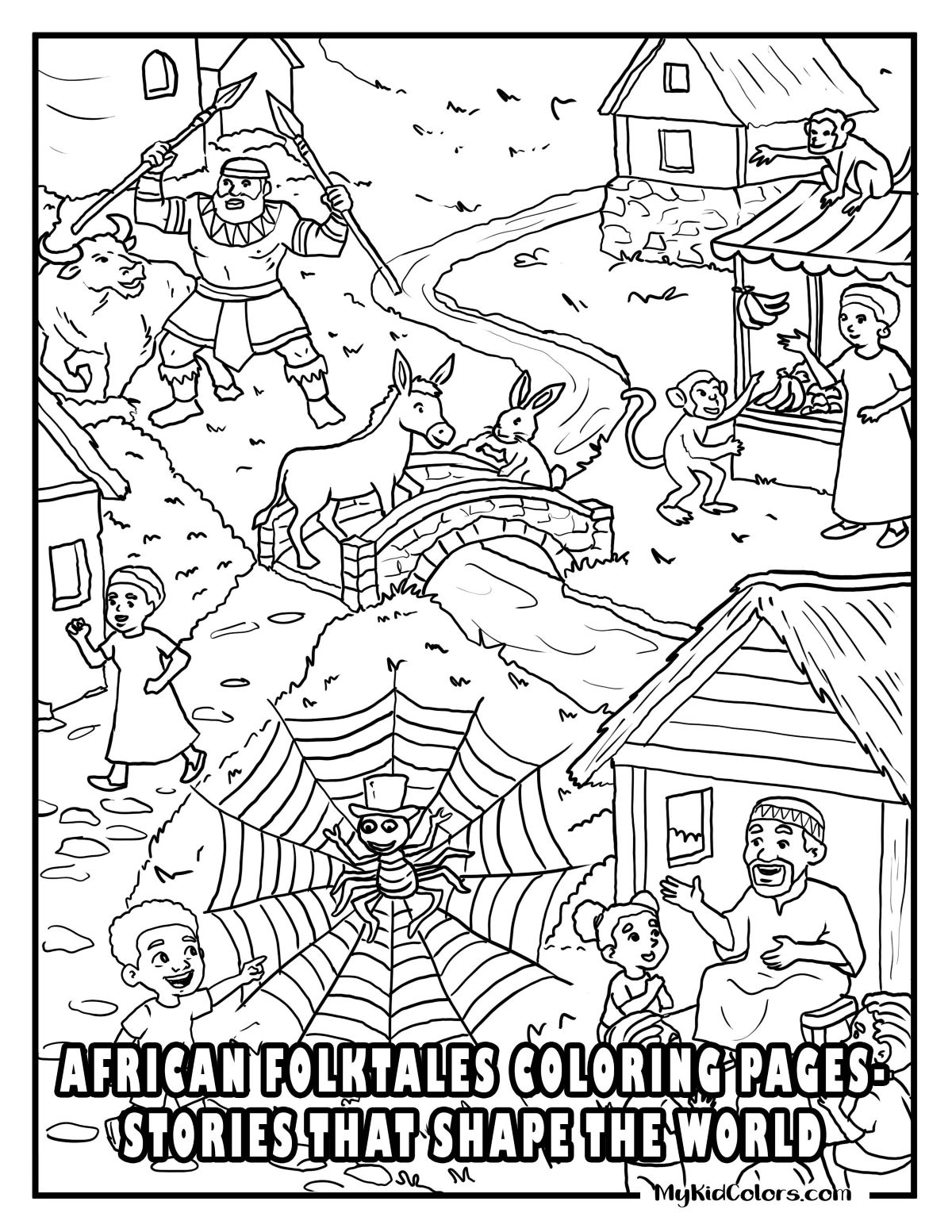
Free Hand-Drawn Anansi Coloring Pages: 15 African Folktale Coloring Pages
Every kid who hears about Anansi the Spider remembers him.
Not because he’s the biggest or the strongest. Because he’s clever. He talks his way out of trouble. He outsmarts animals twice his size. And somehow, he always wins.
These Anansi coloring pages are part of a larger set of African folktale coloring pages featuring the characters children love most from African storytelling: Anansi, Sundiata the Brave, the Clever Hare, and more.
Each page is hand-drawn by a real human illustrator, because these stories deserve more than a template. Print them. Color them. Then ask your child what they would have done in Anansi’s place.

Less searching. More MEANINGFUL moments.
When kids recognize themselves on the page, coloring changes.
The Inclusive Family Coloring Collection includes 25 human-drawn illustrations centered on everyday moments — designed to make inclusion feel normal, joyful, and intentional.
Because representation shouldn’t be reserved for one month.
A Note from Louisa (Founder of MyKidColors)
I didn’t grow up with bedtime stories the way most people imagine them. We had power cuts. And when the kerosene lamp finally ran out, the dark came fast.
That’s when the women who helped raise us, village women who worked in our home, would tell us about Mami Wata. Beautiful, dangerous, impossible to stop thinking about. I don’t know if those stories were meant to frighten us or fascinate us. I think they did both.
As the youngest of ten, I heard a lot of stories in small rooms by lamplight. I couldn’t always follow every detail. But the feeling stayed. That curious, held-breath feeling of a story that might go anywhere.
That’s what I wanted these folktale coloring pages to carry. Not just Anansi on a web. A story your child keeps turning over long after the crayons are put away.
Conversation Corner: 3 Questions to Ask While Coloring
Turn this activity into a bonding moment. While your child colors, try asking these questions:
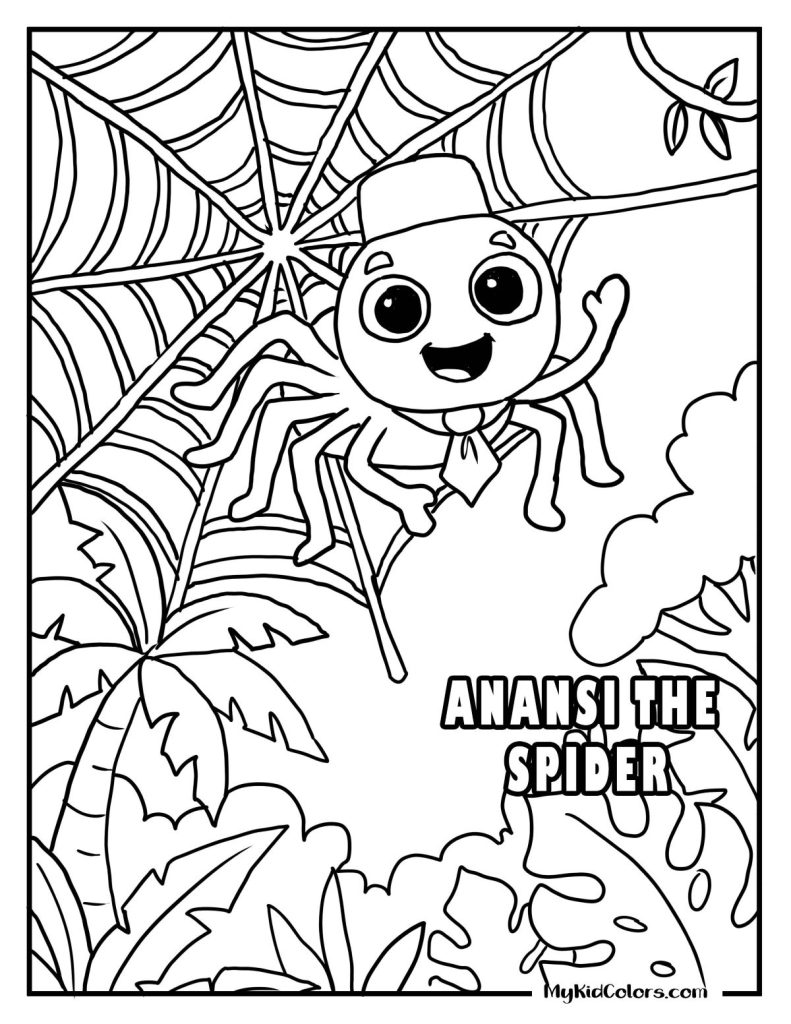
- For “Anansi the Spider” (Page 1): “Anansi uses his brain instead of his muscles. When have you solved something by thinking it through instead of rushing?”
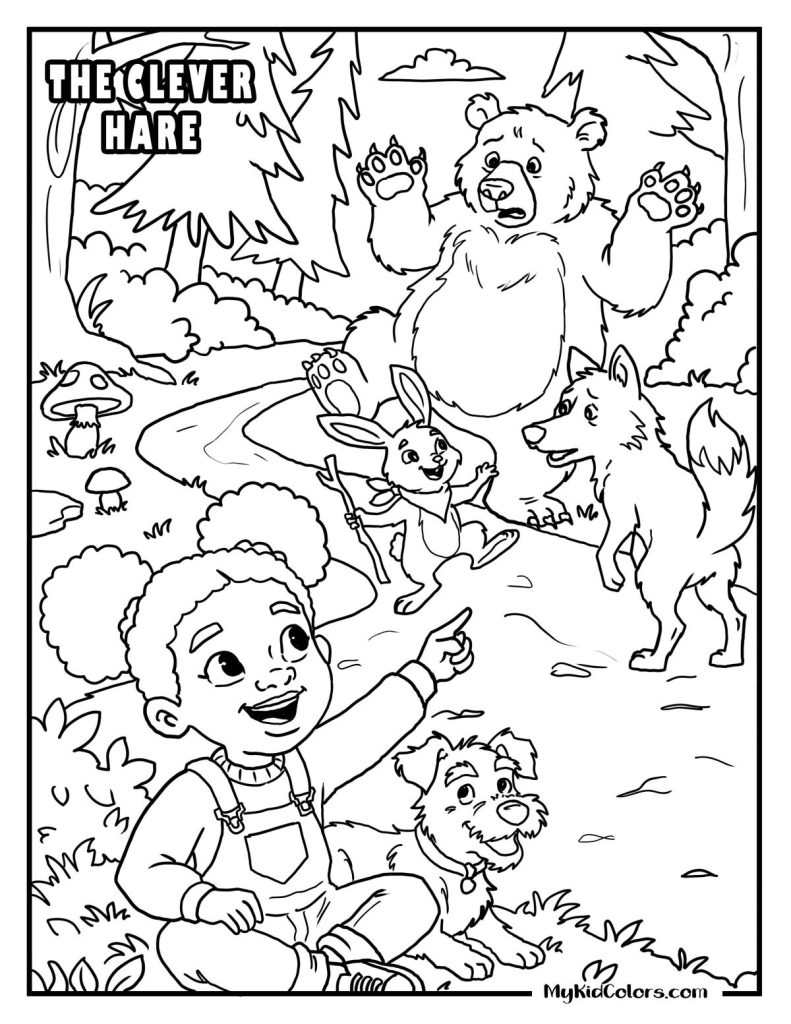
- For “The Clever Hare” (Page 9): “Do you think being small or quiet can sometimes be a superpower? Why?”
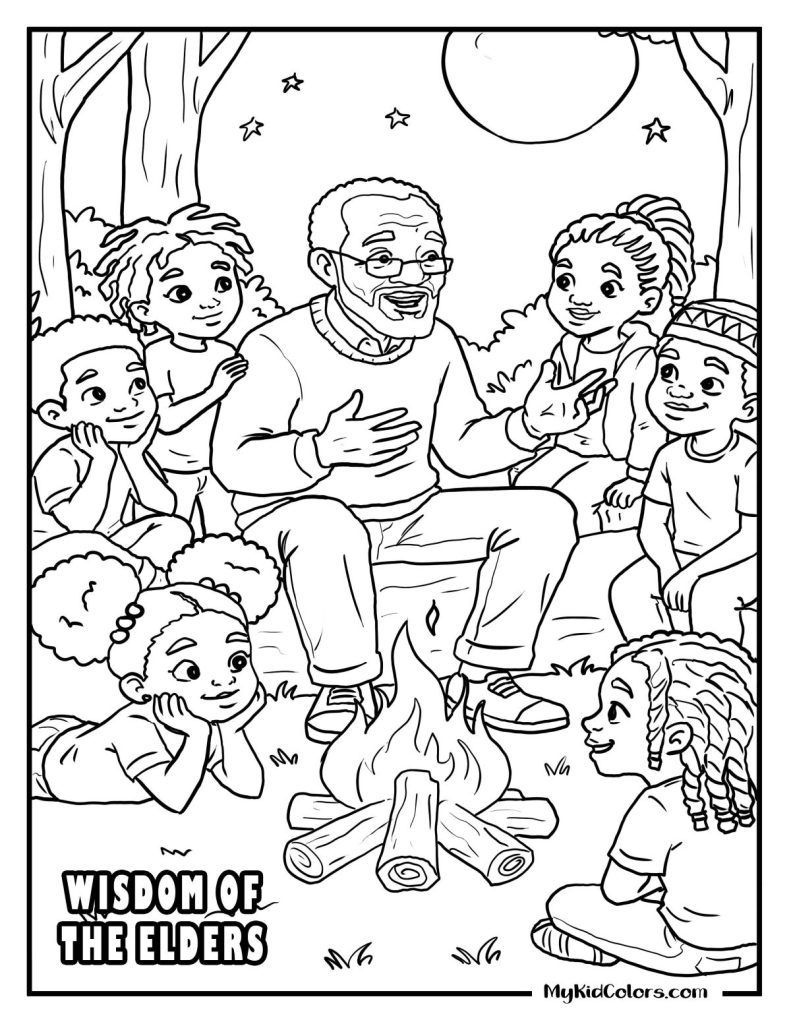
- For “Wisdom of the Elders” (Page 13): “What’s something important a grown-up taught you that you want to remember forever?”
The Collection: 15 Free Anansi Coloring Pages
We have organized these into three sets to help you teach storytelling—from simple character recognition to deeper cultural understanding and real-life lessons.
For Little Hands: Storybook Beginnings (Pages 1–5)
Best for toddlers and preschoolers. These pages focus on simple storytelling using African coloring pages, Black coloring pages for kids, and clear, friendly visuals.
- Page 1: A cheerful Anansi the Spider sitting on his web introduces children to African storytelling through a friendly and approachable character, making it a perfect starting point for African coloring pages for kids and early cultural learning.
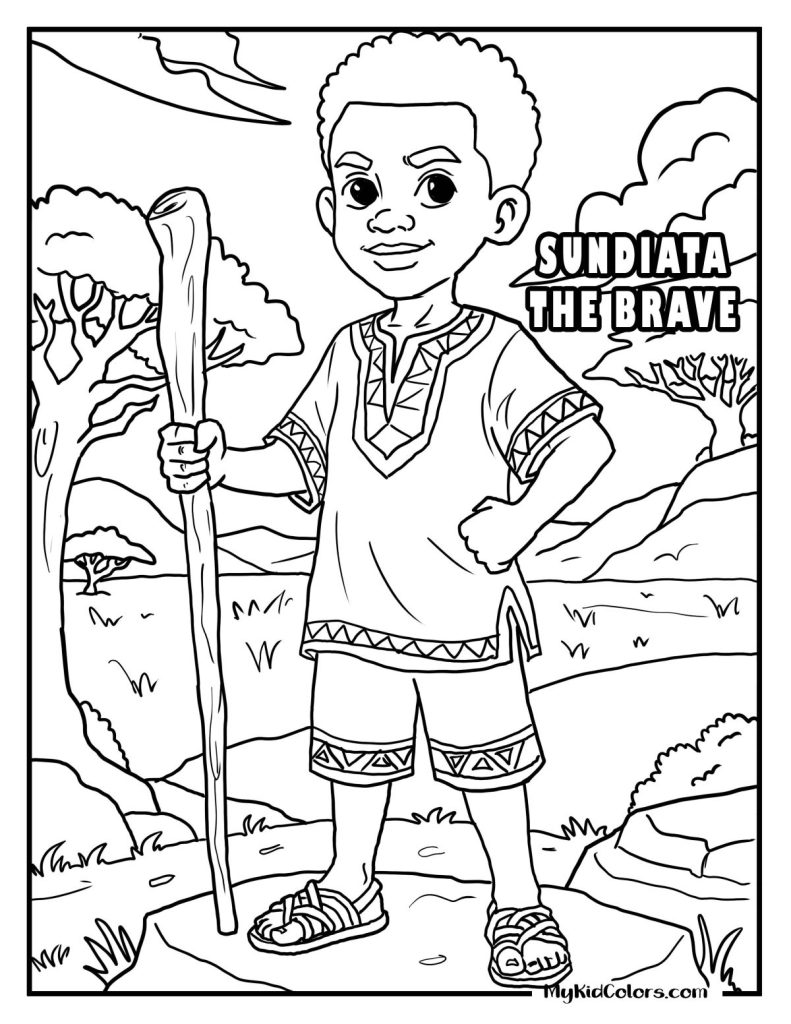
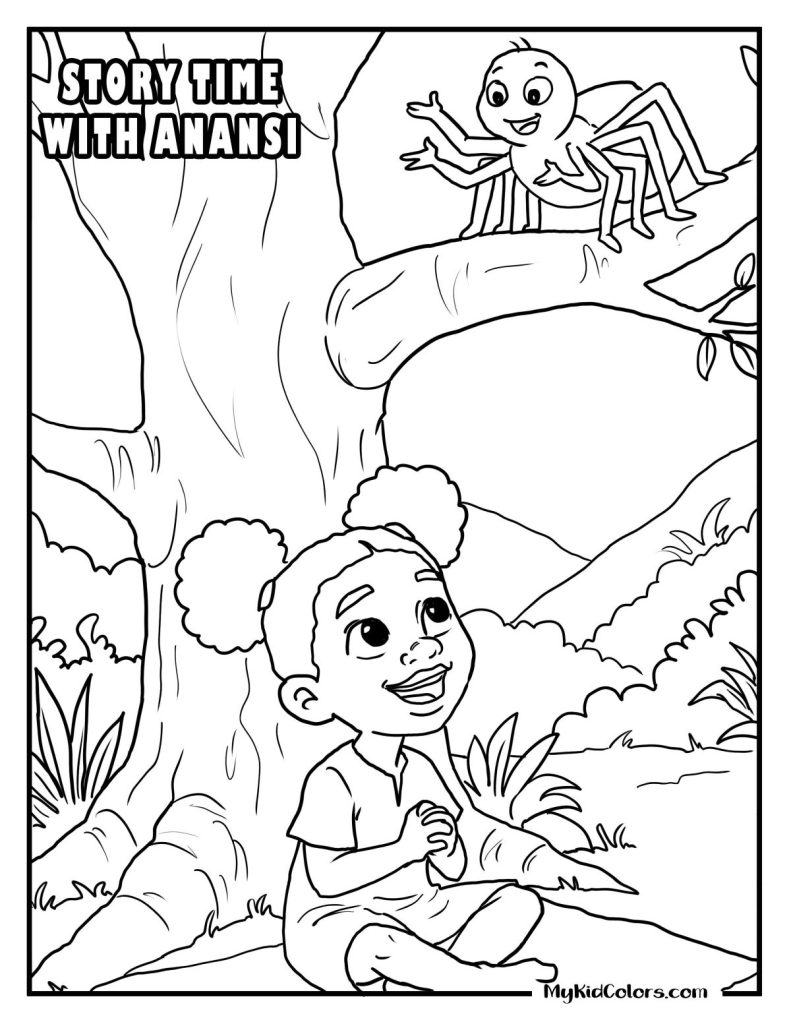
- Pages 2 & 3: Sundiata the Brave standing proudly and a child listening to Anansi bring storytelling and heroism to life, helping children connect with courage and imagination through African culture.
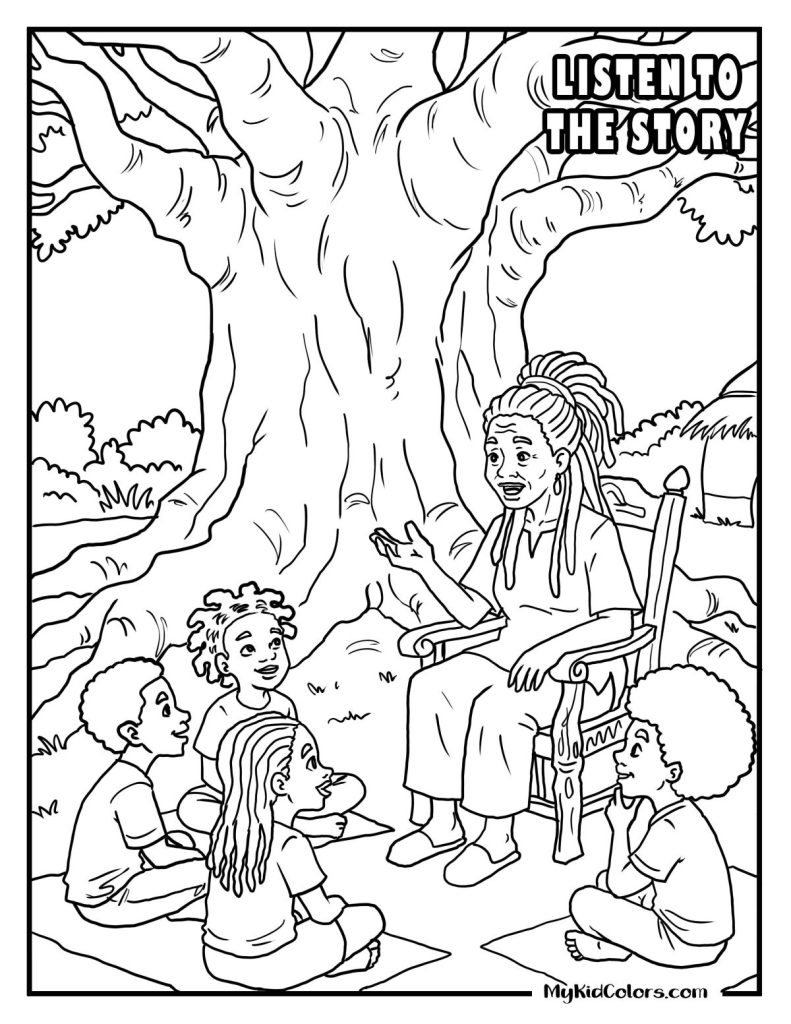
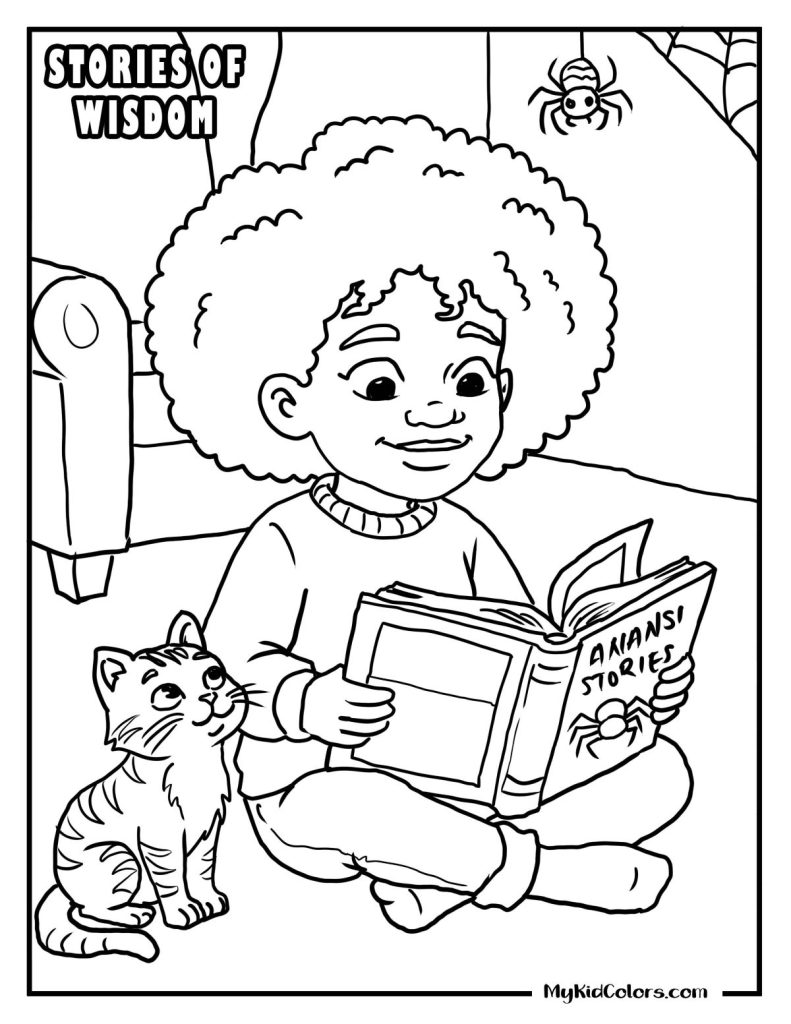
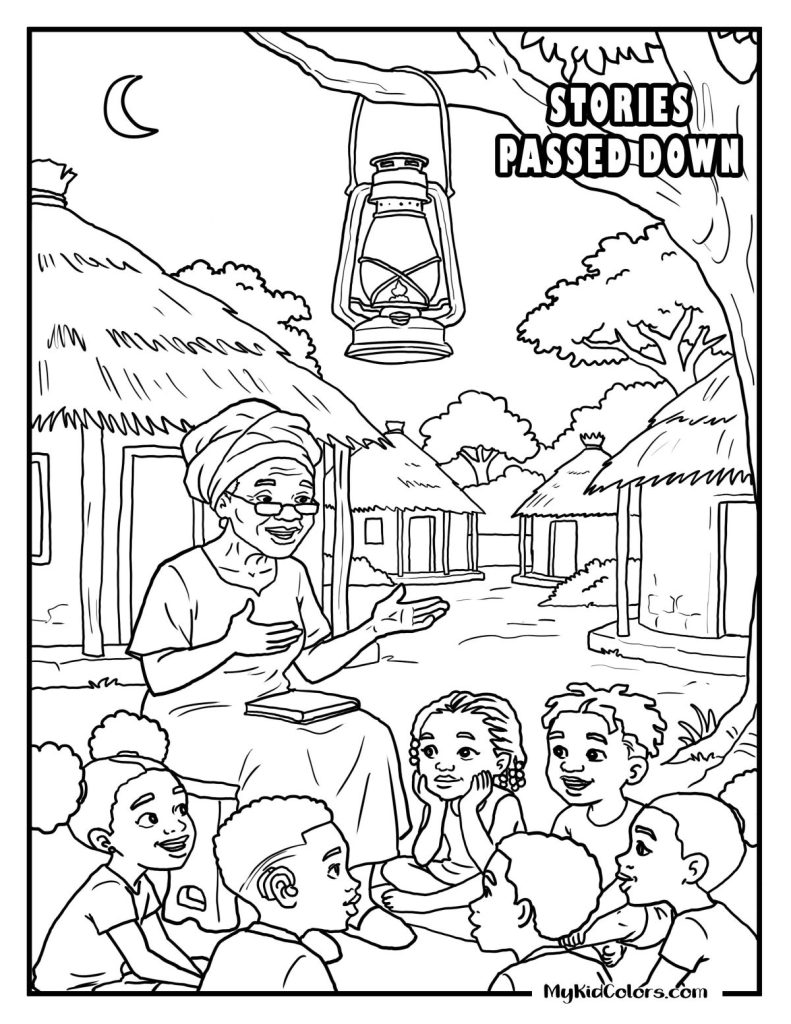
- Pages 4 & 5: A grandparent sharing stories under a baobab tree and a child reading at home create a sense of warmth, tradition, and learning, reinforcing emotional connection.
Exploring Stories Through Action (Pages 6–10)
Perfect for preschool and early elementary kids. These pages bring folktales to life through action, creativity, and community.
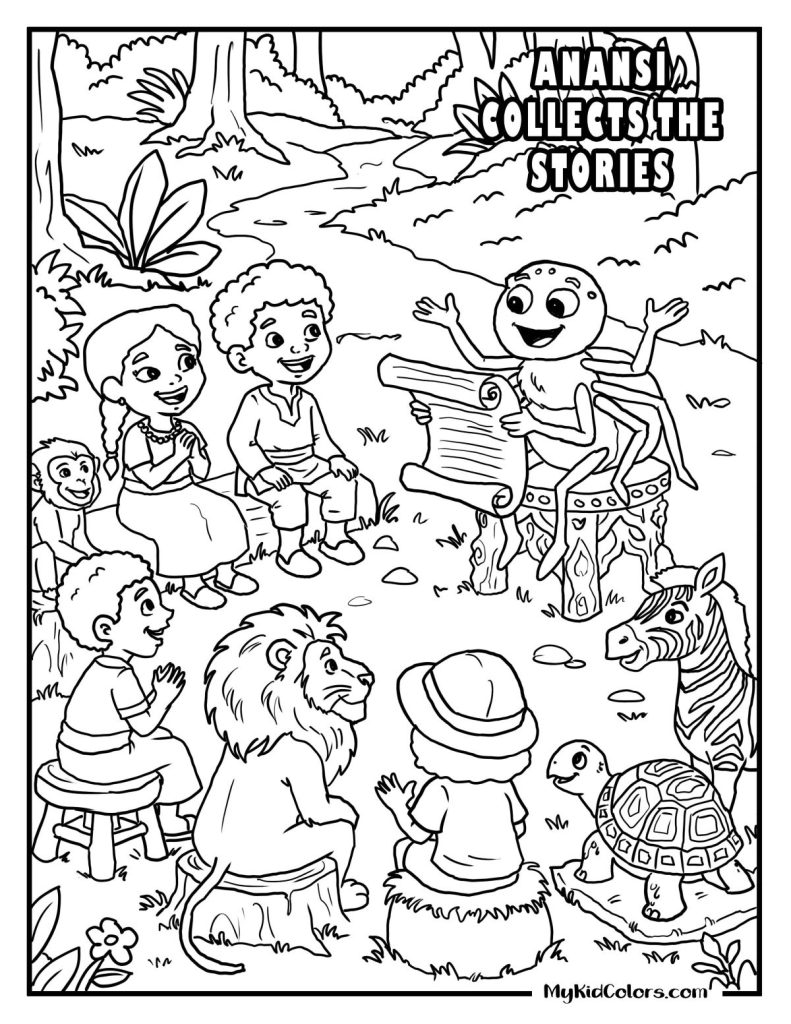
- Page 6: Anansi collecting stories from animals introduces problem-solving and cleverness, making it ideal for African activities and storytelling-based learning.
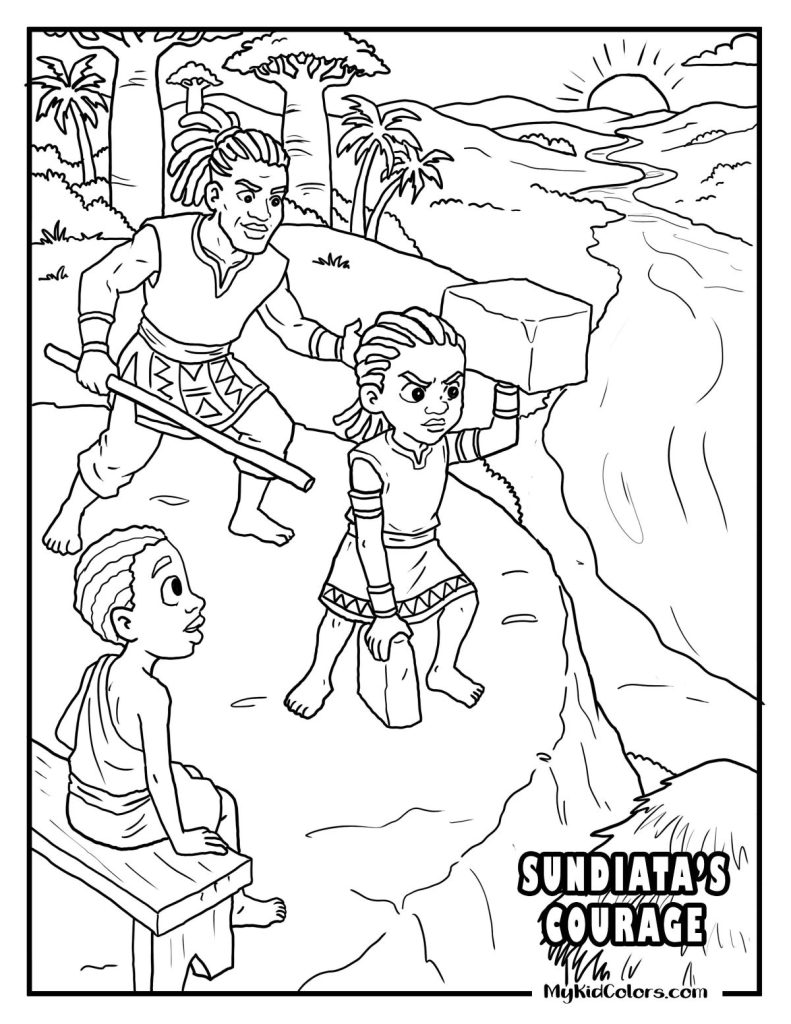
- Pages 7 & 8: Sundiata practicing courage and children gathered for storytelling at night highlight bravery and tradition, supporting cultural diversity coloring pages for kids and meaningful discussions.
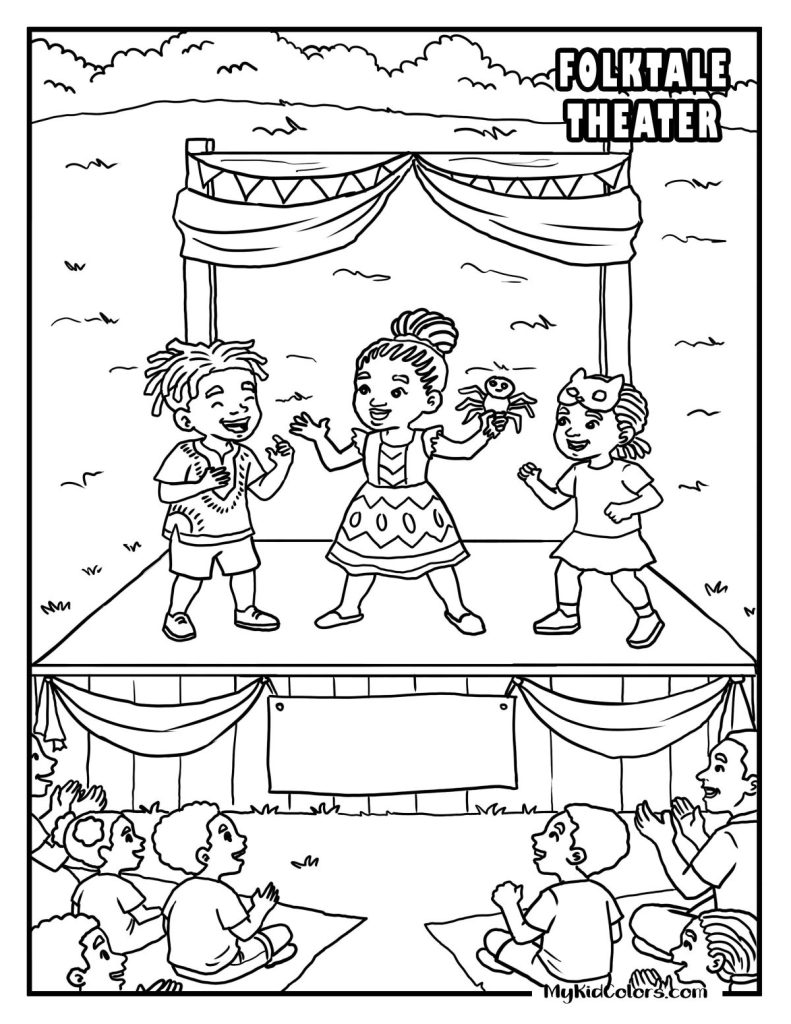
- Pages 9 & 10: The Clever Hare outsmarting others and children acting out folktales on stage encourage imagination, performance, and understanding of lessons.
Understanding Culture, Wisdom, and Identity (Pages 11–15)
Designed for older kids or deeper reflection. These pages show how stories connect to identity, community, and culture.
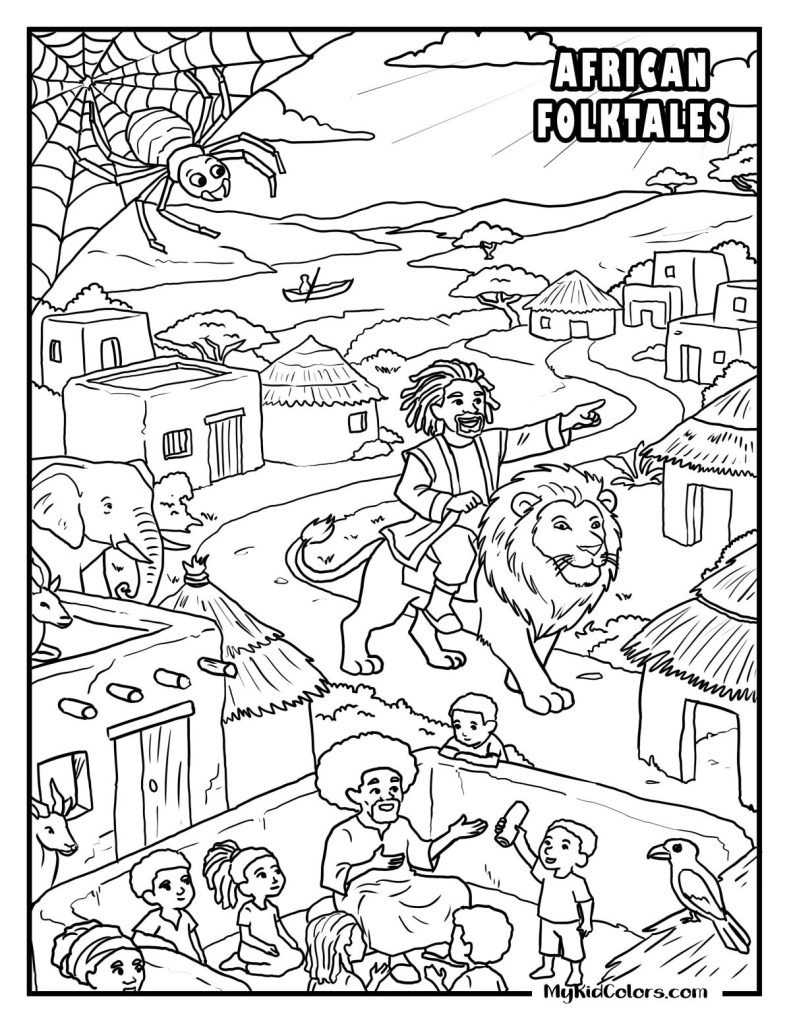
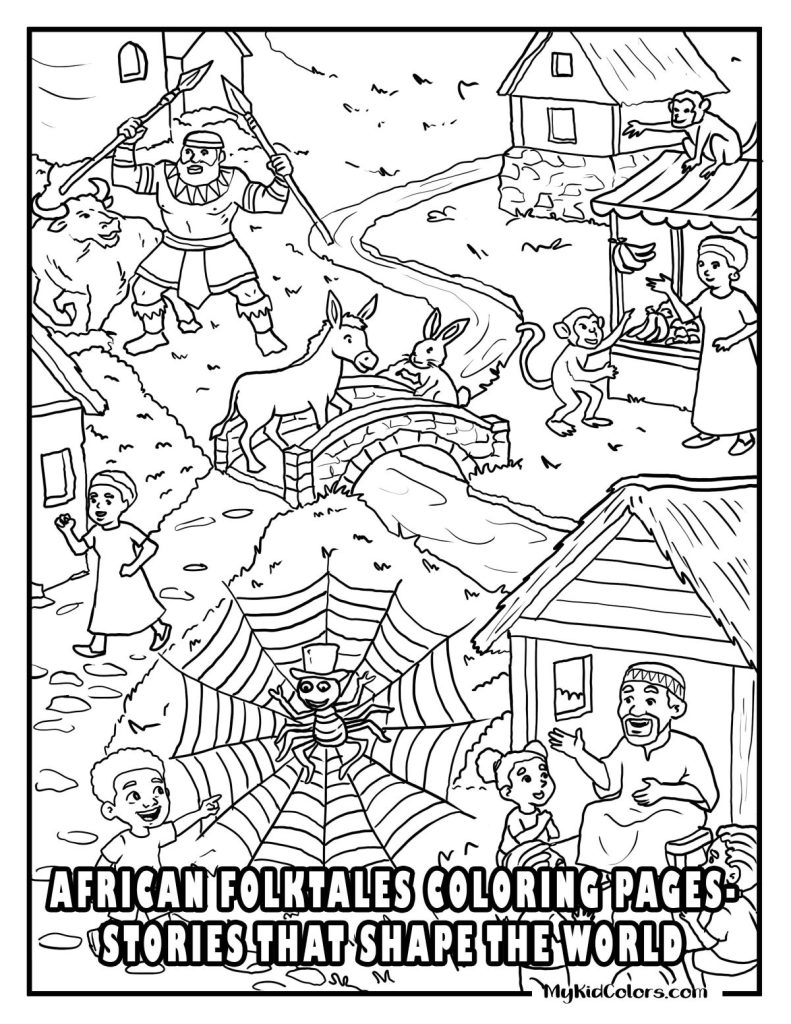
- Page 11: A detailed African folktale village scene filled with characters and stories helps children explore multiple narratives at once.
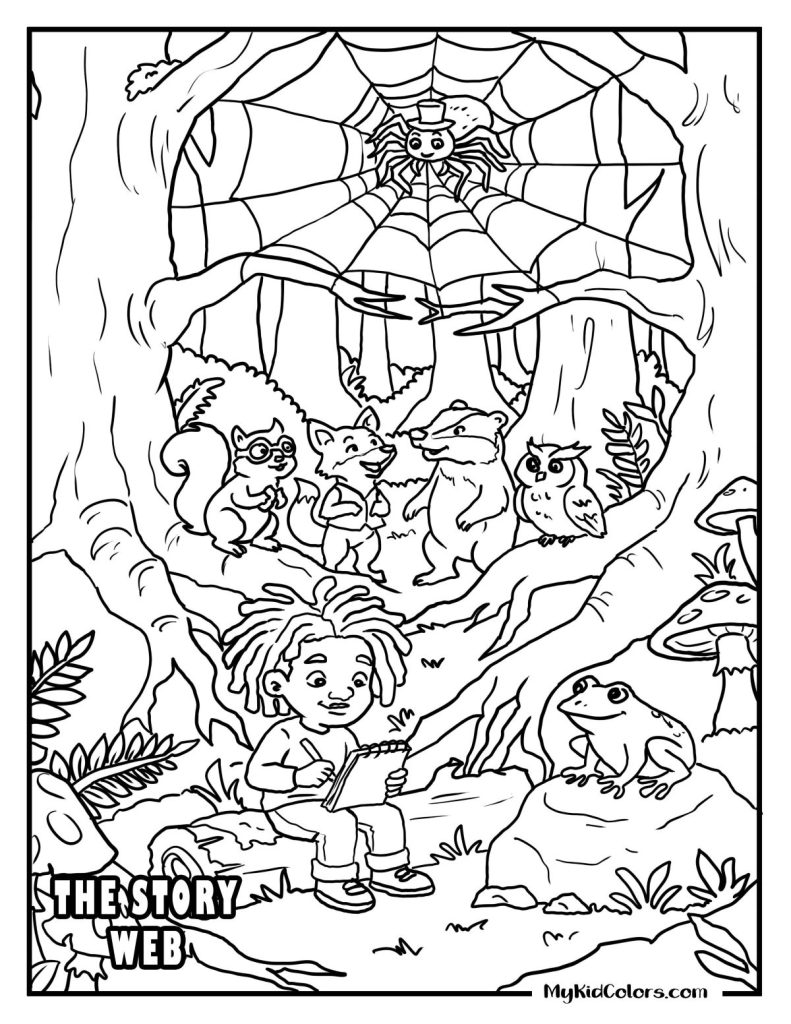
- Pages 12 & 13: A magical storytelling forest and elders sharing wisdom create deeper reflection on learning and tradition.
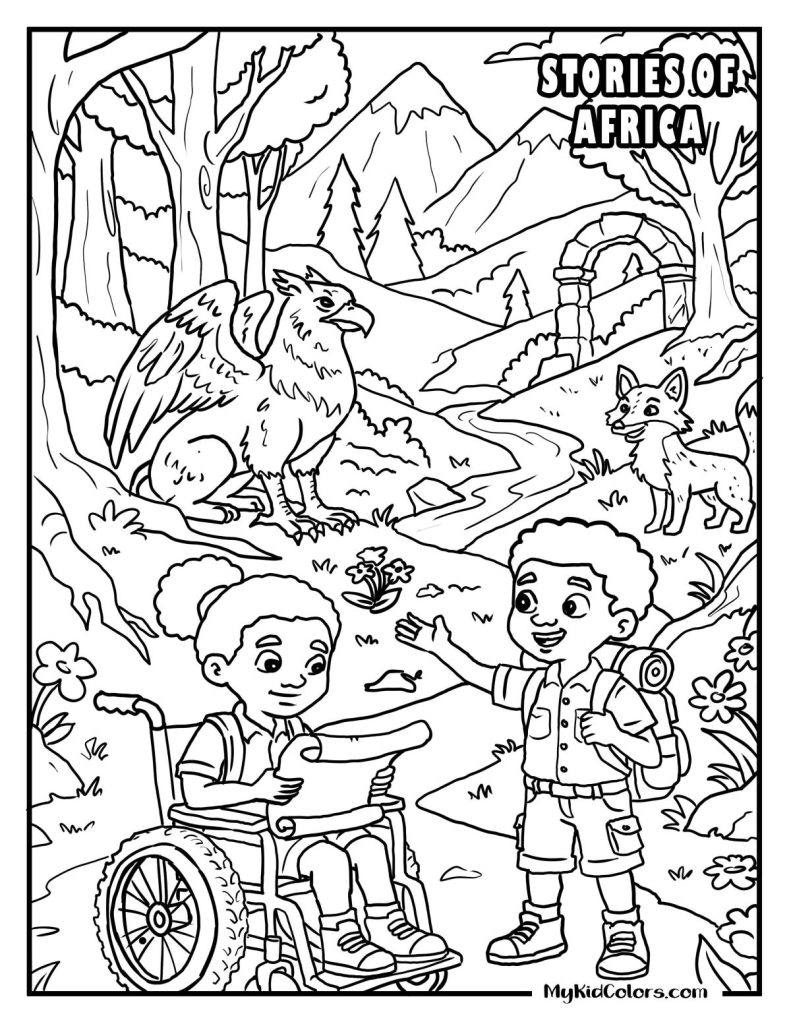
- Pages 14 & 15: A rich storytelling landscape and an epic folktale tribute bring everything together, connecting culture, identity, and creativity.
Perfect for Everyday Calm Activities & Homeschool
Parents and teachers love using these as engaging cultural learning tools. Here are a few ways to extend the lesson:
- Storytelling Circle Activity: Sit together and let each child add to a story, just like traditional African storytelling circles, helping build confidence and creativity.
- Story Sequencing Activity: Use pages like Anansi, Sundiata, and The Clever Hare to help children retell stories in order and understand lessons step by step.
- Create Your Own Folktale Book: Combine completed pages into a homemade storybook that children can read, share, and feel proud of.
Why We Choose Hand-Drawn Over AI
Anansi isn’t just a spider. He’s an expression. He schemes. He grins. He looks like he already knows how the story ends.
That’s what our illustrators bring to these folktale coloring pages: personality that a prompt can’t generate. The tilt of a head, the mischief in an eye, the way a grandparent leans toward a child under a baobab tree. T
hese are choices a human artist makes because they understand what it feels like when a story lands on a child.
We work with real human illustrators because these characters have been passed down for generations by real people. They deserve that same human care on the page.
Frequently Asked Questions
How can I teach African folktales if I don’t know the full stories?
Keep it simple—focus on the lesson. For example, Anansi teaches cleverness, Sundiata teaches courage, and the hare teaches strategy. Let children retell the story in their own words.
How do I use these pages in a classroom or group setting?
Turn them into storytelling sessions where each child colors a page and explains what is happening, building confidence and communication skills.
What’s a creative way to extend learning beyond coloring?
Create puppets or cut-out characters from the pages and act out folktales, helping children connect movement, storytelling, and imagination.
Download Your Free Set
The stories in this set have been told for generations — sometimes around a fire, sometimes at a kitchen table, sometimes in a classroom far from where the tales began.
Now they’re in your hands, too. Join the MKC family and these African folktale coloring pages sent straight to your inbox. Download pages that look like your child, tell stories worth keeping, and give you something to talk about while you color together.
You Might Also Like
- 15 Nigerian Landmarks Coloring Pages That Teach Kids Culture, History, and Pride
- 15 Animals of Africa Coloring Pages That Connect Kids About Wildlife & Nature
- 15 Emotions Coloring Pages That Help Kids Understand Their Feelings
- 15 Free Reading Coloring Pages That Help Kids Fall in Love with Books
- 15 African Countries Coloring Pages That Help Kids Explore Culture & Geography
- 15 Free Edo Kingdom Coloring Pages for Kids Learning African History

