
15 Free Axolotl Coloring Pages for Kids Who Love the World’s Weirdest, Sweetest Creature
The axolotl should not exist in the way it does. It is technically a salamander, but it never fully grows up — it keeps its feathery gills and its wide-eyed larval face for its entire life. It can regrow lost limbs. It lives in one lake in the world: the canals of Xochimilco in Mexico City. It looks like something a child invented, and in a way, that is exactly why children love it.
Most adults encounter axolotls and think: interesting, a bit strange. Children encounter axolotls and think: finally, something that understands me.
These free axolotl coloring pages are for that child. The one who loves what is different, unusual, and completely, unapologetically itself.
A Note from Louisa (Founder of MyKidColors)
One thing I love about children is how quickly they become curious about the smallest details. A dog says “woof woof.” A blanket becomes a baby. A rock becomes a treasure. A strange little animal with feathery gills can suddenly become the most fascinating thing in the world.

Less searching. More MEANINGFUL moments.
When kids recognize themselves on the page, coloring changes.
The Inclusive Family Coloring Collection includes 25 human-drawn illustrations centered on everyday moments — designed to make inclusion feel normal, joyful, and intentional.
Because representation shouldn’t be reserved for one month.
As a mom, I see this in my own children all the time. They notice animals, sounds, water, movement, and tiny objects in ways adults often rush past. My son loves little rocks. My daughter loves animals and water. Those small interests may look random, but they are often how children begin paying attention to the world.
That is what makes axolotl coloring pages so fun. Axolotls are not the usual cat, dog, or farm animal. They are unusual enough to make kids stop and ask questions, but cute enough to feel approachable.
These pages were created for that kind of curiosity: the child who wants to know what an axolotl is, where it lives, why it looks that way, and what colors they can use to bring it to life.
Conversation Corner: 3 Questions to Ask While Coloring
Turn this activity into a bonding moment. While your child colors, try asking these questions:
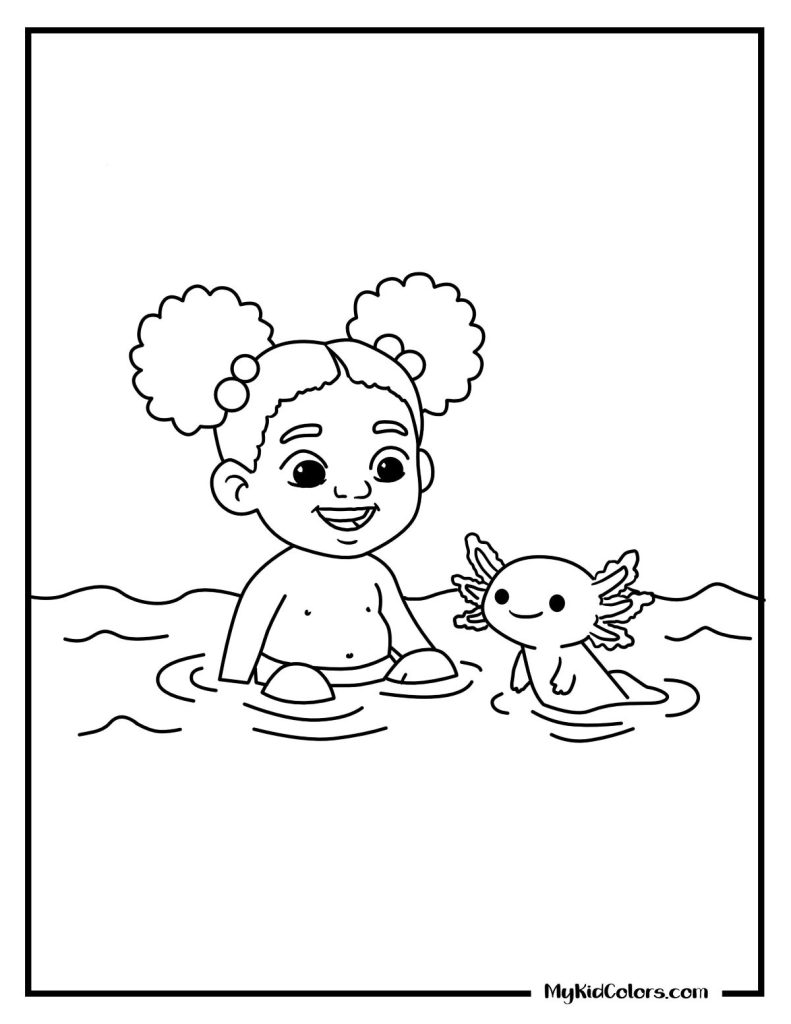
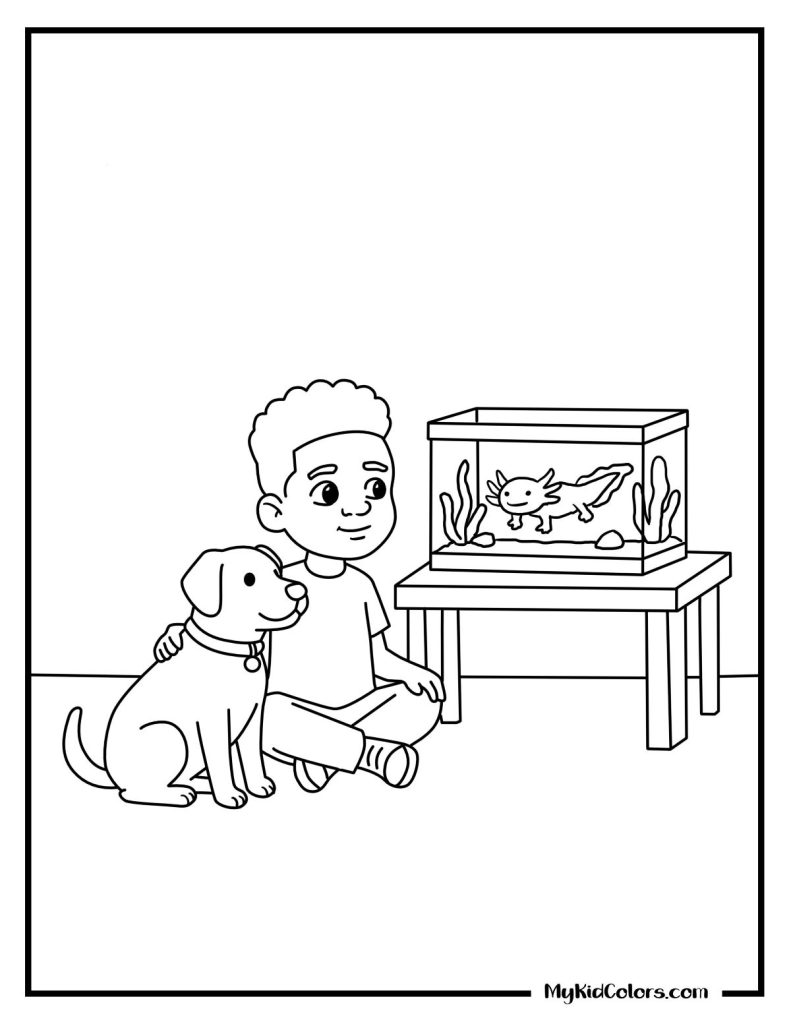
- For “Axolotl Friend” (Page 3): “What do you think the child feels sitting so close to the axolotl, and how can we learn to be gentle and calm around animals that trust us?”
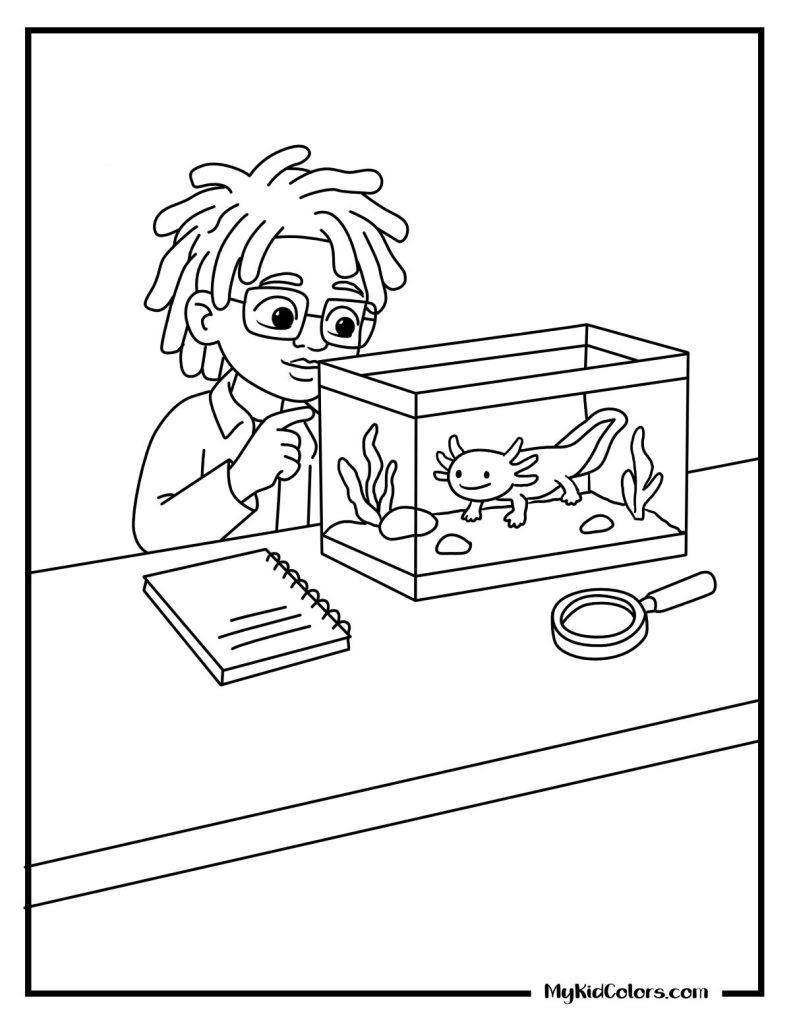
- For “Science Explorer” (Page 8): “What do you think the child is discovering about the axolotl, and what would you want to learn if you were observing something new and interesting?”
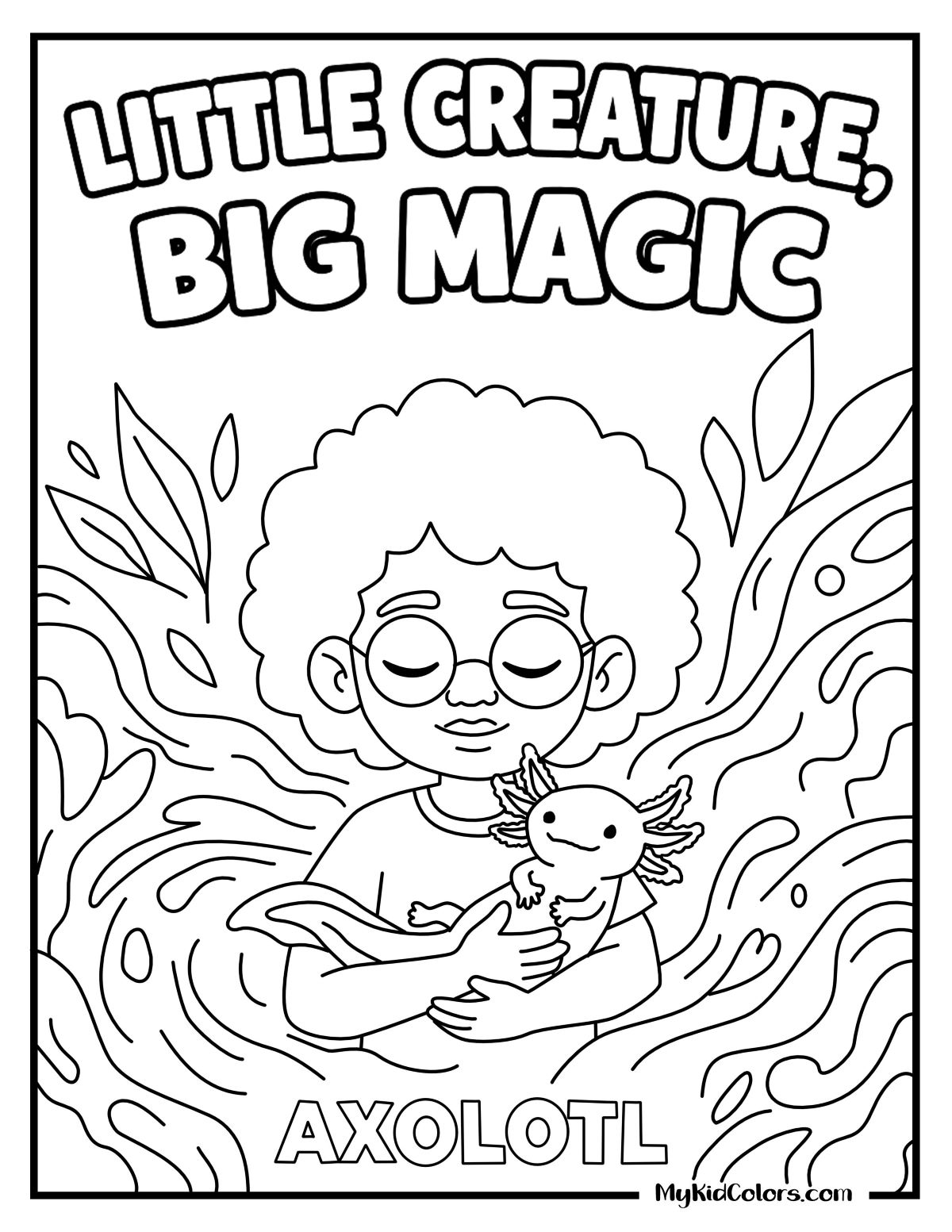
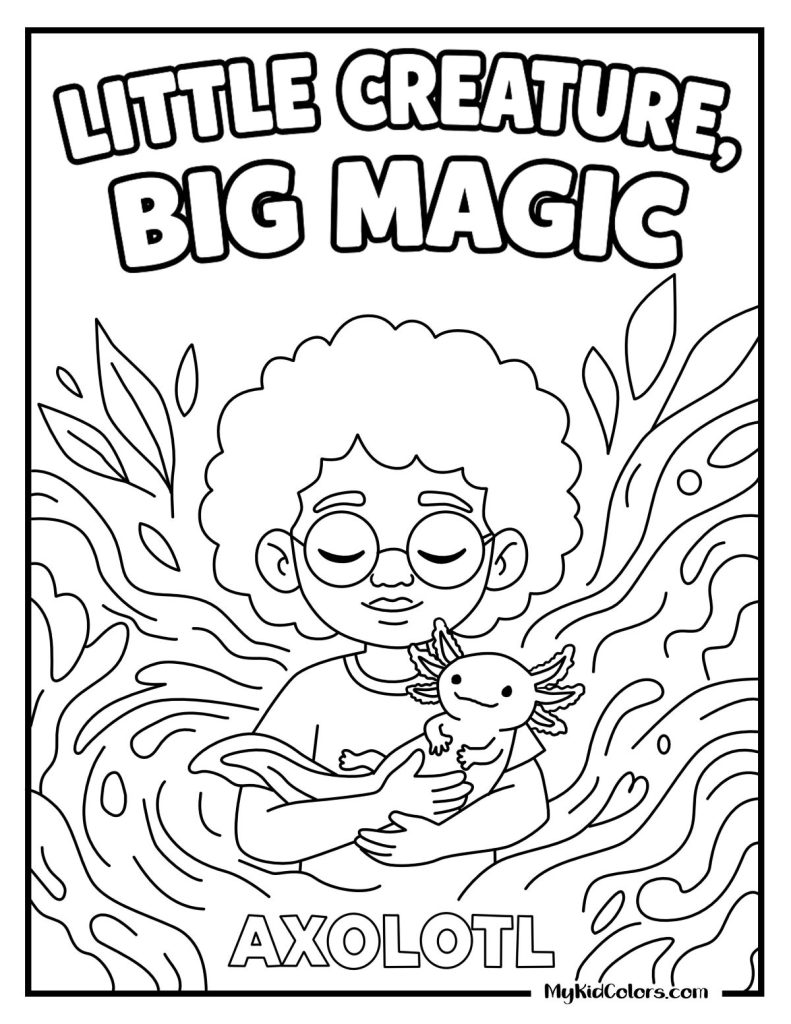
- For “LITTLE CREATURE, BIG MAGIC” (Page 15): “Why do you think something small like an axolotl can still feel so special and magical, and what small things in your life make you feel happy and calm too?”
The Collection: 15 Free Axolotl Coloring Pages
We have organized these into three sets to help you guide your child from simple creativity to deeper imagination and storytelling.
For Little Hands: Gentle & Playful Beginnings (Pages 1–5)
Best for toddlers and preschoolers. These pages focus on simple shapes, emotional safety, and easy coloring experiences.
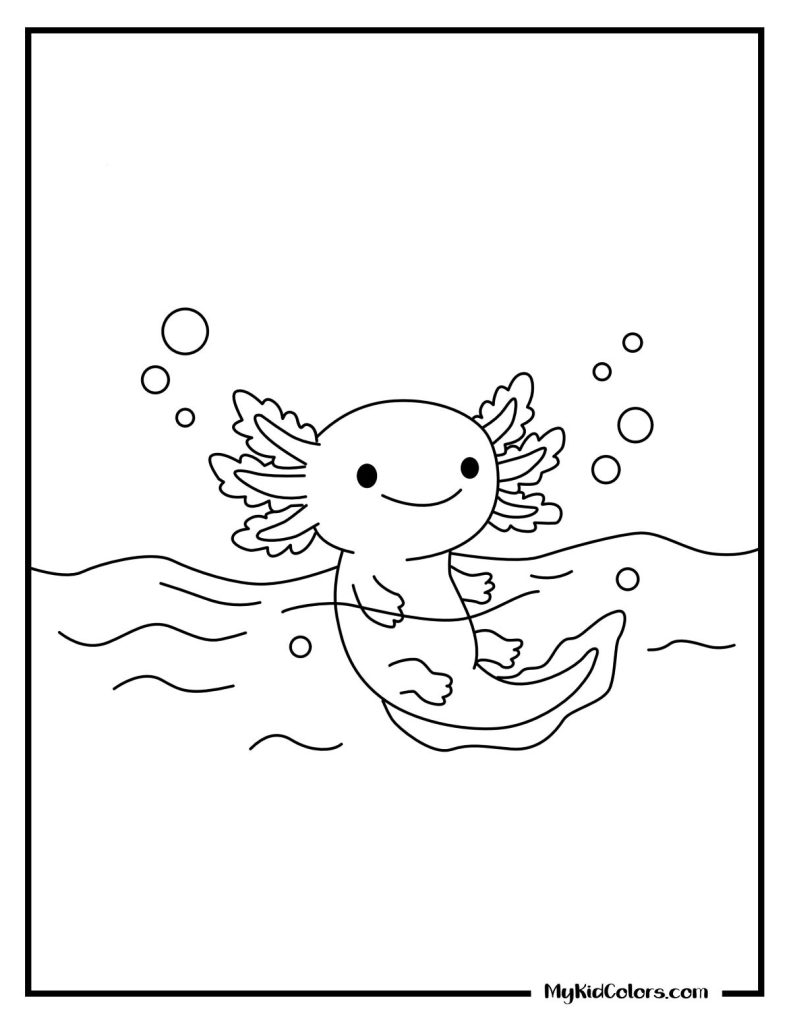
- Page 1: A simple smiling axolotl with bold outlines—perfect as a first axolotl coloring page free experience that builds confidence
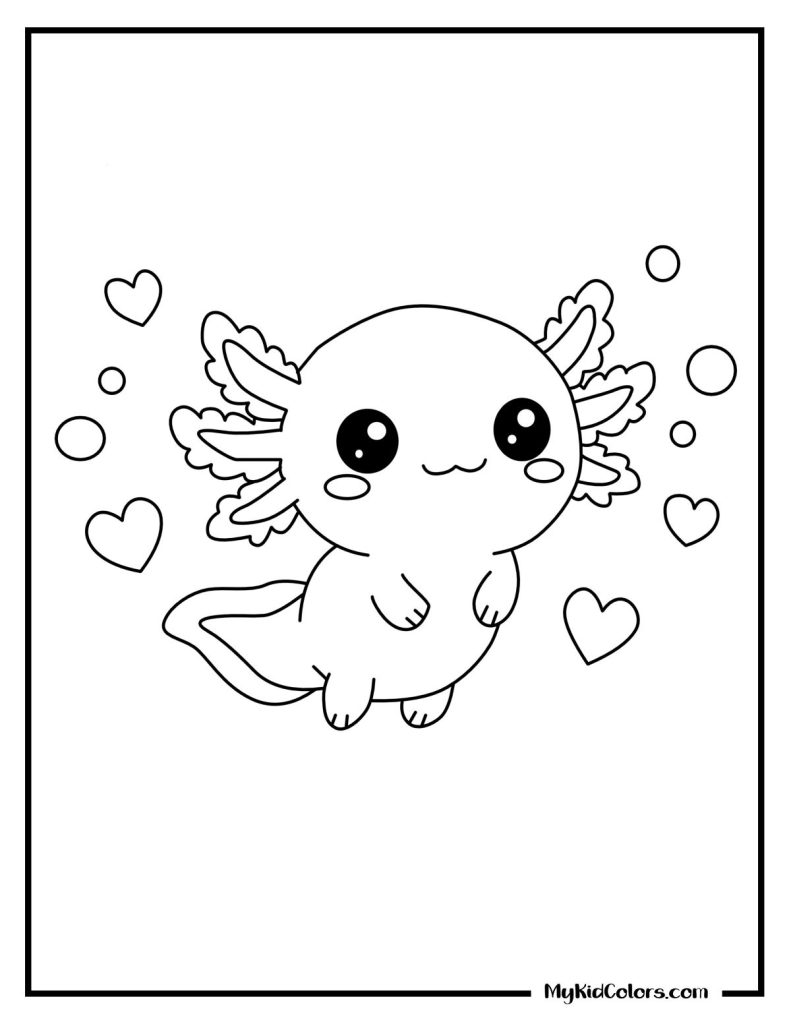
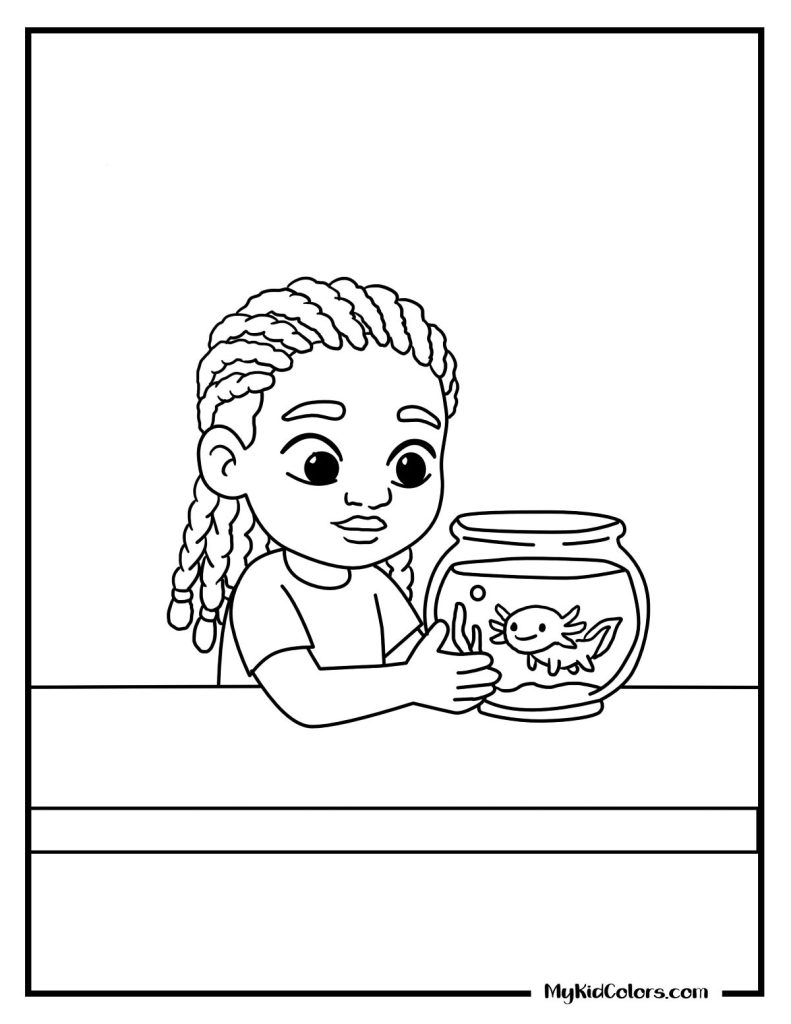
- Pages 2 & 3: A kawaii axolotl with hearts and a child sitting beside an axolotl—blending cute axolotl coloring pages with emotional connection
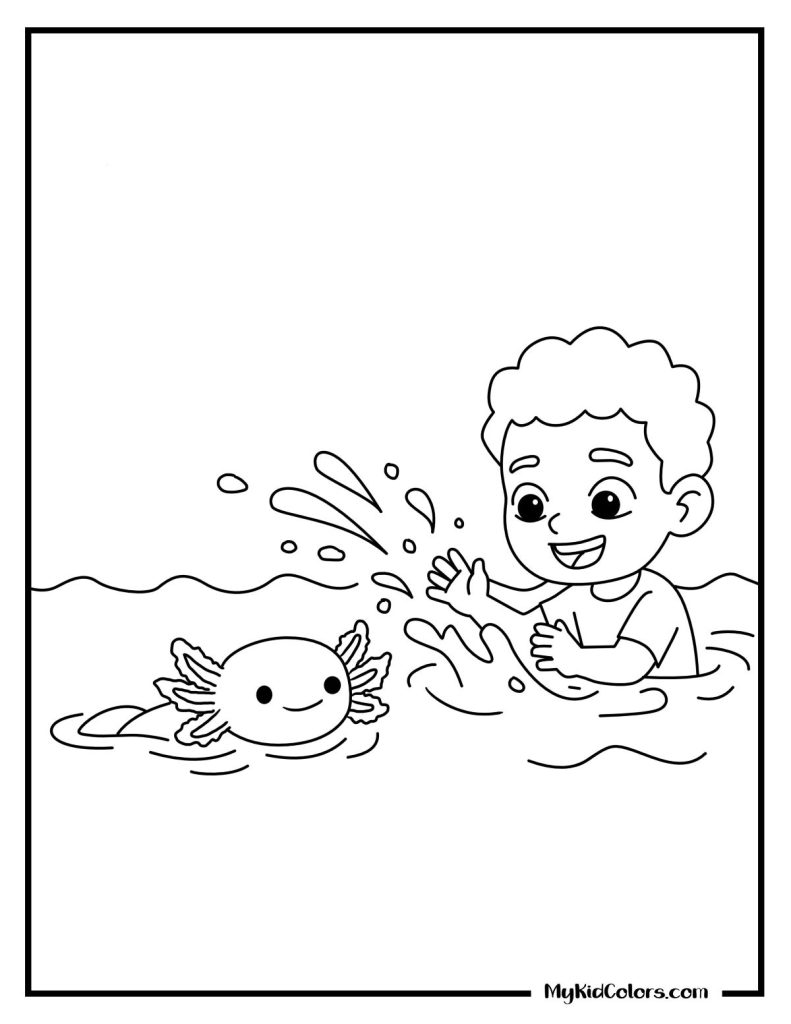
- Pages 4 & 5: Splash play and a pet-style axolotl moment—introducing gentle interaction, curiosity, and early storytelling
Curiosity & Connection (Pages 6–10)
Perfect for elementary kids. These pages bring in observation, learning, and everyday calm moments.
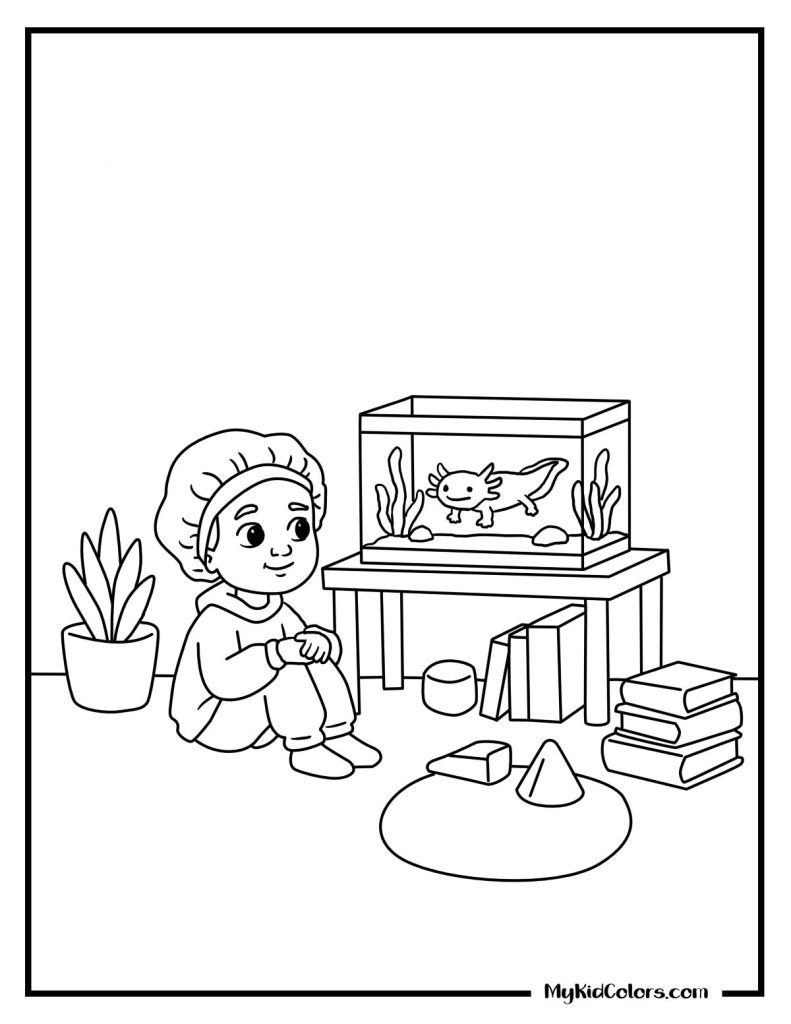
- Page 6: A cozy aquarium room scene—great for quiet time and coloring sheets axolotl moments that feel peaceful
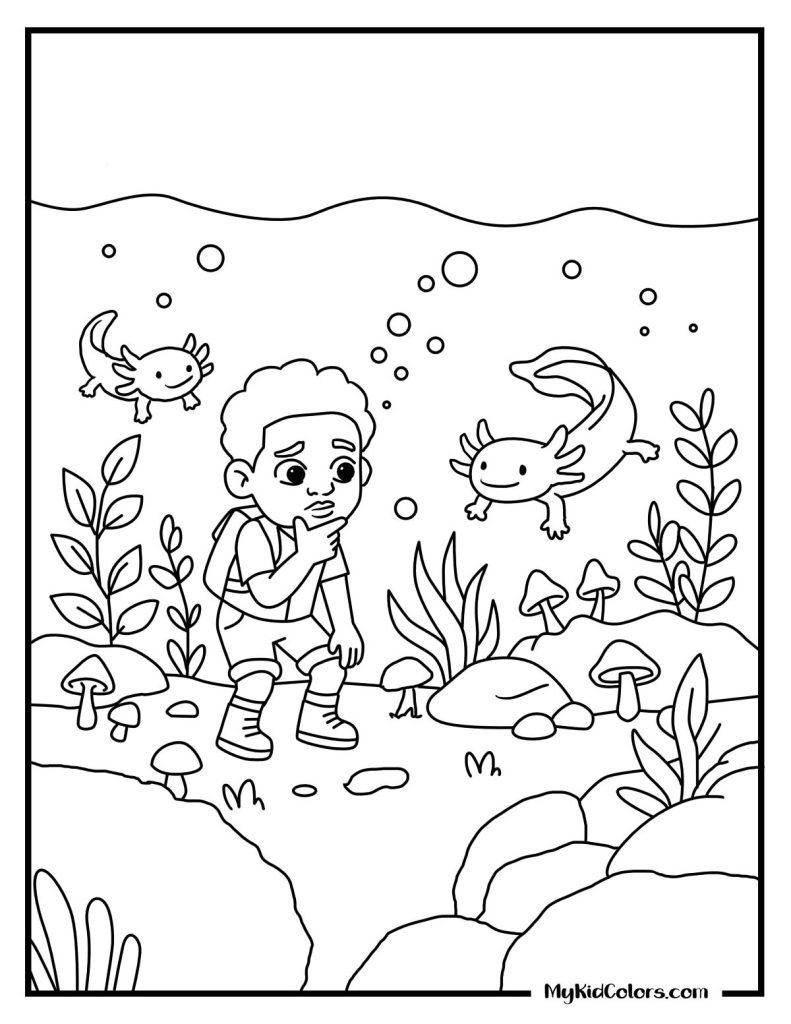
- Pages 7 & 8: A nature-rich axolotl environment and a science explorer scene—supporting axolotl drawing printable learning and curiosity
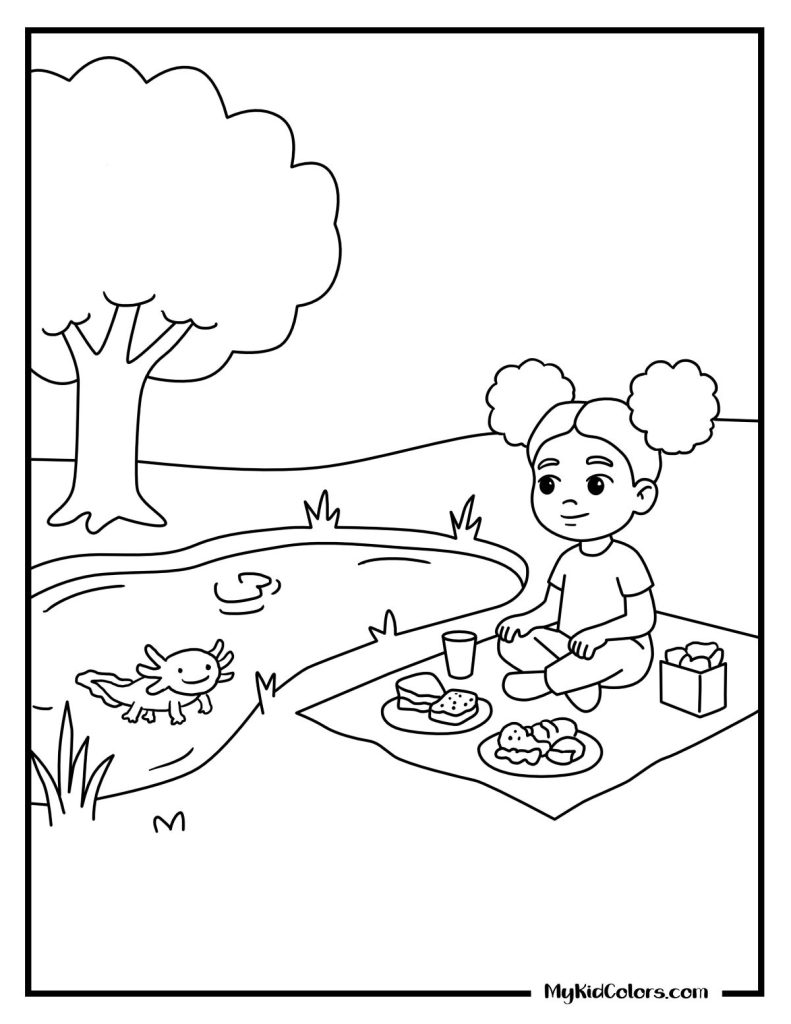
- Pages 9 & 10: A picnic by the pond and a pet + axolotl moment—connecting daily life with nature and care
The Full Story & Imagination (Pages 11–15)
Designed for older kids or reflective quiet time. These pages expand creativity and storytelling.
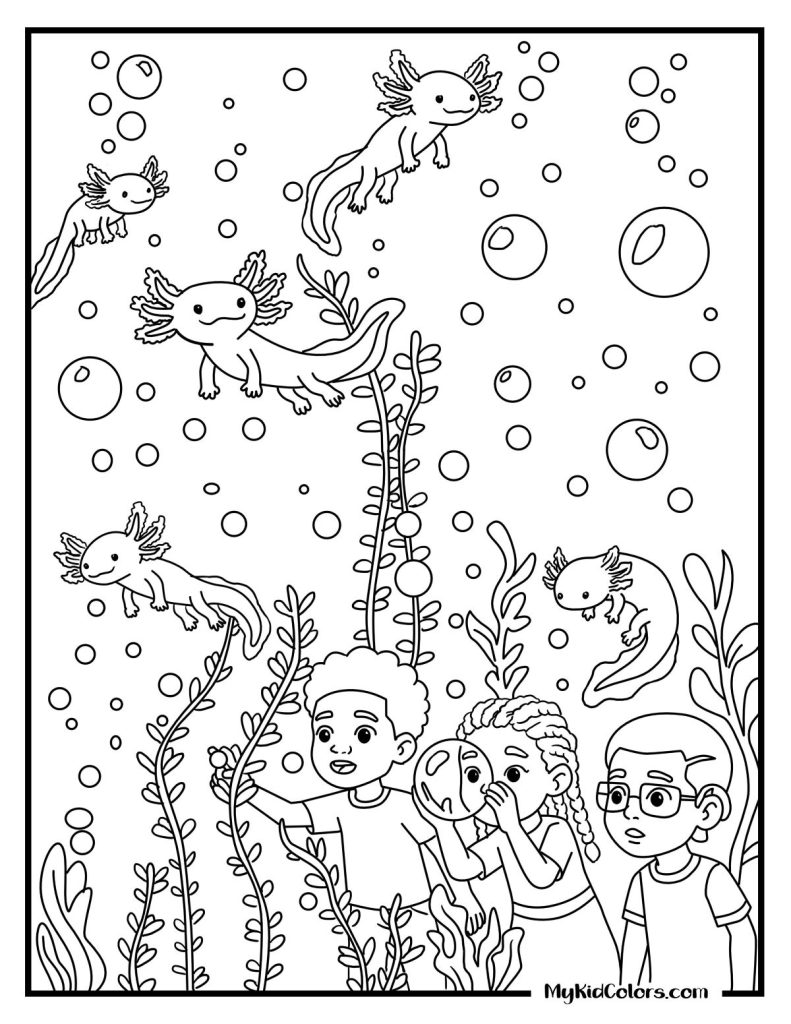
- Page 11: A dreamlike underwater world filled with axolotls—perfect for immersive kawaii coloring pages free printable experiences
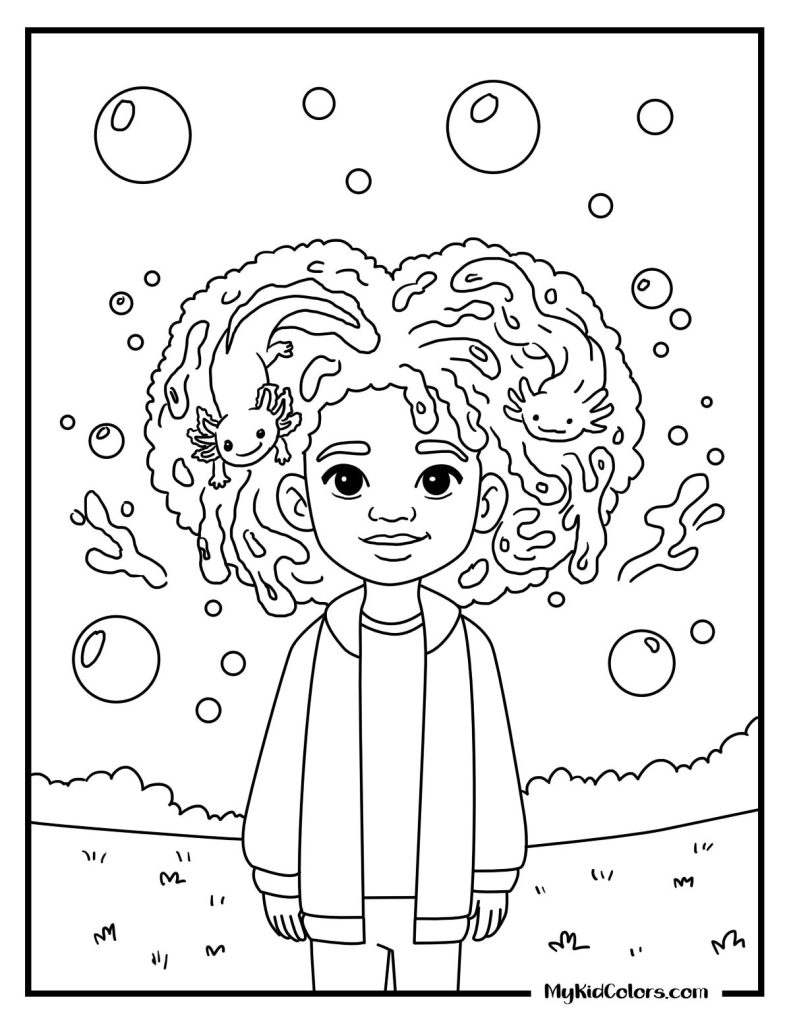
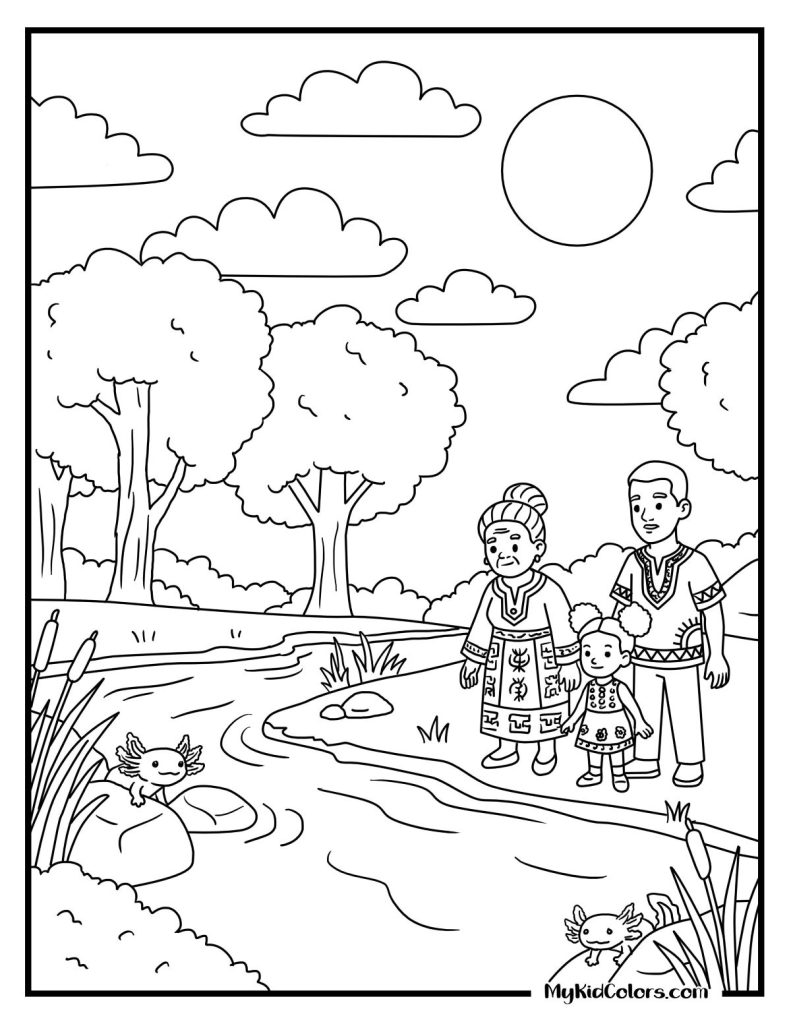
- Pages 12 & 13: A magical hair transformation and a cultural nature scene—blending identity, imagination, and connection to nature
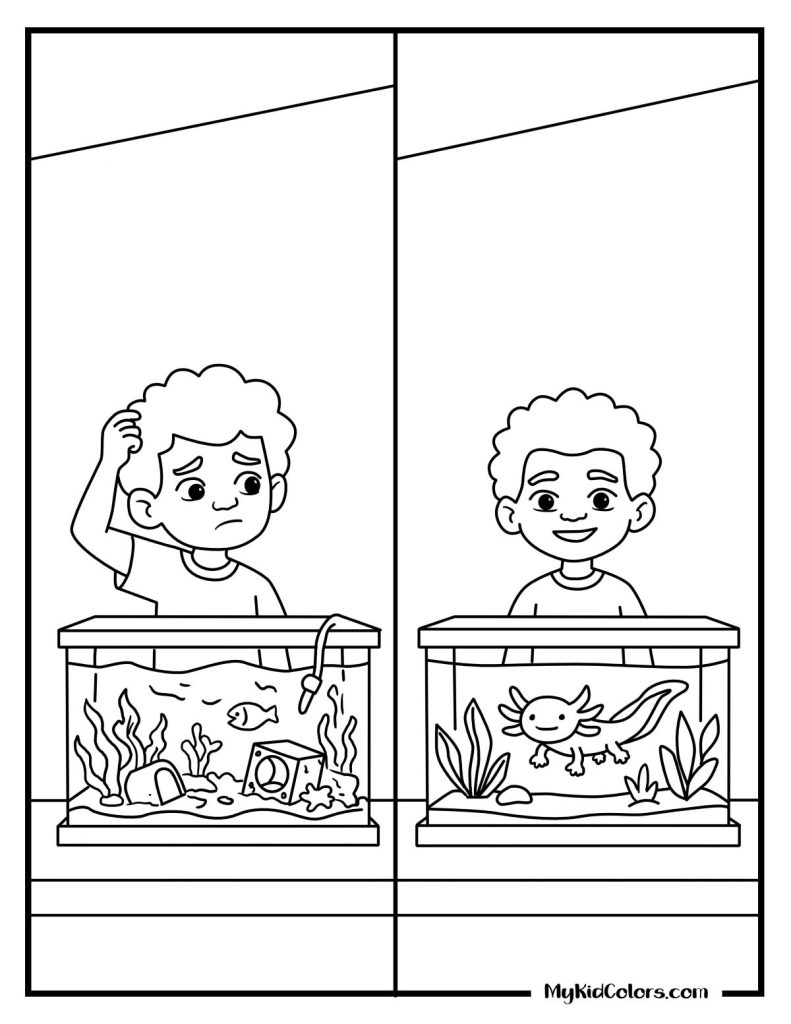
- Pages 14 & 15: A before-and-after care lesson and the hero page “LITTLE CREATURE, BIG MAGIC”—teaching responsibility, wonder, and emotional growth
Perfect for Classrooms, Homeschools, and Science Units
These pages work as biology and conservation unit anchors, Mexico and Mesoamerican culture studies, aquatic habitat activities, and quiet time printables. A few ways to extend the learning:
- Xochimilco Canal Study: Use Page 7, the canal scene, as the anchor for a brief geography study. Find Xochimilco on a map together. Look at photographs of the trajineras. Talk about why a single lake in one city being the only home of an entire species makes that place worth protecting. For children doing a conservation or endangered species unit, this connection between place and animal is one of the most vivid examples available.
- Axolotl Fact File: After coloring Page 1, challenge your child to write or dictate five true facts about axolotls — one on each gill. They can start with what they already know and look up the rest. For children who love animals and research, this is a natural entry point into independent science inquiry. The facts they tend to find most astonishing: axolotls can regrow their hearts, axolotls are critically endangered in the wild, they are considered a cultural symbol in Mexico, and the word axolotl comes from Nahuatl, the language of the Aztec people.
- Regeneration Imagination: After coloring Page 9, the regeneration page, ask your child: if you could regrow any part of yourself that you had lost, what would it be — and what if it was not a physical part? What about a feeling, a memory, a skill? This question works differently for different ages. Younger children tend toward very concrete, literal answers. Older children go somewhere much more interesting.
Why We Choose Hand-Drawn Over AI
The axolotl has a face that is very specific. The width of the smile. The particular set of the gills. The way it looks directly at you with an expression that communicates complete, uncomplicated acceptance.
The expression on Page 1 was drawn by a person i.e. a human illustrator, who spent time with that face and understood what made it specific. The child at the glass on Page 11 was drawn by someone who thought about what it means to look at a rare thing and recognize something in it.
That kind of specificity is not incidental. It is the entire point.
Frequently Asked Questions
Why is my child so obsessed with axolotls? Is there a reason this particular animal resonates so deeply with kids?
There is, and it is worth understanding rather than just indulging. Axolotls appeal to children for several overlapping reasons. Visually, they are soft, rounded, and expressive in a way that triggers the same protective instinct as a baby animal, but they are also genuinely strange — they have features that do not quite belong to any category a child has already encountered, which is cognitively exciting. Biologically, the fact that an axolotl never fully grows up (a trait called neoteny) resonates with children who have complicated feelings about their own growing up. And the regeneration capacity is pure childhood logic: the idea that you can lose a part and grow it back. For children who feel different, or who are navigating a world that sometimes feels like it was not designed for them, the axolotl is a quiet symbol of something important.
Are axolotls actually endangered? How do I talk about that with my child without making it sad?
Yes, axolotls are critically endangered in the wild — they exist naturally only in the canals of Xochimilco in Mexico City, where habitat loss and water pollution have reduced their wild population dramatically. The most effective way to talk about this with children is through action rather than fear. Instead of leading with the danger, lead with the place: Xochimilco is a real canal system in Mexico City, and it is one of the only places in the world that has this specific ecosystem. Then talk about what people are doing to protect it — scientists in Mexico are actively working on conservation and breeding programs. Page 7 and Page 14 in particular open these conversations naturally, because they show the axolotl in its real home with warmth rather than alarm.
My child wants a pet axolotl. What should I know?
Axolotls can be kept as pets in many places where they are legal to own (check your local regulations — they are restricted in some states and countries). They require a cold-water aquarium (ideally around 16 to 18 degrees Celsius), specific water chemistry, and a diet of earthworms or specialized pellets. They are fascinating to watch and relatively low-maintenance compared to many pets, but they do need consistent care. For a child lobbying for an axolotl, these coloring pages are a good starting point for the conversation: what do you already know about what axolotls need, and what would you be responsible for every day?
Download Your Free Set
The axolotl has been living in its one specific lake, doing its one specific thing, completely unbothered by the fact that it does not fit any other category, for millions of years.
There is a lesson in that. And there is a child who is ready to hear it.
You Might Also Like
- 15 Free Farm Animals Coloring Pages (Free PDF Printables)
- 15 Free Jellyfish Coloring Page Sheets for Undersea Fun
- 15 Free Flower Coloring Pages to Download and Print
- 15 Free Science Coloring Pages (Free PDF Printables)
- 15 Free Days of the Week Coloring Pages (Free PDF Printables)

