
15 Cottagecore Coloring Pages That Help Kids Slow Down, Feel Safe, and Enjoy Simple Joys
Cottagecore as an aesthetic has a particular look: English countryside, Beatrix Potter hedgerows, linen aprons, a white woman in a meadow. That is one version of it. And it is beautiful.
But the values underneath cottagecore — slowness, nearness to growing things, handmade over manufactured, a life organized around seasons and care rather than productivity and noise — those do not belong to one culture. They have never belonged to only one culture.
These free cottagecore coloring pages are built on those values. The slow morning. The garden. The kitchen table where something is always being made. The child entirely at home in it. And the child looks like every child — not only the one the aesthetic has historically imagined.
A Note from Louisa (Founder of MyKidColors)
Growing up in Nigeria, summers in our compound were slow in exactly the way cottagecore describes. We played with what was around us. We made things out of what we found. We spent entire afternoons with no particular destination. There were mango trees. There was red earth underfoot. There were cashew seeds roasted in holes we dug ourselves.

Less searching. More MEANINGFUL moments.
When kids recognize themselves on the page, coloring changes.
The Inclusive Family Coloring Collection includes 25 human-drawn illustrations centered on everyday moments — designed to make inclusion feel normal, joyful, and intentional.
Because representation shouldn’t be reserved for one month.
Nobody called it cottagecore. It was just life. But the same quality is there — the slowness, the making, the world organized around the natural and the handmade.
These pages are drawn by one artist who understood that the cottagecore world should hold children who look like mine. It does. That is the only change it needed.
Conversation Corner: 3 Questions to Ask While Coloring
Turn this into a meaningful moment together:
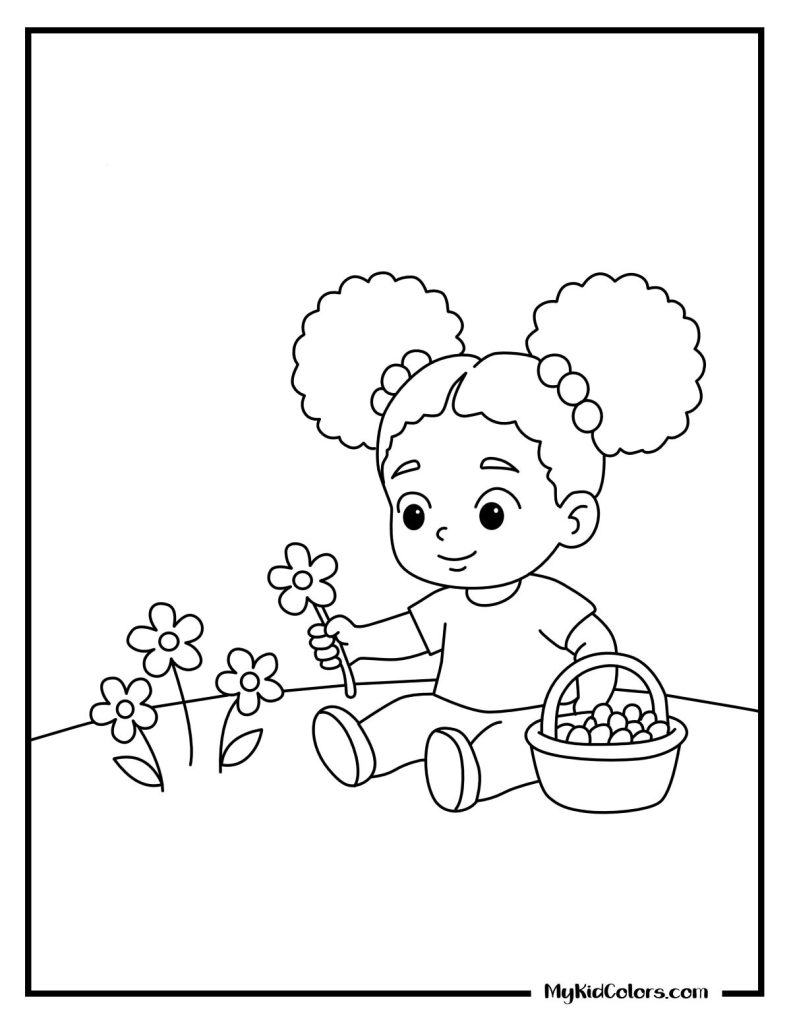
- For “Garden Play” (Page 3): “How do you think it feels to sit quietly in a garden and pick flowers—what would you notice around you?”
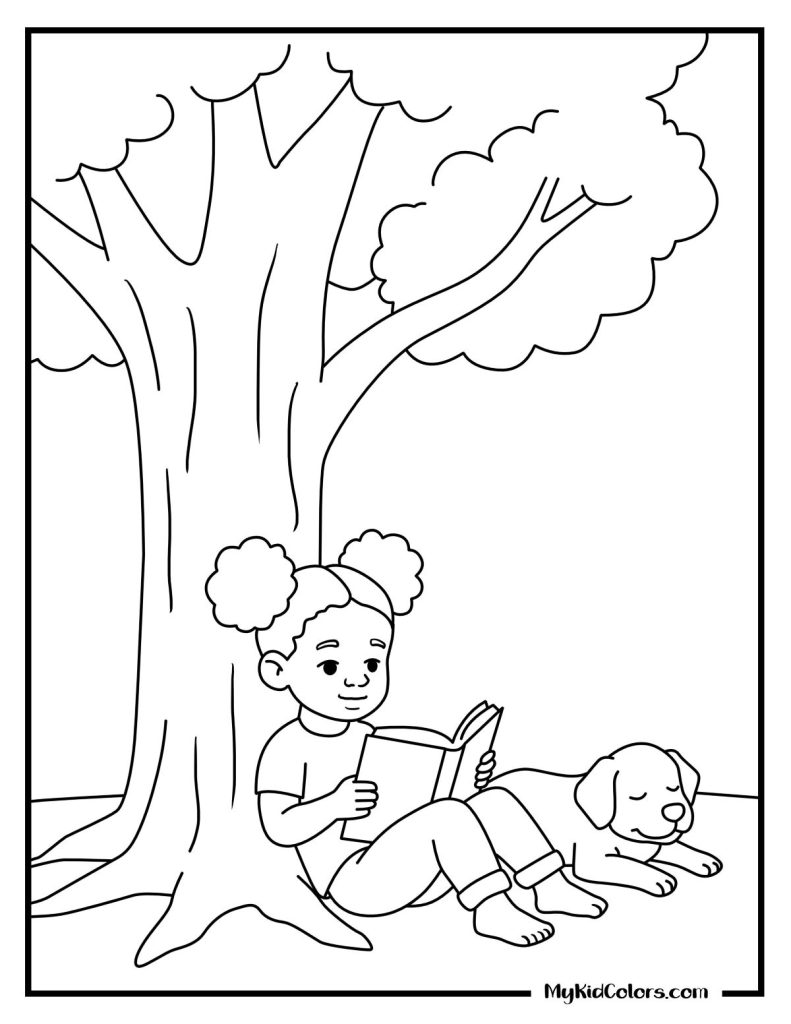
- For “Reading Under a Tree” (Page 9): “Why do you think quiet moments like reading outside can help us feel calm or happy?”
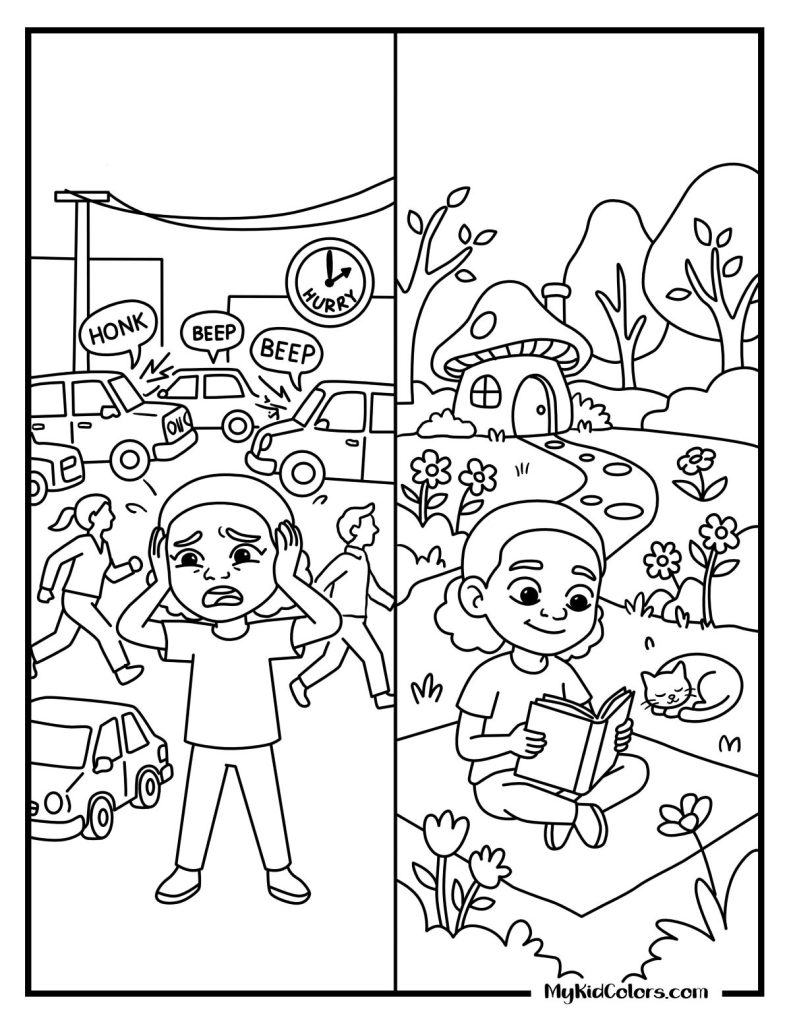
- For “Before & After Slow Down” (Page 14): “What changes do you see between the busy side and the calm side—and which one feels better to you?”
The Collection: 15 Free Cottagecore Coloring Pages
We’ve organized these into three sets to guide children from simple calm moments to deeper emotional understanding and reflection.
For Little Hands: The Garden World (Pages 1-5)
Best for toddlers and preschoolers. These cottagecore coloring pages easy focus on simple shapes, soft environments, and peaceful outdoor moments.
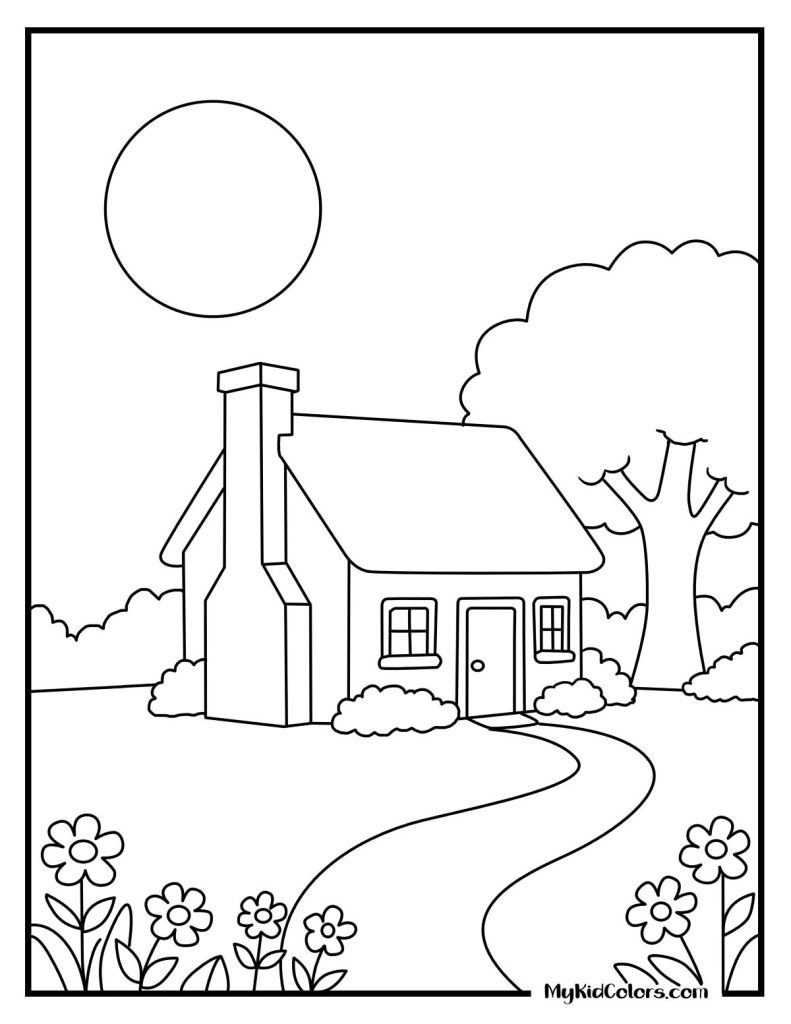
- Page 1: introduces a cozy cottage surrounded by flowers—an inviting and familiar nature scene.
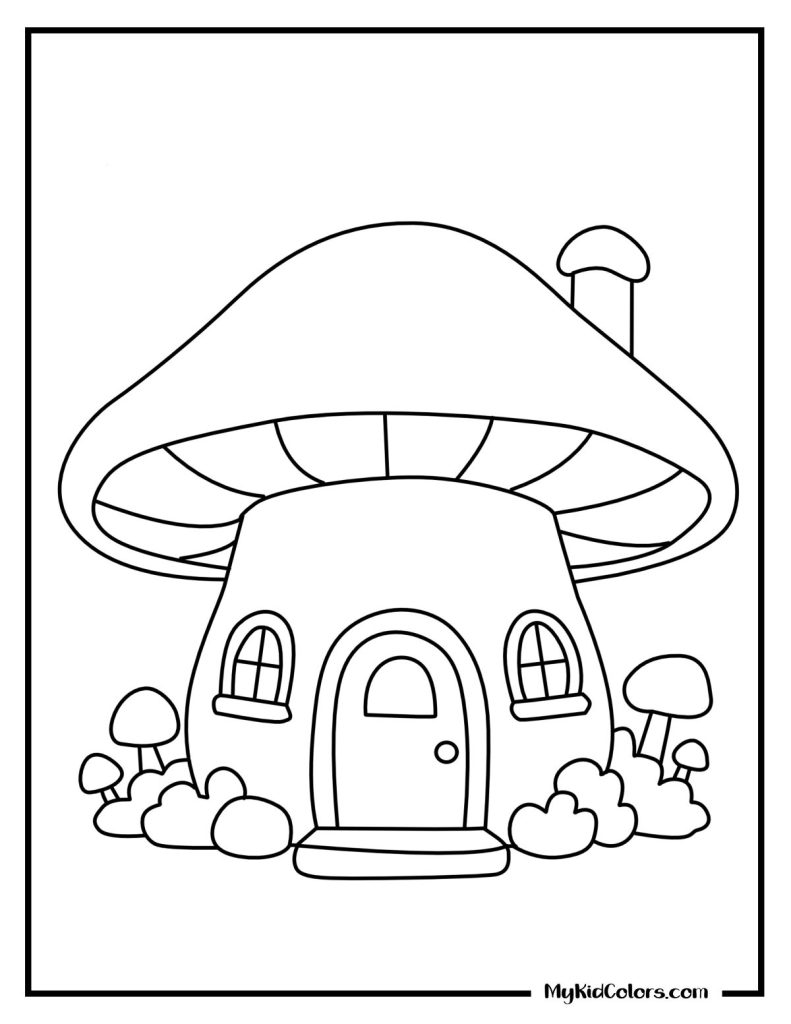
- Pages 2 & 3: bring in imagination and connection: a mushroom house and a child peacefully picking flowers in a garden.
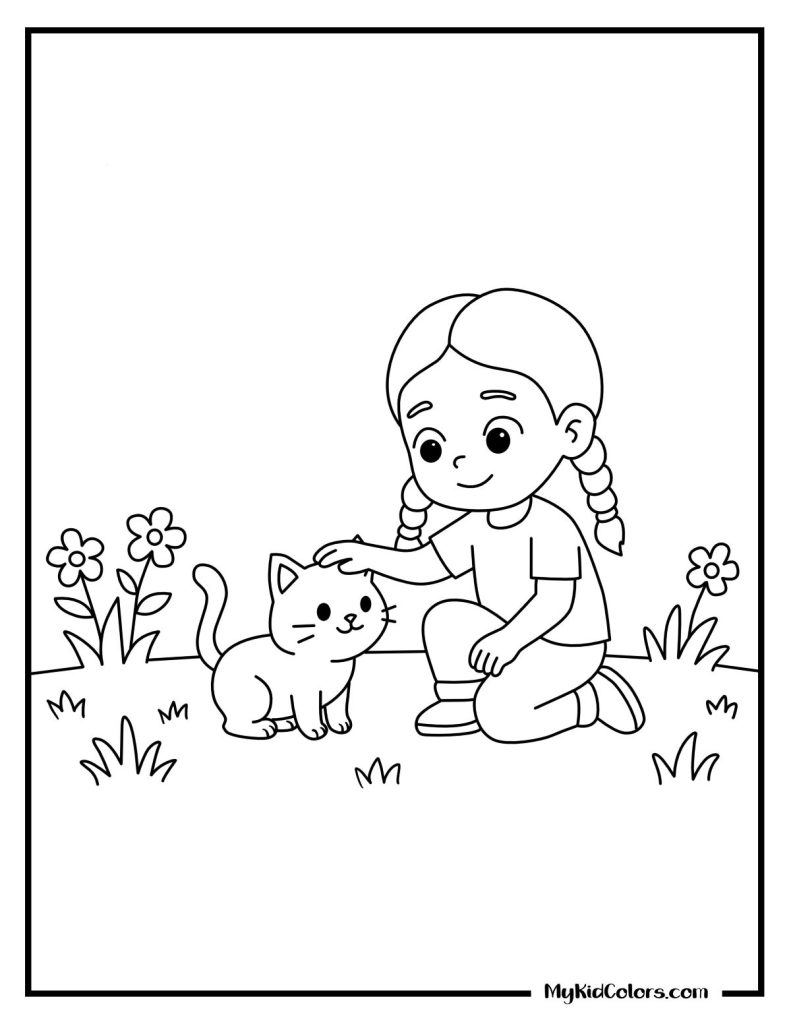
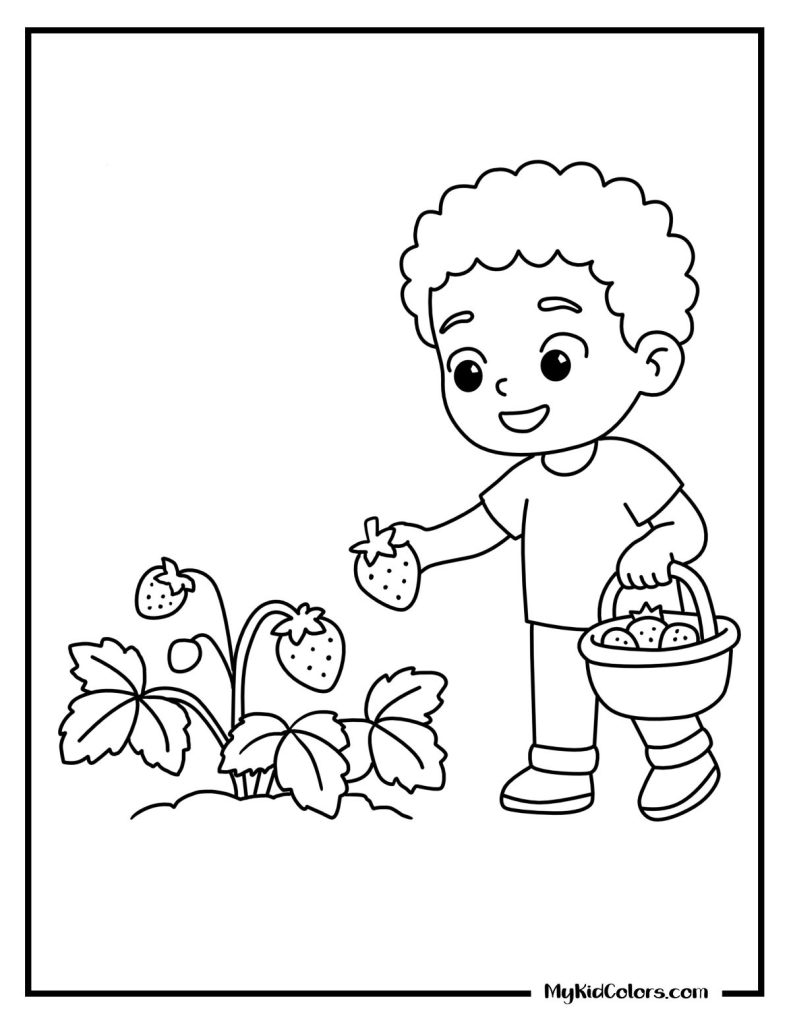
- Pages 4 & 5: focus on gentle interaction—caring for a pet and picking strawberries, reinforcing calm and nurturing moments.
The Slow Home: Kitchens, Making, and the Art of Taking Care (Pages 6-10)
Perfect for elementary kids. These nature colouring pages and forest garden coloring pages printable show routines, relationships, and slow living.
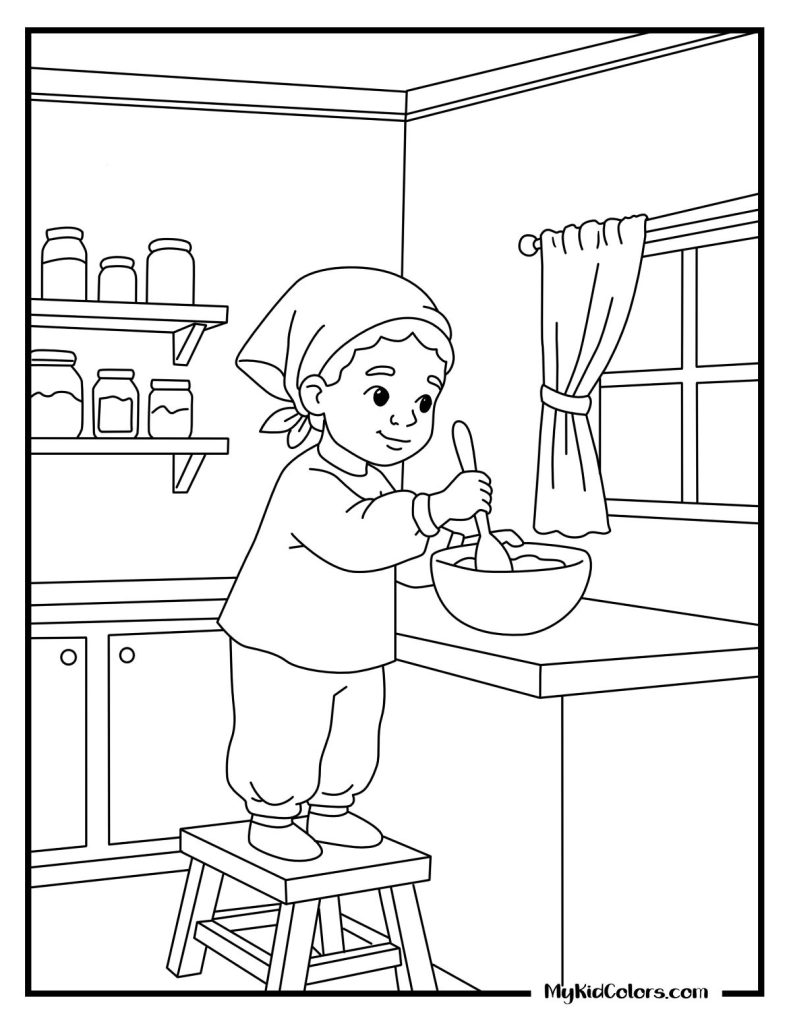
- Page 6: highlights a cozy kitchen moment where a child helps mix ingredients—introducing care and participation.
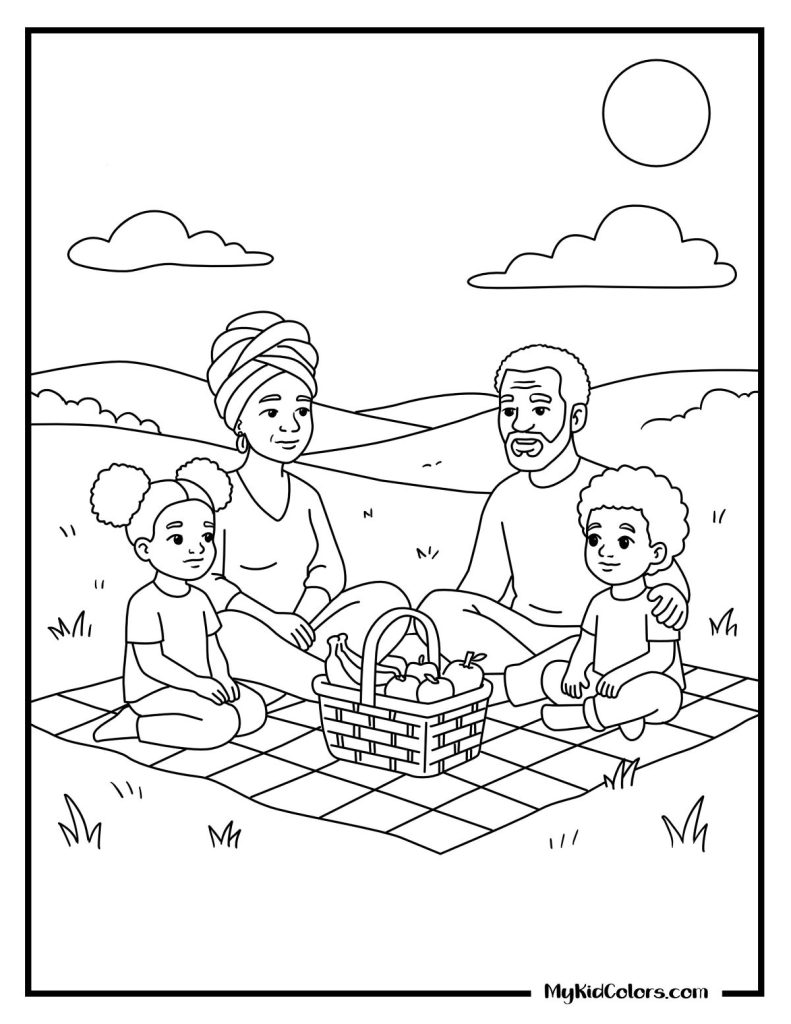
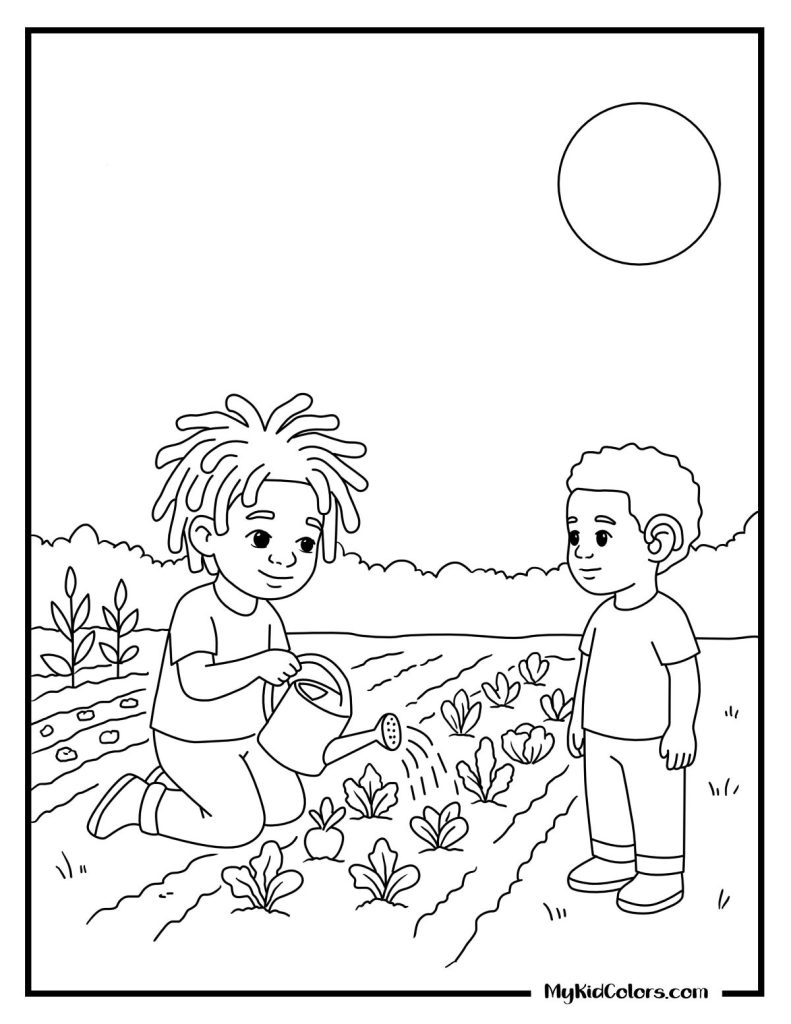
- Pages 7 & 8: focus on connection and responsibility: a peaceful family picnic and a child watering plants in a garden.
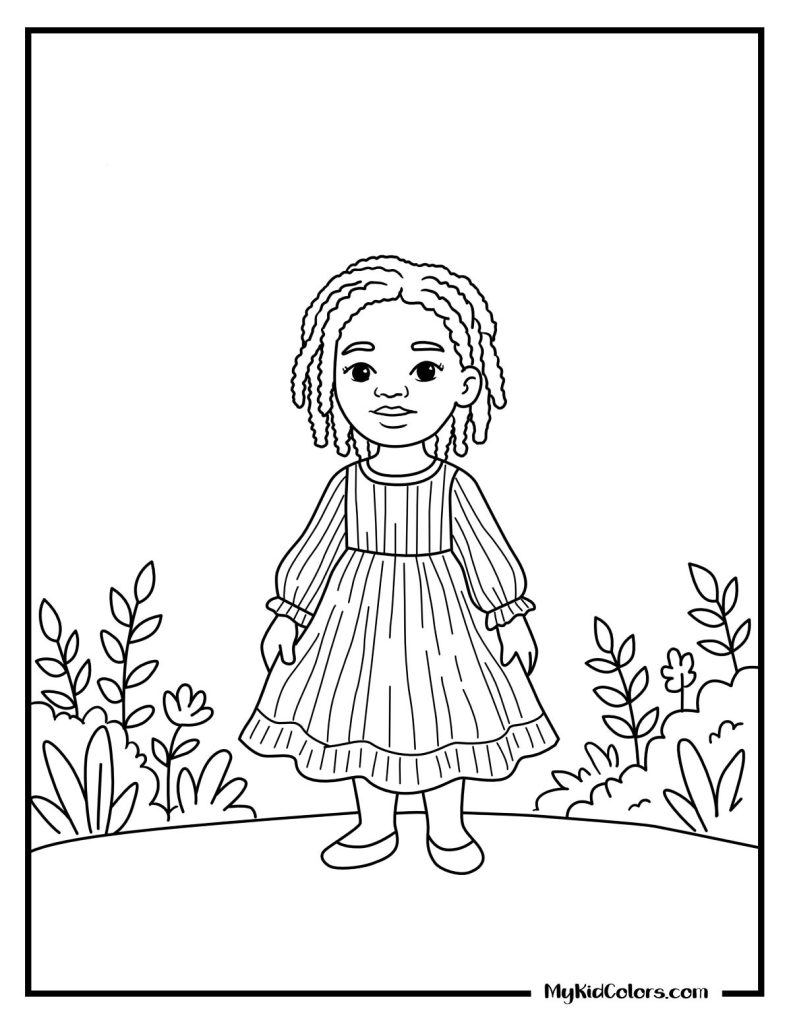
- Pages 9 & 10: explore identity and calm—reading under a tree and expressing personal style through cottagecore clothing.
Soft Days: Rest, Nature, and the Pleasure of Doing Nothing in Particular (Pages 11-15)
Designed for older kids or quiet reflection. These adult coloring pages cottagecore and cozy nature coloring book-style scenes offer deeper storytelling.
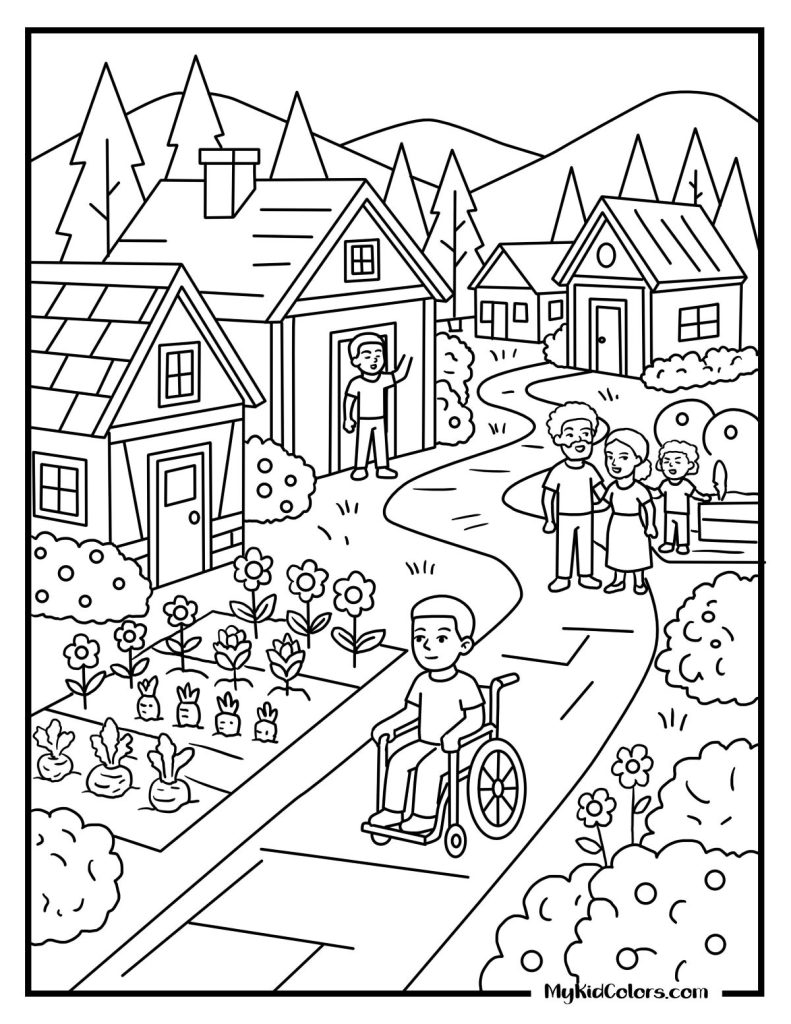
- Page 11: shows a full cottagecore village—community, connection, and peaceful living.
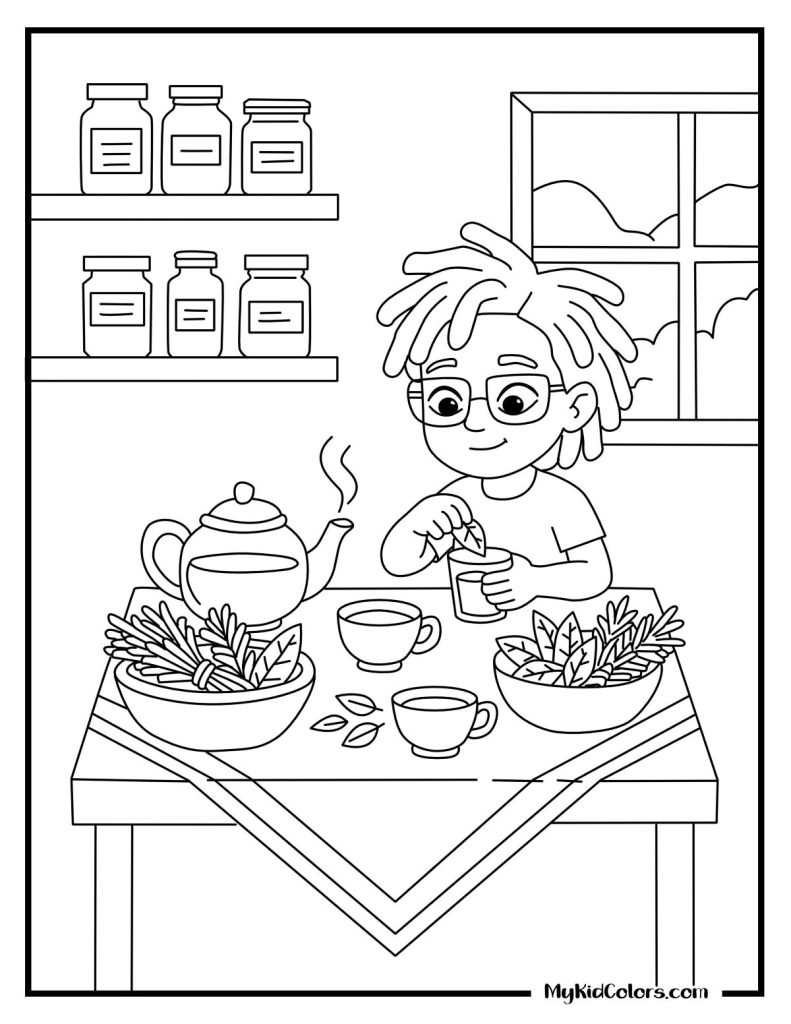
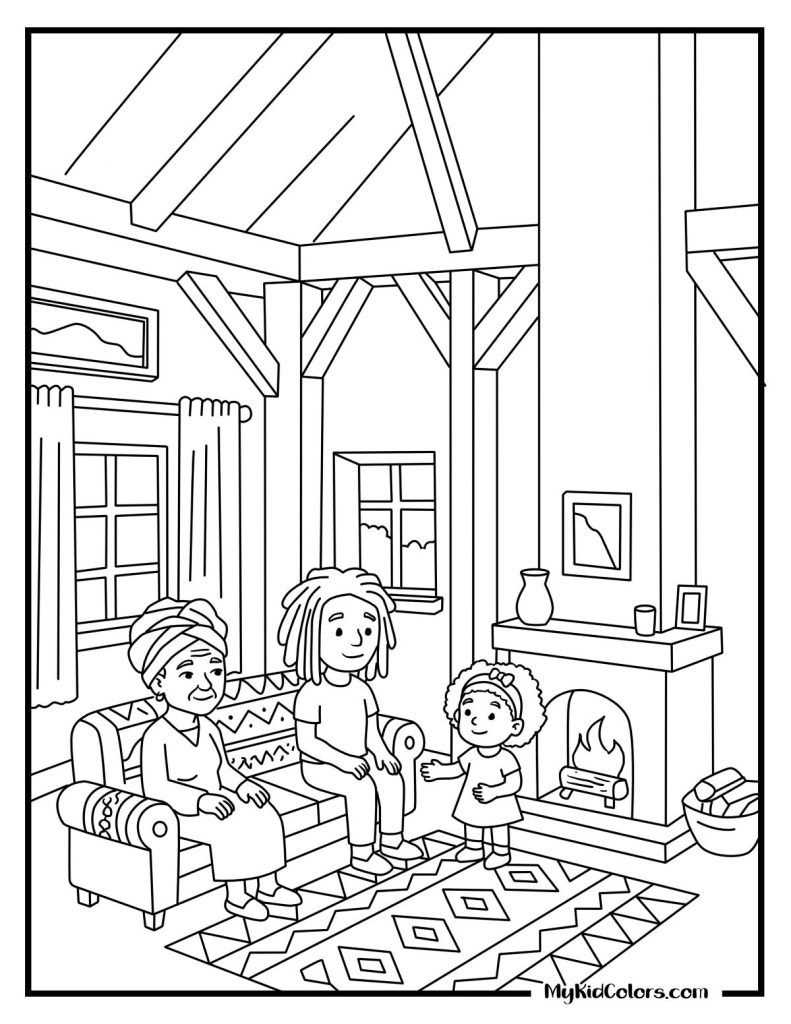
- Pages 12 & 13: explore rituals and culture: preparing herbal tea and experiencing a culturally rich cottagecore home.
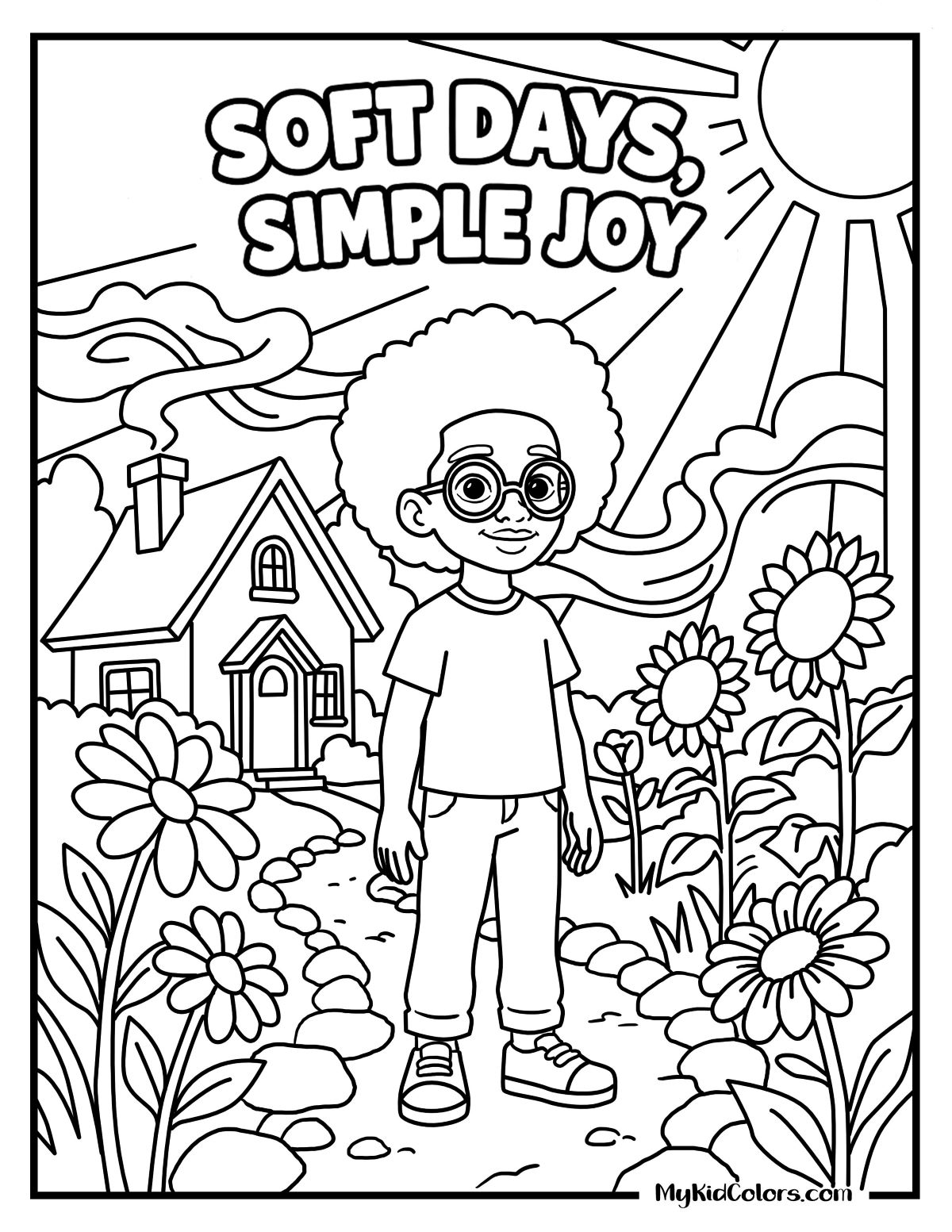
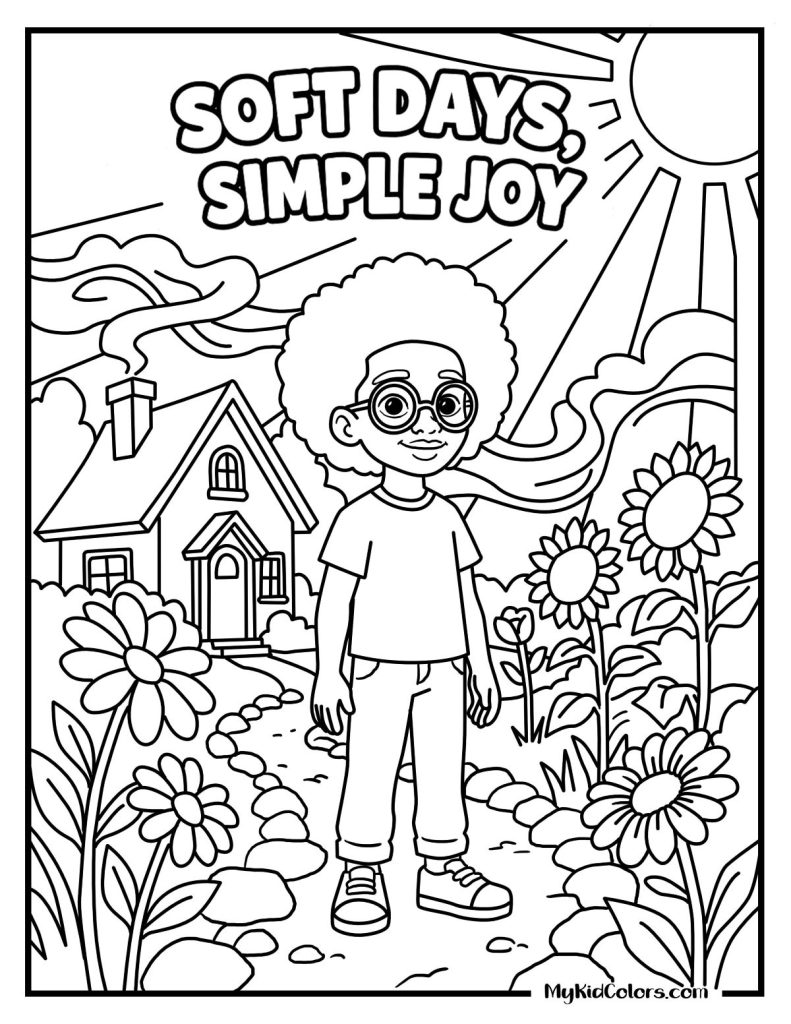
- Pages 14 & 15: bring emotional meaning—contrasting busy life vs calm living, ending with a powerful affirmation of “Soft Days, Simple Joy.”
Perfect for Classrooms, Homeschools, and Screen-Free Slow Days
These pages work as nature unit printables, slow morning activities, gardening curriculum companions, and calm-down corner anchors. A few ways to use them:
- Seasonal Rhythm Calendar: Print Pages 1, 4, 7, and 14 and assign them as four seasonal coloring pages — one per season. After each coloring session, talk about what is growing right now, what changes outside, and what your family does differently in this season versus others. Over a year, the four pages become a record of how your family moves through time.
- Handmade Alongside: Print Page 9 — the child pressing flowers — and take your child outside to find three things worth pressing: a leaf, a small flower, a petal, a blade of interesting grass. Press them in a heavy book. When they are ready in a week, glue them to the back of the colored page. The coloring and the making become one artifact.
- Slow Morning Ritual: Print Pages 11 through 13 and put one out on the table with crayons before a slow Saturday morning begins. No instruction. No timer. Just the page, the crayons, and the morning. For families trying to establish a slower weekend rhythm, this is one of the simplest anchors available — it signals before a word is spoken that today is a different kind of day.
Why We Choose Hand-Drawn Over AI
Cottagecore depends entirely on the quality of the line. The warmth of a worn wooden table, the specific way a wildflower leans, the texture of a knitted blanket folded over a chair arm — these are details that require a person who has looked at the real thing and understood what makes it feel like itself.
The illustrator who drew these pages made specific choices. The child on Page 6 has natural hair loose and flyaway from an afternoon in the garden. The family on Page 13 has their particular way of sitting together.
The hero page on Page 15 was drawn by someone who understood that a harvest gathering has always, everywhere, included everyone. That specificity is the whole point of this aesthetic.
Frequently Asked Questions
My child is deeply drawn to this aesthetic but it seems aimed at adults online. Is it appropriate for younger children?
Yes, and younger children often connect to the values underneath cottagecore more naturally than adults do — they already live slowly, notice small things, and find joy in the immediate and handmade. The aesthetic online can skew adult in its execution, but the underlying world — gardens, animals, making things, being outside, food that came from somewhere — is entirely at home with children. Pages 1 through 5 in this set are specifically built for younger children who love nature, texture, and living things without needing the more complex composition of the later pages.
Are there pages that work for a multicultural or global classroom unit on slow living and nature?
Yes. Pages 7 and 8, the market scene and the child feeding chickens, and Pages 13 and 15 are explicitly multicultural in their framing — the people in them come from a wide range of backgrounds, and the activities shown (market trading, harvest gathering, tending animals, preparing food together) are practices that exist across many cultures and do not belong exclusively to the English cottage tradition. For a classroom unit on food systems, sustainable living, or global cultural practices around agriculture and craft, these pages offer a visual vocabulary that does not center one cultural version of the same human impulse.
How do I use these pages as part of a slow living or screen-free initiative at home?
The most effective approach is environmental rather than instructional. Print two or three pages and leave them in a visible, accessible place with a small set of good quality colored pencils nearby. Do not announce a screen-free initiative. Simply make the alternative beautiful and available. Cottagecore coloring tends to self-select for calm because the scenes themselves are calm — a child who picks up one of these pages and starts coloring is already, by the nature of the activity, doing exactly what the aesthetic values. The screen-free moment follows naturally from the choice of subject.
Download Your Free Set
Slow, simple, close to growing things — this is a way of being that has existed everywhere, always, in every family that has ever made something by hand or eaten something they grew themselves.
Your child belongs in this world. These pages were drawn to show them that.
You Might Also Like
- 15 Vegetables Coloring Pages That Teach Kids Healthy Habits and Smart Food Choices
- 15 Free Habitat Coloring Pages Beyond Basic Animal Worksheets (Human-Drawn PDFs)
- 15 Kindness Coloring Pages That Teach Empathy, Connection, and Everyday Compassion
- 15 Spring Break Coloring Pages That Bring Kids Joy & Creative Freedom
- 15 Emotions Coloring Pages That Help Kids Understand Their Feelings
- 15 Cat Coloring Pages That Teach Kids Comfort, Creativity & Calm

