
15 Free Ballerina Coloring Pages That Put Every Child on the Stage
Ballet has historically had a particular face. It is a face most children do not share. And for a long time, that gap between who ballet showed and who loved it went mostly unremarked.
The love was always there. Children of every background have always twirled in kitchens, practiced arabesques in hallways, and stood at the barre of a class that sometimes made them feel like a guest in their own dream.
These free ballerina coloring pages do not argue that these children belong in ballet. They simply show them there. Which is the only thing that ever needed to happen.
A Note from Louisa (Founder of MyKidColors)
Growing up, there was a kind of shorthand I heard: certain activities were described as things certain people did, and certain other people did not. Hiking. Camping. Ballet. The message was never shouted. It was just quietly understood.

Less searching. More MEANINGFUL moments.
When kids recognize themselves on the page, coloring changes.
The Inclusive Family Coloring Collection includes 25 human-drawn illustrations centered on everyday moments — designed to make inclusion feel normal, joyful, and intentional.
Because representation shouldn’t be reserved for one month.
These pages are my answer to that quiet understanding. The illustrator who drew this set drew Black and brown children on the stage, at the barre, in the costume room, in the audience. Not as exceptions. As the story itself.
Because every child who has ever twirled in a kitchen, or stood on their toes to see how it feels, belongs there. These pages just make that visible.
Conversation Corner: 3 Questions to Ask While Coloring
Turn this activity into a meaningful bonding moment:
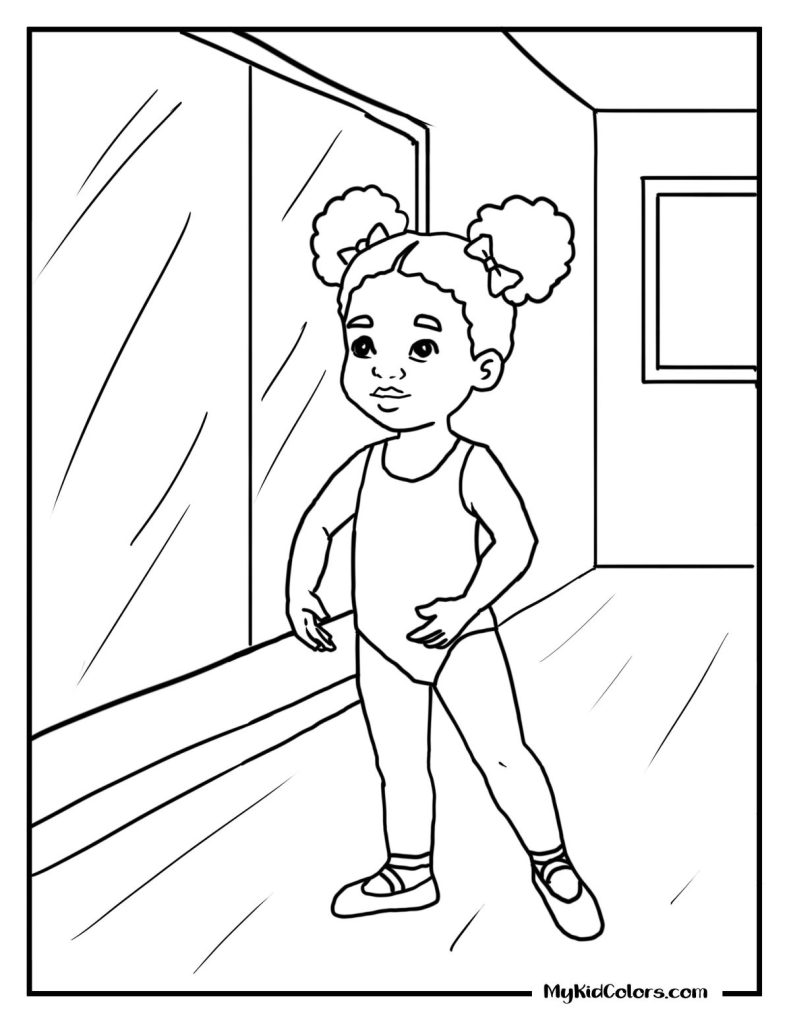
- For “First Dance Class” (Page 3): “How do you think it feels to try something new like dance for the first time, and what would help you feel more confident?”
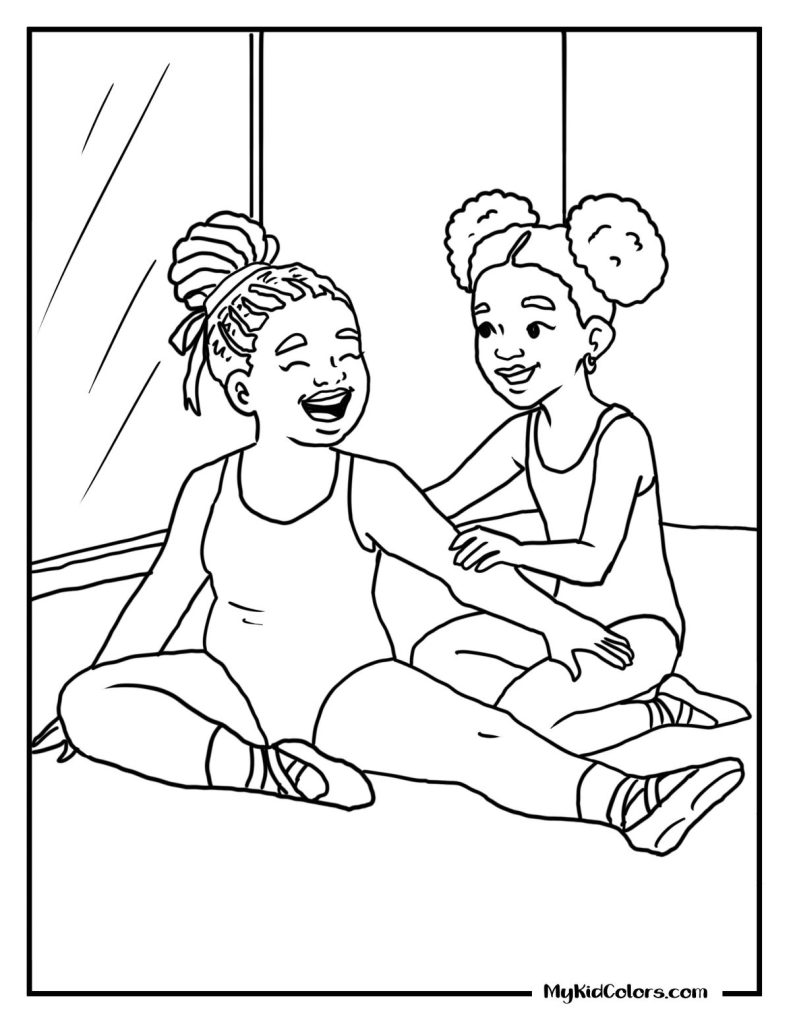
- For “Ballet Class Friendship” (Page 9): “Why is it important to support and encourage each other when we are learning something new together?”
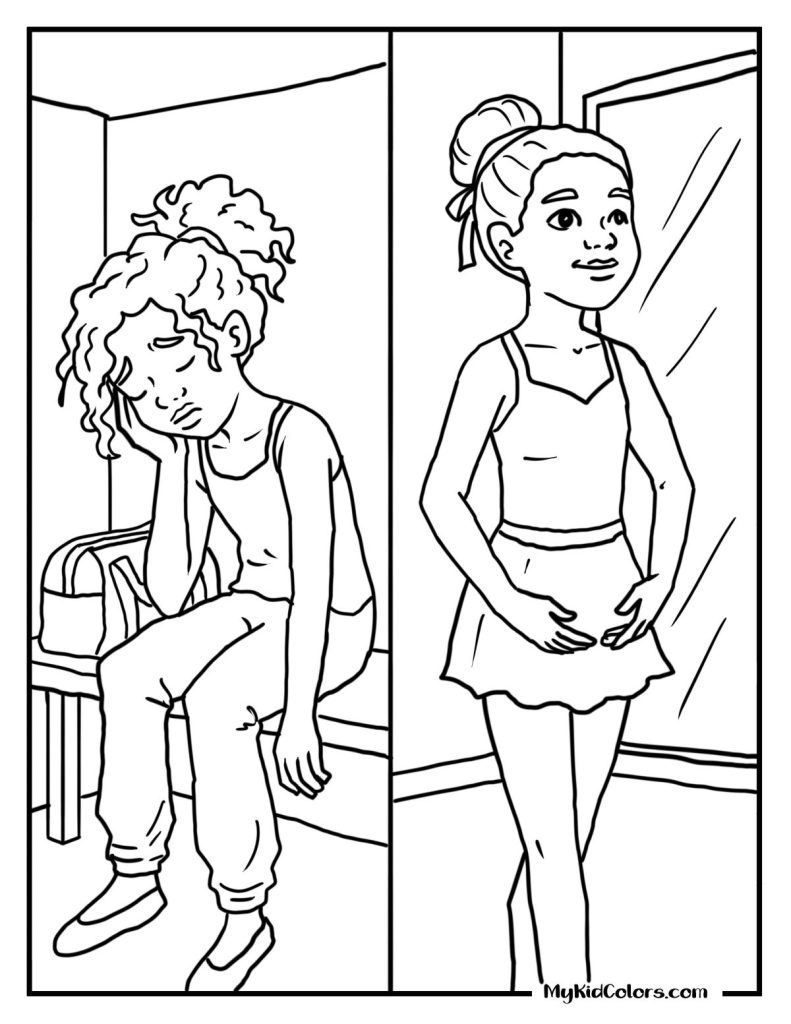
- For “Before & After Practice” (Page 14): “What changes do you notice between the tired side and the confident side, and what helped the dancer grow?”
The Collection: 15 Free Ballerina Coloring Pages
We’ve organized these into three sets to help children understand the full dance journey—from learning basics to expressing confidence and identity.
For Little Hands: First Steps in Dance (Pages 1–5)
Best for toddlers and preschoolers. These ballerina coloring pages easy focus on simple poses, early learning, and gentle practice moments.
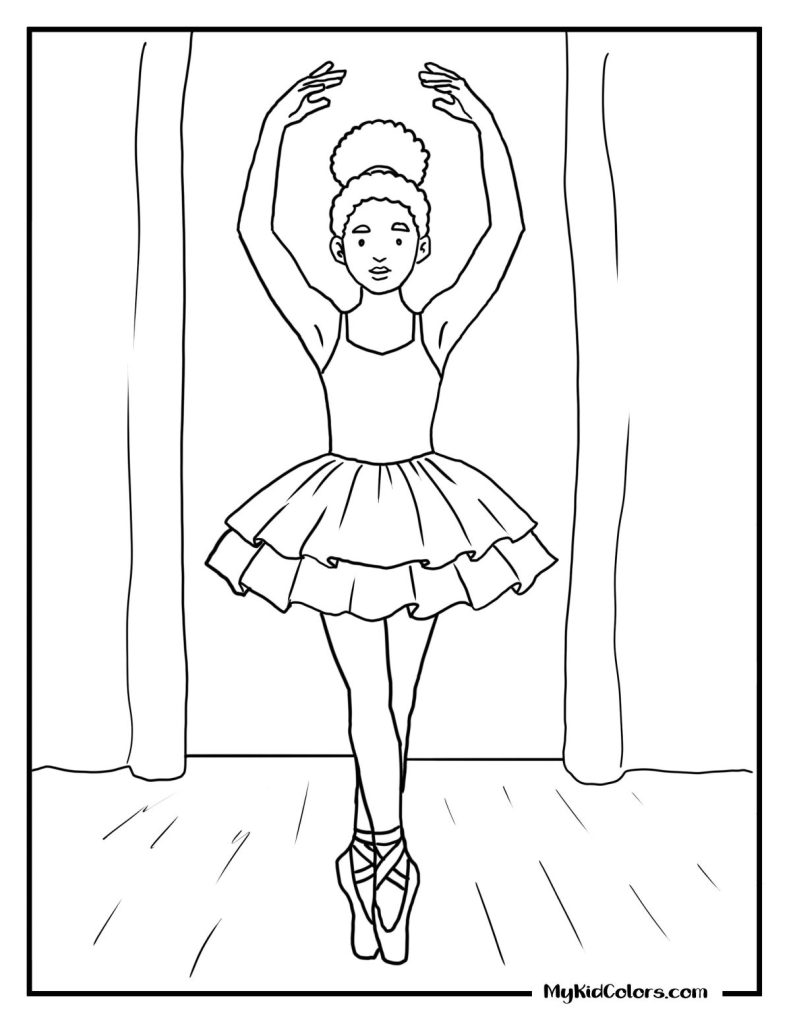
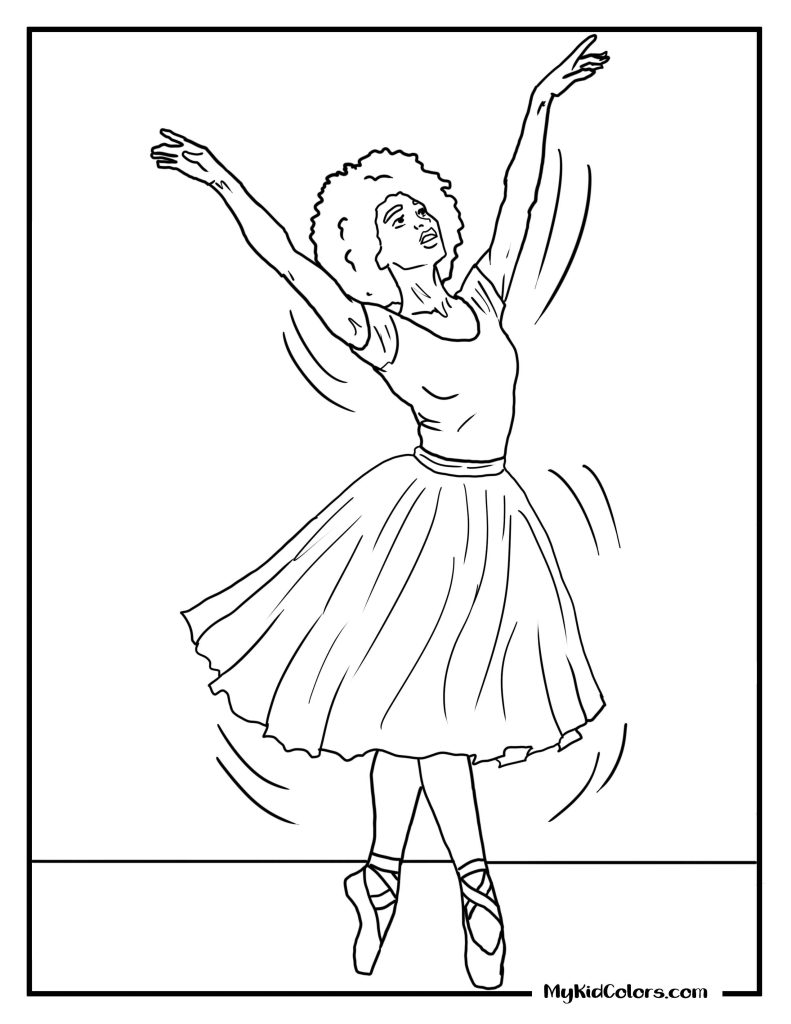
- Page 1: introduces a classic ballet pose with a calm, confident stance.
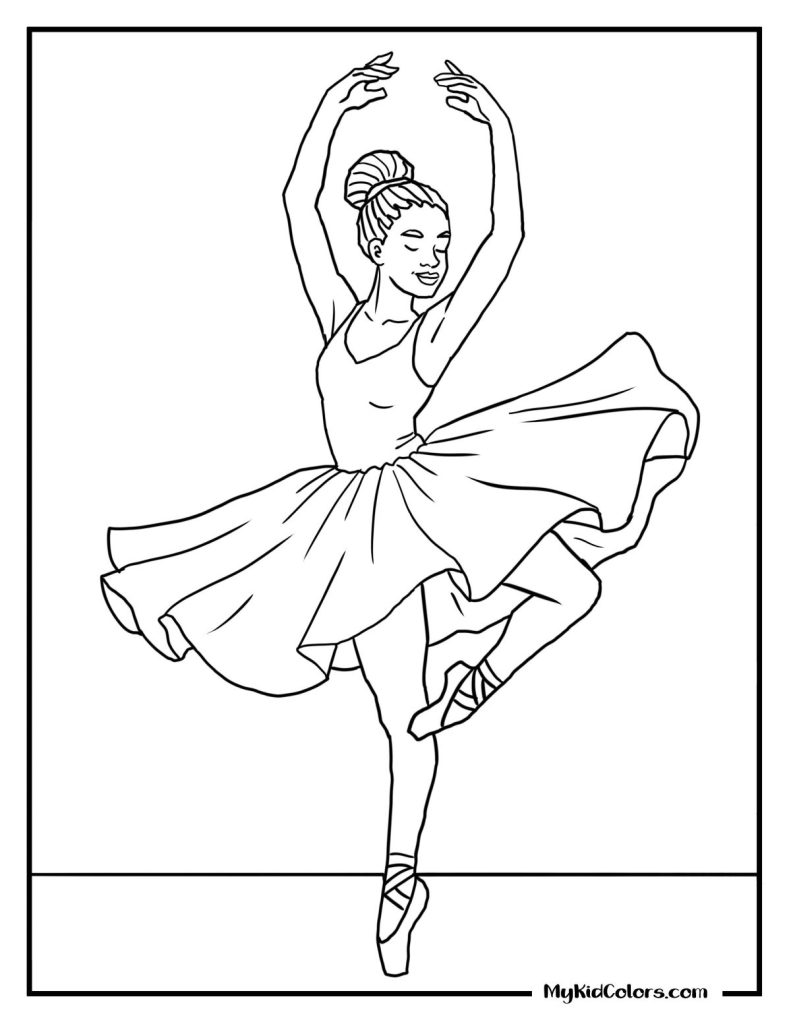
- Pages 2 & 3: show movement and beginnings—a twirling dancer and a toddler practicing in her first dance class.
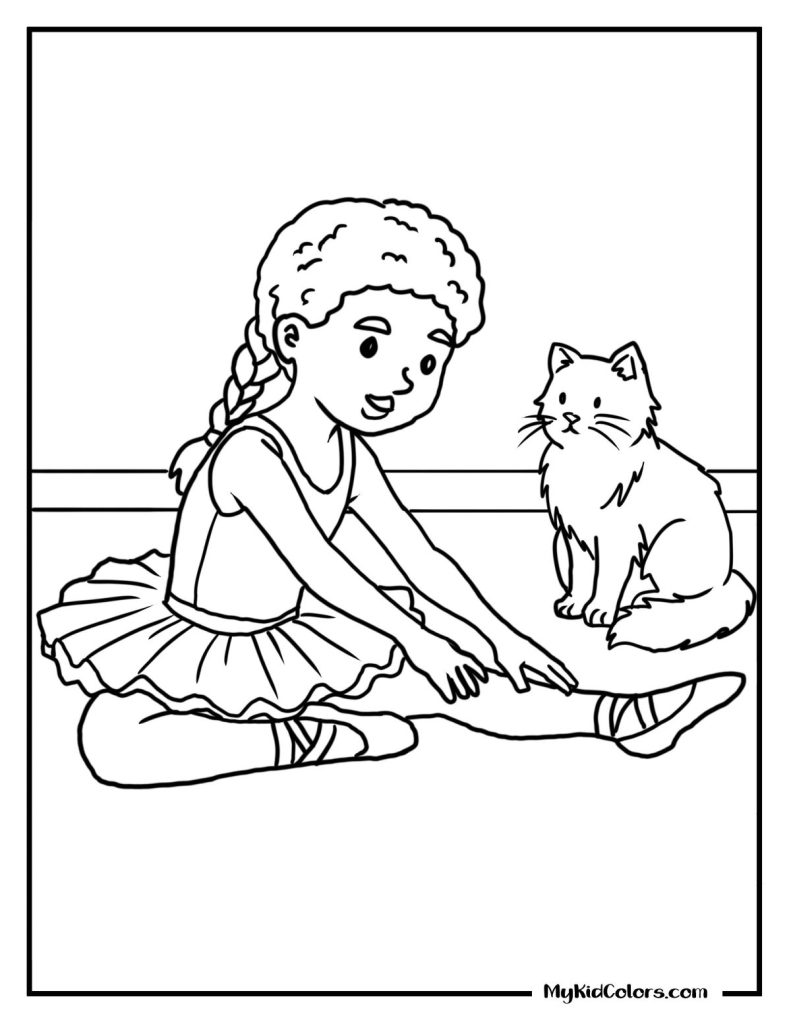
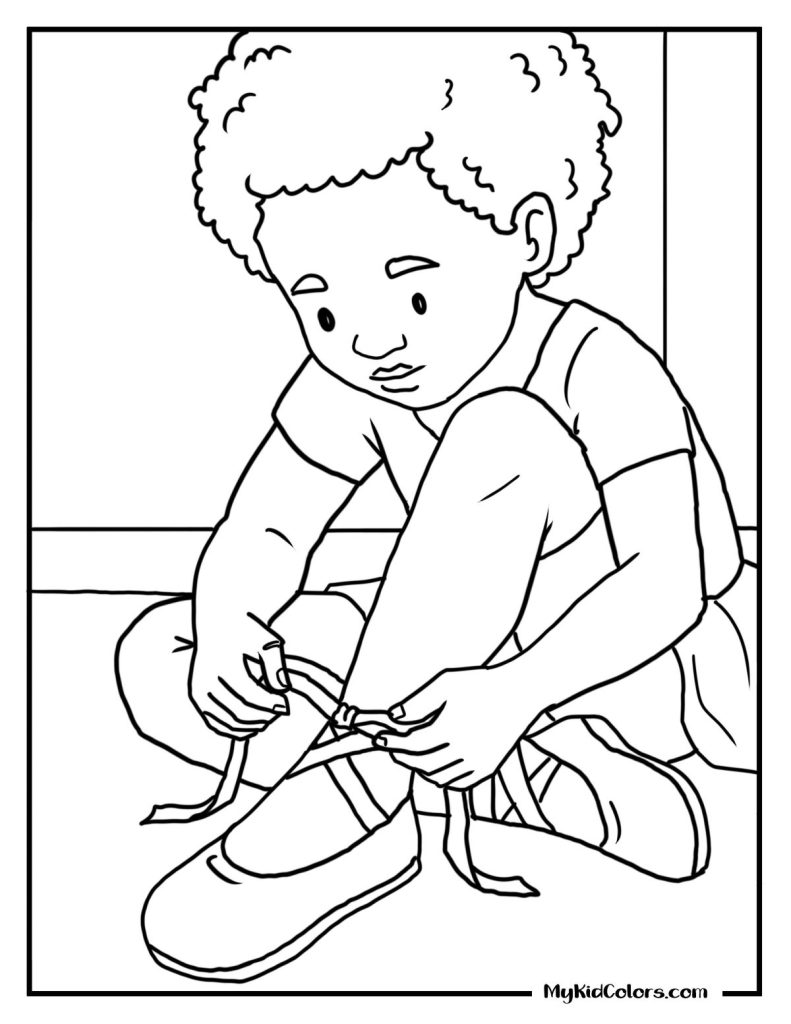
- Pages 4 & 5: highlight routine and preparation—stretching with a pet nearby and quietly tying ballet shoes before practice.
Practice, Growth & Connection (Pages 6–10)
Perfect for elementary kids. These dance coloring pages and ballet coloring sheets explore teamwork, emotion, and daily practice.
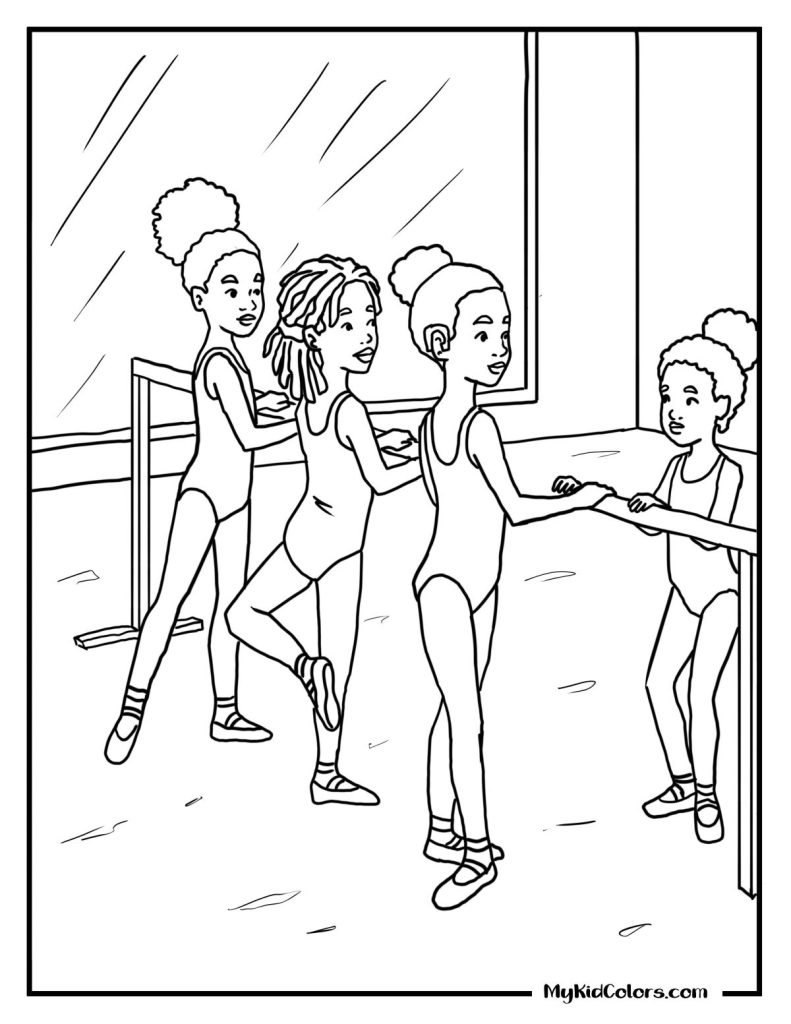
- Page 6: shows a ballet class working together at the barre, building discipline and focus.
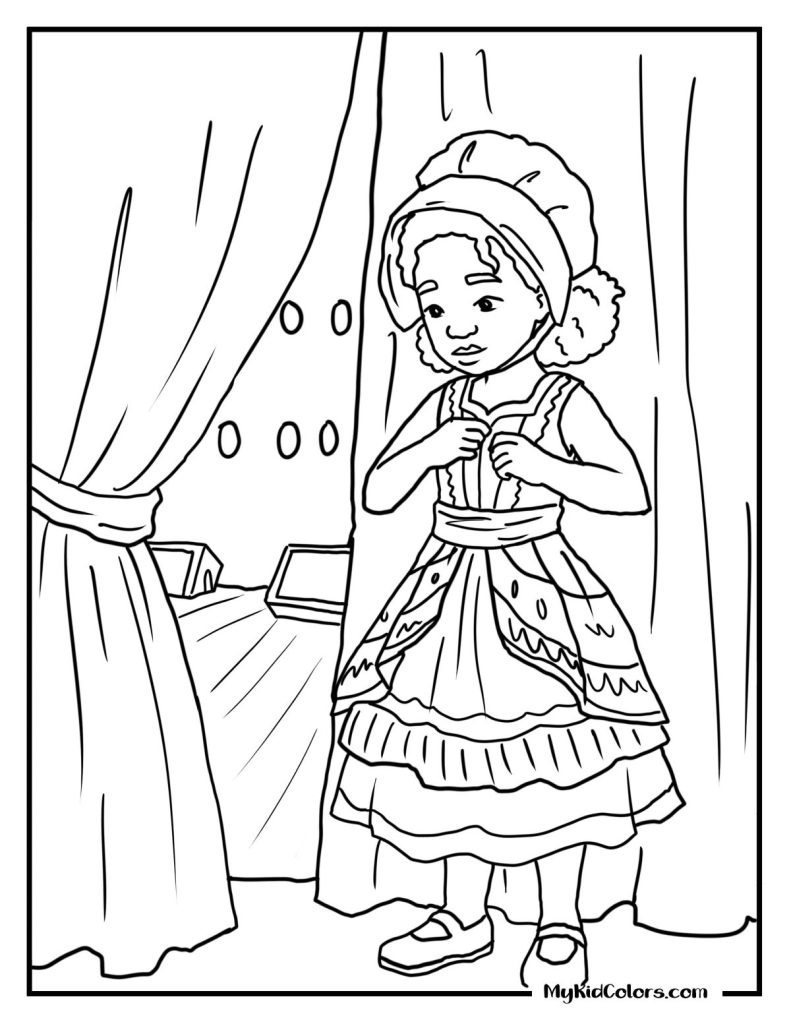
- Pages 7 & 8: capture deeper moments—getting ready backstage and expressing emotion through dance.
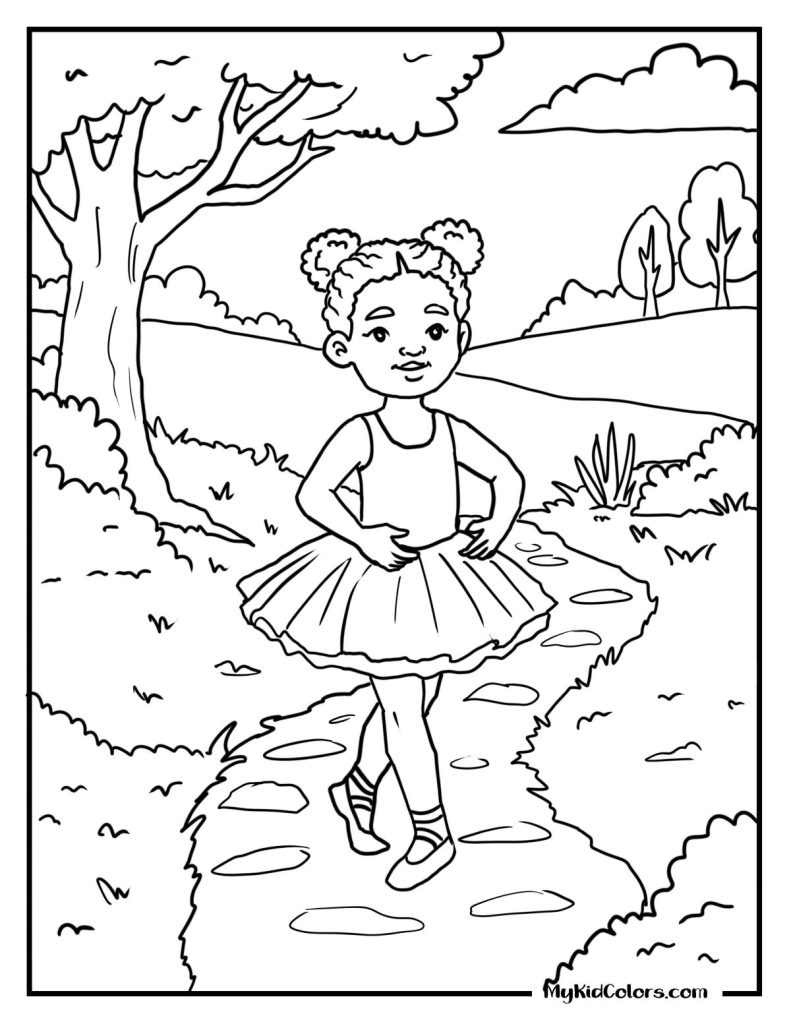
- Pages 9 & 10: emphasize connection and balance—friendship in class and practicing outdoors in a calm environment.
Confidence, Identity & Expression (Pages 11–15)
Designed for older kids or reflective moments. These ballerina coloring pages PDF and detailed scenes highlight identity, culture, and growth.
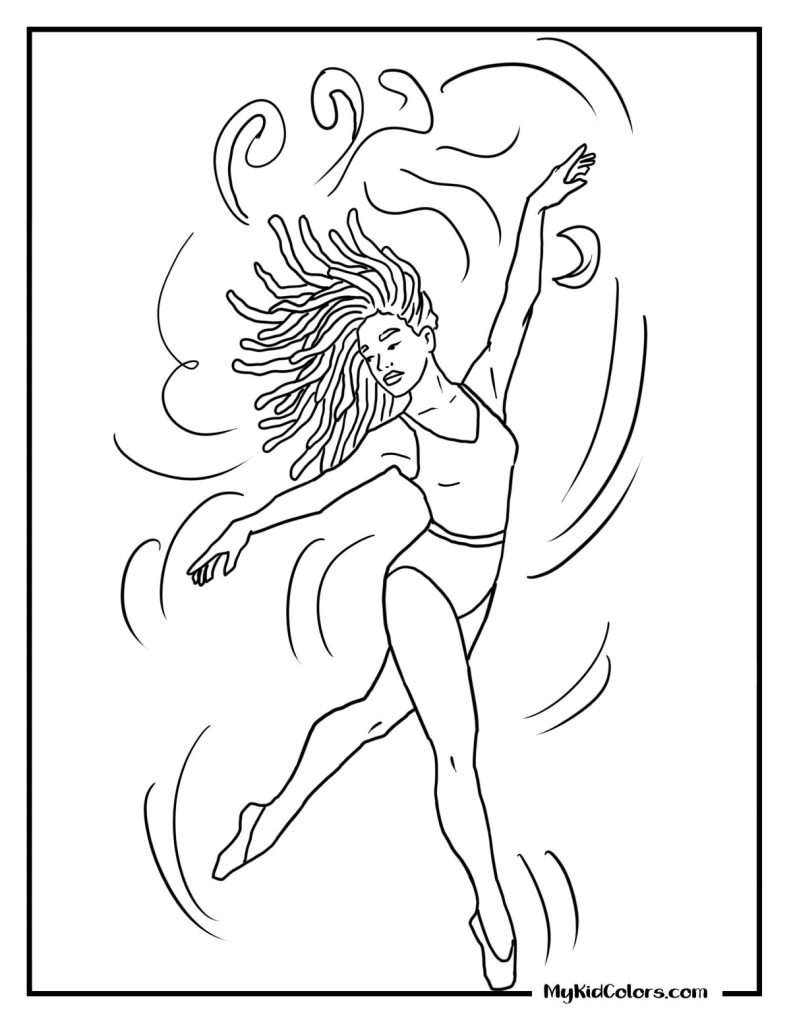
- Page 11: celebrates movement through hair and identity, showing dance as a full-body expression.
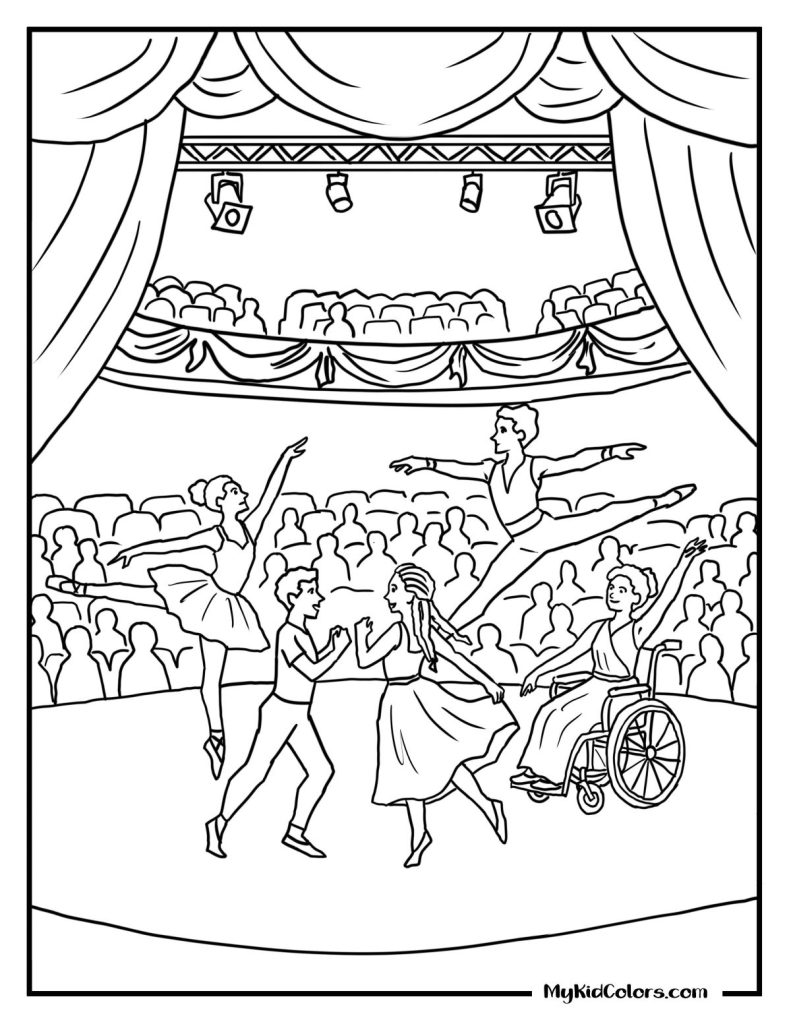
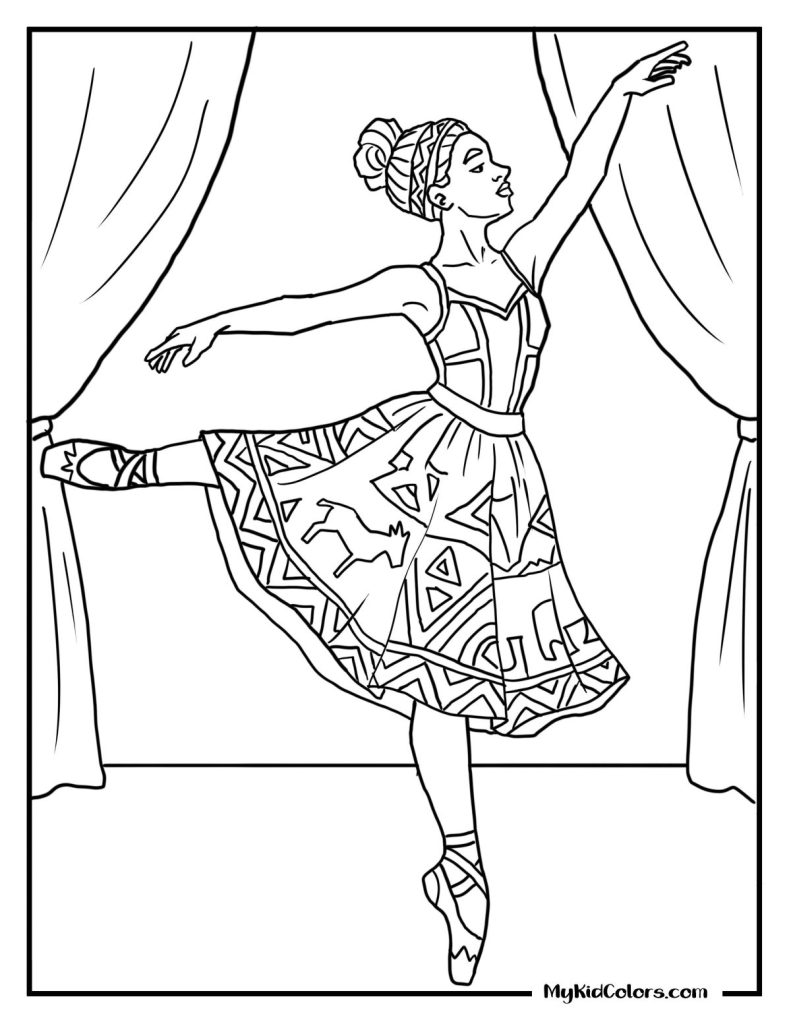
- Pages 12 & 13: expand the stage—performance scenes and cultural ballet fusion that honor heritage and creativity.
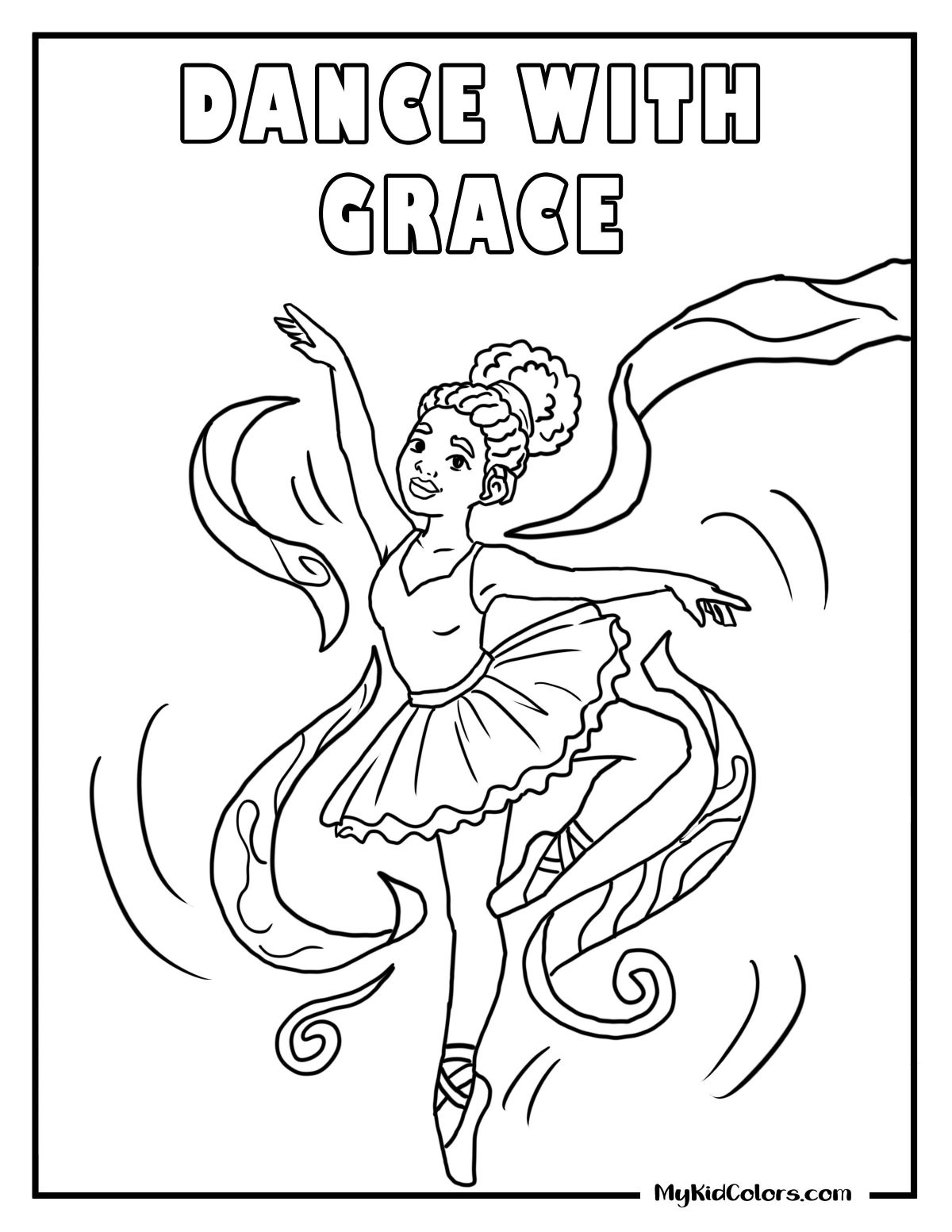
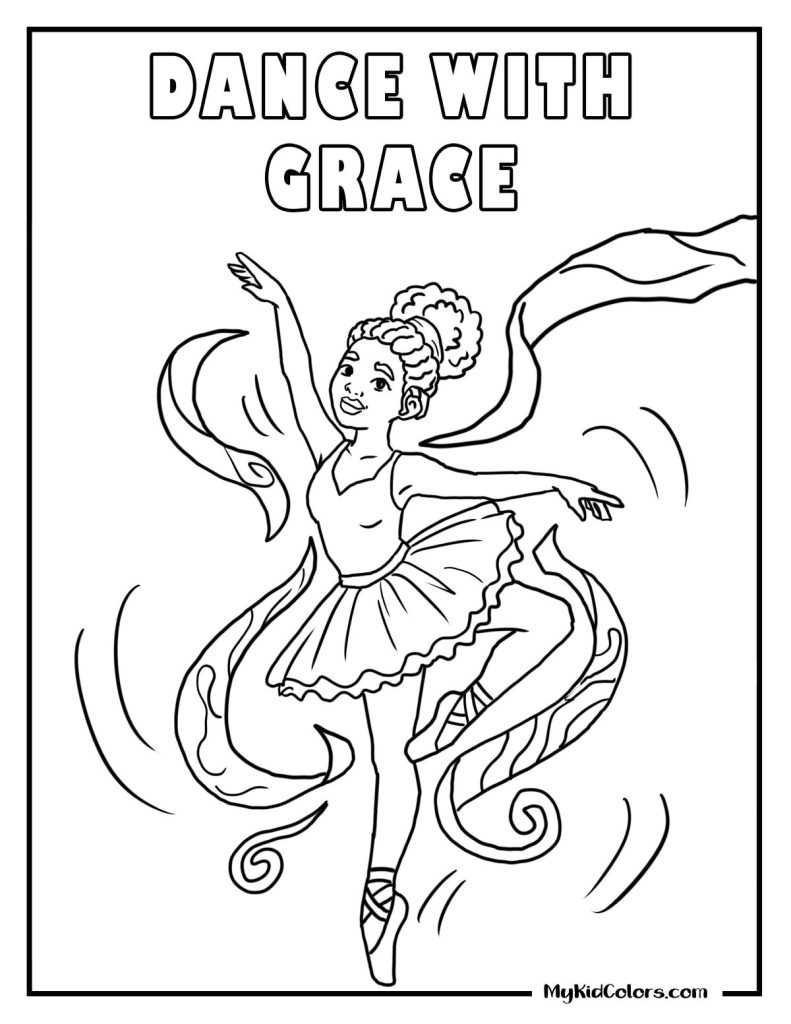
- Pages 14 & 15: bring everything together—growth through effort and the powerful message: “DANCE WITH GRACE.”
Perfect for Dance Studios, Classrooms, and Young Dancers at Home
These pages work as recital waiting room activities, dance class party crafts, summer camp printables, and quiet time activities for children who love movement. A few ways to use them:
- Dance Journal: Print Pages 6 and 13 and invite your child to write one sentence on the back of each: one thing they are working on in their dancing right now, and one thing they already do well. Over time, printing and collecting these pages creates a record of growth that is more honest and personal than a report card. For children who find it hard to articulate their own progress, this is a gentle, low-pressure way to start.
- Recital Day Keepsake: Print Page 14 — the bow scene — and bring it to the recital. After the performance, have your child color it while the memory is fresh. Write the date and the name of the piece on the back. Years from now, the combination of the image, the colors they chose, and the date will be more vivid than almost any photograph.
- Dance Vocabulary Pages: Print Pages 6, 8, and 12 and label the ballet positions and movements visible in each. For children in formal classes, this bridges coloring and learning in a way that reinforces vocabulary without feeling like homework. For children who dance informally, it introduces the language of a form they already love in their body.
Why We Choose Hand-Drawn Over AI
The body in motion is one of the hardest things to draw well.
The illustrator who drew these pages drew dancers in motion. Page 13 in particular was a deliberate technical challenge: an arabesque line that is clean and specific and held, the kind that requires someone who has looked at real bodies doing real movement and understands what makes it feel like itself.
That specificity applies to who is in the pages too. A Black girl on Page 1 gripping the barre for the first time. A boy on Page 9 mid-turn. The hero page backstage with every kind of dancer in it. These were choices, made line by line, by one person who understood that ballet has always had more than one face — even when the coloring pages did not.
Questions Parents and Teachers Ask
My son loves dance but is nervous about starting ballet because of how boys are treated. What do I tell him?
Tell him that male ballet dancers are among the most physically powerful athletes in any performance art — they carry partners, execute jumps that require extraordinary strength, and train as rigorously as professional athletes in any sport. The narrative that ballet is not for boys is cultural, recent, and wrong. Page 9 in this set was drawn specifically for this conversation: a boy mid-turn, alone in the frame, doing something he is good at. Put it on the table and let him color it. The image often does more than the words.
We cannot afford formal classes. Are there ways to use these pages to support a child who loves dance at home?
Yes. Pages 1 through 5 introduce first positions, the barre, and the basic postures of ballet in a visual form a child can study and try. After coloring Page 2, look up a short video of first position together and try it. After Page 4, try standing in front of a mirror and seeing what your reflection does when you move. This is not a substitute for a teacher, but it is a legitimate way to engage with dance vocabulary and the physical pleasure of movement without any equipment or cost. For many children, this informal exploration is what builds the desire that eventually leads them to a class.
My child stopped going to dance class because they felt like they did not belong. How do I handle that?
That feeling is real and common, and it usually has less to do with the child’s ability than with what they see (and do not see) around them. These pages are a small part of a larger response — they are specifically designed to show a child who looks like them doing something they love, in a context that says their presence is not unusual. Pair them with books about Black or brown ballet dancers (Misty Copeland’s work is an accessible starting point for older children), and consider looking for dance programs specifically led by instructors from diverse backgrounds. The feeling of not belonging in a space changes most reliably when the space itself changes.
Download Your Free Set
Every child who has ever twirled in a kitchen or stood on their toes to see how it feels already knows what these pages are saying.
The stage has always had room for them. These pages just make sure they can see it.
You Might Also Like
- 15 Affirmation Coloring Pages That Help Kids Build Confidence, Calm, and Self-Love
- 15 Emotions Coloring Pages That Help Kids Understand Their Feelings
- 15 Color Therapy Coloring Pages That Help Kids Feel Calm & Safe
- 15 Mindfulness Coloring Pages That Help Kids Slow Down and Feel Calm
- 15 Monday Coloring Pages That Help Kids Start the Week with Calm, Focus, and a Positive Mindset
- 15 Free Princess Coloring Pages (PDF Printables)

