
15 Recycling Coloring Pages That Show Black Kids Caring for the Earth
Most kids are told to “throw things away.” Not many are taught what happens next — or why it matters where things go.
These recycling coloring pages follow Black children doing what kids everywhere already do: sorting bins, cleaning up the block, tending a garden, imagining what a cleaner world could look like. All 15 are hand-drawn by a real human illustrator.
Download free below, or scroll through the full set.
A Note from Louisa (Founder of MyKidColors)
Coming soon…

Less searching. More MEANINGFUL moments.
When kids recognize themselves on the page, coloring changes.
The Inclusive Family Coloring Collection includes 25 human-drawn illustrations centered on everyday moments — designed to make inclusion feel normal, joyful, and intentional.
Because representation shouldn’t be reserved for one month.
Conversation Corner: 3 Questions to Ask While Coloring
Turn this activity into a bonding moment. While your child colors, try asking these questions:
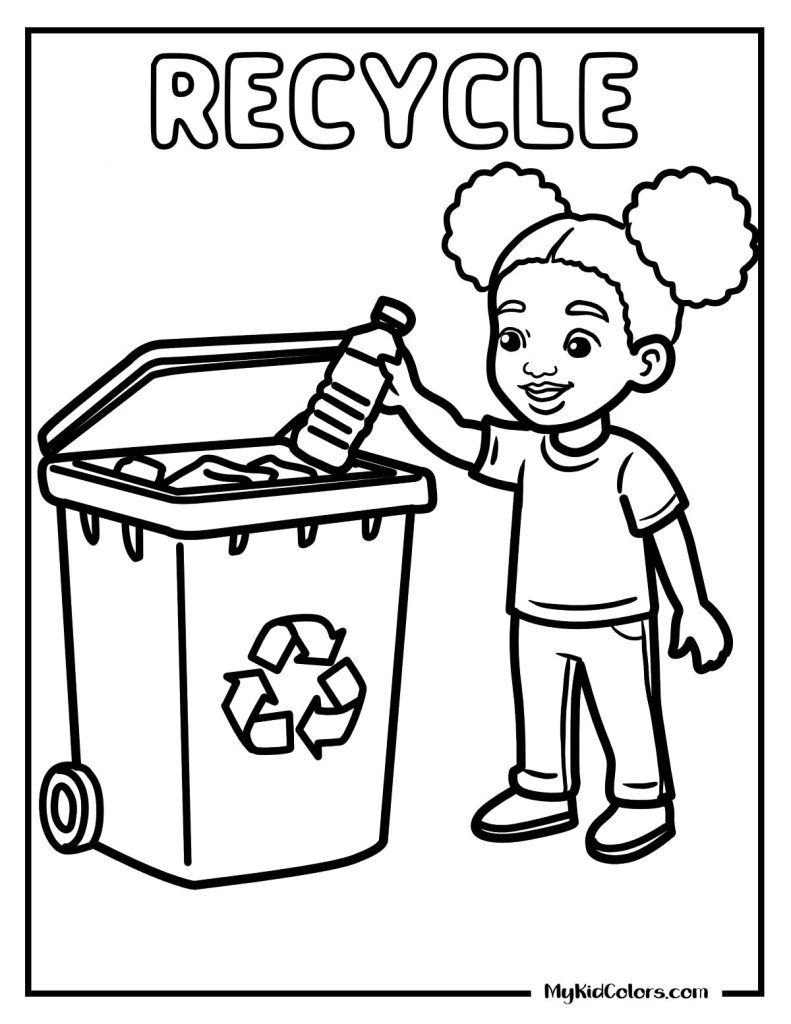
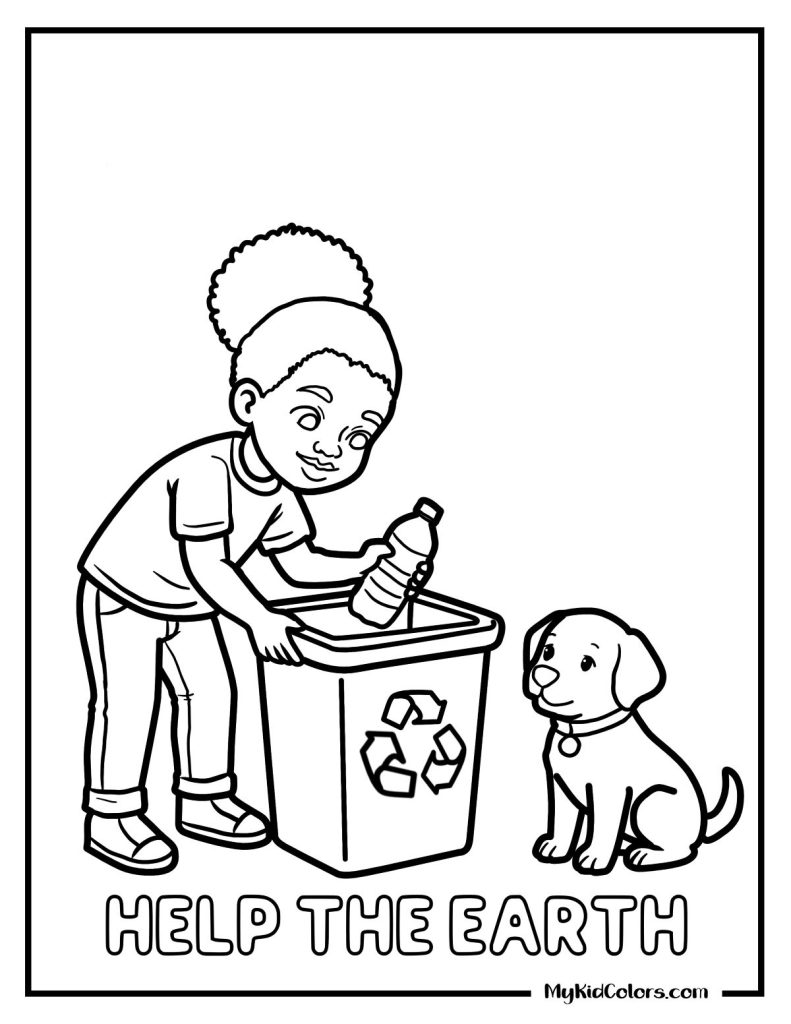
- For “Recycle” (Page 1): “Where do you think this bottle goes after it’s recycled?”
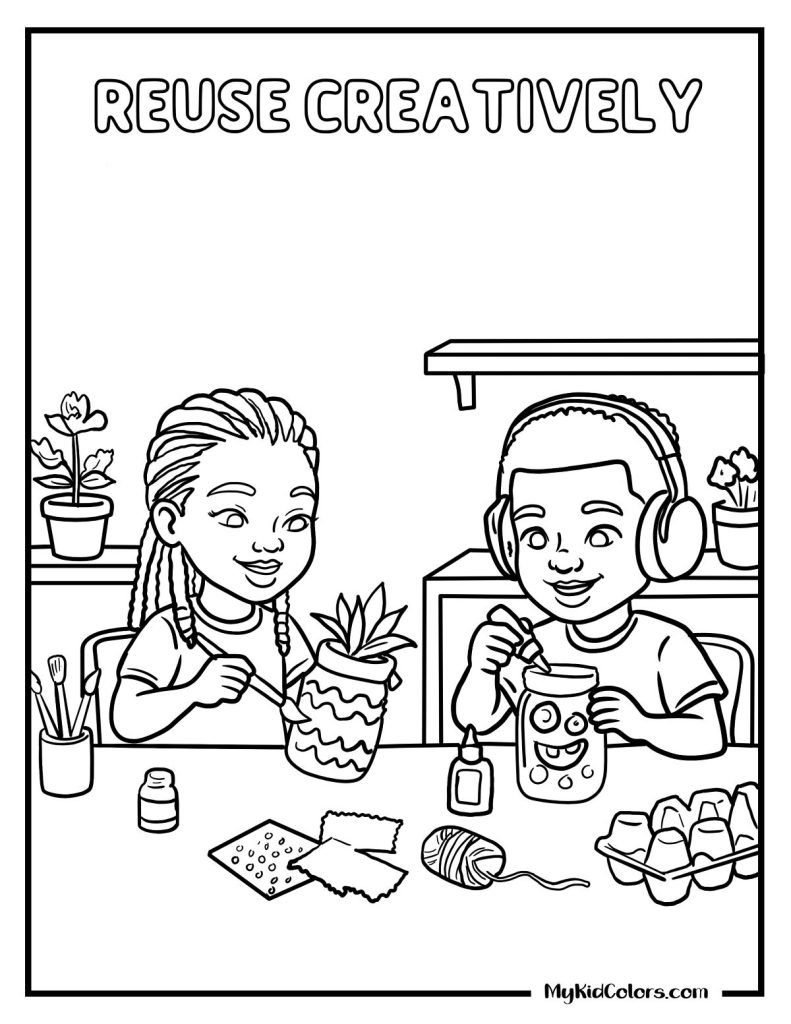
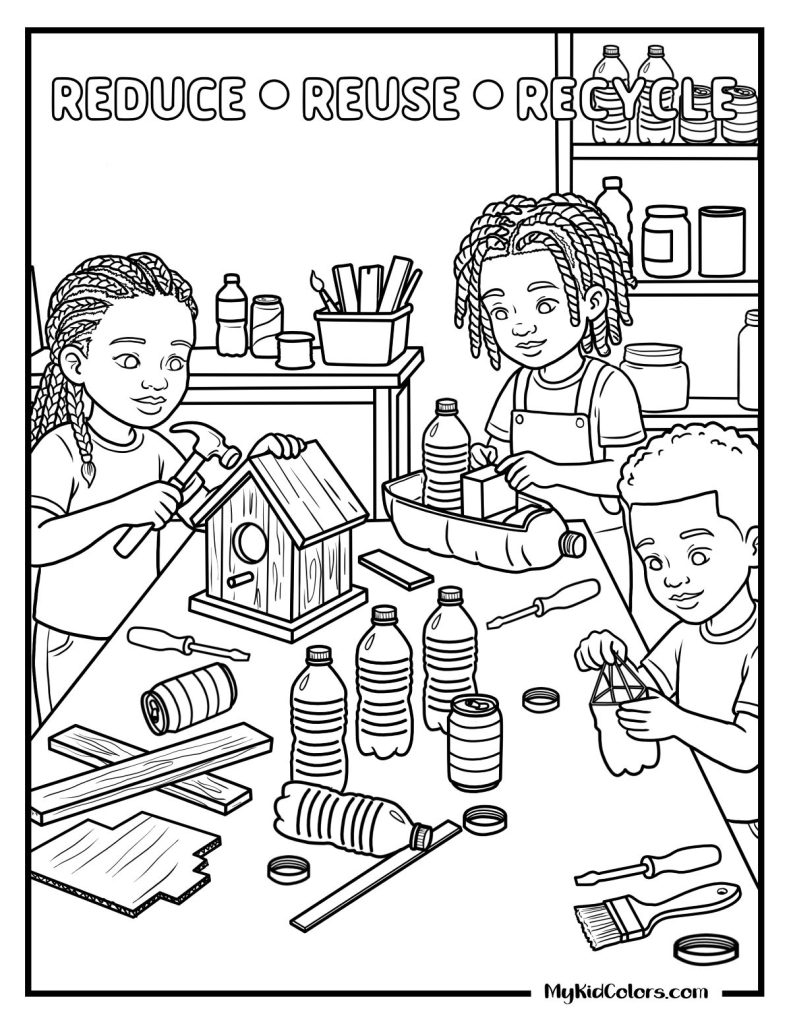
- For “Reuse Creatively” (Page 8): “What’s something at home we could reuse instead of throw away?”
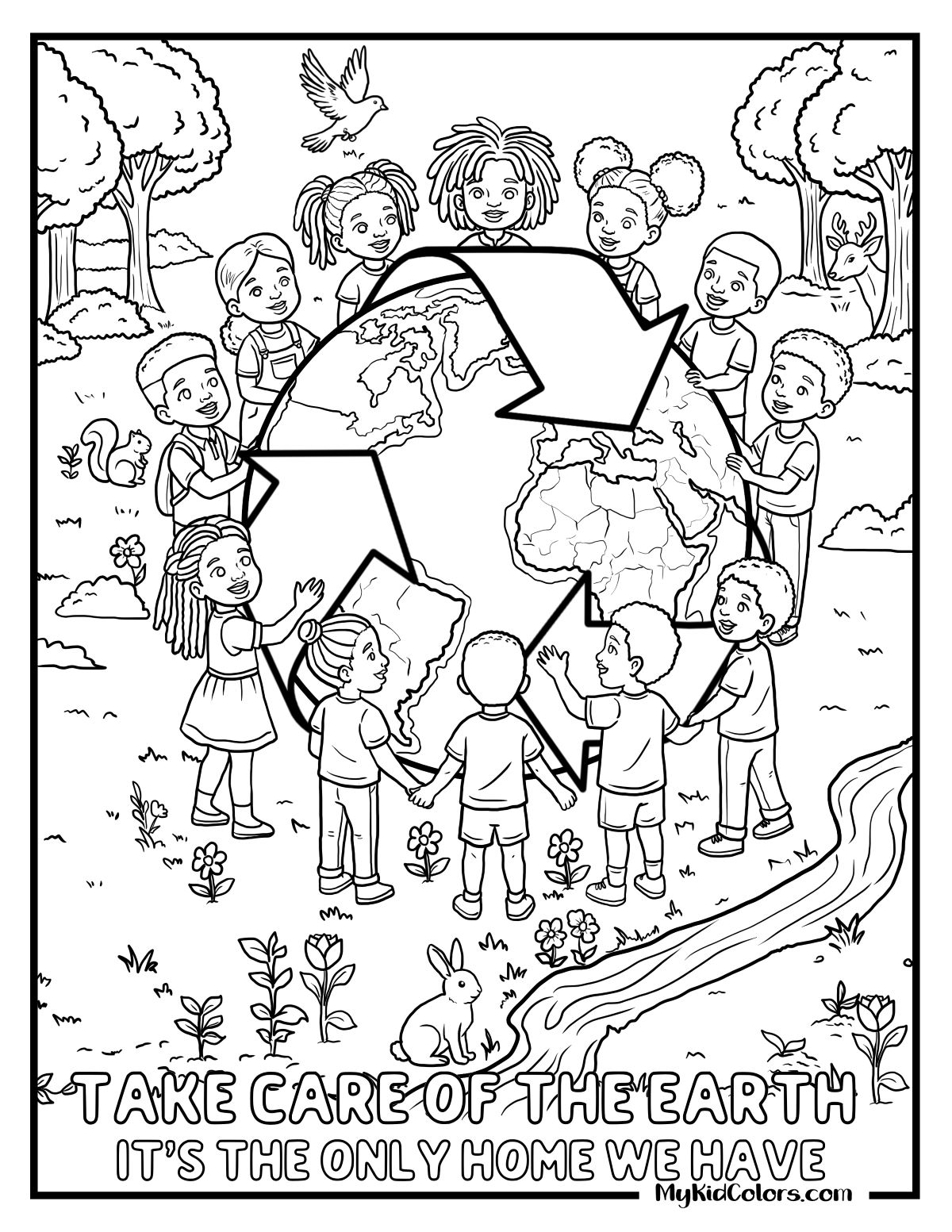
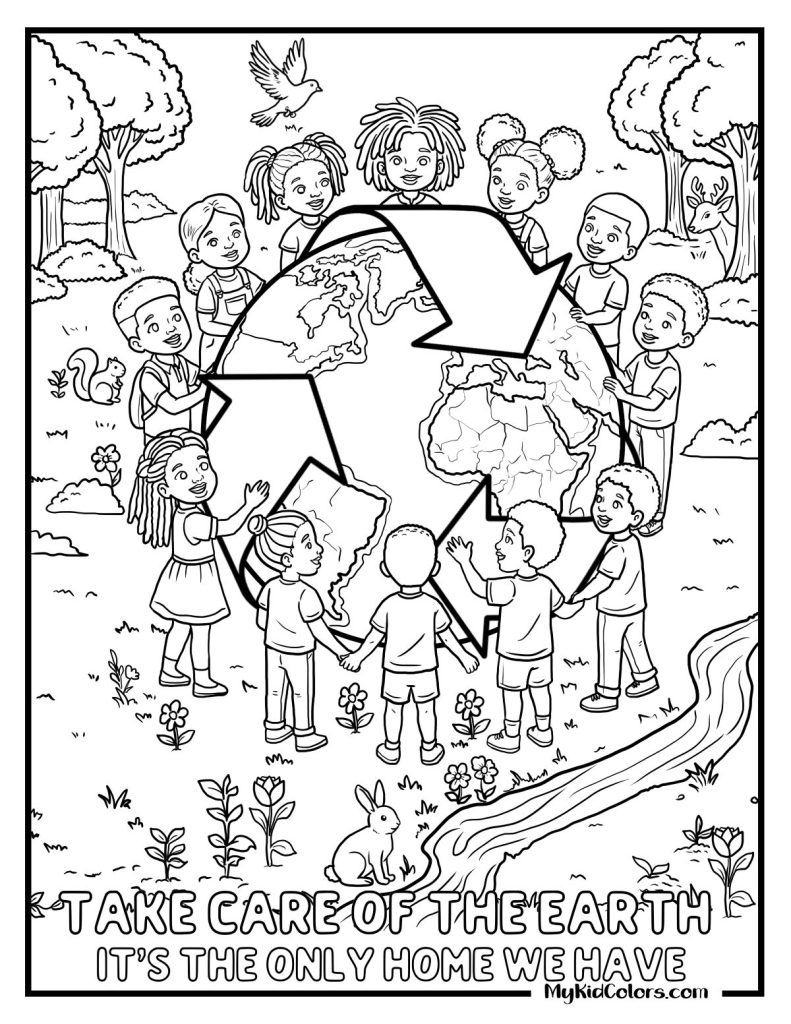
- For “Take Care of the Earth” (Page 15): “If you could teach one person to take care of the Earth, what would you show them first?”
The Collection: 15 Free Recycling Coloring Pages (Reduce, Reuse, Recycle — with Black Kids)
The 15 pages are grouped by complexity — start wherever your child is, or work through all three sets together.
For Little Hands: First Recycling Habits (Pages 1–5)
Best for toddlers and preschoolers. Simple, clear actions — the kind a young child already does alongside you.
- Page 1: A child dropping something into the recycling bin. One small, deliberate act. Good for the moment when they first start asking: “But where does it go?”
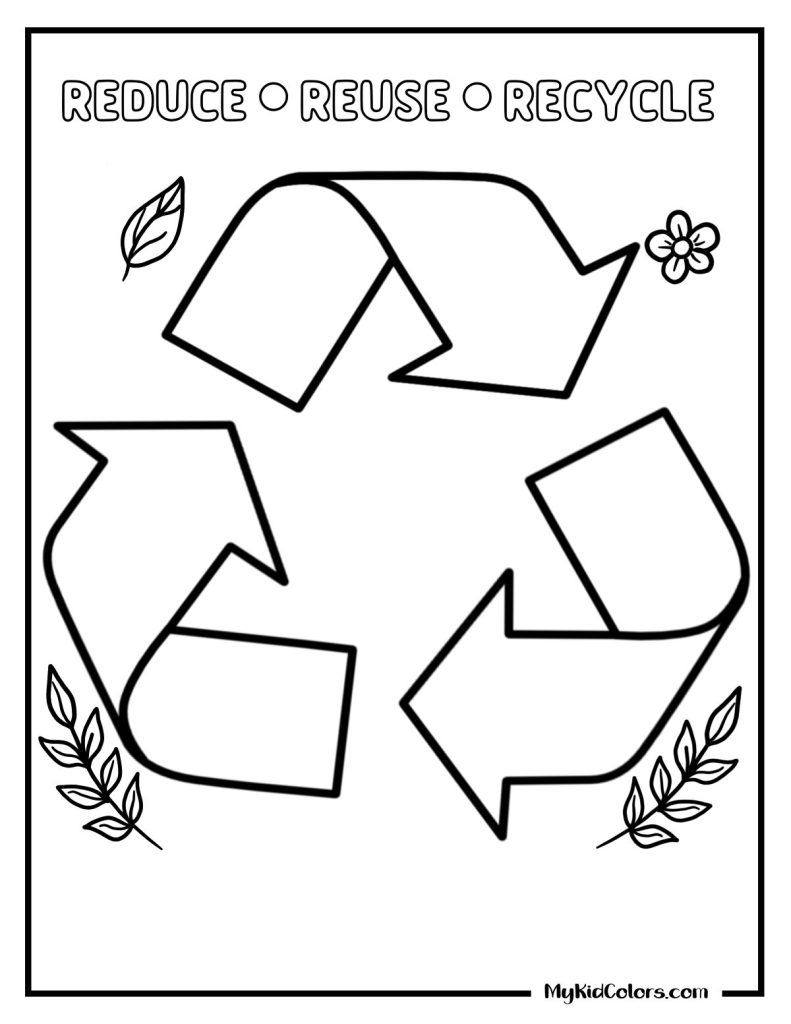
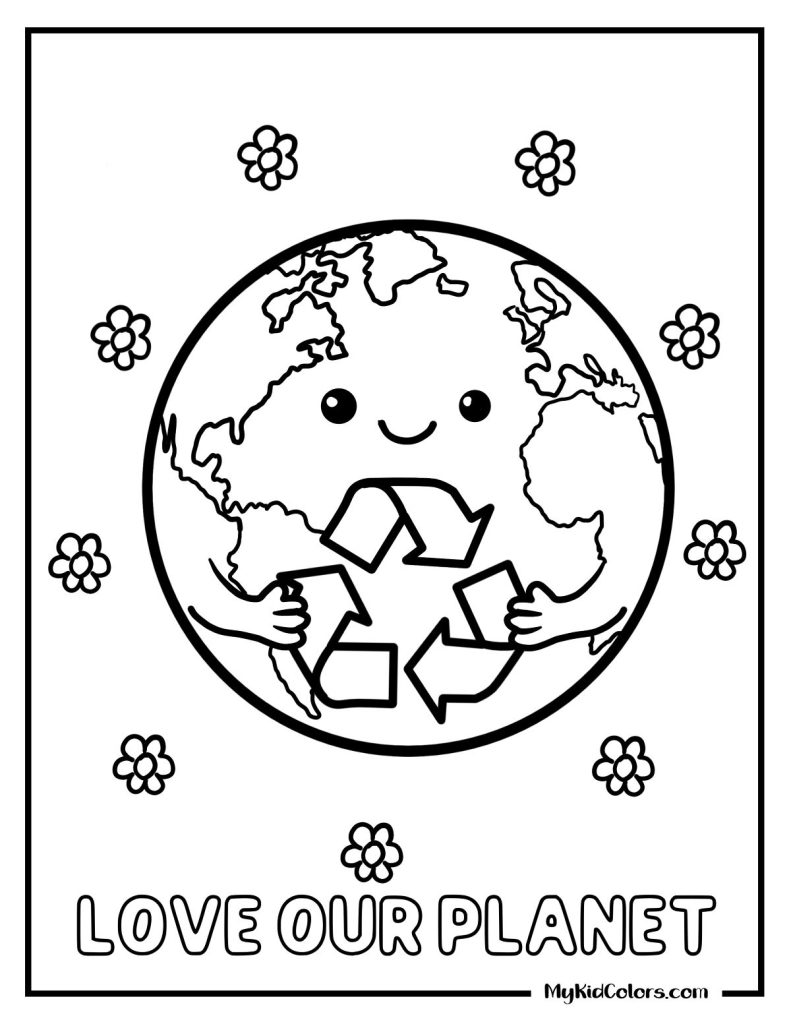
- Pages 2 & 3: The reduce-reuse-recycle symbol, big and bold, and a gentle round Earth beside it. Simple enough to color in one sitting. Meaningful enough to talk about while they do.
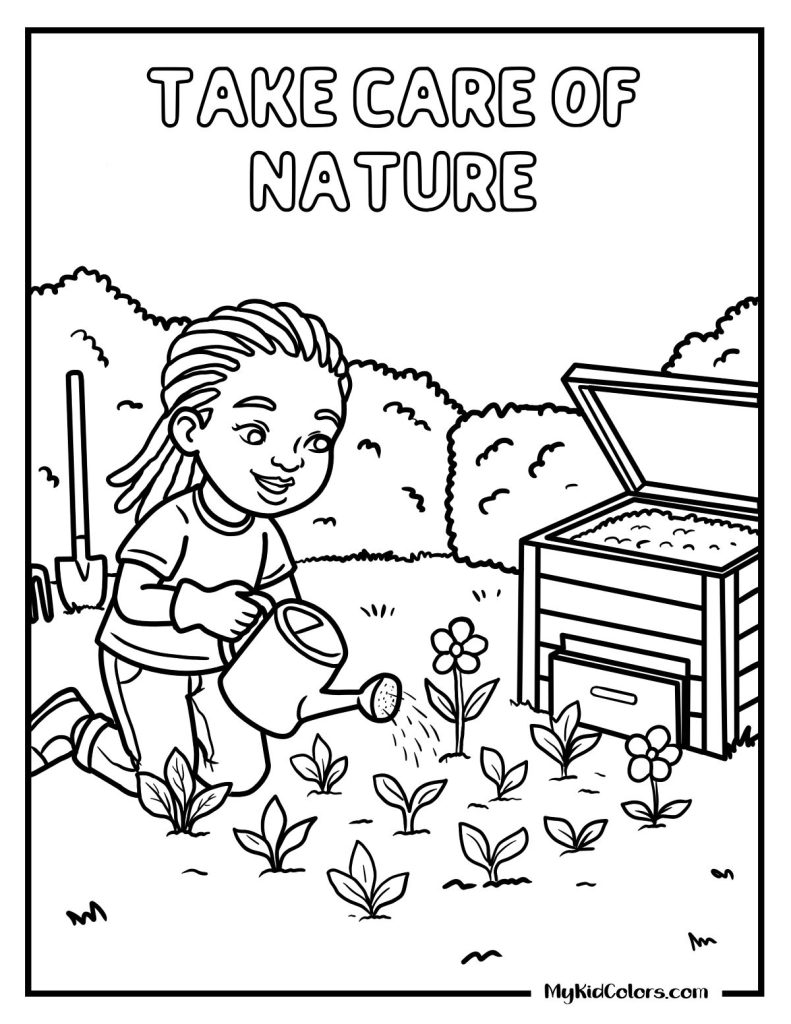
- Pages 4 & 5: A child tending a garden patch, hands in soil. A quiet page about the link between what we throw away and what keeps growing. Good for slow mornings.
Learning Through Action & Community (Pages 6–10)
For elementary-age kids. These pages show recycling as something people do together — not just a bin in the corner.
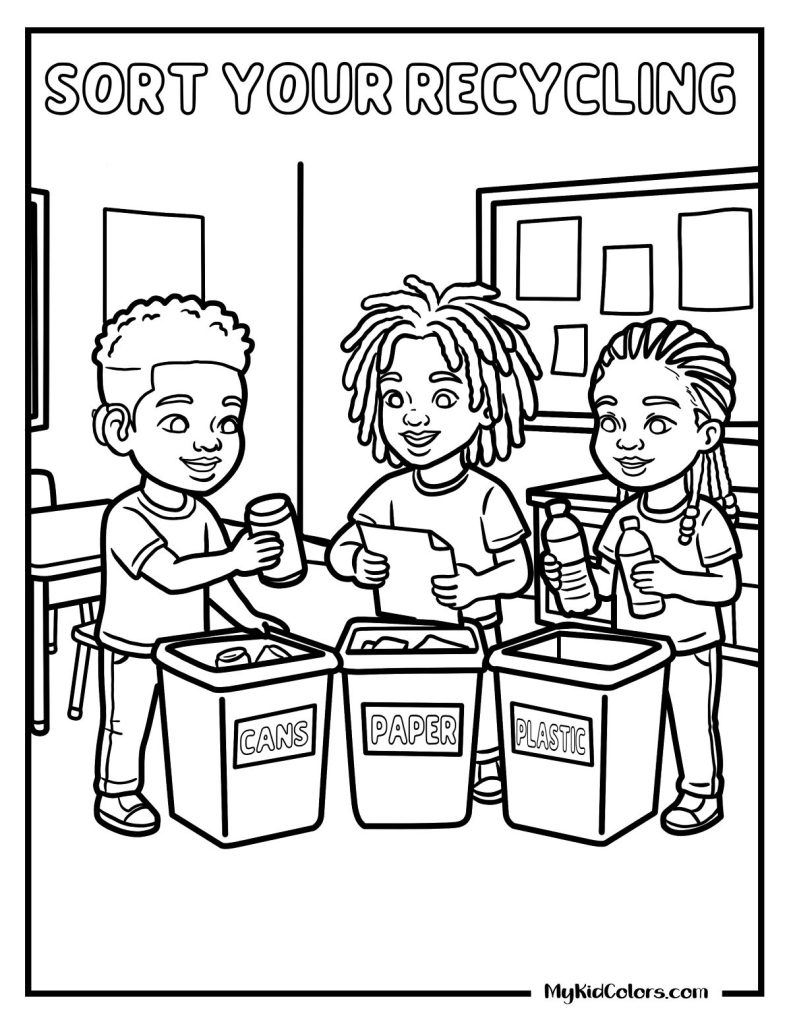
- Page 6: Three bins — paper, plastic, cans — and the question of what goes where. Print this one when your child wants to practice, not just watch.
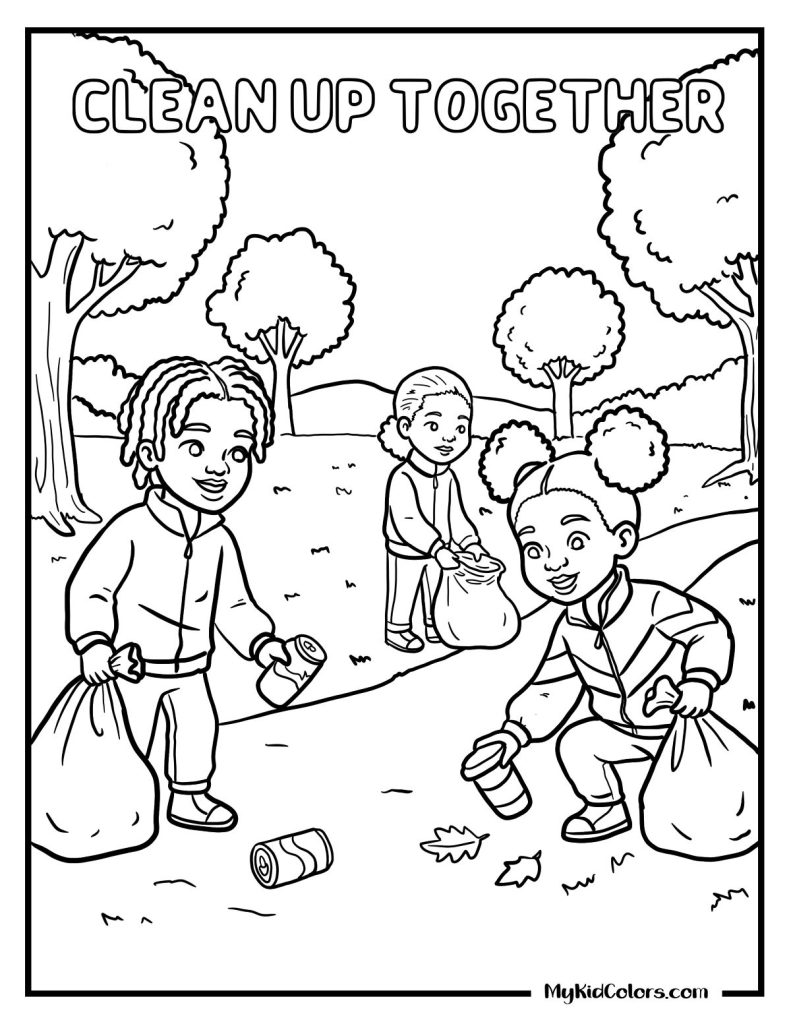
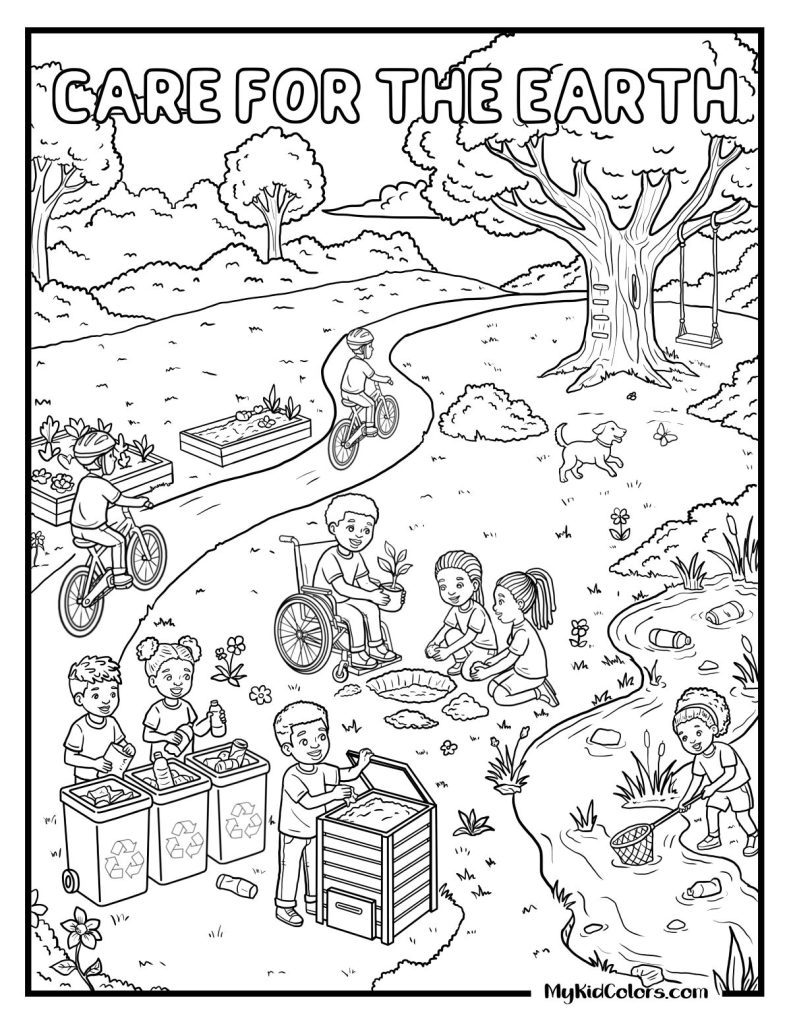
- Pages 7 & 8: A neighborhood clean-up in full swing, then a child turning something old into something new. Two pages, one message: this is what caring for your block looks like.
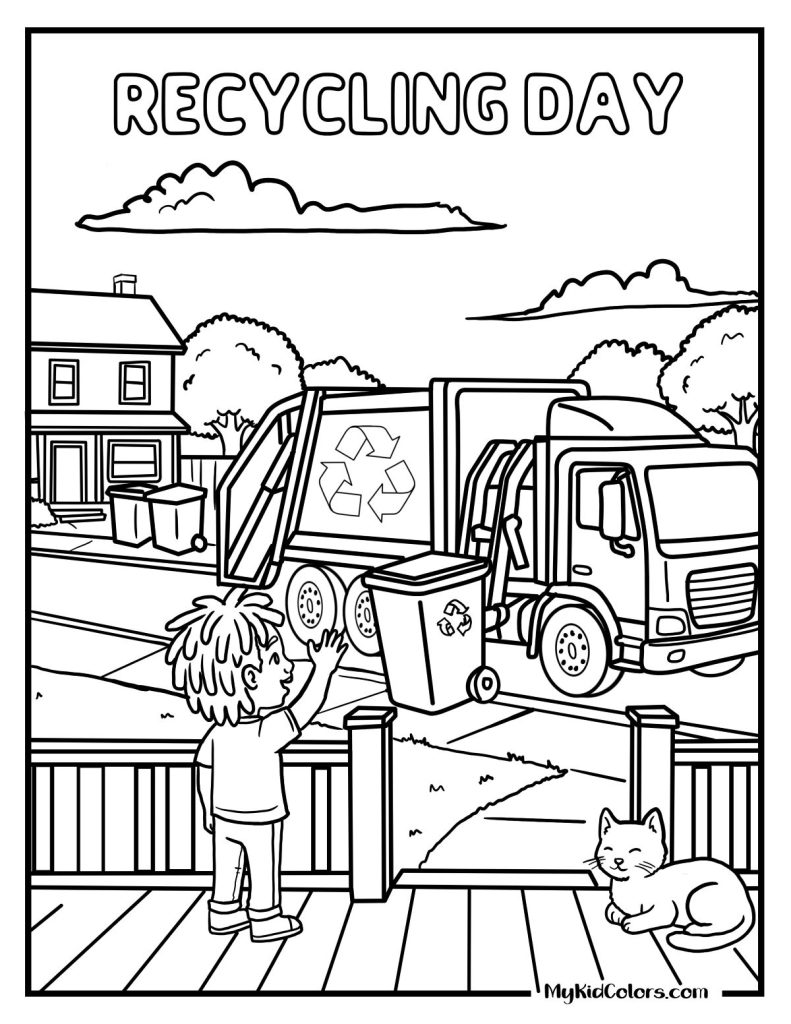
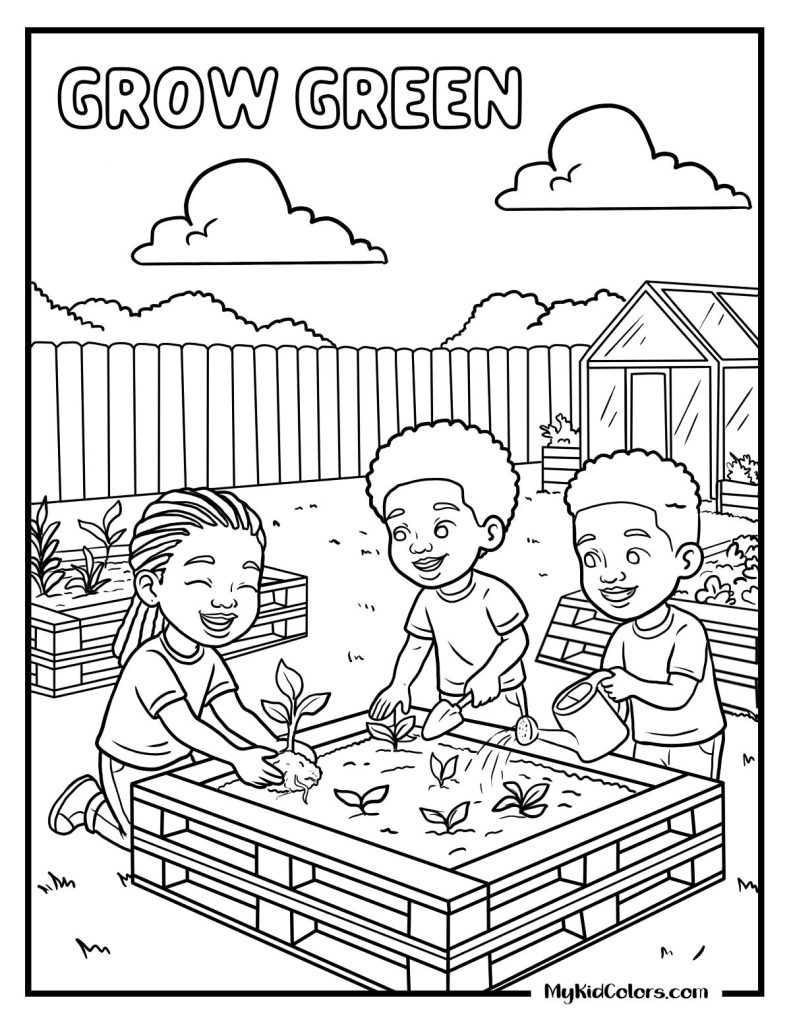
- Pages 9 & 10: The recycling truck rolling down the street, then a community garden coming to life. Both show kids that real care is a system — and they’re already part of it.
Big Picture Thinking: Sustainability & the Future (Pages 11–15)
For older kids, or any child ready to think beyond the bin.
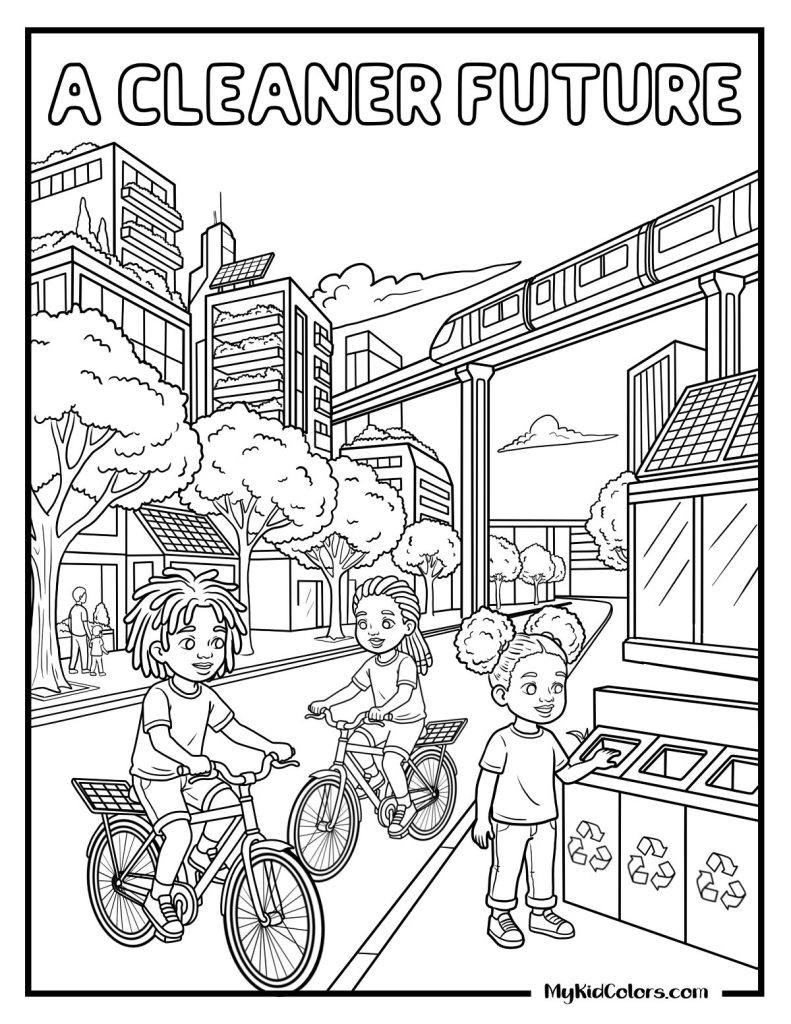
- Page 11: A city of the future — cleaner, greener, full of possibility. Let them color it however they imagine it. There’s no wrong answer here.
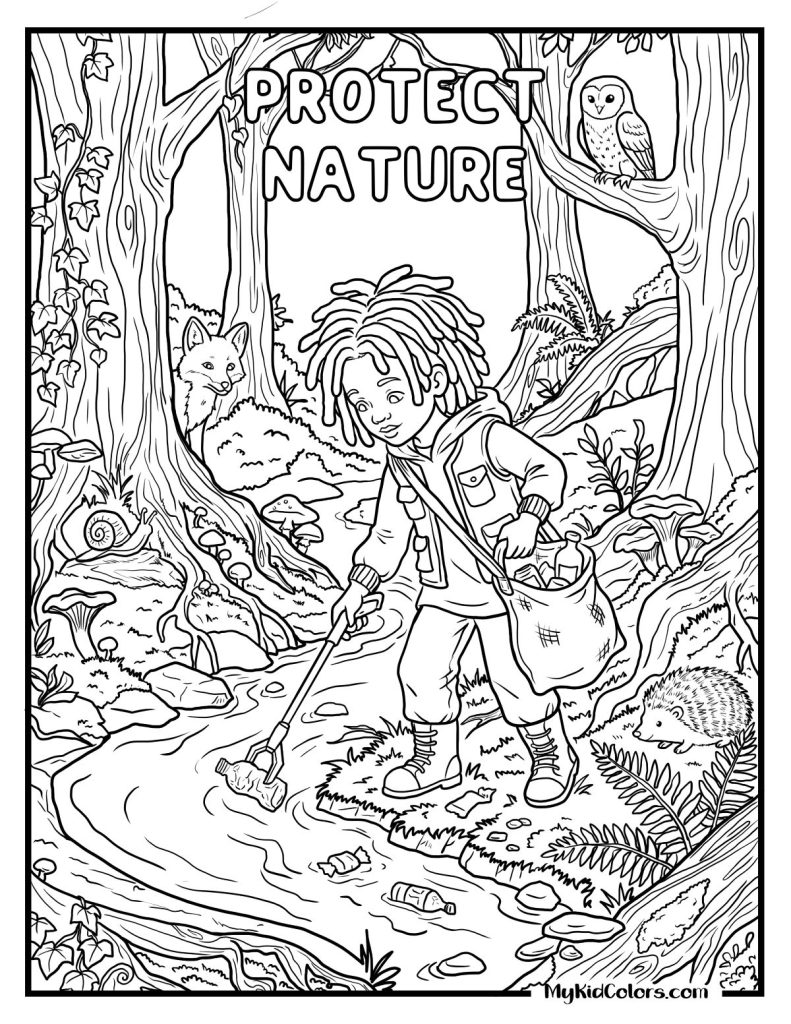
- Pages 12 & 13: An eco park stretching wide, and a forest where children are clearing what doesn’t belong. Pages for the child who wants to feel like their actions actually matter.
- Pages 14 & 15: A recycling workshop buzzing with young people, and then the Earth held carefully in many hands. A quiet ending. Save this one for last.
Perfect for Screen-Free Learning & Homeschool
Teachers and parents love using these as recycling activity pages, physical learning worksheets, and engaging environmental education tools. Here are a few ways to extend the lesson:
- Recycling Sorting Game: Use Page 6 to create a hands-on activity where children sort real items (paper, plastic, cans) into categories.
- Story Sequencing: Combine Pages 1 (Recycle), 7 (Clean Up Together), 10 (Grow Green), and 15 (Take Care of the Earth) to show how small actions build a healthier planet.
- Create a Reuse Craft Project: Let children use recycled materials at home to create art, connecting directly to Page 8 (Reuse Creatively).
Why We Choose Hand-Drawn Over AI
When children learn about recycling, they’re learning to look at ordinary things differently. A bottle. A bin. A patch of dirt. Suddenly these things have weight — they matter.
That’s why I work with a human illustrator. A person drawing a child sorting recycling has to make real decisions: how does the child hold the bottle? Does she look focused or curious? What does the neighborhood around her look like? Those aren’t details an algorithm chooses with intention.
Every page in this set was drawn with that kind of care. We think children feel the difference, even when they can’t say why.
Frequently Asked Questions
My child keeps asking what actually happens to the recycling after the truck comes. How do I explain it while we’re coloring?
Pages 9 and 11 work well together here. Page 9 shows the truck; Page 11 shows a greener future. You can keep it simple: “The truck takes things to a special place where they get cleaned up and turned into something new.” For kids who want more, some recycling centers do public tours — looking one up together after coloring is a natural next step.
I’m a homeschool parent running a mixed-age group from preschool through 3rd grade. Can these pages work for everyone at the same time?
Yes. The three sections are designed with age progression in mind. Pages 1–5 work well for preschool and kindergarten; Pages 6–10 for early elementary; Pages 11–15 for older kids ready for bigger concepts. You can run all three sections in one session and let each child work at their own level, then bring the group back together using the Conversation Corner questions.
Our children’s ministry is doing a creation care unit. Are these pages appropriate for a church setting?
They fit well. The pages don’t reference any specific environmental framework — they show children caring for the Earth as an act of responsibility and community, which connects naturally with a stewardship or creation care theme. Pages 4, 10, and 15 have a reflective quality that works especially well for group settings. You’re welcome to print and distribute the free set for your group.
Download Your Free Set
These 15 pages are yours when you join the MKC family, you’ll get new hand-drawn sets sent to your inbox: Black and brown children in real, everyday moments, not just for one month of the year, but for any Tuesday afternoon when you need something meaningful to print.
The bins are already part of your routine. Now your kids can color them.
You Might Also Like
- 15 Earth Day Coloring Pages That Teach Kids Wonder and Love for the Planet
- 15 Gardening Coloring Pages That Teach Kids Patience, Growth, and Care
- 15 Free Habitat Coloring Pages Beyond Basic Animal Worksheets (Human-Drawn PDFs)
- 15 Free Water Cycle Coloring Pages (A Simple Way for Kids to Understand Rain and Water)
- 15 Community Helpers Coloring Pages That Teach Kids Empathy, Belonging, and Real-World Purpose

