
15 Opposites Coloring Pages That Help Kids Understand the World Through Contrast
Some kids learn by hearing it. Some need to see it — and more than that, they need to hold the contrast in their hands before the word sticks.
That’s what these opposites coloring pages are built around. Not a worksheet with blanks to fill in, but fifteen hand-drawn scenes where big sits next to small, loud lives beside quiet, and busy and calm share the same page.
They work beautifully as a quiet-time activity, a center rotation, or something to pull out when a lesson needs to slow down and breathe.
A Note from Louisa (Founder of MyKidColors)
I remember the worksheets: “Fill in the blank. What is the opposite of fast?” Lines to trace. Words to circle. My brain was somewhere else, picturing things, not reading words. I was a visual learner in a fill-in-the-blank world.

Less searching. More MEANINGFUL moments.
When kids recognize themselves on the page, coloring changes.
The Inclusive Family Coloring Collection includes 25 human-drawn illustrations centered on everyday moments — designed to make inclusion feel normal, joyful, and intentional.
Because representation shouldn’t be reserved for one month.
Now I’m raising children, and I see the same moment happening for kids who think like I do. Some brains understand better when they’re creating, not answering.
Some kids need opposites coloring pages instead of worksheets because coloring is where the learning actually clicks. And some kids finish early and deserve something meaningful to do next.
I worked with my illustrators to design pages that show opposites in real moments, not abstract words. Because when a child colors “busy and calm,” they’re not just learning a concept. They’re experiencing it.
Their hands are moving. Their understanding is happening. Learning doesn’t have to feel like a task. It can feel like play.
Conversation Corner: 3 Questions to Ask While Coloring
Turn this activity into a bonding moment. While your child colors, try asking these questions:
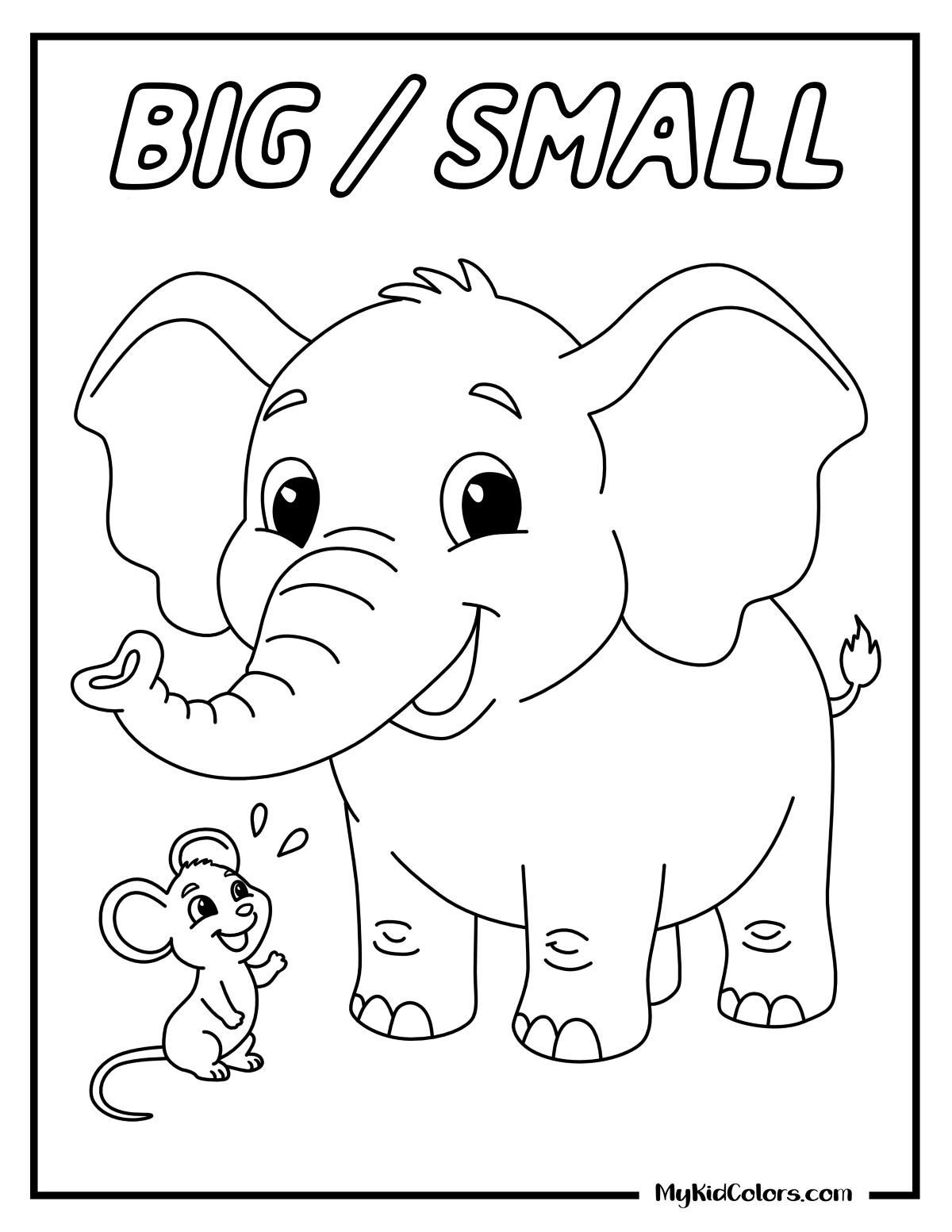
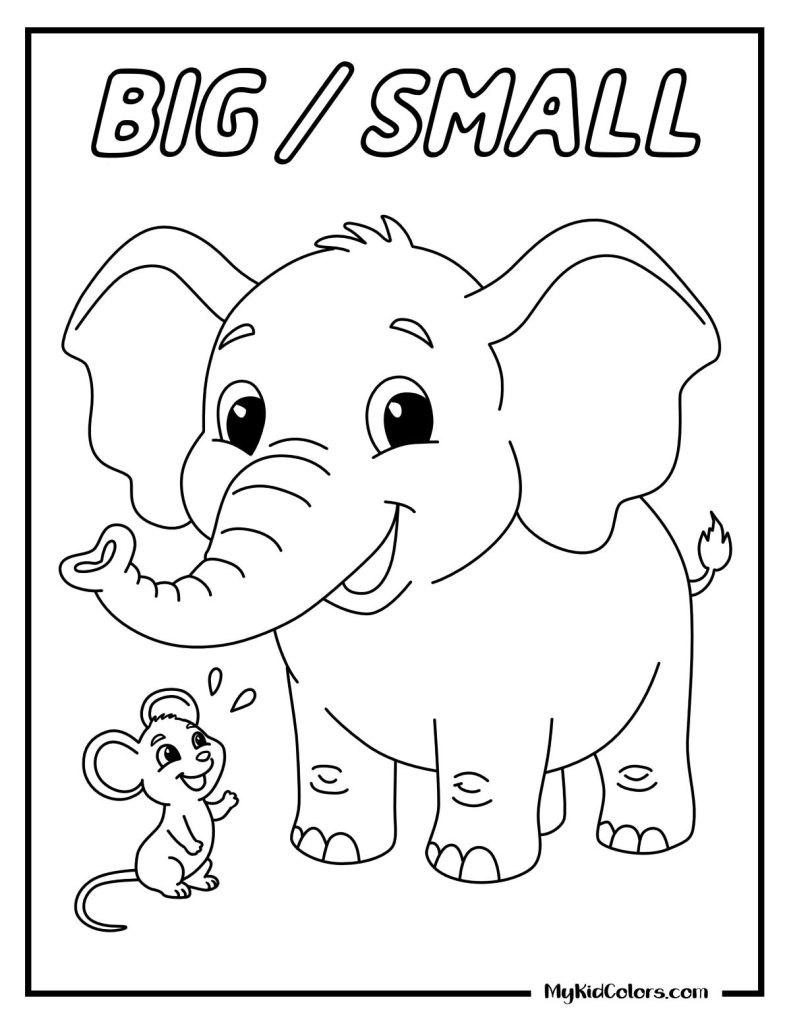
- For “Big / Small” (Page 1): “What are some things around you that are big and small, and how do they compare to each other?”
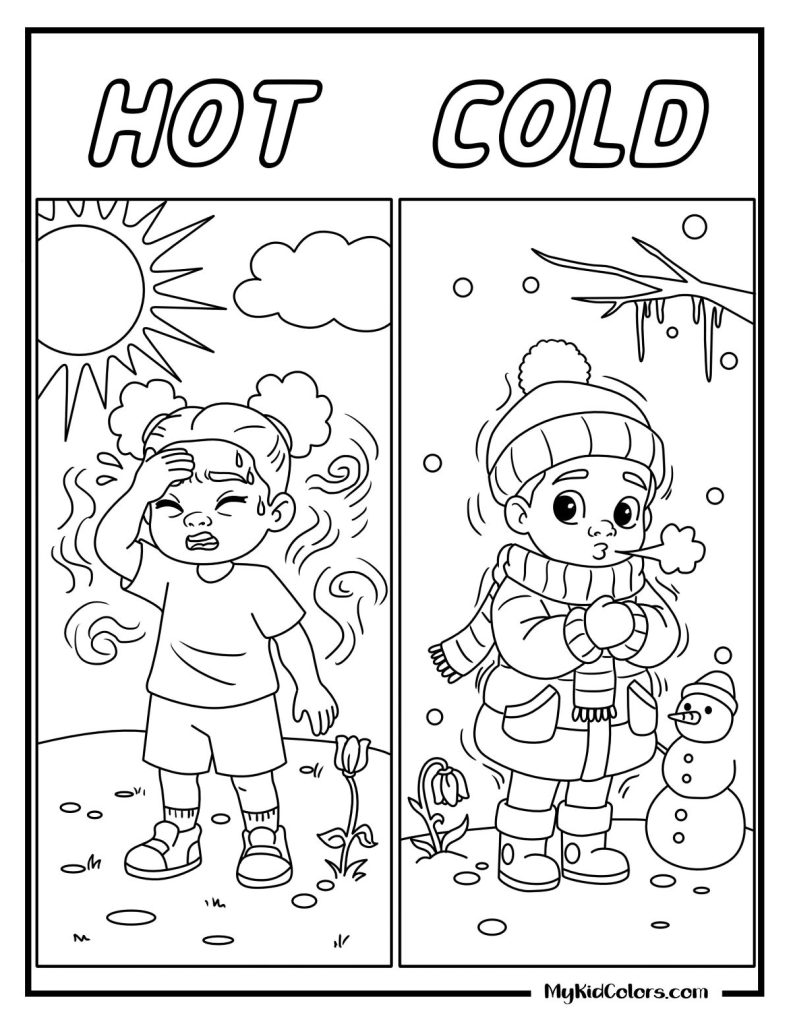
- For “Hot / Cold” (Page 3): “How does your body feel when something is hot or cold, and when do you experience each one?”
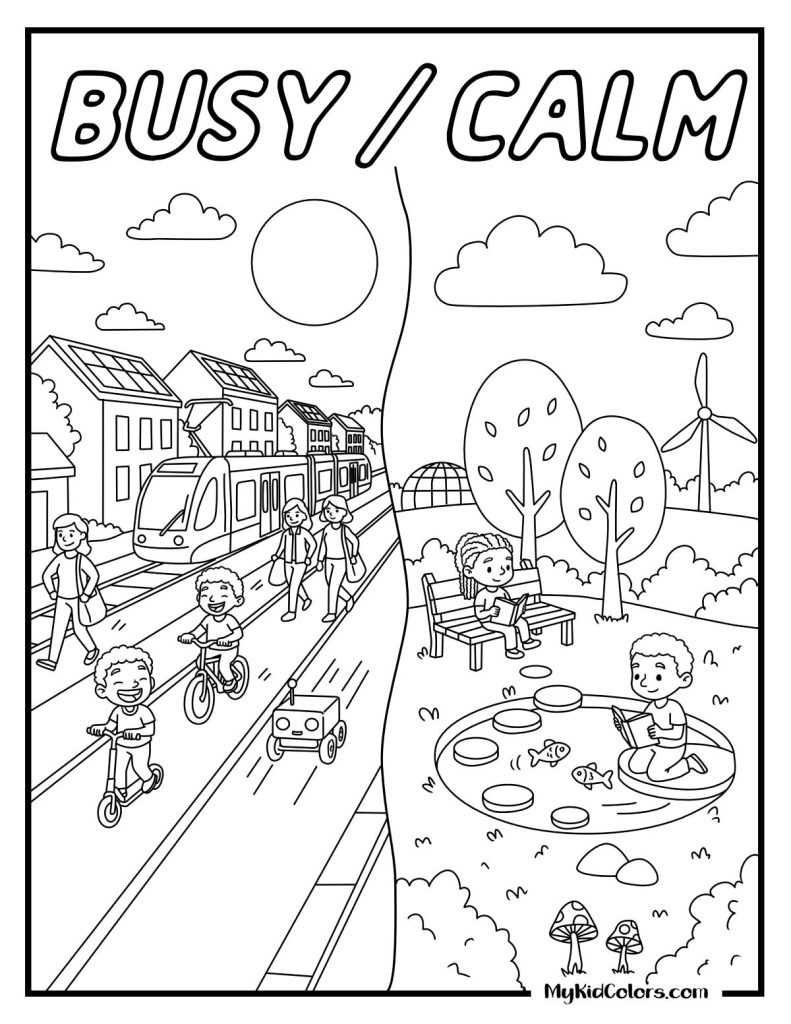
- For “Busy / Calm” (Page 13): “When do you feel busy and when do you feel calm, and which one do you enjoy more?”
The Collection: 15 Free Opposites Coloring Pages
We have organized these into three sets to help you teach contrast, awareness, and real-life understanding—from simple recognition to deeper thinking.
For Little Hands: First Opposites (Pages 1–5)
Best for toddlers and preschoolers. These pages focus on simple contrasts, bold shapes, and early vocabulary building.
- Page 1: introduces “Big / Small,” where a large elephant and a tiny mouse make size differences easy to see and understand.
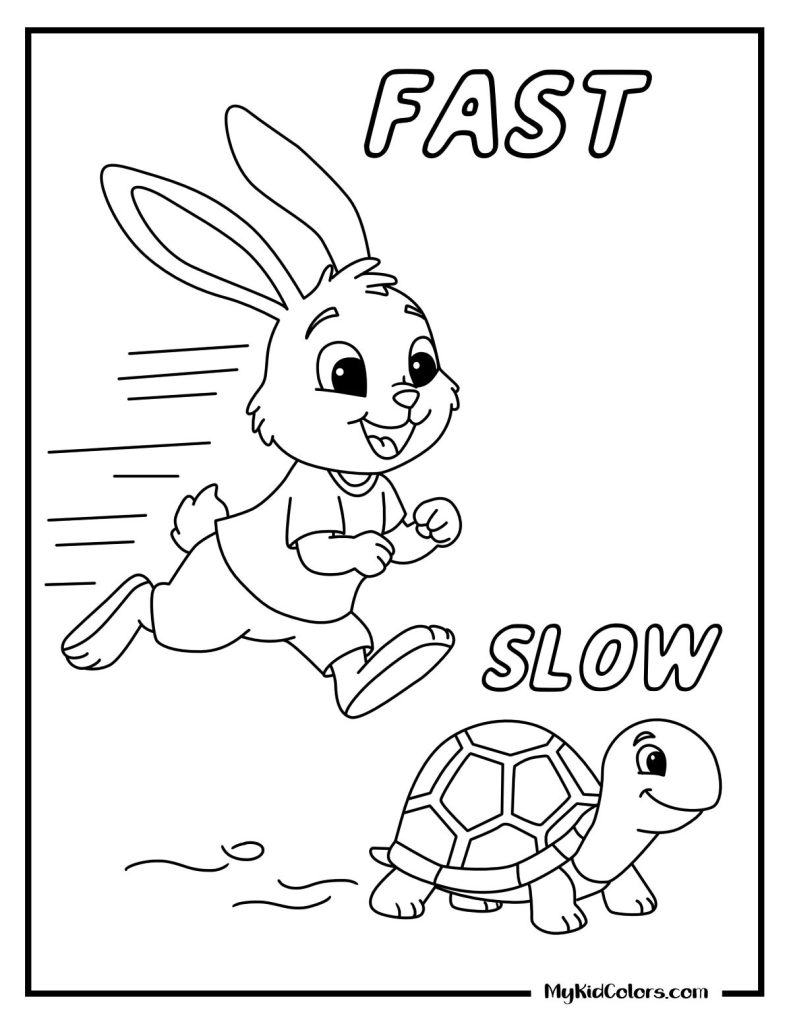
- Pages 2 & 3: explore “Fast / Slow” and “Hot / Cold,” helping children connect movement and temperature with everyday experiences.
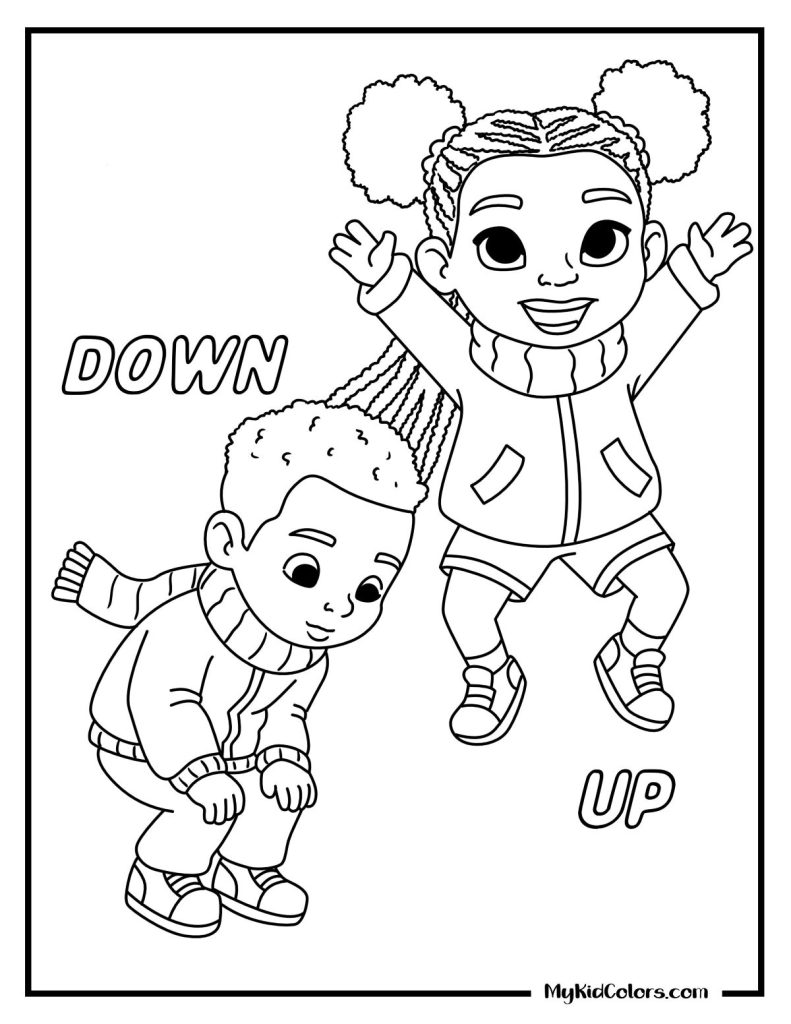
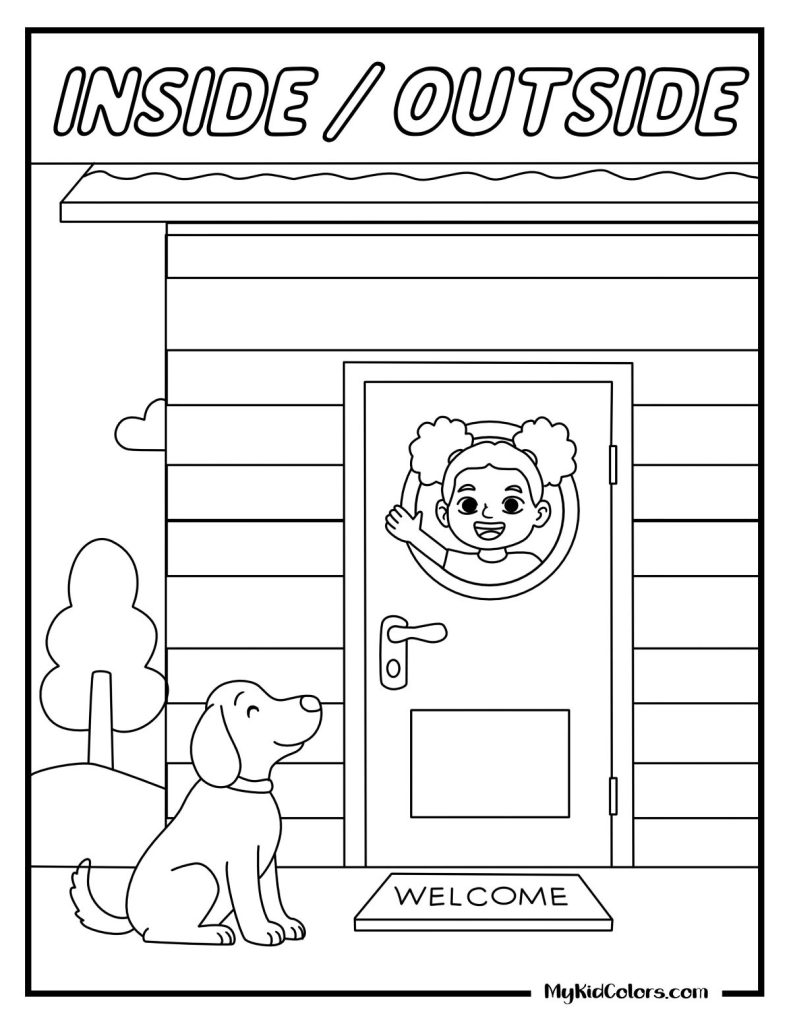
- Pages 4 & 5: show “Up / Down” and “Inside / Outside,” introducing direction and position in a fun, relatable way.
Learning Through Everyday Life (Pages 6–10)
Perfect for elementary kids. These pages build deeper understanding using opposite words for kids.
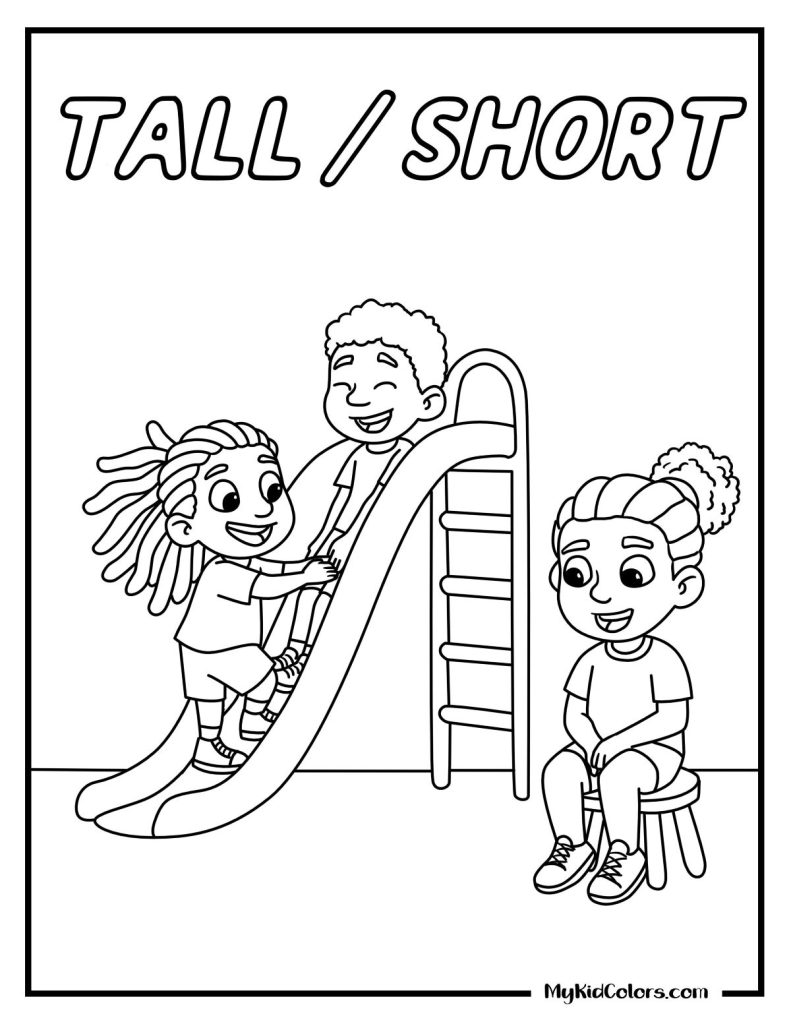
- Page 6: introduces “Tall / Short,” helping children compare height through a playful scene.
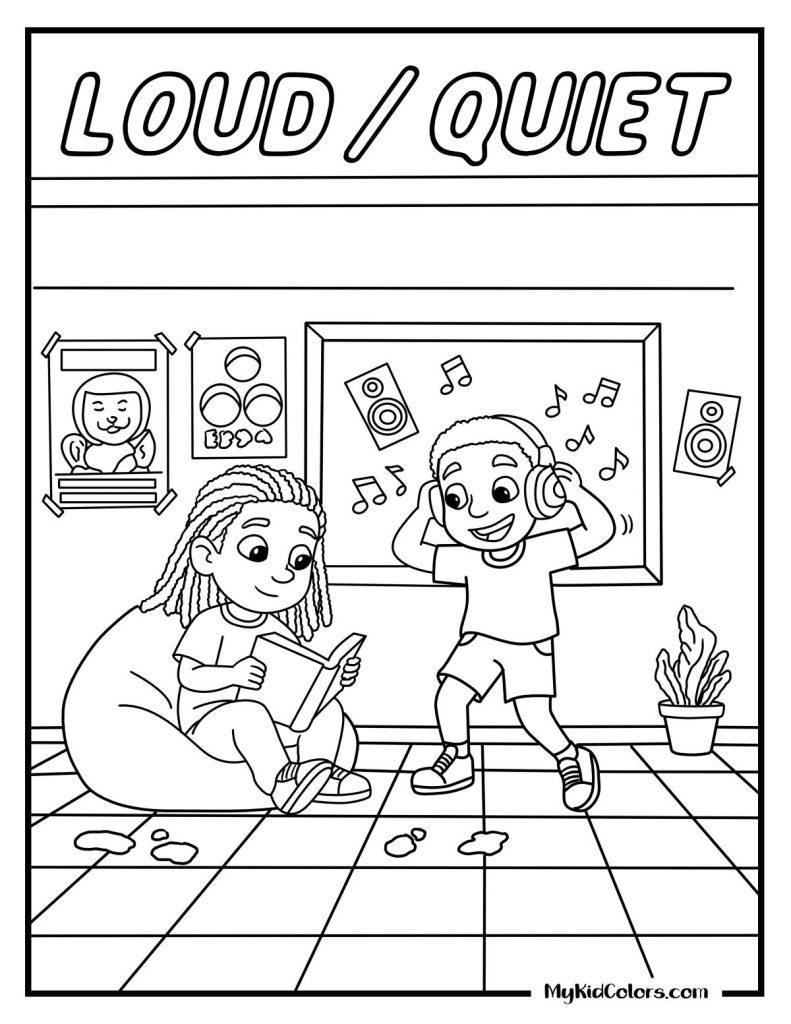
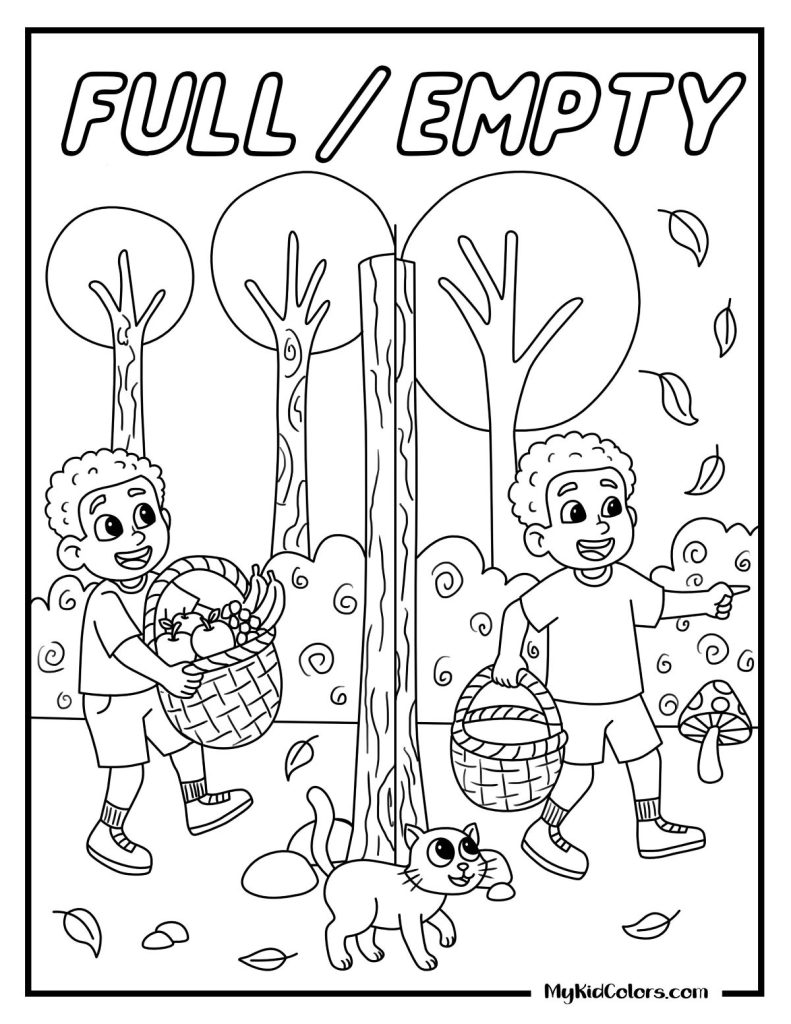
- Pages 7 & 8: explore “Loud / Quiet” and “Full / Empty,” showing both emotional and physical contrasts in real-life situations.
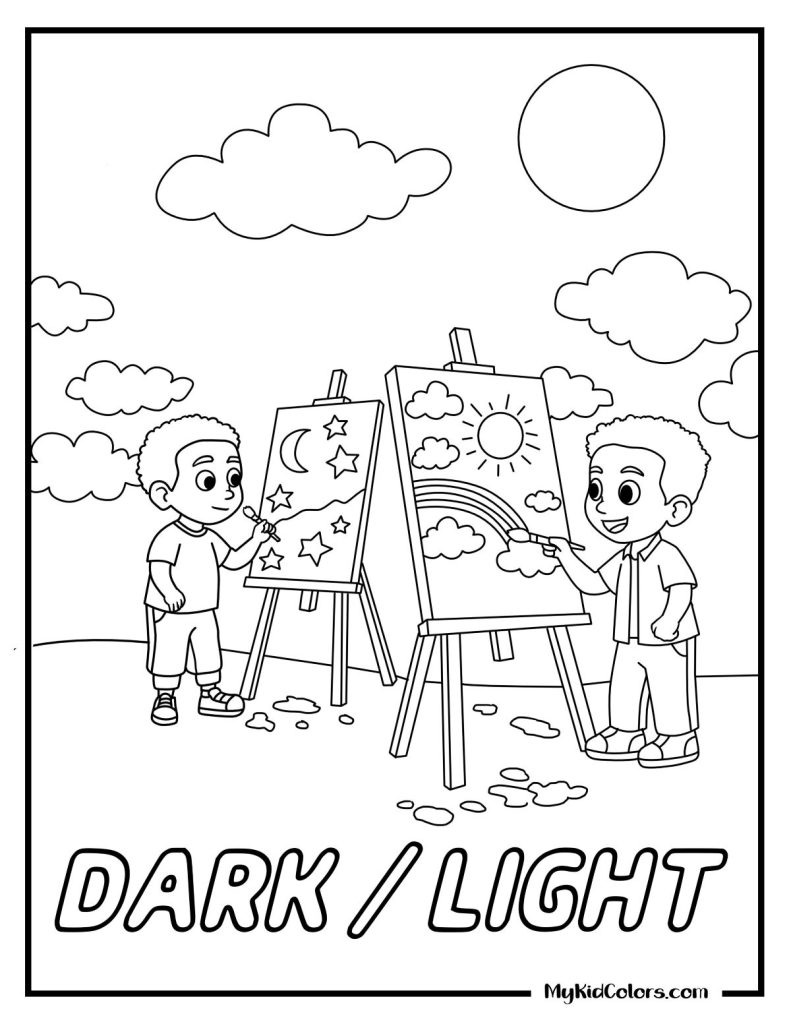
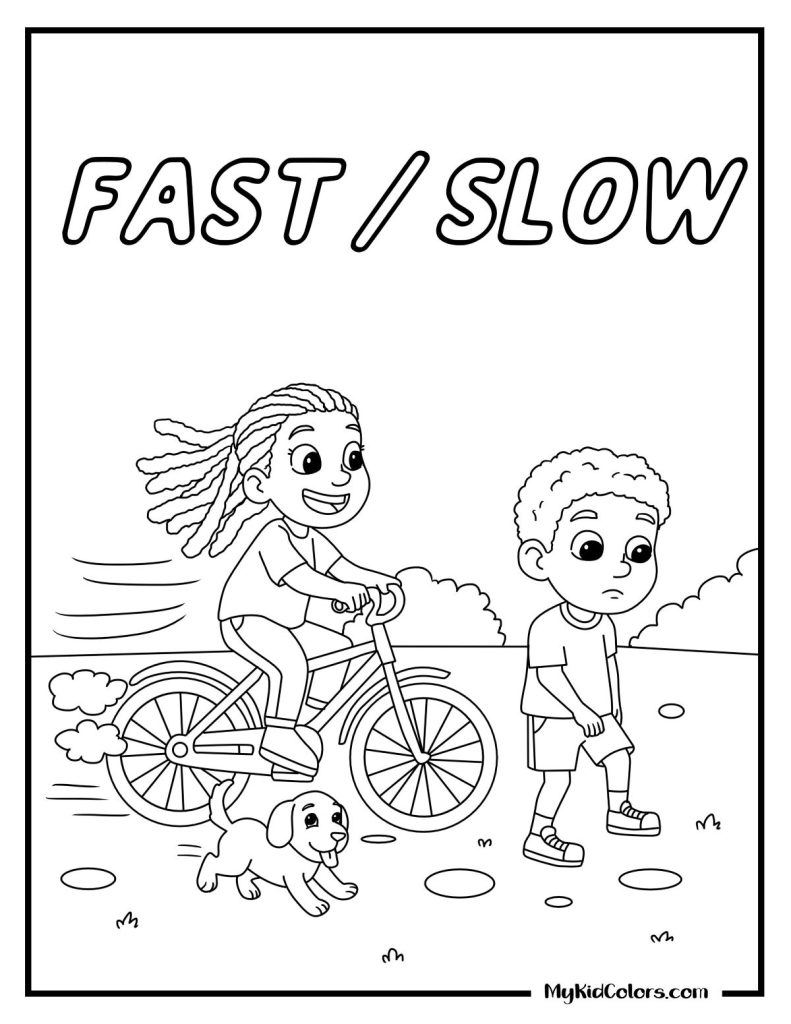
- Pages 9 & 10: show “Dark / Light” and “Fast / Slow,” reinforcing visual and motion-based learning through creative and outdoor settings.
The Full Story & Real-World Thinking (Pages 11–15)
Designed for older kids or deeper reflection. These pages expand understanding using opposites preschool activities.
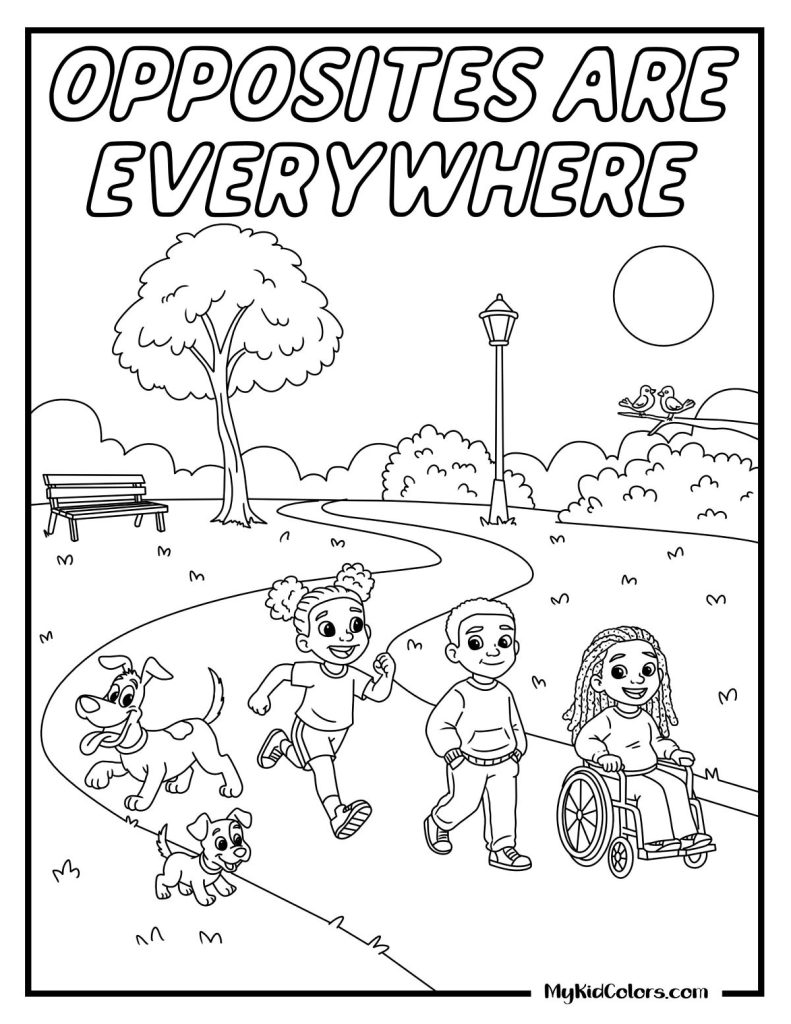
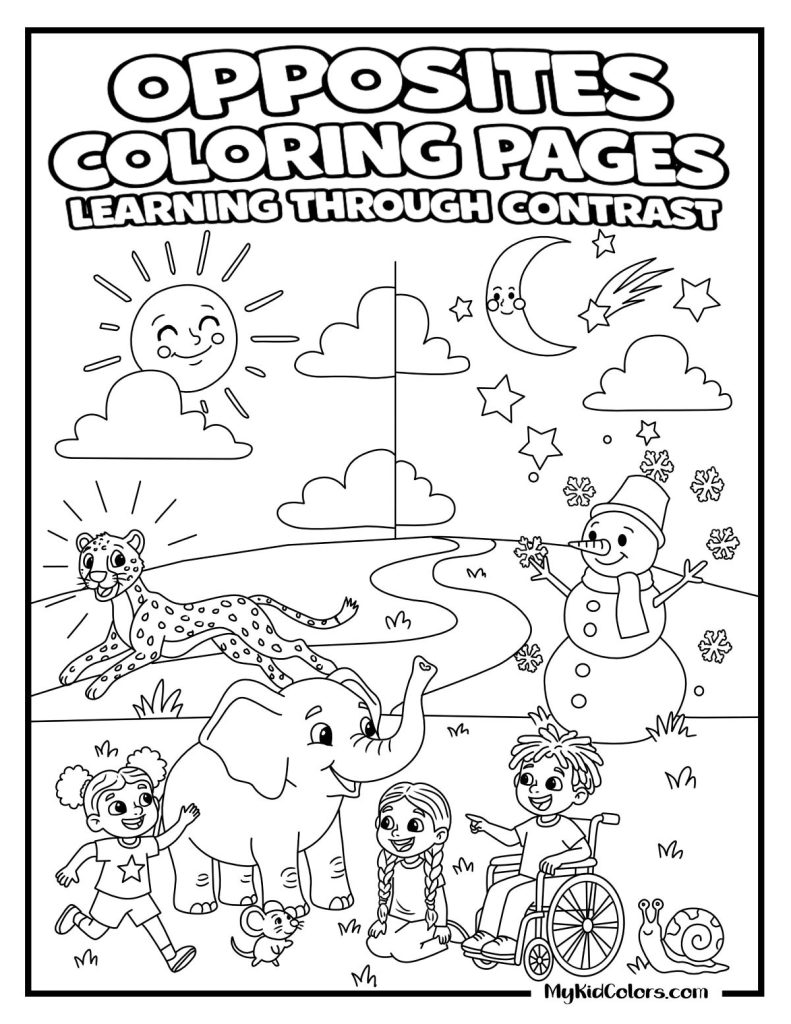
- Page 11: introduces “Opposites Are Everywhere,” showing multiple contrasts happening at once in a lively, relatable environment.
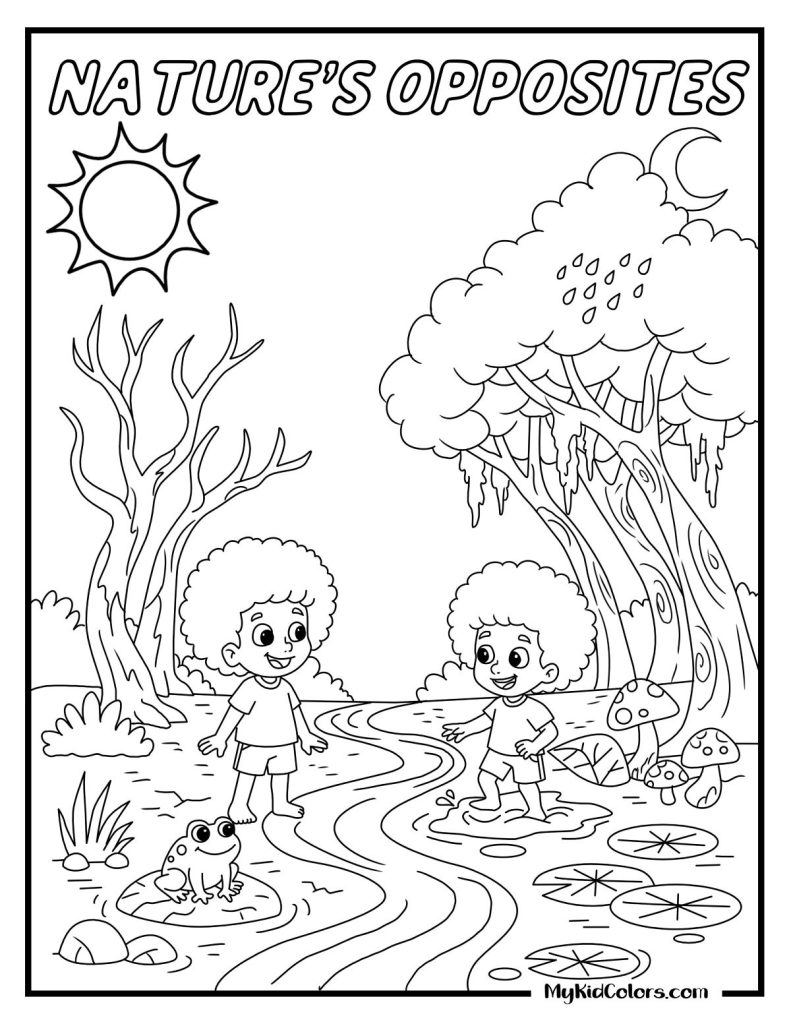
- Pages 12 & 13: explore “Nature’s Opposites” and “Busy / Calm,” helping children connect learning to both nature and emotions.
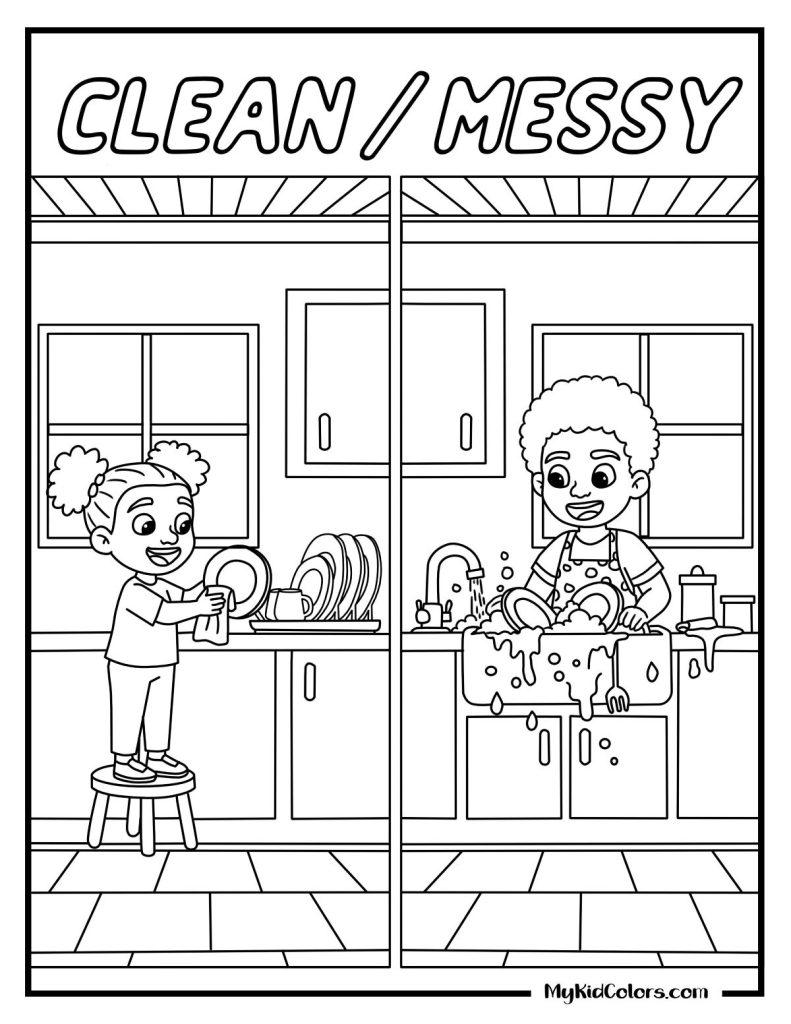
- Pages 14 & 15: show “Clean / Messy” and the hero page, bringing everything together with a clear, meaningful understanding of contrast.
Great for Daily Learning, Quiet Time, and Homeschool Use
Teachers and parents love using these as opposites worksheet kindergarten, opposites preschool activities, and easy preschool crafts. Here are a few ways to extend the lesson:
- Opposites Matching Game: After coloring, ask children to match or act out opposites like fast vs slow or loud vs quiet to reinforce learning.
- Story Sequencing: Use Pages 1, 3, 7, and 14 to guide children through recognizing opposites in real-life situations.
- Real-Life Opposites Hunt: Encourage children to find examples of opposites around them at home or outside.
Why We Choose Hand-Drawn Over AI
When a child is learning opposites, they’re not just learning words. They’re learning to notice. To look at two things side by side and feel the difference before they can name it.
That kind of noticing deserves pages that were drawn by someone who was also paying attention. Our illustrators think about where each child is standing, what expression is on their face, what the light feels like in a room that’s dark versus bright. These are not details a generator produces. They are choices a person makes.
The result is pages that feel like something — not just correct, but warm. And for a child who is still figuring out how the world is organized, that warmth is part of the learning.
Frequently Asked Questions
How can I use these pages to teach opposites effectively?
Pair coloring with real-life examples, movement activities, or simple games so children can experience each concept.
Are these suitable for preschool and kindergarten classrooms?
Yes, they work perfectly as opposites worksheet preschool, opposites worksheet kindergarten, and interactive learning tools.
How can I make this more engaging for my child?
Turn each page into a discussion, ask questions, and encourage children to find similar examples in their daily life.
Download Your Free Set
Opposites are one of the first ways children learn to make sense of the world. Big helps them understand small. Quiet makes calm feel real.
These pages were drawn to make that discovery feel good — not like a lesson, but like play.
If you’d like more hand-drawn, inclusive pages sent straight to your inbox, join our free family below. A new set arrives regularly, and there’s always something your child will recognize themselves in.
You Might Also Like
- 15 Emotions Coloring Pages That Help Kids Understand Their Feelings
- 15 Mindfulness Coloring Pages That Help Kids Slow Down and Feel Calm
- 15 Free Hand-Drawn Day and Night Coloring Pages for Everyday Moments (PDF)
- 15 Then and Now Coloring Pages That Teach Kids How the World Has Changed
- 15 Free Big Feelings Coloring Pages That Teach Kids Emotional Awareness and Calm
- 15 Free Dora the Explorer Coloring Pages (PDF Printable Set)

