
15 Free Toy Story Coloring Pages for Kids Who Love Woody and Buzz
If you grew up with Toy Story, you already know the feeling. Not the plot, not the animation — the feeling. The idea that the toys were alive. That they had feelings. That they cared about you even when you forgot about them for a while.
Here is the thing about that feeling: it was never really about the toys. It was about what children do when they play. They build worlds. They assign meaning. They love things completely and without embarrassment. Toy Story just gave that a name.
These 15 free Toy Story coloring pages (inspired by the films) were made for the children still in the middle of that magic. And for the parents who remember exactly what it felt like.
A Note from Louisa (Founder of MyKidColors)
My son is at the age where he lines up his toys before bed. He arranges them. He checks that they are all there. I do not think he believes they move when he leaves the room — but I am not entirely sure he does not believe it either.

Less searching. More MEANINGFUL moments.
When kids recognize themselves on the page, coloring changes.
The Inclusive Family Coloring Collection includes 25 human-drawn illustrations centered on everyday moments — designed to make inclusion feel normal, joyful, and intentional.
Because representation shouldn’t be reserved for one month.
Toy Story 5 comes out June 19, 2026, and its theme is something I think about often as a parent: what happens to play when screens move in? What do children lose when the toys they love are replaced by something that talks back, tracks them, and never runs out of battery?
These pages are part of my answer. Coloring is one of the oldest forms of children’s play. No wi-fi. No notifications. Just a child, a page, and whatever they decide to make of it. That is worth protecting.
Conversation Corner: 3 Questions to Ask While Coloring
Turn this activity into a bonding moment. While your child colors, try asking these questions:
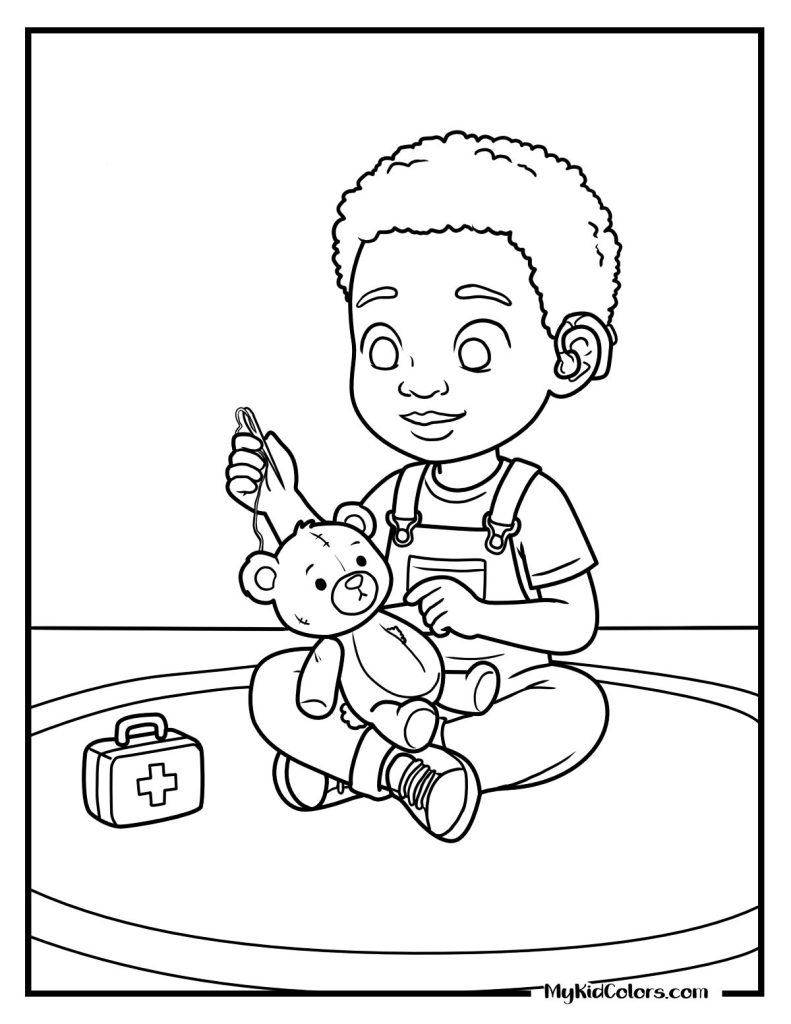
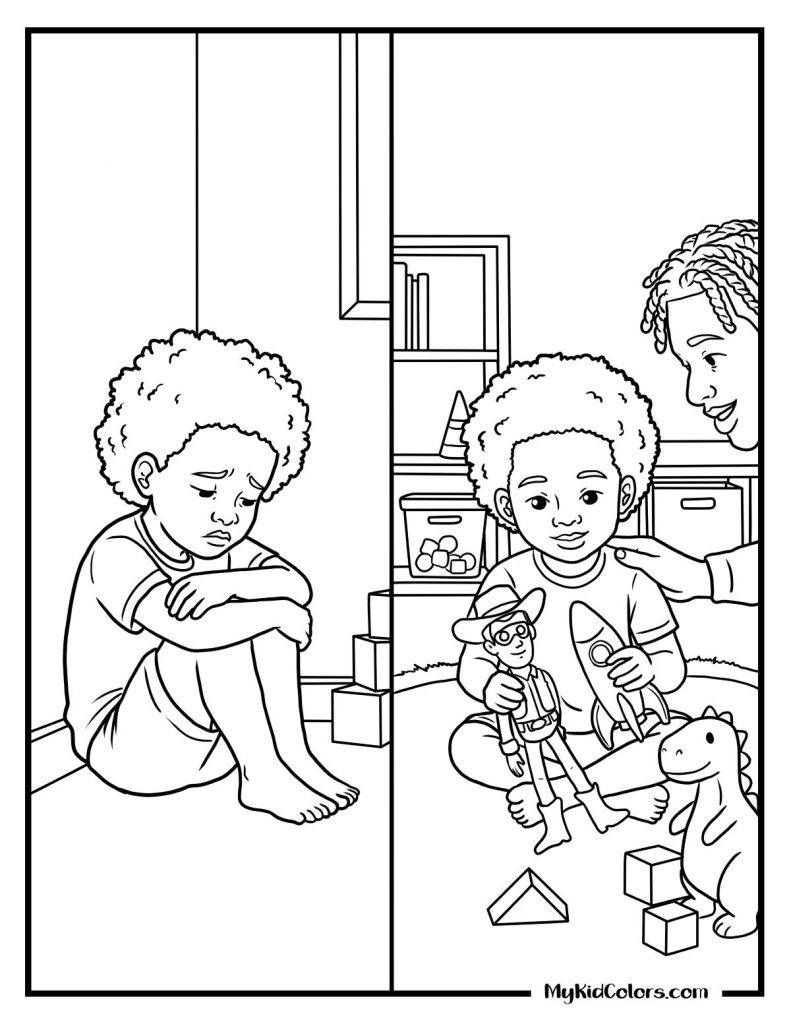
- For “Toy Repair Moment” (Page 7): “How can we show love and care to things—or people—that feel broken or need help?”
- For “Playdate” (Page 8): “What makes playing together fun, and how can we be kind and fair when sharing toys?”
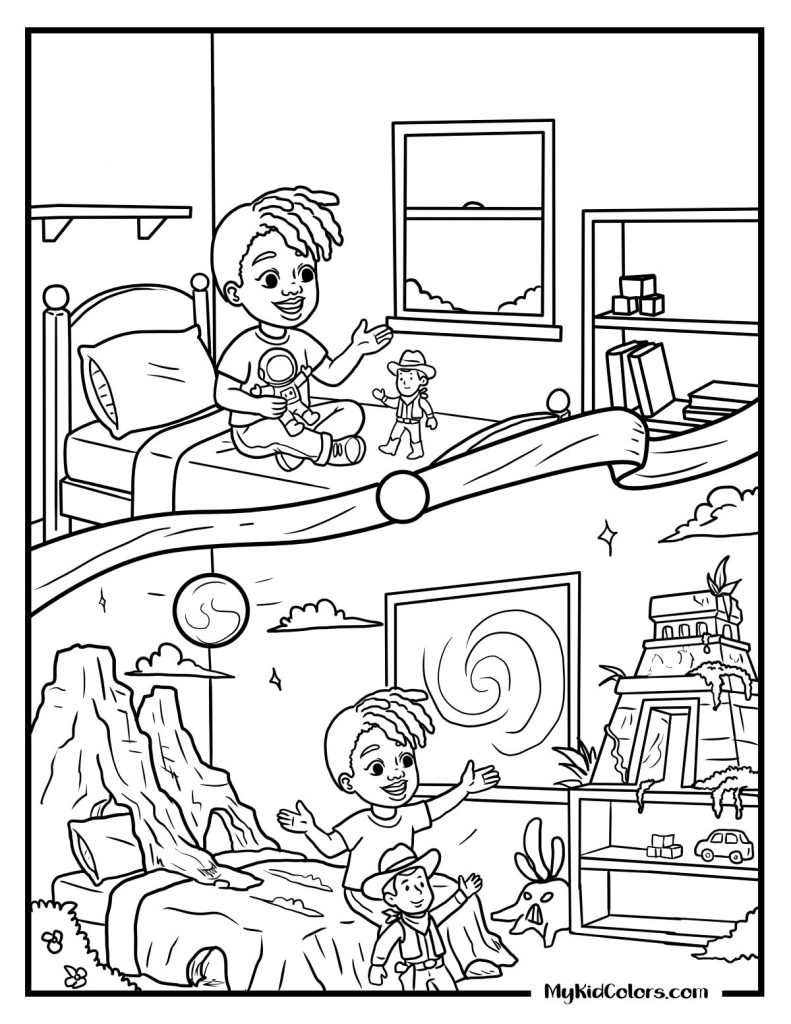
- For “Real vs Imagination” (Page 14): “If your toys came alive today, what adventure do you think they would go on with you?”
The Collection: 15 Free Toy Story Coloring Pages
We have organized these into three sets to help you teach imagination, empathy, and creativity—from simple play to storytelling adventures.
For Little Hands: Playtime & Comfort (Pages 1–5)
Best for toddlers and preschoolers. These pages focus on simple play, emotional comfort, and familiar toys.
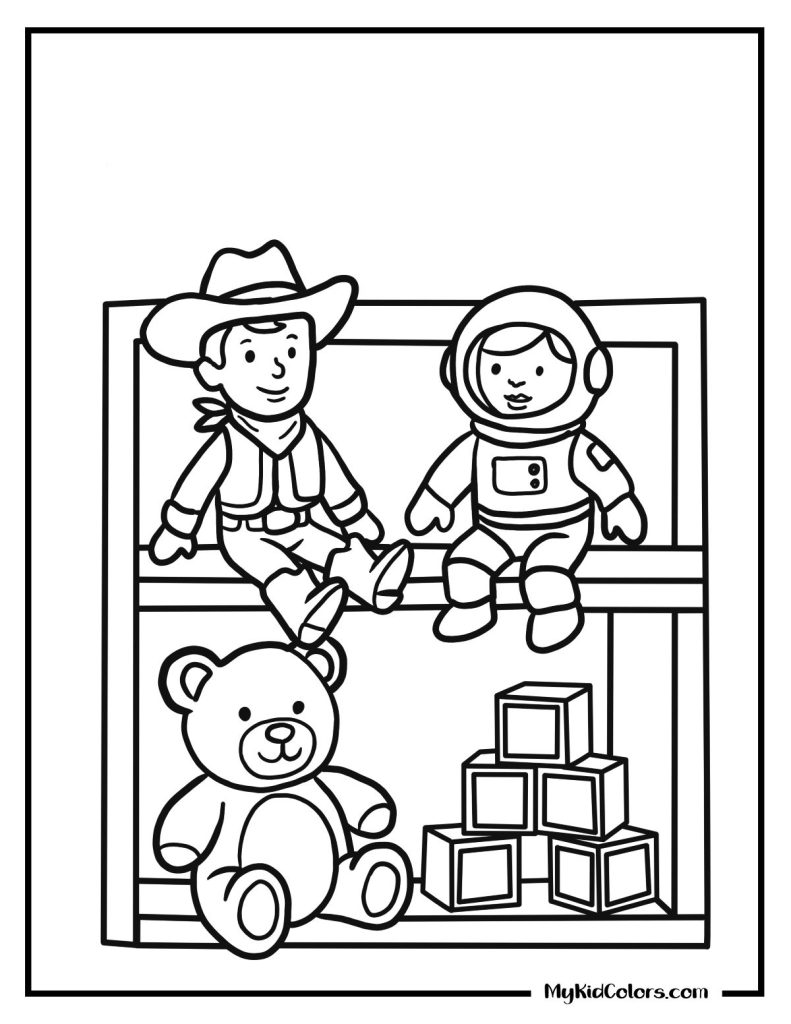
- Page 1: Toy Shelf Scene — A simple shelf with classic toy shapes like a cowboy doll, teddy bear, and blocks introduces easy coloring and toy recognition
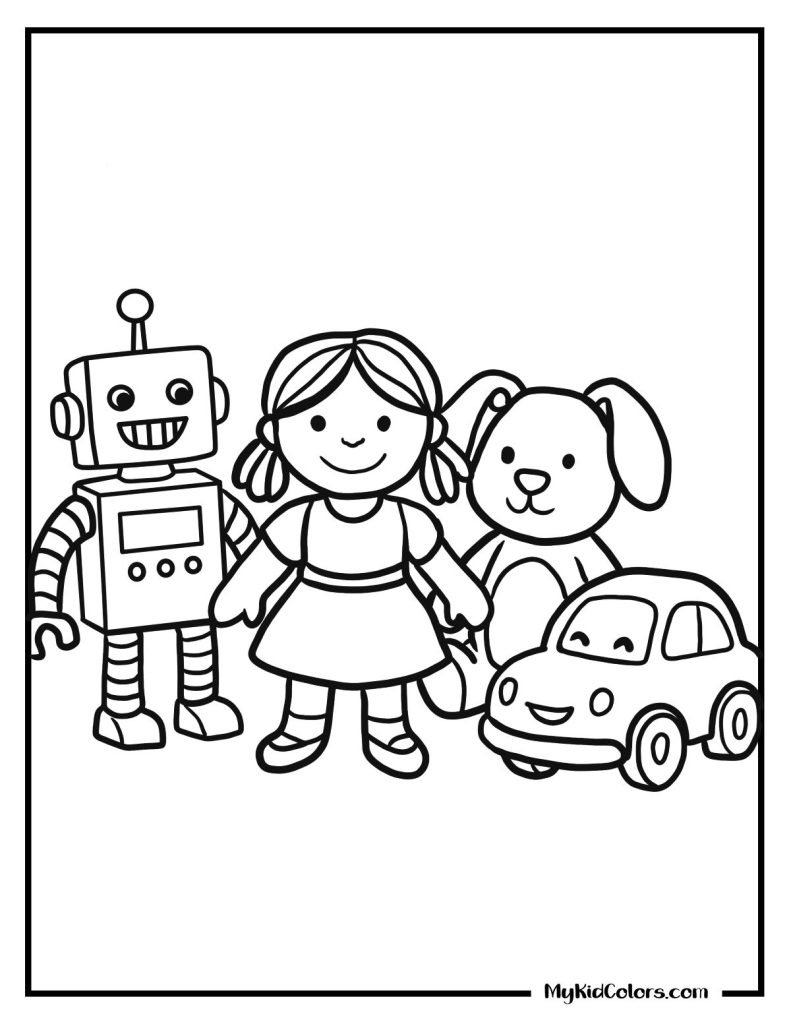
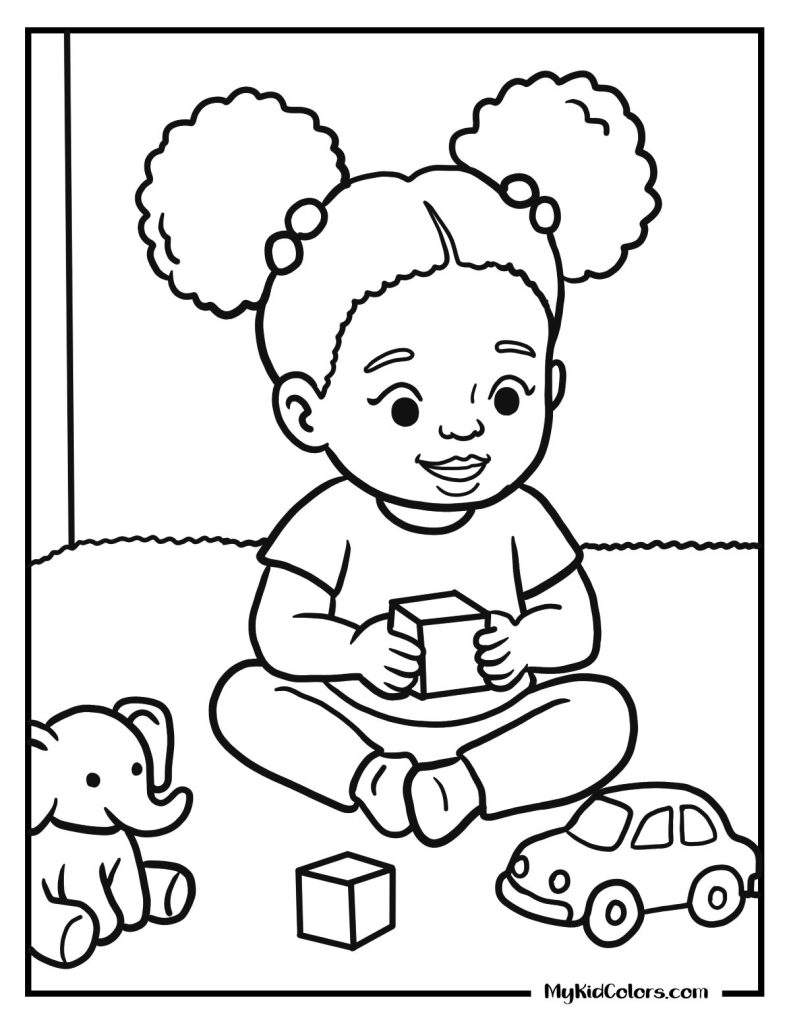
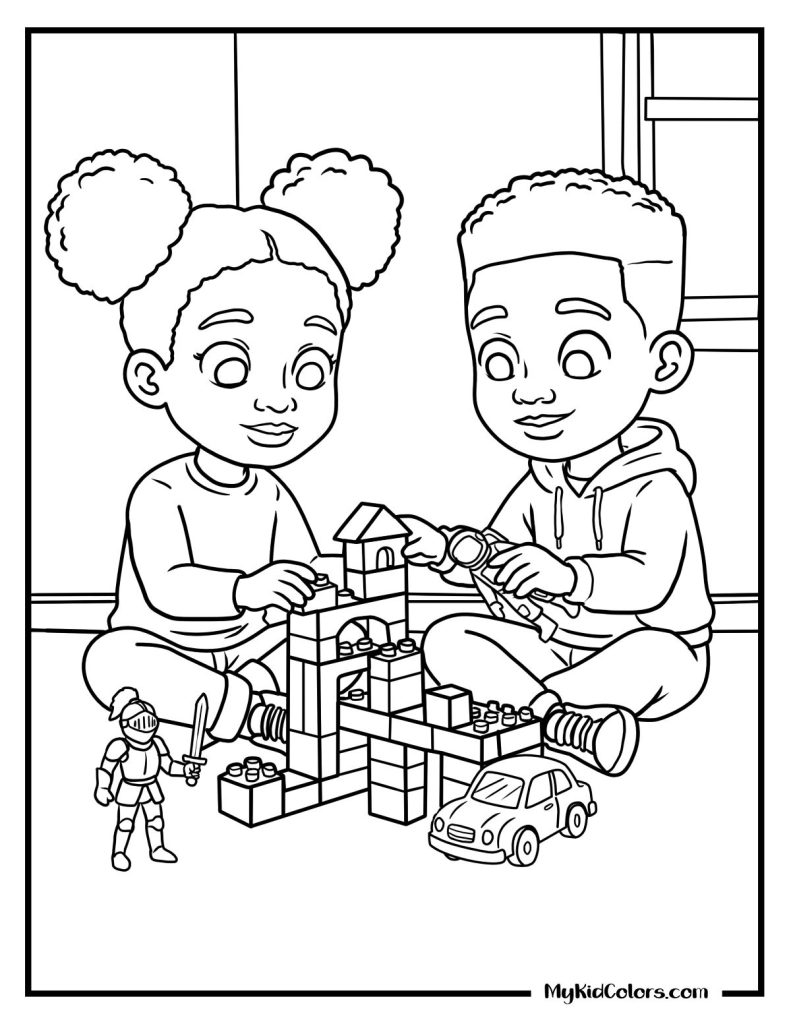
- Pages 2 & 3: Happy Toy Group + Playtime Floor — Smiling toys and a Black toddler with afro puffs playing on the floor create joyful, familiar play scenes children can relate to
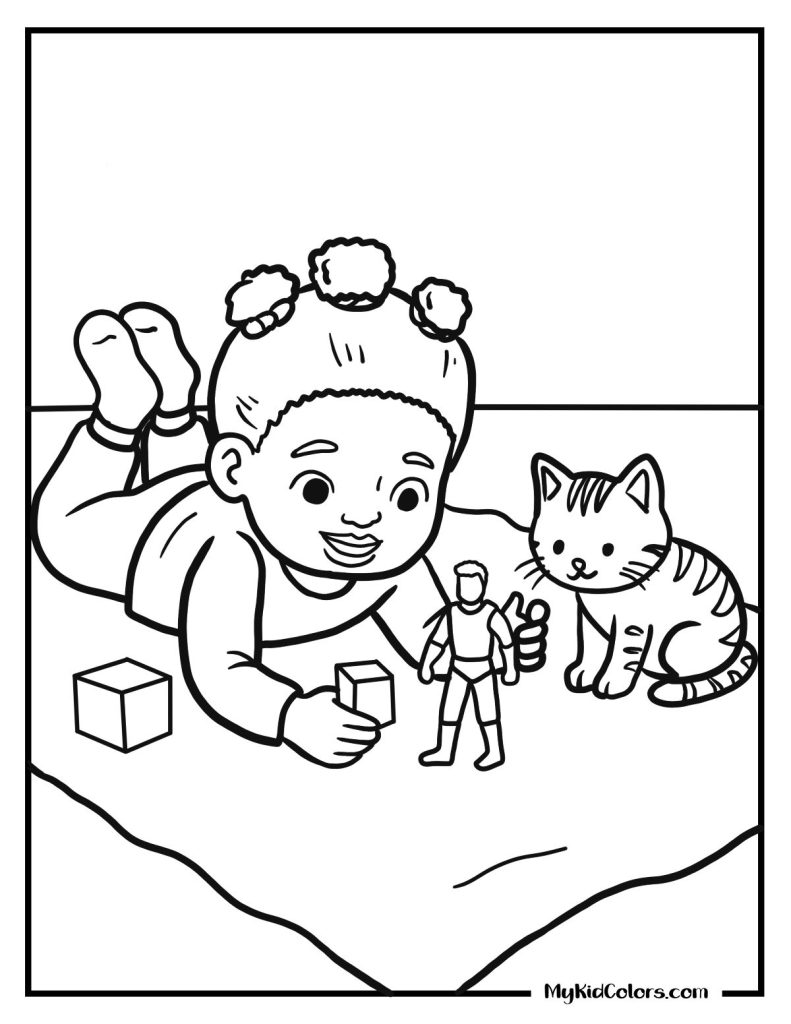
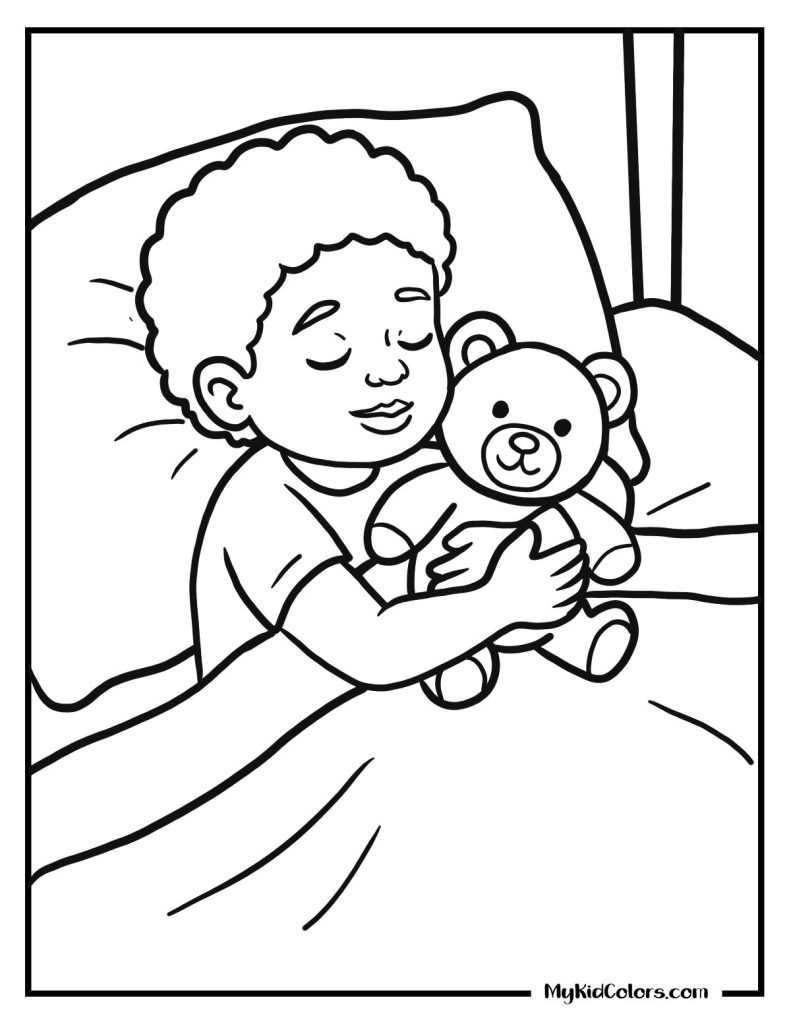
- Pages 4 & 5: Toy + Pet Moment + Bedtime Toy Hold — A child playing with a pet nearby and a bedtime comfort scene emphasize emotional safety and attachment
Growing Imagination: Play, Care & Friendship (Pages 6–10)
Perfect for elementary kids. These pages visualize imagination, empathy, and social connection.
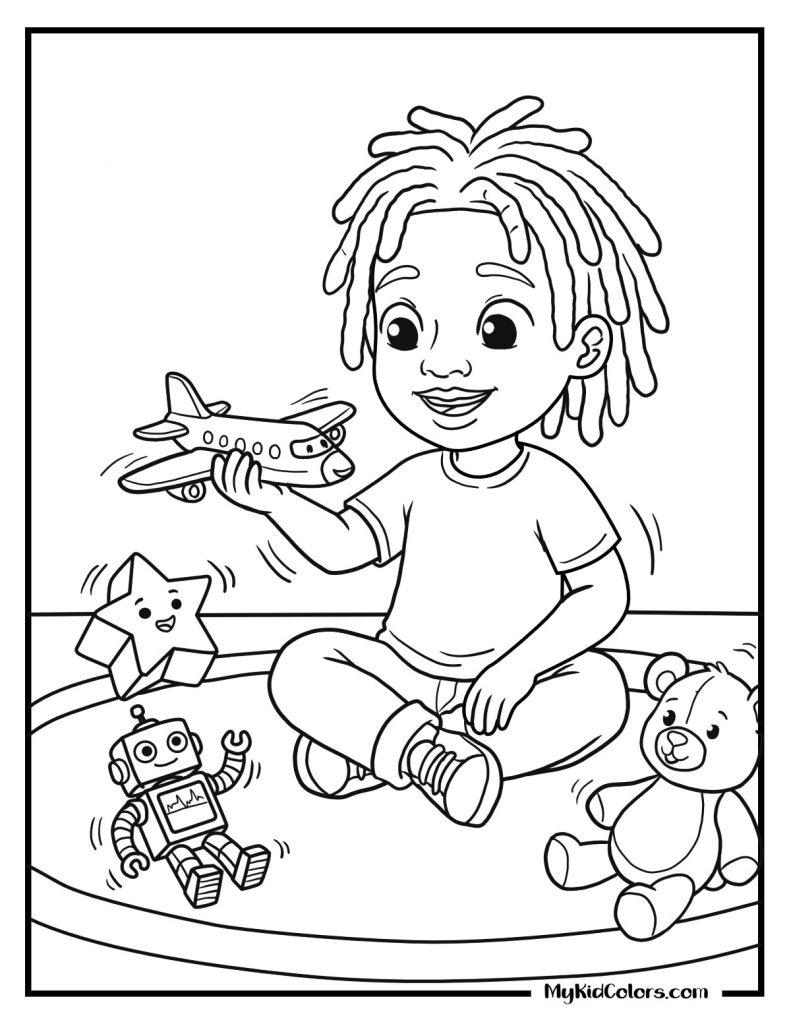
- Page 6: Imagination Scene — A child imagines toys coming alive around them, encouraging creativity and storytelling
- Pages 7 & 8: Toy Repair Moment + Playdate — Caring for a worn toy and sharing toys with friends teach empathy, kindness, and teamwork
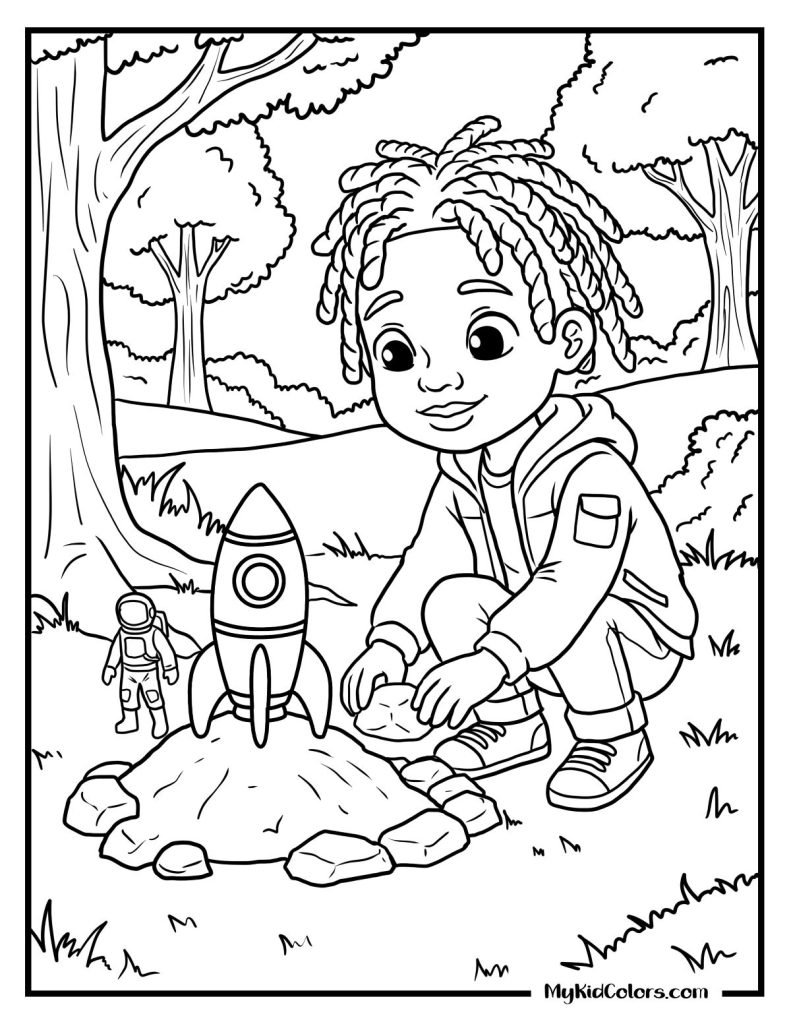
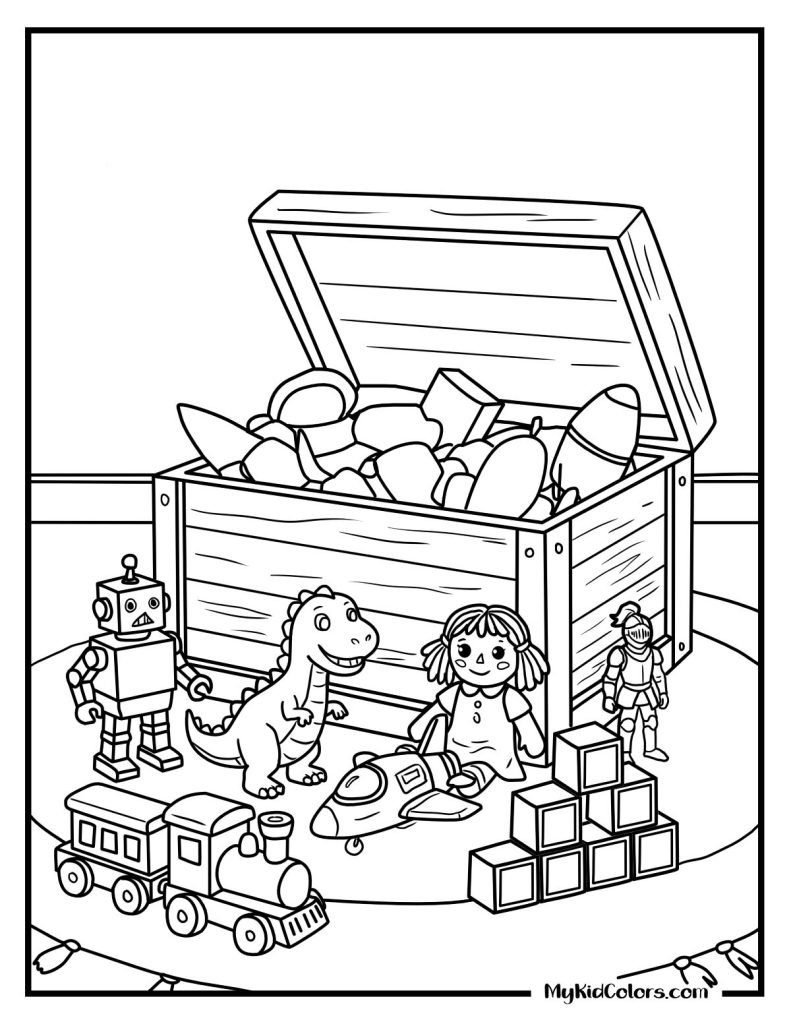
- Pages 9 & 10: Outdoor Toy Adventure + Toy Box World — Outdoor play and an overflowing toy world inspire imagination and adventure
From Play to Big Feelings & Big Dreams (Pages 11–15)
Designed for older kids or quiet reflection. These pages include storytelling, emotional learning, and family connection.
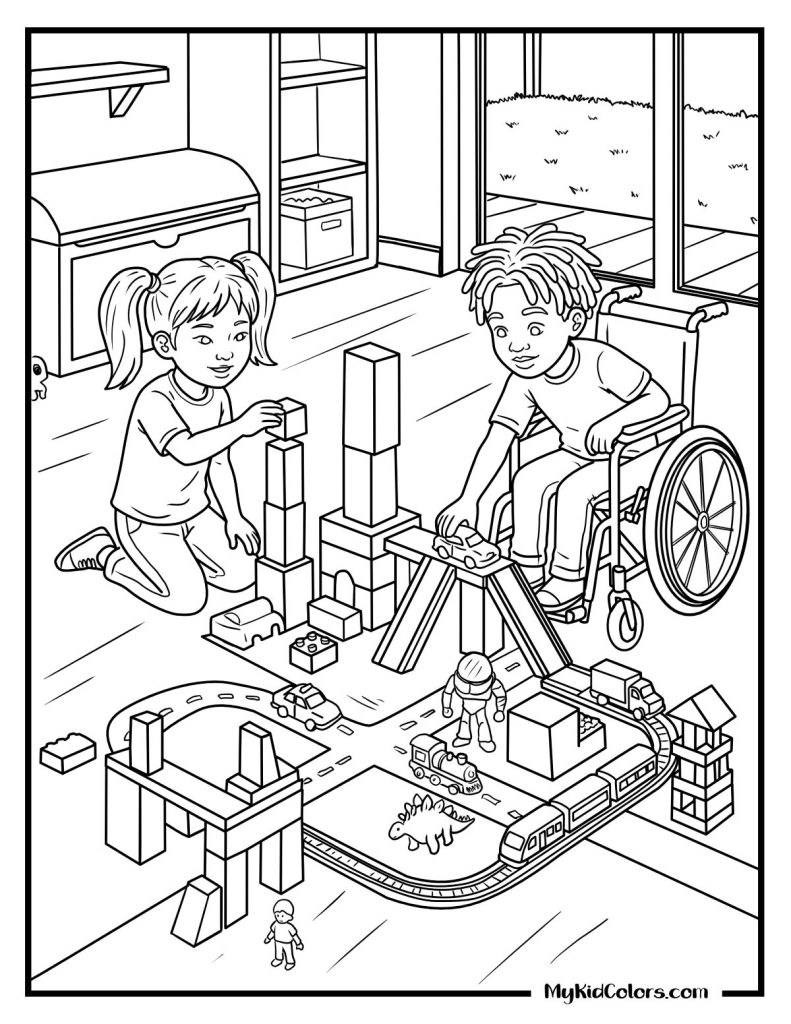
- Page 11: Toy City Build — A detailed city made of toys and blocks celebrates creativity, teamwork, and problem-solving
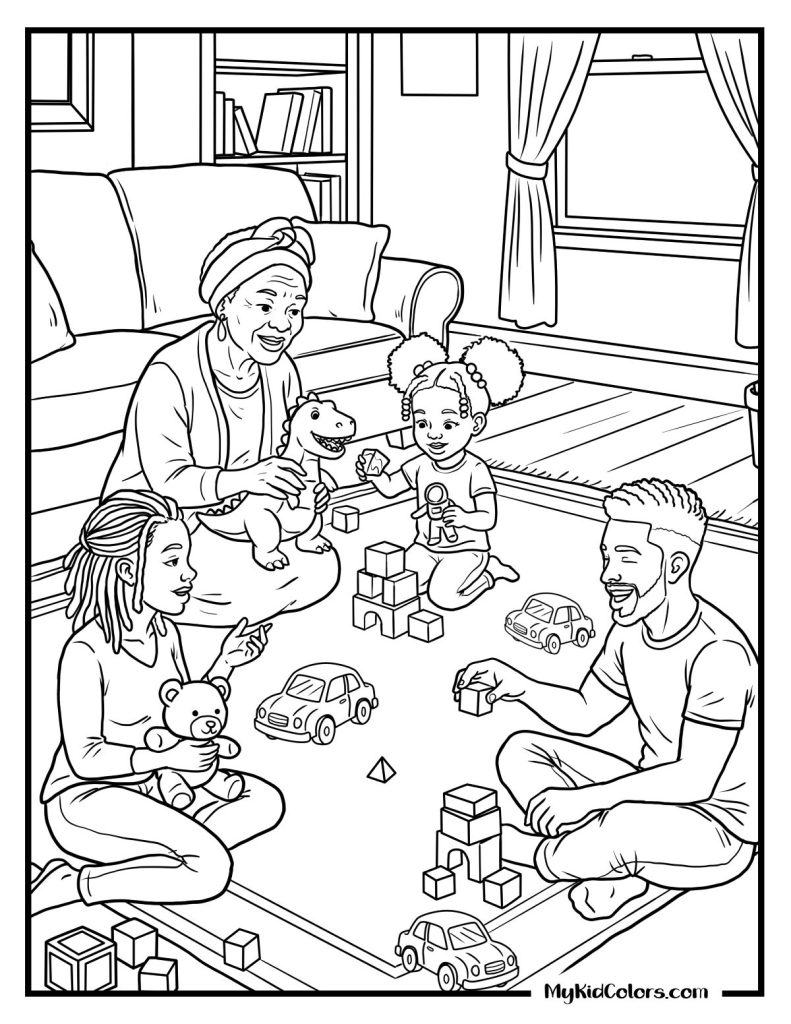
- Pages 12 & 13: Emotional Growth + Family Play Night — Emotional regulation through play and a cozy family game night show the healing and bonding power of toys
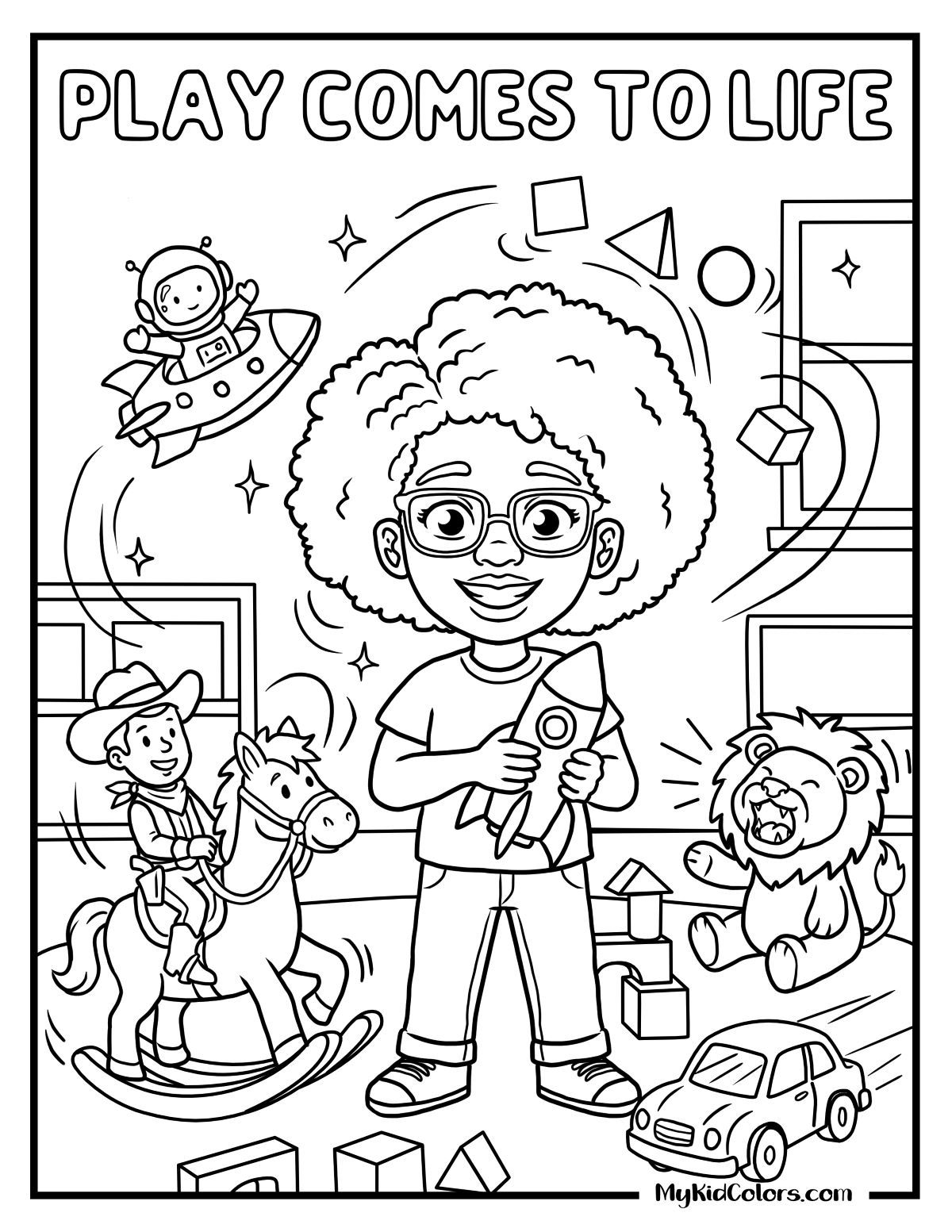
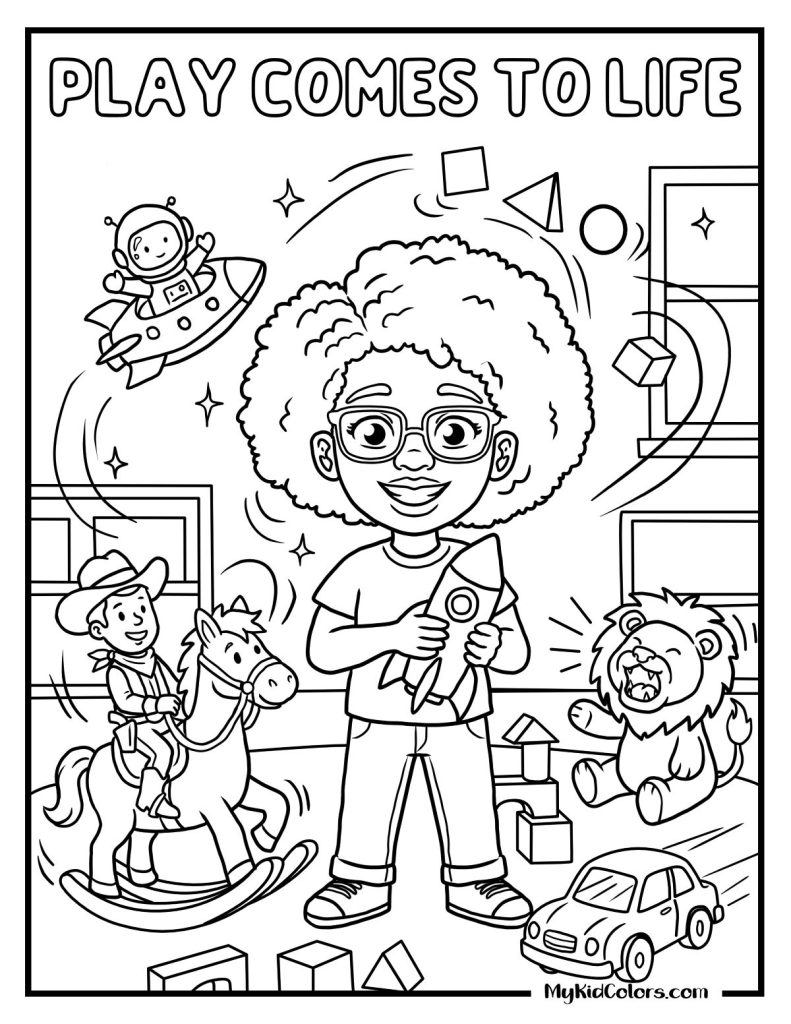
- Pages 14 & 15: Real vs Imagination + Play Comes to Life Hero Page — A split-scene imagination page and bold hero page celebrate storytelling, confidence, and the power of play
Perfect for Everyday Calm Activities & Homeschool
Teachers and parents love using these as Toy Story activity pages, printable worksheets, and creative quiet-time fun. Here are a few ways to extend the lesson:
- Storytelling Time: Let children color a page, then create a story about what the toys are doing or feeling
- Story Sequencing: Use Pages 3, 6, 12, and 15 to show the journey from simple play to imagination and emotional growth
- Toy Care Activity: Pair the Toy Repair page with fixing or cleaning an old toy to teach empathy and responsibility
Why We Choose Hand-Drawn Over AI
Toy Story 5 is, at its core, a film about what gets lost when imagination is replaced by technology. A tablet that anticipates every question. A toy that never wears out. A game that plays itself.
Our coloring pages are the opposite of that.
Every page in this set was drawn by a real human illustrator. Not generated. Not optimized. Drawn with intention, line by line, with the belief that the child who colors it will bring something to the page that no algorithm could predict.
That is exactly what Toy Story has always been about. The child completes the toy. The imagination makes it real.
These pages work the same way. They are not finished until your child picks up a crayon. The goal is not to replace the movie. It is to give kids a hands-on way to keep imagining after the screen turns off.
Frequently Asked Questions
My child is obsessed with screens and barely plays with toys anymore. Is this a phase?
It is a common pattern, and one that Toy Story 5 addresses directly. The film’s central conflict is about traditional toys struggling for relevance in a world where a tablet does everything faster and louder. For children who have shifted toward screens, these pages can serve as a gentle re-entry point into hands-on, imaginative play. There is no pressure built into coloring. It is quiet, self-directed, and slow in a way that screens rarely are. Some children resist at first. Most settle in within a few minutes. The transition back to analog play usually starts with something that already has their imagination — like the world of Toy Story.
My child has not seen the Toy Story movies yet. Will these pages still connect?
Yes, because the pages are built around emotions and experiences that exist outside the films: the loyal old toy, the adventurous new friend, the child who plays with total commitment. Children who have never seen Toy Story understand all of those things. The movies became beloved precisely because they captured something universal rather than inventing something new. These pages live in the same territory.
Are there pages that are good for children who are anxious about change?
Pages 7, 8, and 14 are the gentlest entry points for that conversation. Page 7 shows a toy who has been replaced but not forgotten. Page 8 shows the return — that some things come back, even when you were afraid they would not. Page 14 shows a handoff: something loved being passed forward rather than left behind. For a child who is anxious about transitions, starting a new school, welcoming a sibling, or adjusting to a big change, coloring these pages together while talking loosely about the images can be surprisingly effective. You do not need to make it a lesson.
Download Your Free Set
Toy Story 5 is almost here. But the magic of play your child is living right now does not need a theater. It just needs time, space, and something worth putting color into.
These pages are made for that.
You Might Also Like
- 15 Free Disney Coloring Pages (Hand-Drawn PDF Printables)
- 15 Free Onward Coloring Pages (Free PDF Printables)
- 15 Free Snow White Coloring Pages (Printable PDFs)
- 15 Free Hand-Drawn Color Coloring Pages (Free Printable PDF)
- 15 Free Barbie Coloring Pages for Kids (Free PDF Printables)
- 15 Free Moana-Inspired Coloring Pages for Kids Who Love Ocean Adventures

