
15 Free Fairy Coloring Pages Where Every Child Belongs in the Magic
Fairy coloring pages are not just about wings and sparkles. For many kids, they are a doorway into tiny worlds: mushroom houses, flower crowns, secret gardens, moonlit forests, fluttering wings, and characters who feel brave in small but magical ways.
This free set of fairy coloring pages gives children a calm, screen-free activity for quiet time, classrooms, library programs, homeschool breaks, or any afternoon that could use a little more imagination.
A Note from Louisa (Founder of MyKidColors)
My father brought fairy tale books home when I was growing up in Nigeria. Snow White. The Frog Prince. Little Red Riding Hood. Puss in Boots. European stories, the fairies and princesses all drawn in a way that had nothing to do with what I saw in my mirror.
I loved those stories anyway. But I also grew up reading Nigerian books where the children looked like me, and the difference in how I moved through those two types of stories was real. One I loved from the outside. The other I stepped inside of completely.

Less searching. More MEANINGFUL moments.
When kids recognize themselves on the page, coloring changes.
The Inclusive Family Coloring Collection includes 25 human-drawn illustrations centered on everyday moments — designed to make inclusion feel normal, joyful, and intentional.
Because representation shouldn’t be reserved for one month.
These fairy pages are built for the child who steps inside completely. Who sees their own face in the wings, their own hair in the magic. That is what imagination is actually supposed to feel like.
Conversation Corner: 3 Questions to Ask While Coloring
Turn this activity into a bonding moment while your child colors:
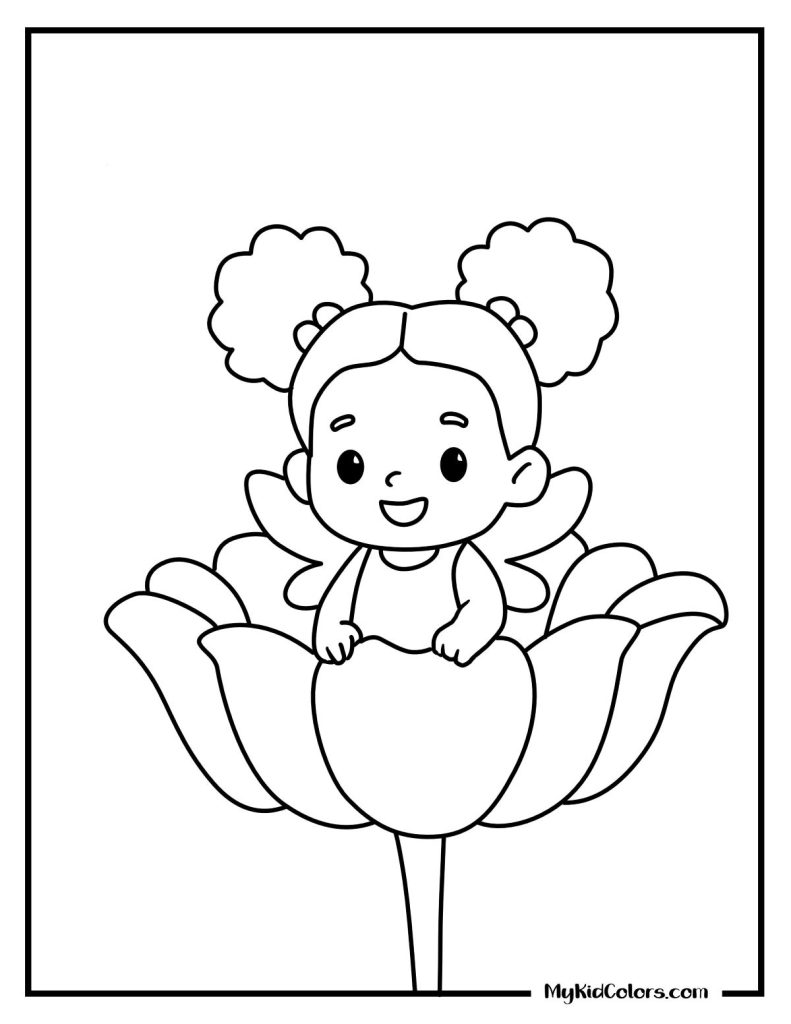
- For “Garden Fairy Play” (Page 3): “If you were this fairy sitting on a flower, what kind of magic would you have and what would you use it for?”
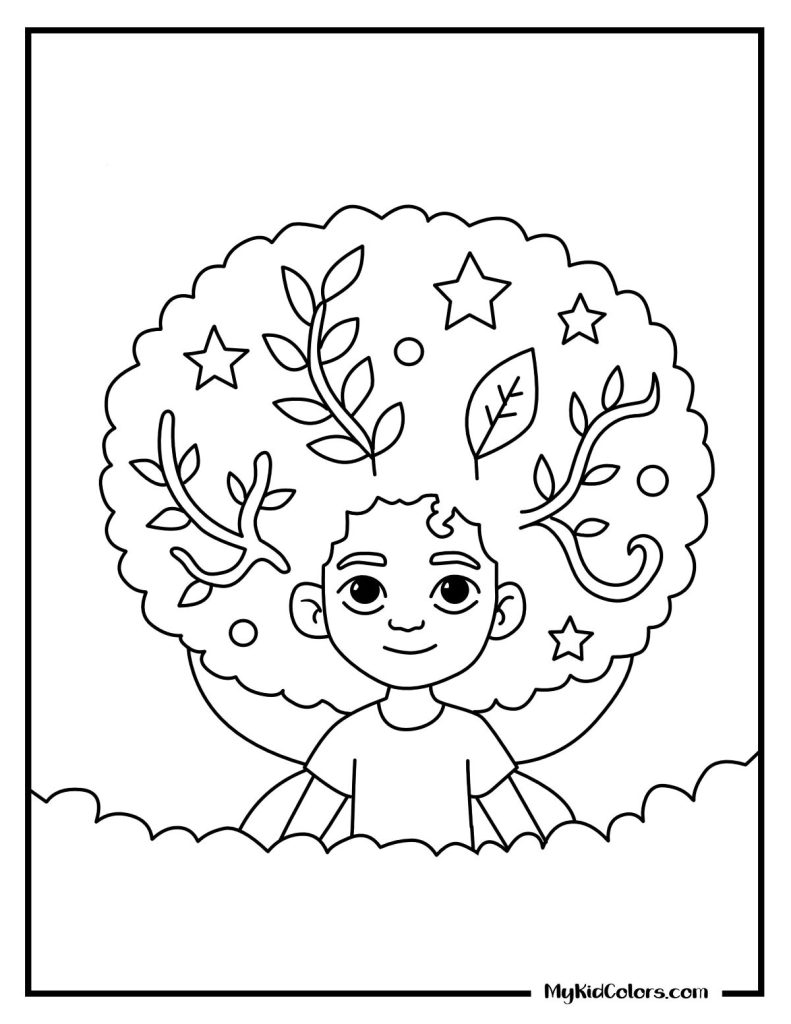
- For “Fairy Hair Magic” (Page 8): “What do you think it means that the fairy’s hair is part of her magic, and what makes you special like that?”
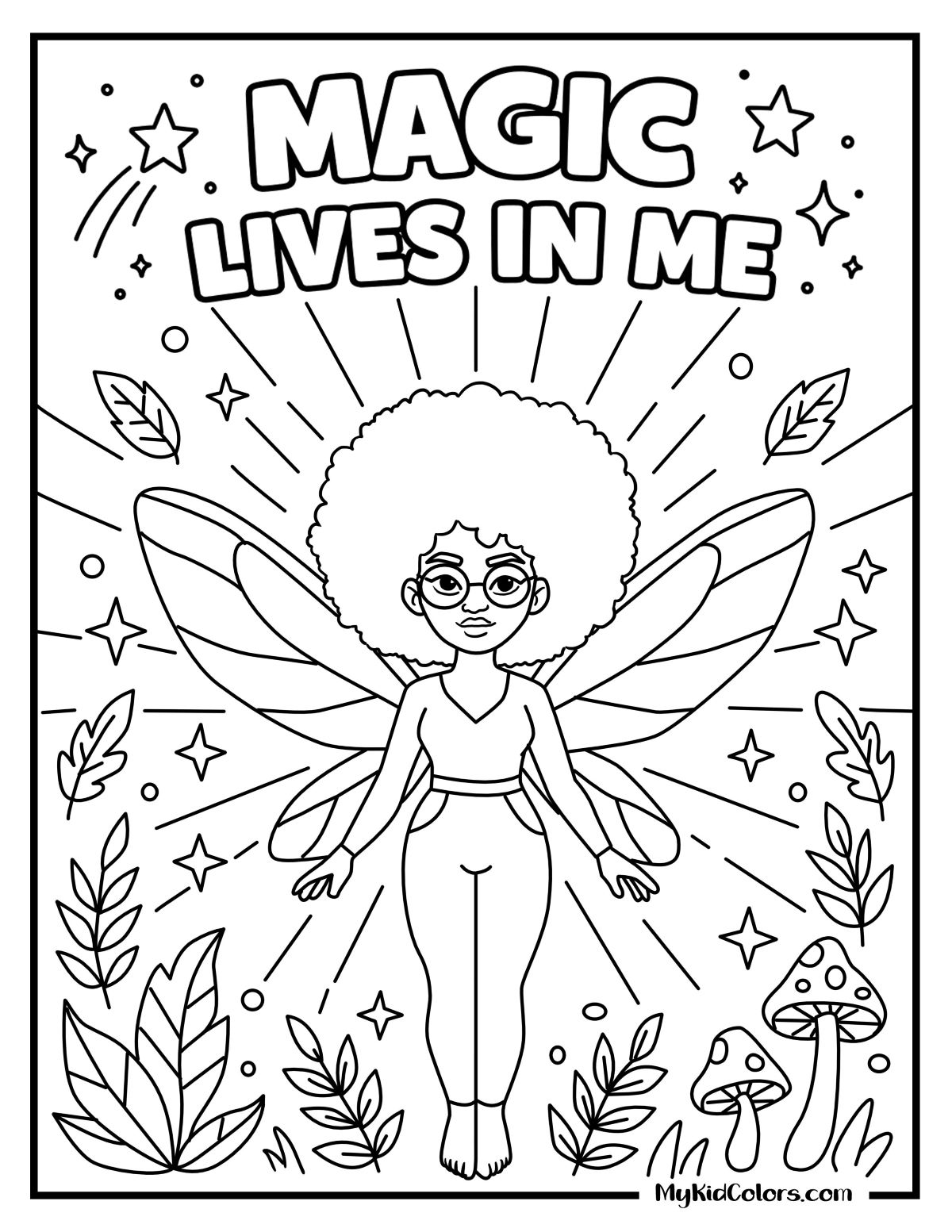
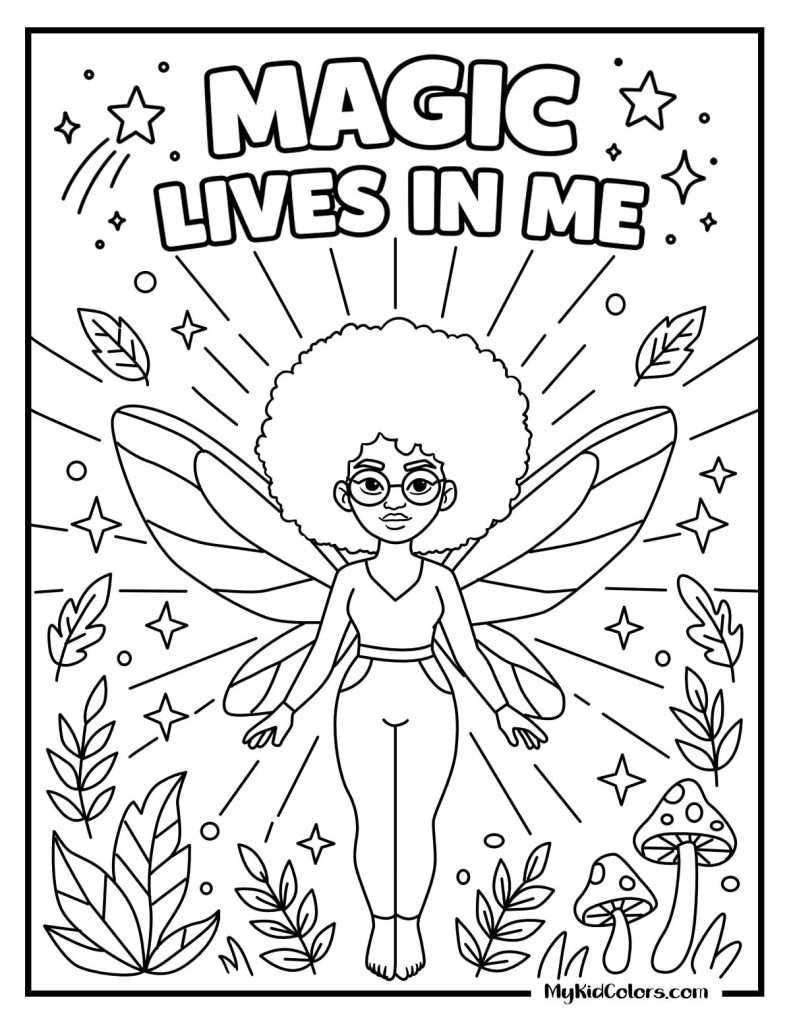
- For “MAGIC LIVES IN ME” (Page 15): “What kind of magic do you think lives inside you, even when no one else can see it yet?”
The Collection: 15 Free Fairy Coloring Pages
We’ve organized these into three sets to help children explore imagination—from simple magical moments to identity and storytelling.
For Little Hands: Gentle Magic & First Imagination (Pages 1–5)
Best for toddlers and preschoolers. These simple fairy coloring pages focus on soft shapes, friendly characters, and easy-to-follow designs.
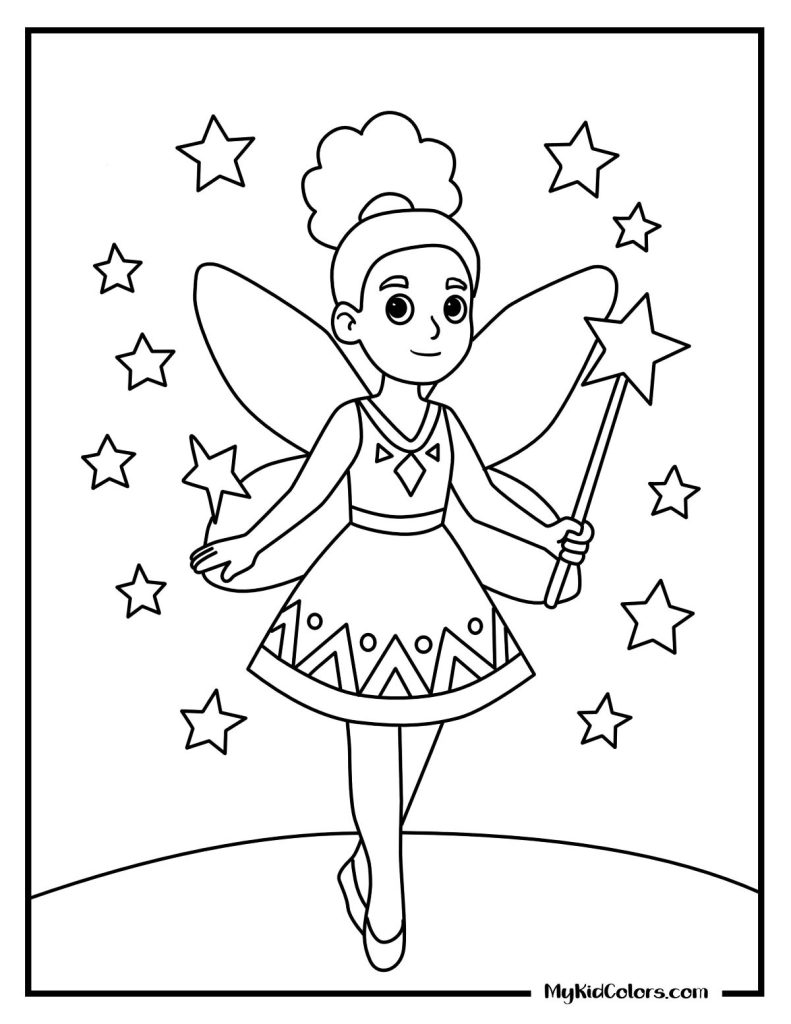
- Page 1: introduces a classic fairy with wings, wand, and stars, creating a familiar and calming starting point.
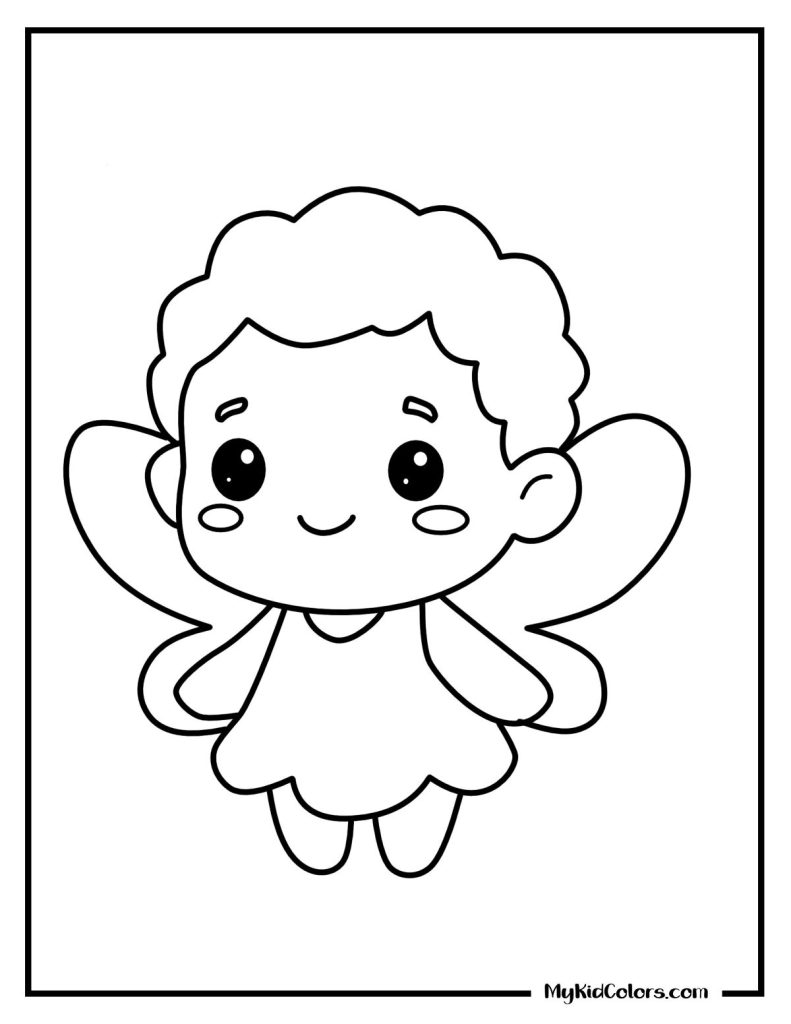
- Pages 2 & 3: bring playful charm—a cute kawaii fairy and a joyful toddler fairy sitting on a flower.
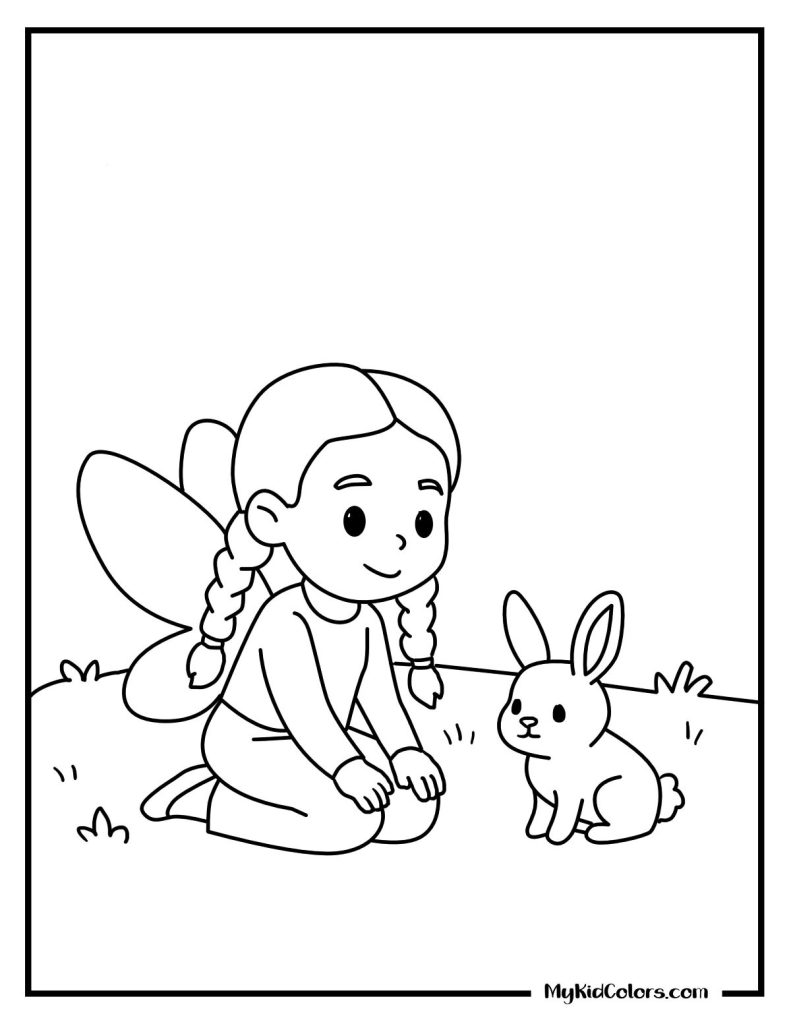
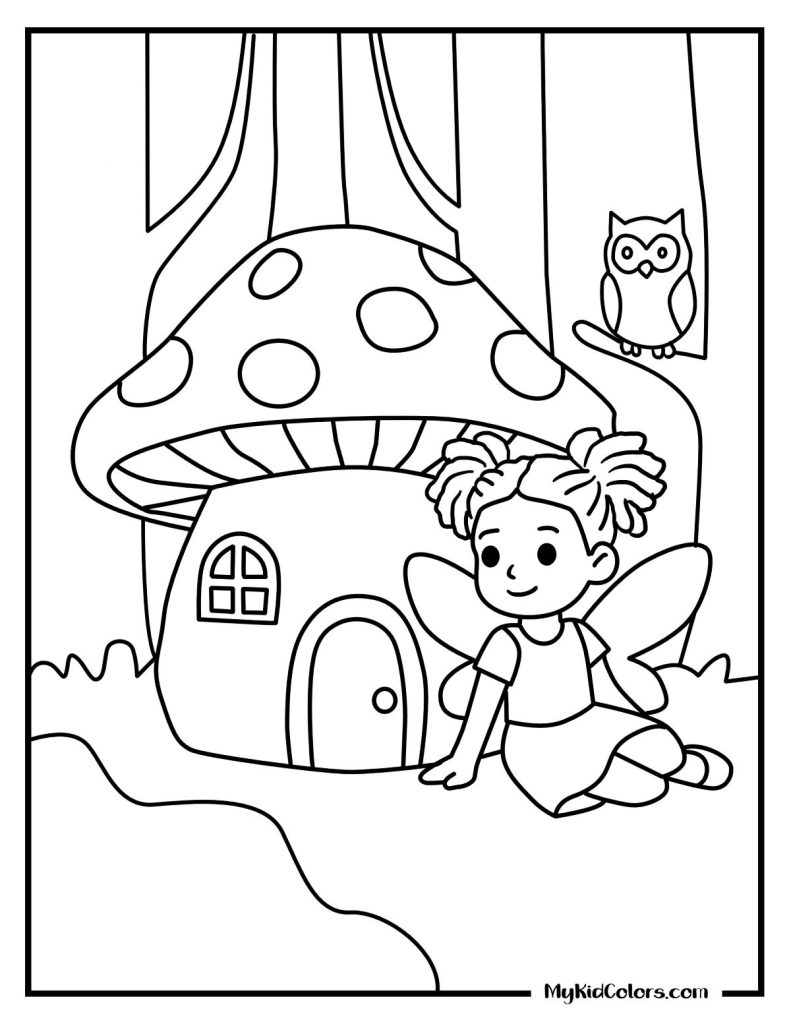
- Pages 4 & 5: highlight connection and comfort—a fairy with a pet companion and a cozy mushroom fairy scene.
Growing Imagination & Emotional Expression (Pages 6–10)
Perfect for elementary kids. These fantasy coloring pages and fairy coloring sheets explore nature, identity, and peaceful storytelling.
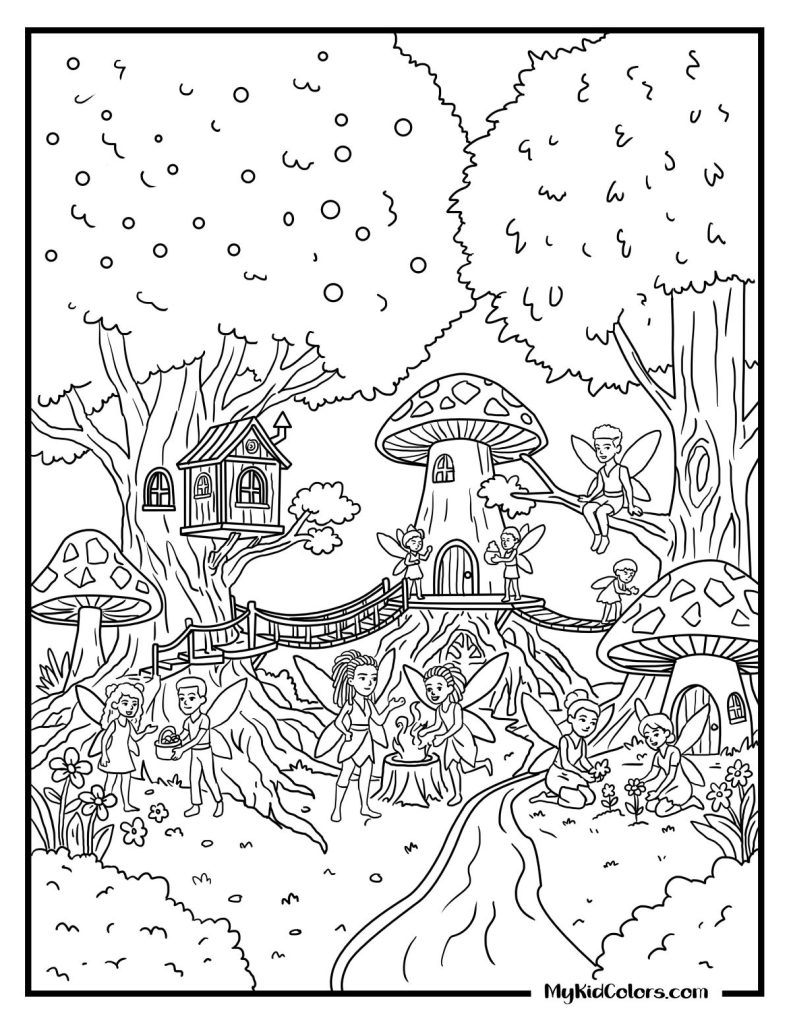
- Page 6: invites children into a detailed forest world filled with textures and discovery.
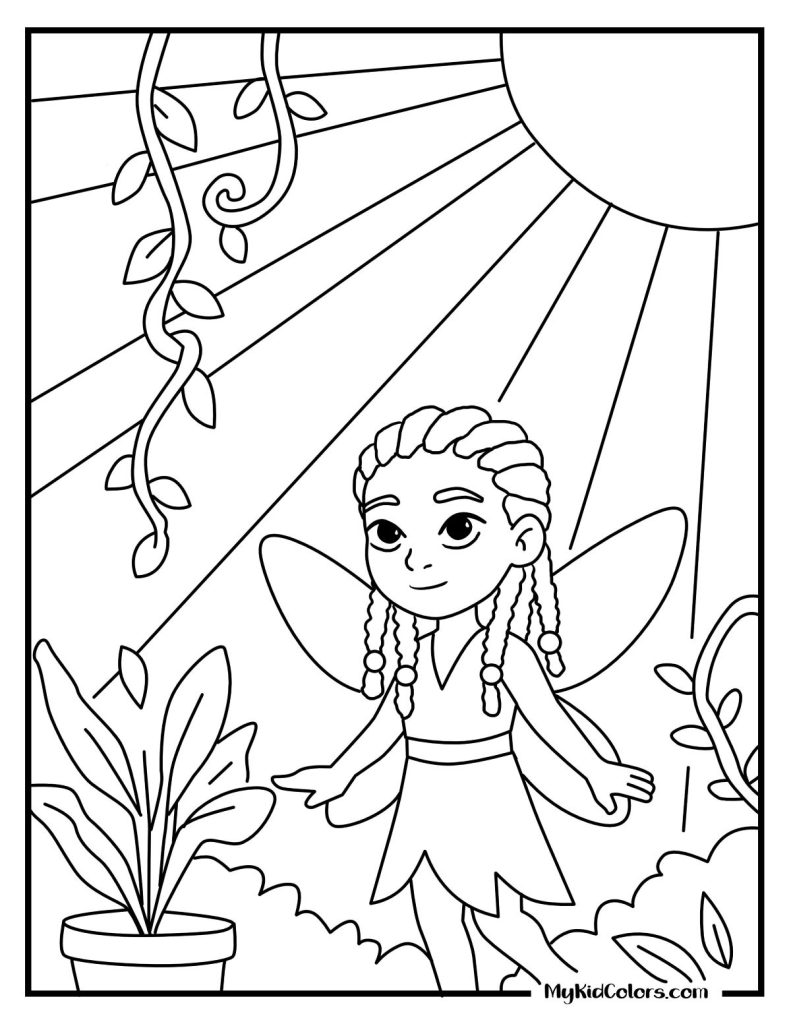
- Pages 7 & 8: connect nature and identity—a garden fairy nurturing growth and a fairy whose hair becomes part of her magic.
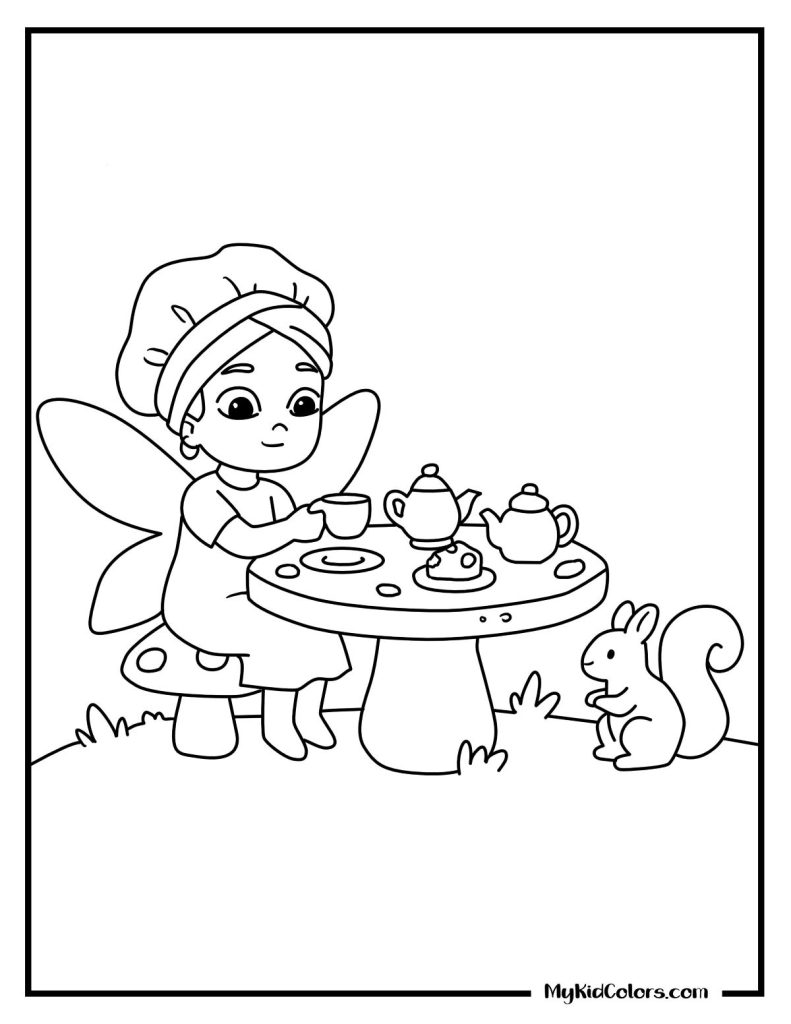
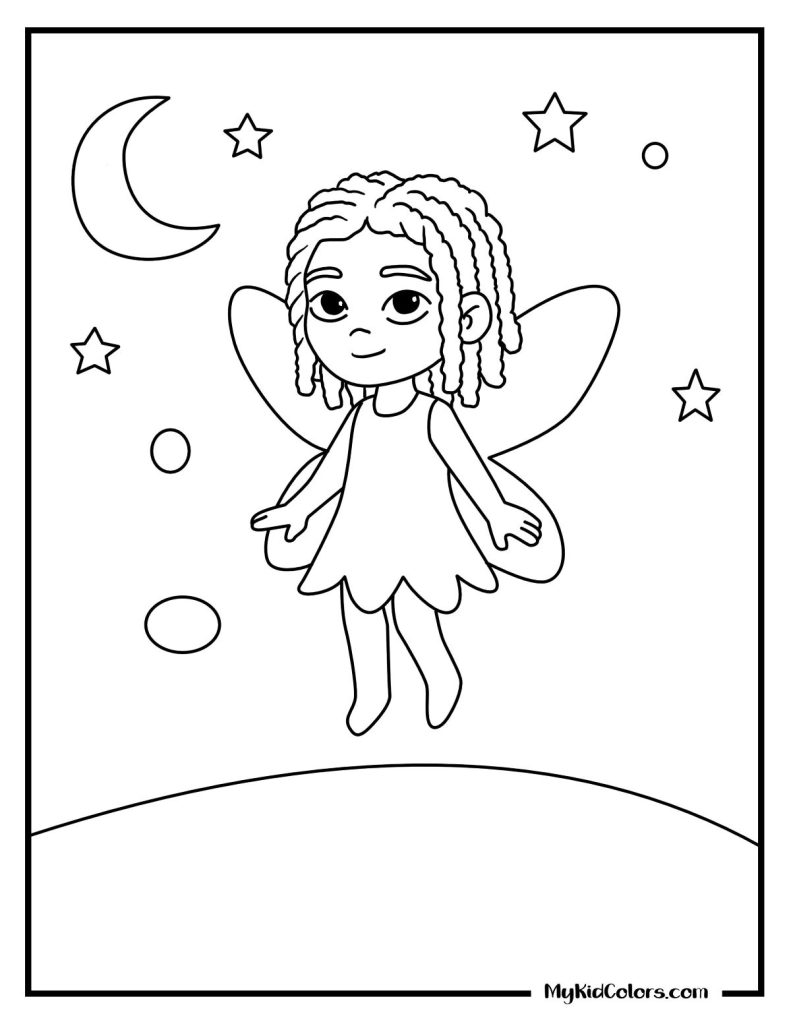
- Pages 9 & 10: create calm, cozy moments—tea time with animal friends and a glowing night fairy scene.
Identity, Storytelling & Magical Worlds (Pages 11–15)
Designed for older kids or quiet reflection. These printable fairy coloring pages and detailed scenes expand imagination into deeper storytelling.
- Page 11: presents a full fairy village, encouraging discovery and community-based imagination.
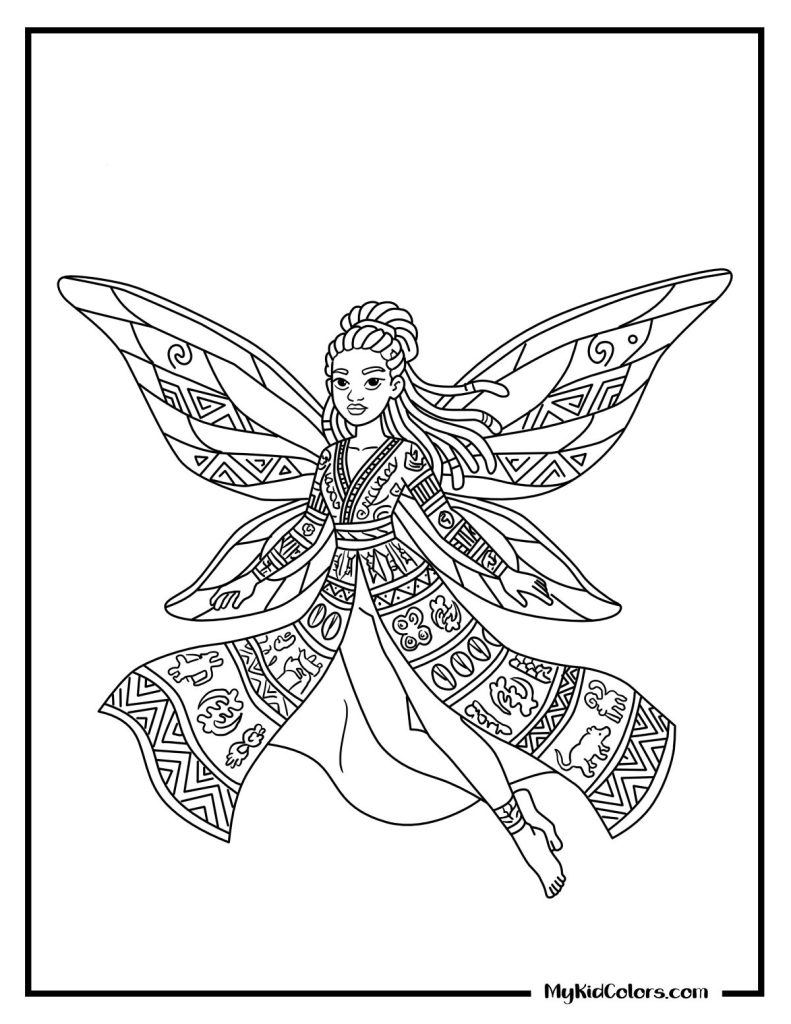
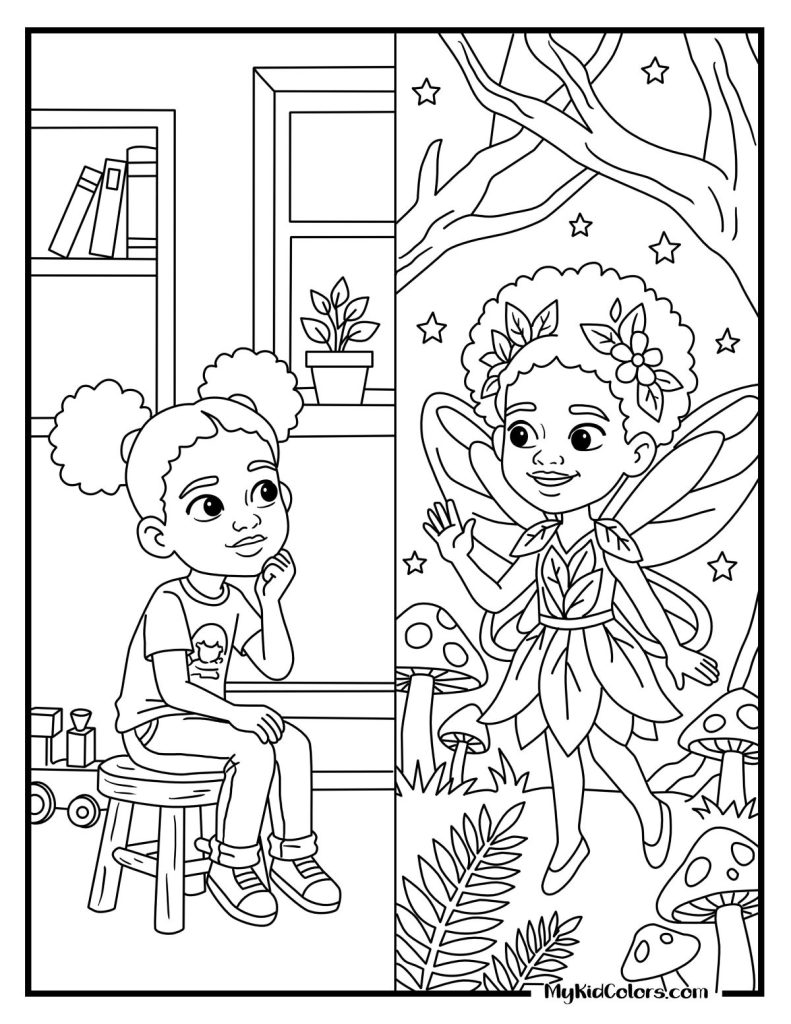
- Pages 12 & 13: explore cultural identity and dual worlds—a fairy with African-inspired patterns and a child transitioning between real and magical spaces.
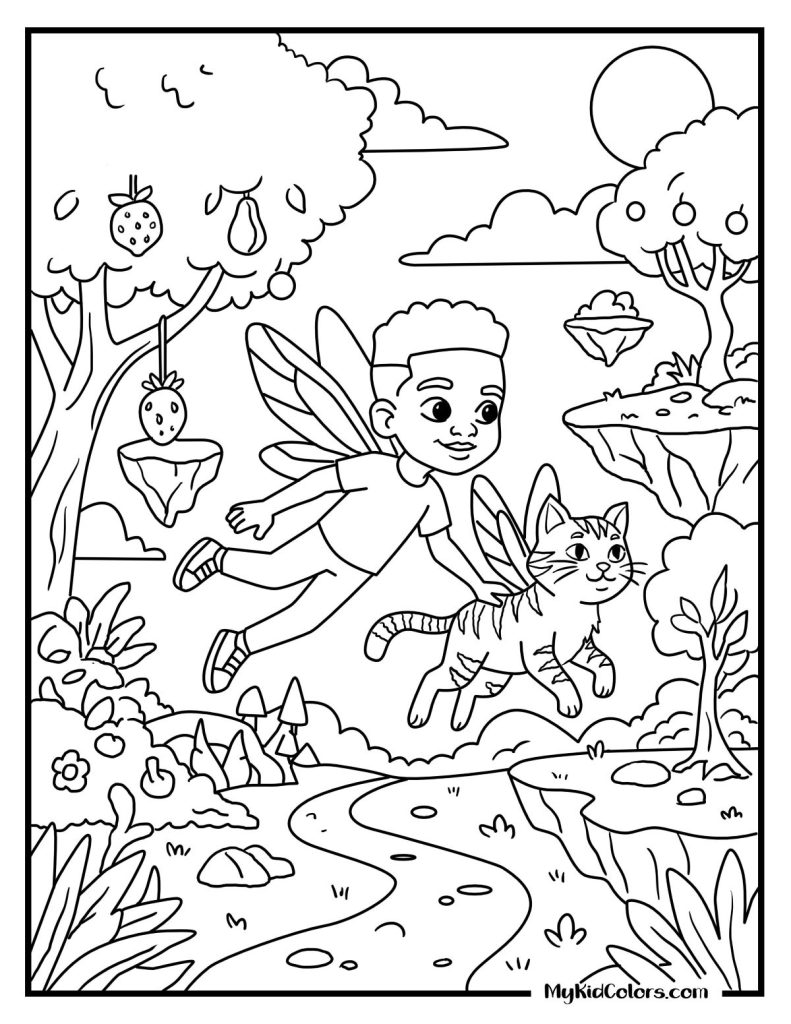
- Pages 14 & 15: bring it all together—adventure with animal companions and the empowering message: “MAGIC LIVES IN ME.”
Perfect for Classrooms, Homeschools, and Fairy-Themed Parties
These pages work as creative writing starters, imaginative play anchors, and party activity stations. A few ways to extend the magic:
- Design Your Fairy: Print Page 1 and give your child full creative authority: name the fairy, choose her power, decide which season she belongs to and where she lives. Write the details on the back of the page. Over multiple sessions, children often develop a full fairy character with a backstory, a territory, and a role in the forest community. This kind of world-building is a natural extension of the page and requires nothing extra from a parent except the willingness to ask follow-up questions.
- Fairy Habitat Map: After coloring Page 6, the forest fairy community scene, challenge your child to draw a map of that fairy neighborhood. Where are the doors in the trees? Where is the market? Where do the fairies sleep? This is a creative geography and storytelling exercise that rewards children who love both art and narrative. Works beautifully as a companion to a fairy-themed read-aloud.
- The Three Wishes Story: Use Page 11, the wish-granting scene, as the beginning of a dictated or written story: what is the wish, who is asking, and what happens after the fairy grants it? For children working on narrative sequencing or early creative writing, this prompt has a built-in structure (problem, wish, consequence) that scaffolds the story without making it feel like a lesson.
Why We Choose Hand-Drawn Over AI
Fairy illustrations have a long history of a particular kind of invisibility — one type of fairy, drawn one way, repeated across generations of children’s media until it started to feel like the only kind that existed.
AI generators trained on that history produce more of the same. They average what already exists. They do not notice the gap.
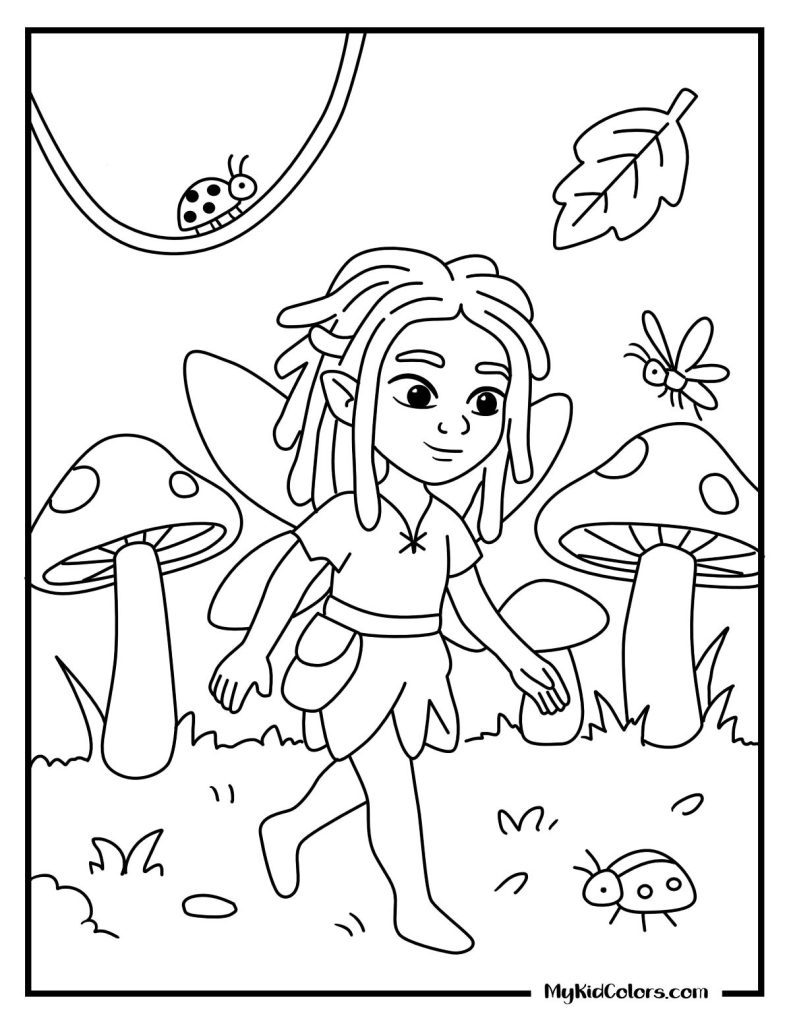
Our human illustrators made specific, deliberate choices: the fairy with locs. The elder with silver-streaked natural hair. The winter fairy who is wholly at home in the cold. The forest fairy whose face is specific and known rather than generically lovely.
Those choices are not corrections or adjustments. They are what fairy magic actually looks like when it belongs to everyone.
Every child deserves to see themselves in the enchanted world. These pages make sure they do.
Frequently Asked Questions
My daughter says fairies don’t look like her. How do I respond to that?
That observation is worth taking seriously rather than deflecting. She is right that most fairy illustrations she has encountered probably do not look like her, and she noticed. The most useful response is not to argue with her perception but to meet it with action — which is exactly what these pages are. Print Page 2 or Page 9, the fairies with natural hair and specific features, and put them on the table without comment. Let the image do the work. Children who have been told through a thousand small moments that magic looks a certain way respond powerfully to a single image that says otherwise.
Are there fairy pages for boys, or children who do not identify with princess fairies?
Yes. Pages 6, 7, 8, and 12 all show fairies in active, purposeful roles — tending, healing, navigating the cold, and moving through a complex natural world — without any princess framing. Page 14, the fairy standing at the edge of a height about to fly, is deliberately un-decorated and focused on courage rather than appearance. For boys who love fantasy or children who are drawn to the adventure and world-building aspects of fairy lore without the princess aesthetic, these pages offer a genuine entry point into the same imaginative world.
My child is going through a fairy phase that feels all-consuming. How do I lean into it?
Lean in fully and do not hurry it along. An all-consuming fairy phase is a child’s imagination doing its most important work: building an internal world with its own rules, its own logic, and its own population. The more richly you feed it, the stronger that imaginative capacity becomes. These pages offer a structured way to extend the world without screens. Pair them with fairy-themed picture books (look specifically for authors of color writing fairy tales from non-European traditions), and encourage your child to design and name their own fairies using the blank-avatar approach described in the Design Your Fairy activity above. The phase will pass when it is ready. Enjoy it while it is here.
Download Your Free Set
Magic does not have one face. It never did. These pages just finally show that.
Your child belongs in the enchanted world. These pages know that from the first line drawn.
You Might Also Like
- 15 Free Fantasy Coloring Pages Where the Hero of the Story Looks Like Your Child
- 15 Free Printable Cozy Friends Coloring Pages for Creativity
- 15 Hand-Drawn Whimsical Coloring Pages Rooted in African Imagination
- 15 Cozy and Comfy Coloring Pages for Fall Relaxation
- 15 Ballerina Coloring Pages That Build Confidence and Self-Expression
- 15 Free Mermaid Coloring Pages (Free PDF Printables)

