
15 Free Ruby Bridges Coloring Pages for Kids Learning Her Story
How do you introduce Ruby Bridges’ story without making the history too vague or overwhelming? These 15 free Ruby Bridges coloring pages give you a place to begin, with human-drawn school scenes, family moments, and questions you can explore together.
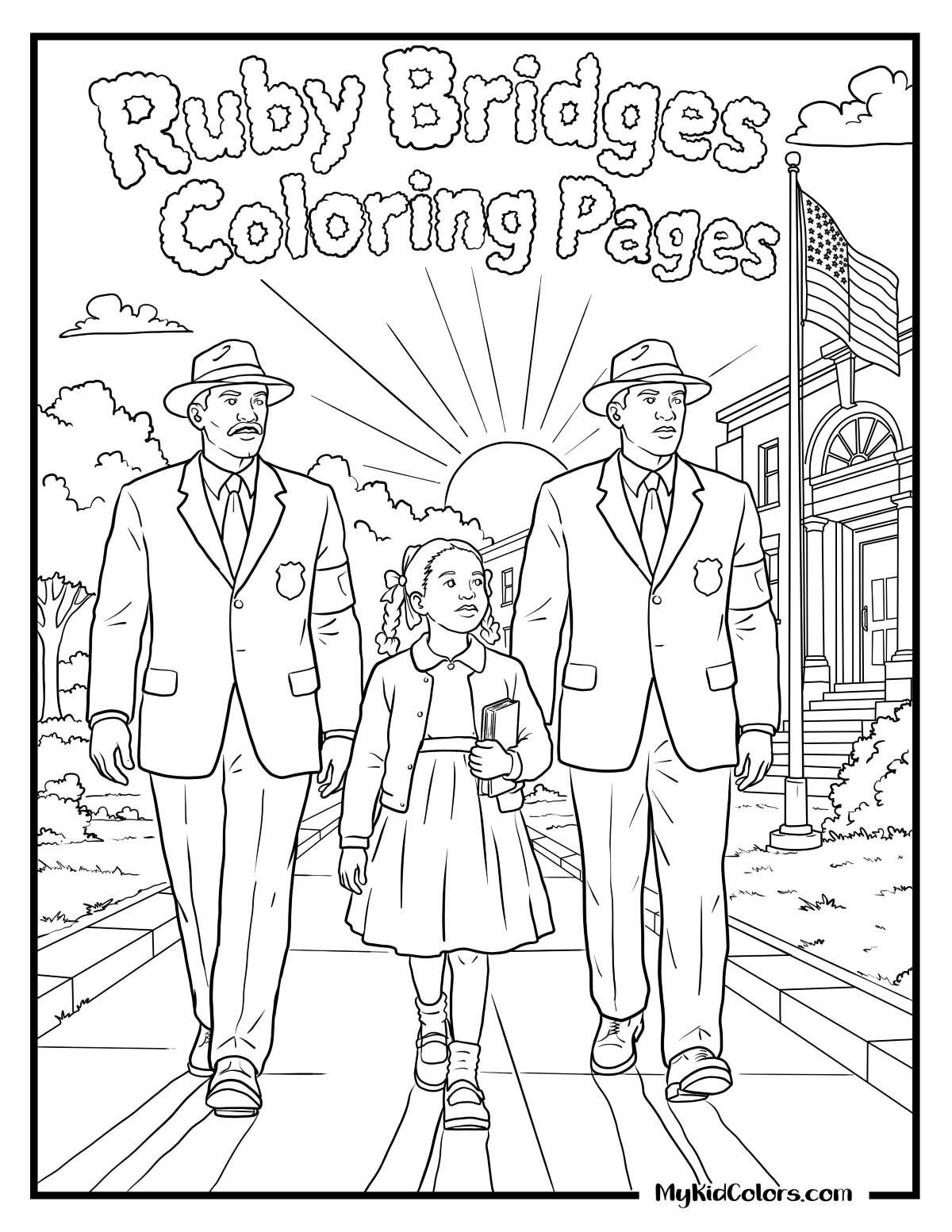
In 1960, six-year-old Ruby helped desegregate William Frantz Elementary School in New Orleans. Federal marshals escorted her because people opposed a Black child attending the previously all-white school. Her story is about courage, and about the racism that made such courage necessary.
The collection combines illustrations inspired by her life with present-day scenes about learning and belonging.
All 15 pages. One easy download. Get the complete human-drawn, ready-to-print PDF for $1.99, available instantly with a download link emailed to you for easy access anytime.
Prefer free JPGs? Right-click any coloring page and select “Save image as,” or press and hold the image on your phone to save it.
A Note from Louisa (Founder of MyKidColors)
Growing up in Africa, I knew my father believed his daughters should have access to a good education. He bought us books and encouraged us to read and study.

Less searching. More MEANINGFUL moments.
When kids recognize themselves on the page, coloring changes.
The Inclusive Family Coloring Collection includes 25 human-drawn illustrations centered on everyday moments — designed to make inclusion feel normal, joyful, and intentional.
Because representation shouldn’t be reserved for one month.
That part of my childhood comes to mind when I think about introducing Ruby Bridges to my children.
I want them to understand that her place in the classroom was a right, and that adults had a responsibility to protect it. These pages give us somewhere to begin that conversation together.
Conversation Corner: 3 Questions to Ask While Coloring
You don’t need to ask every question in one sitting. Let your child’s observations guide the conversation.
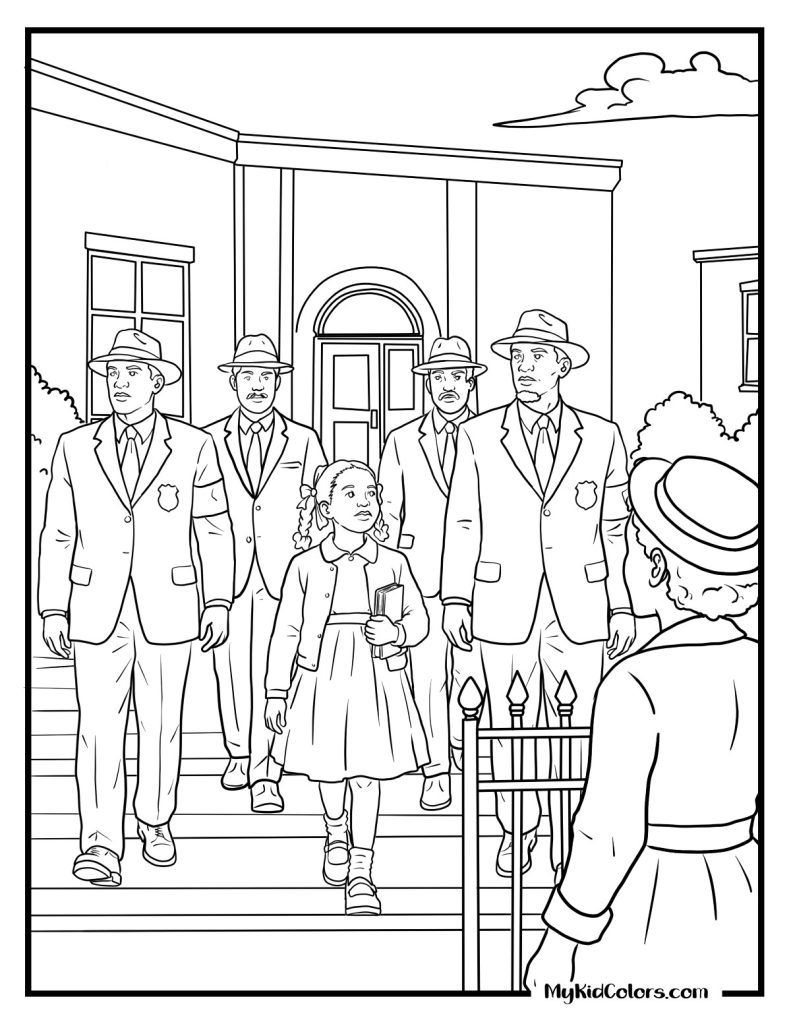
- For “Escorted to School” on Page 6: “The marshals were there to protect Ruby. What should grown-ups do when someone is being treated unfairly?”
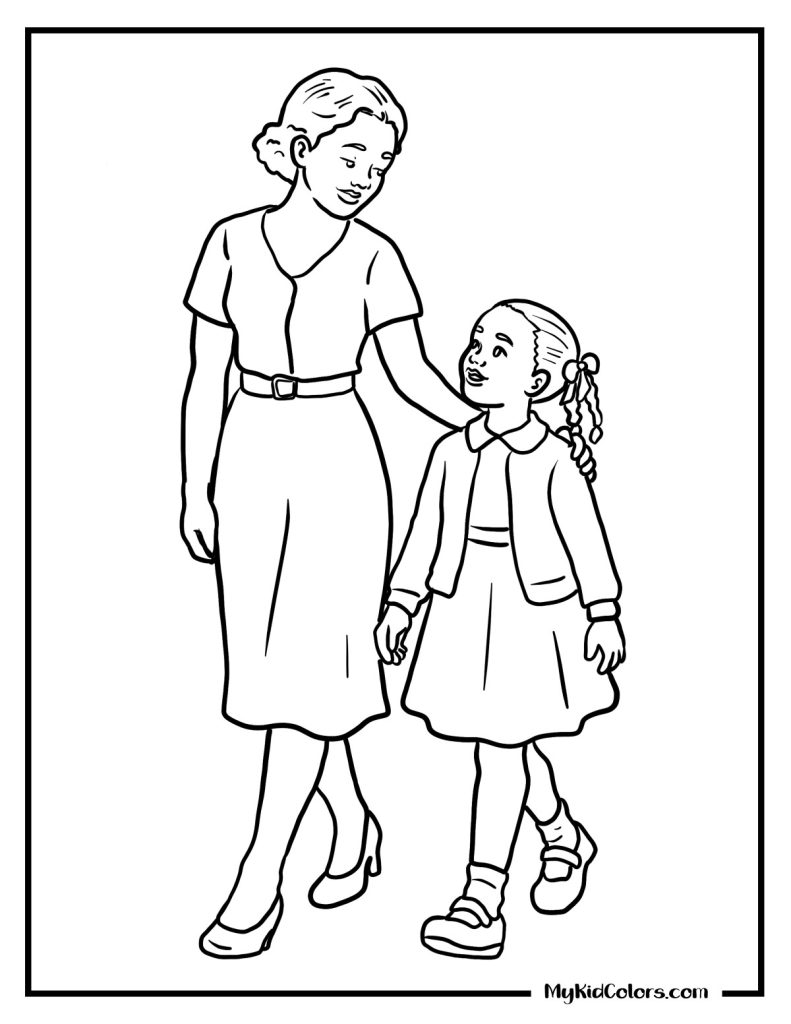
- For “Mother’s Hand” on Page 3: “Who helps you when you’re doing something unfamiliar?”
- For “Sharing Her Story” on Page 13: “What would you like to ask Ruby about her school days?”
Children can point to a person in the picture, draw an answer, or talk it through.
The Collection of 15 Free Ruby Bridges Coloring Pages
These pages include historical illustrations, imagined family moments, and present-day connections. The modern children are not Ruby at different ages, and the family scenes should be treated as illustrations rather than records of particular events.
Choose a page by its amount of detail and your child’s interest. A simple outline can suit a younger colorist while still inviting a thoughtful conversation with an older child.
For Little Hands Everyday School Moments on Pages 1–5
Larger shapes and simpler backgrounds offer an introduction to Ruby alongside familiar experiences of school and family support.
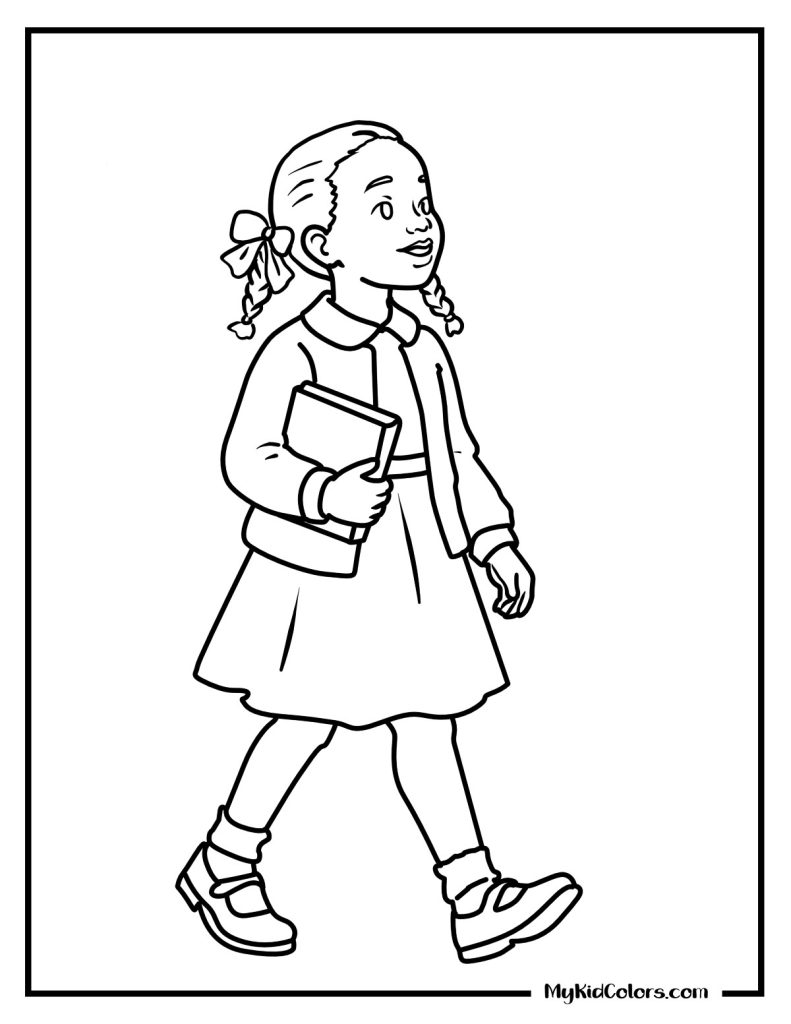
- Page 1 introduces young Ruby carrying a book. Pair it with her name and one clear fact: she was six when she began attending William Frantz Elementary School.
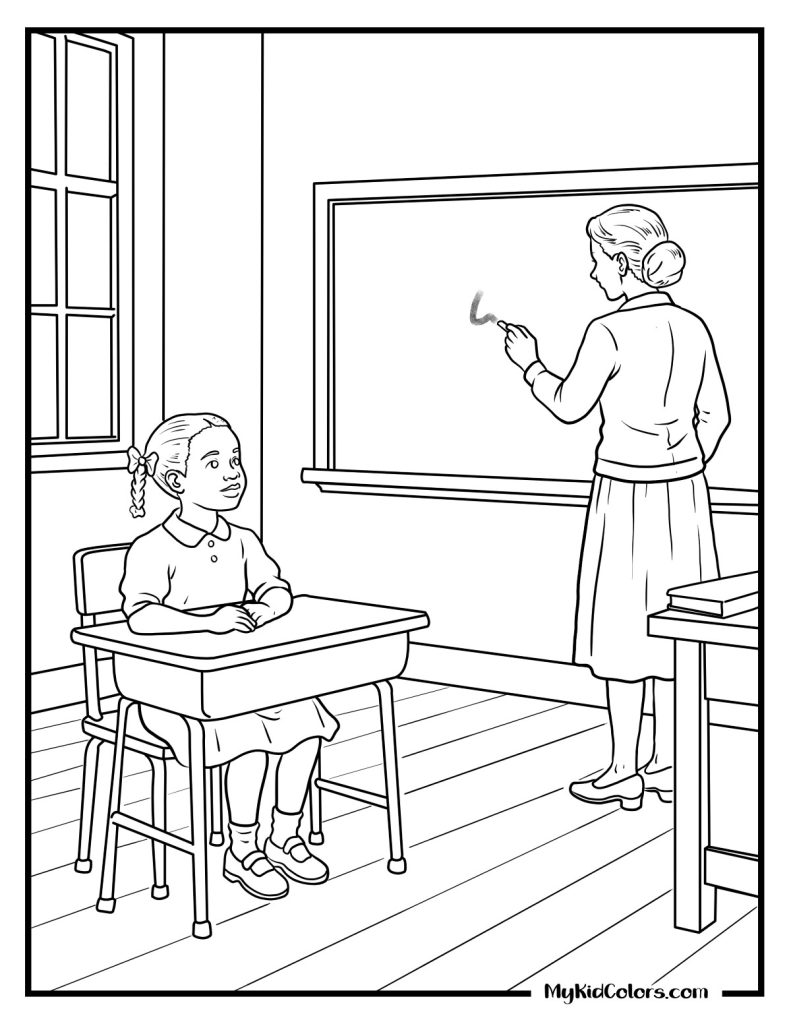
- Pages 2 and 3 show a classroom learning moment and a mother holding her daughter’s hand. They offer starting points for talking about the adults who supported Ruby.
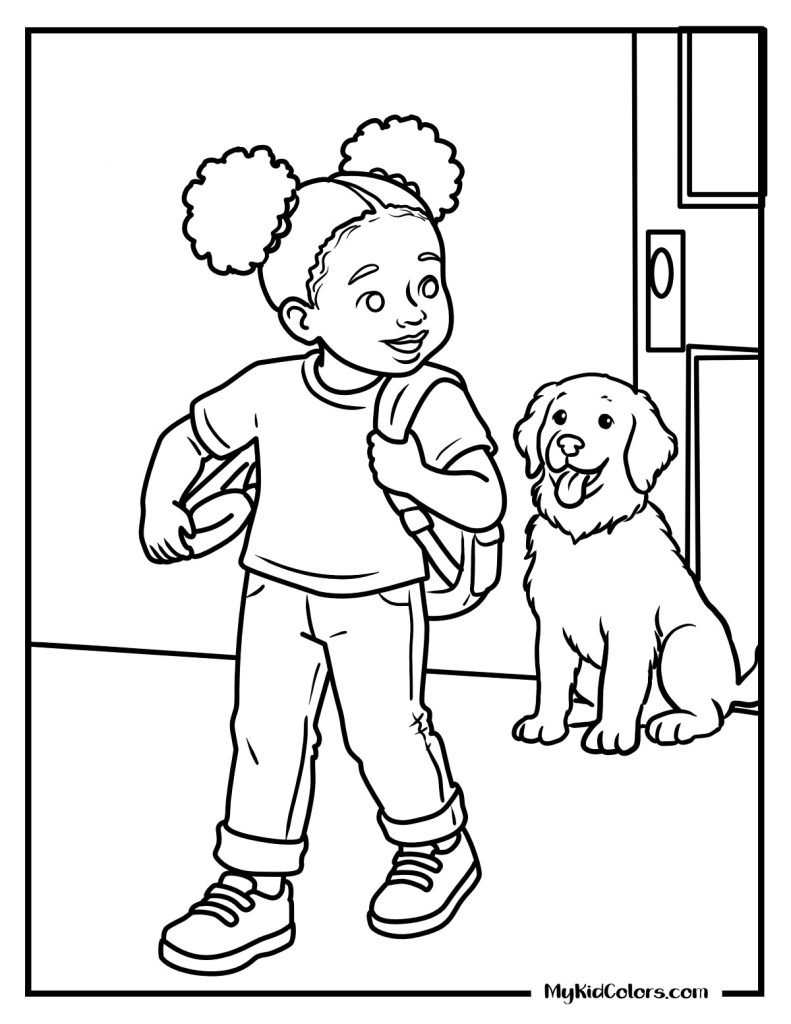
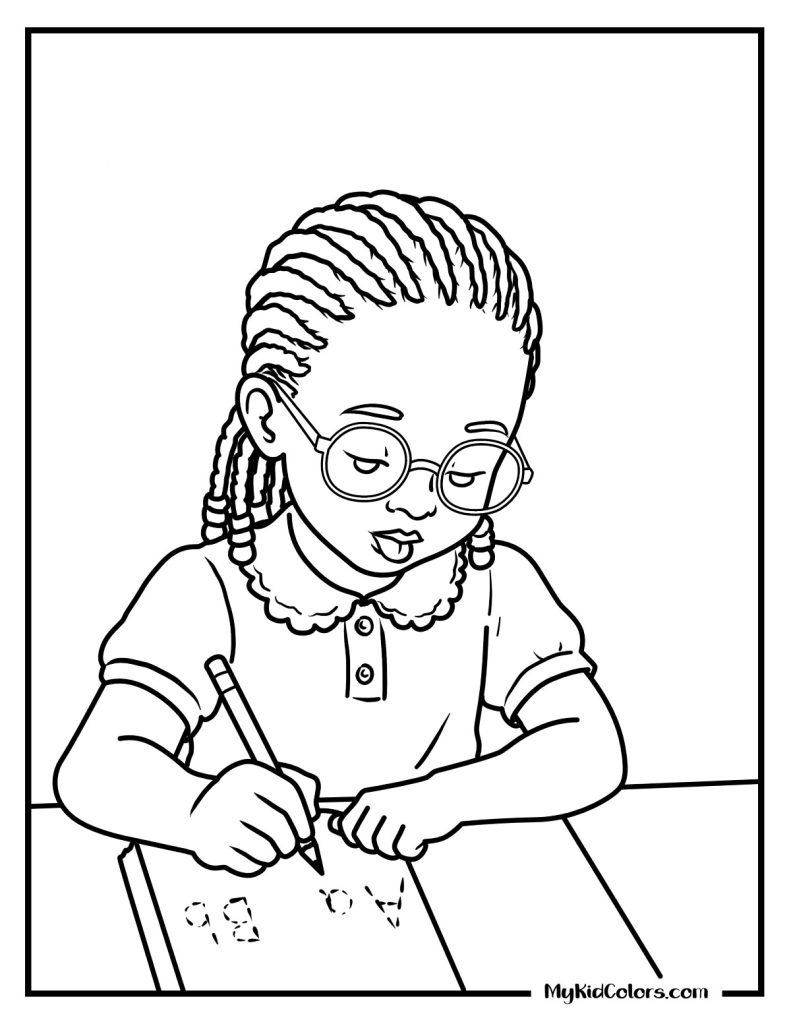
- Pages 4 and 5 show present-day children getting ready for school and practicing letters. These are connections to children’s lives today, rather than additional scenes from Ruby’s childhood.

All 15 pages. One easy download. Get the complete human-drawn, ready-to-print PDF for $1.99, available instantly with a download link emailed to you for easy access anytime.
Prefer free JPGs? Right-click any coloring page and select “Save image as,” or press and hold the image on your phone to save it.
The Walk to School and Learning Together on Pages 6–10
These scenes introduce the marshal escort, classroom learning, and present-day school life.
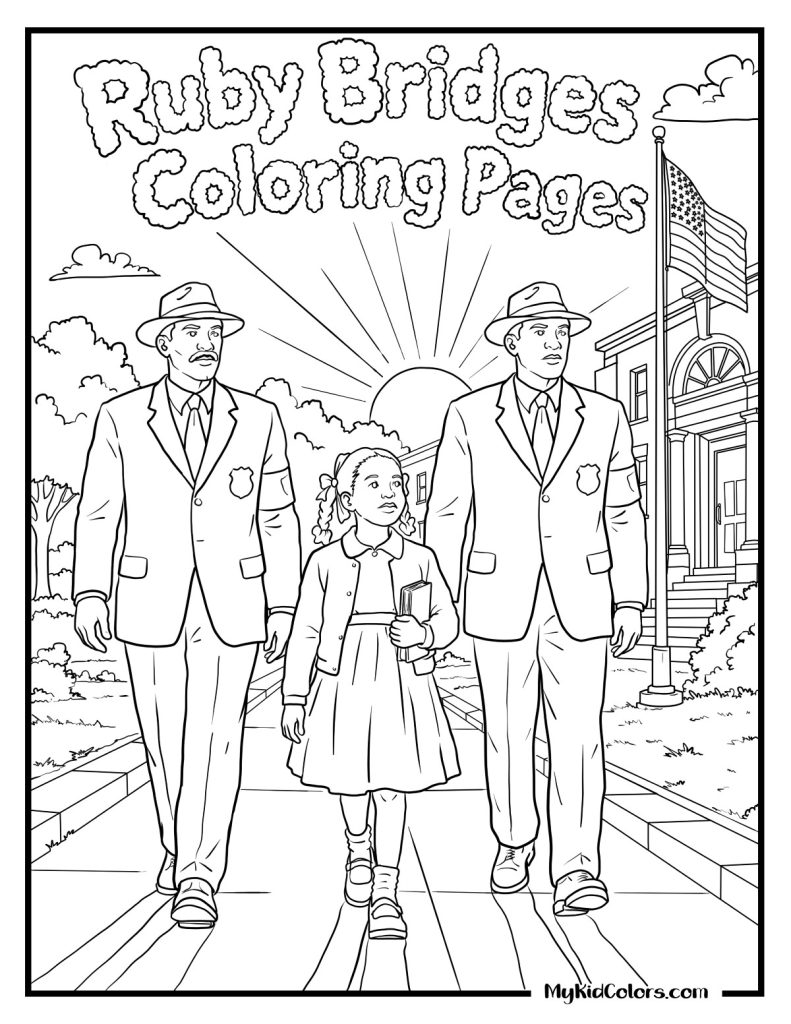
- Page 6 depicts Ruby at school with a marshal escort. Explain who the marshals were before asking your child what they notice.
- Pages 7 and 8 move between classroom learning and a mother braiding her daughter’s hair. The braiding scene is an imagined family moment, not a documented account of Ruby’s morning.
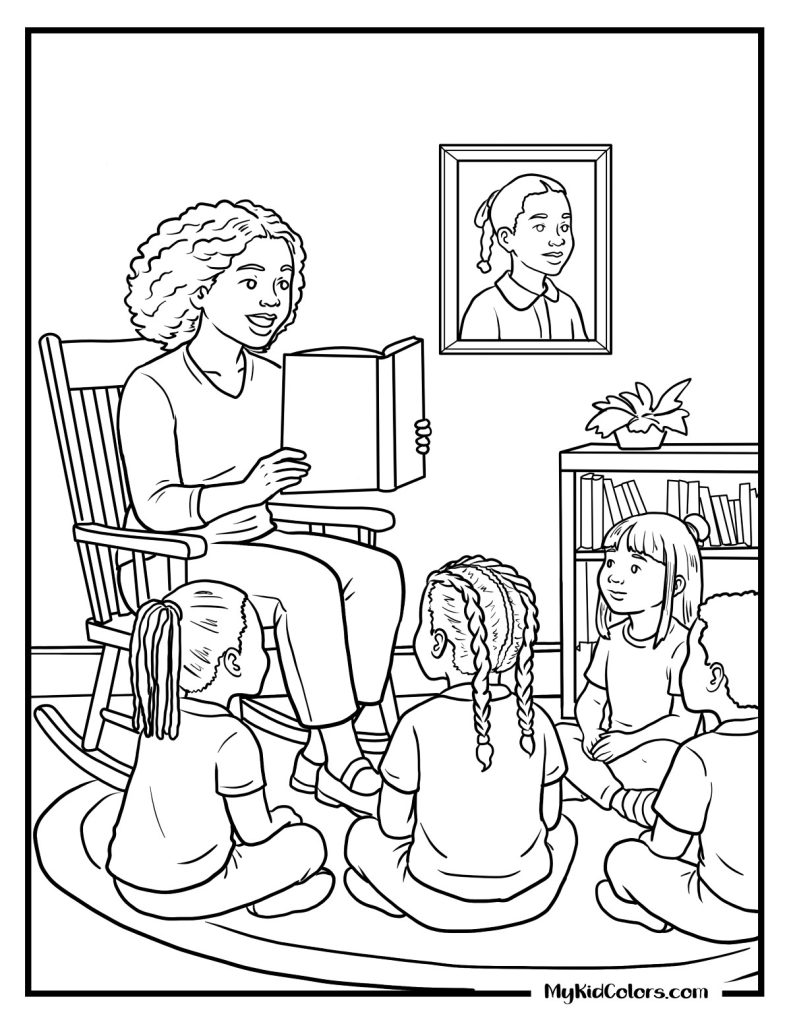
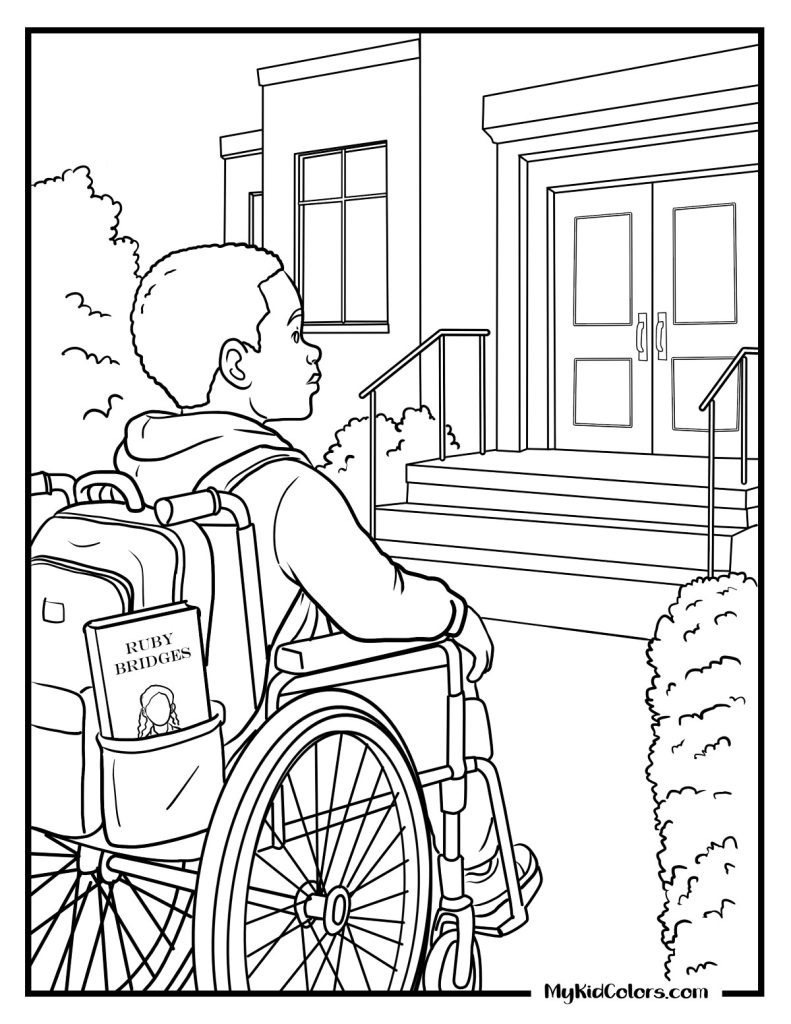
- Pages 9 and 10 bring the collection into the present, with a classroom read-aloud and a student using a wheelchair arriving at school. Use these pages to discuss how schools can welcome and support their students.
When discussing Ruby’s classroom, introduce her teacher, Barbara Henry, who taught her during that first-grade year.
A historical source or read-aloud can help children understand why Ruby was learning without classmates. The Library of Congress provides background on her school year.

All 15 pages. One easy download. Get the complete human-drawn, ready-to-print PDF for $1.99, available instantly with a download link emailed to you for easy access anytime.
Prefer free JPGs? Right-click any coloring page and select “Save image as,” or press and hold the image on your phone to save it.
Remembering and Sharing Her Story on Pages 11–15
More detailed settings offer choices for children who enjoy classroom displays, family scenes, and architectural backgrounds.
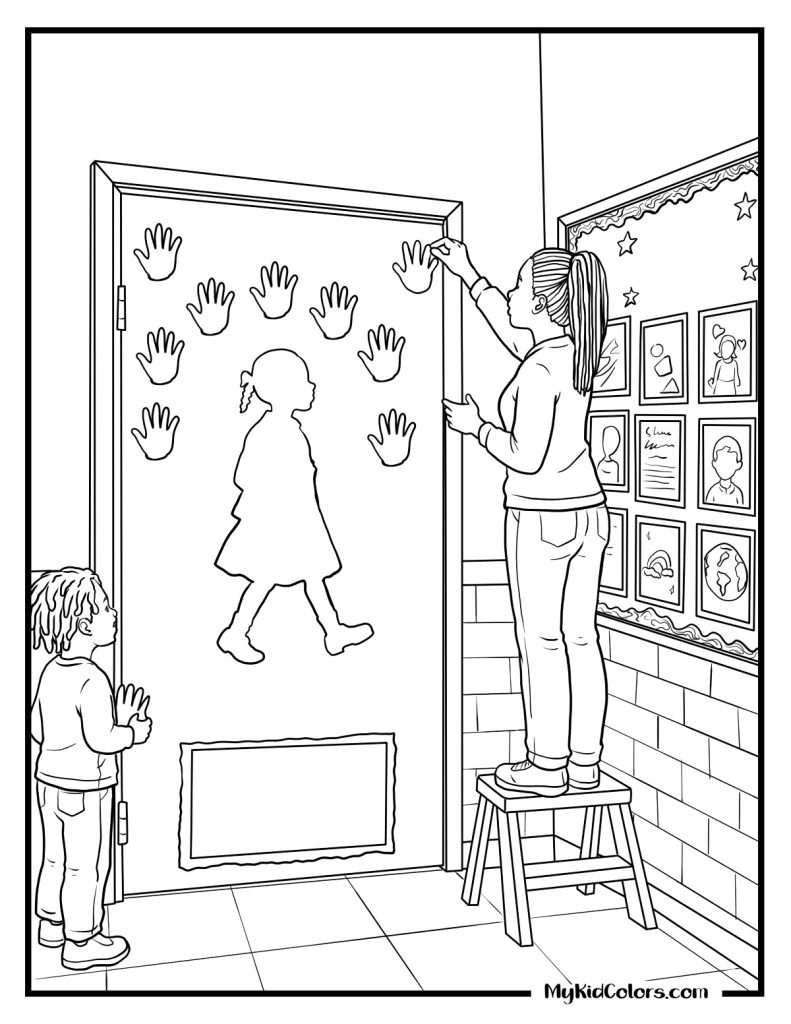
- Page 11 shows a classroom door display inspired by Ruby’s story. It can accompany a class discussion about what students want others to learn from their display.
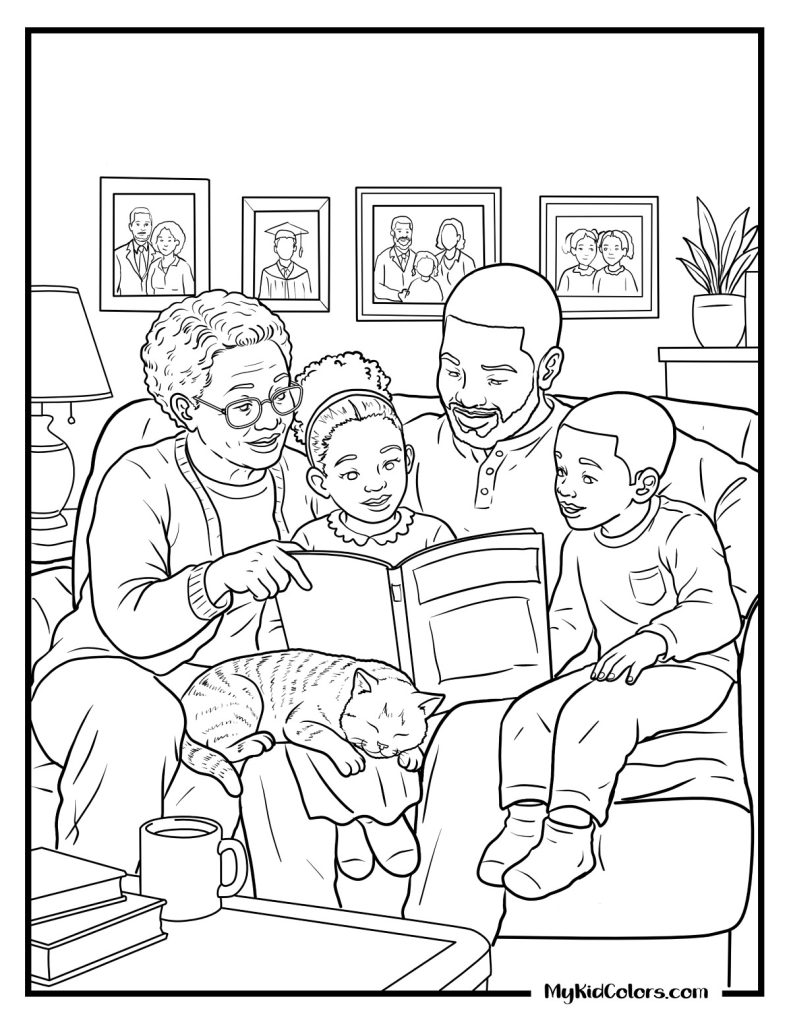
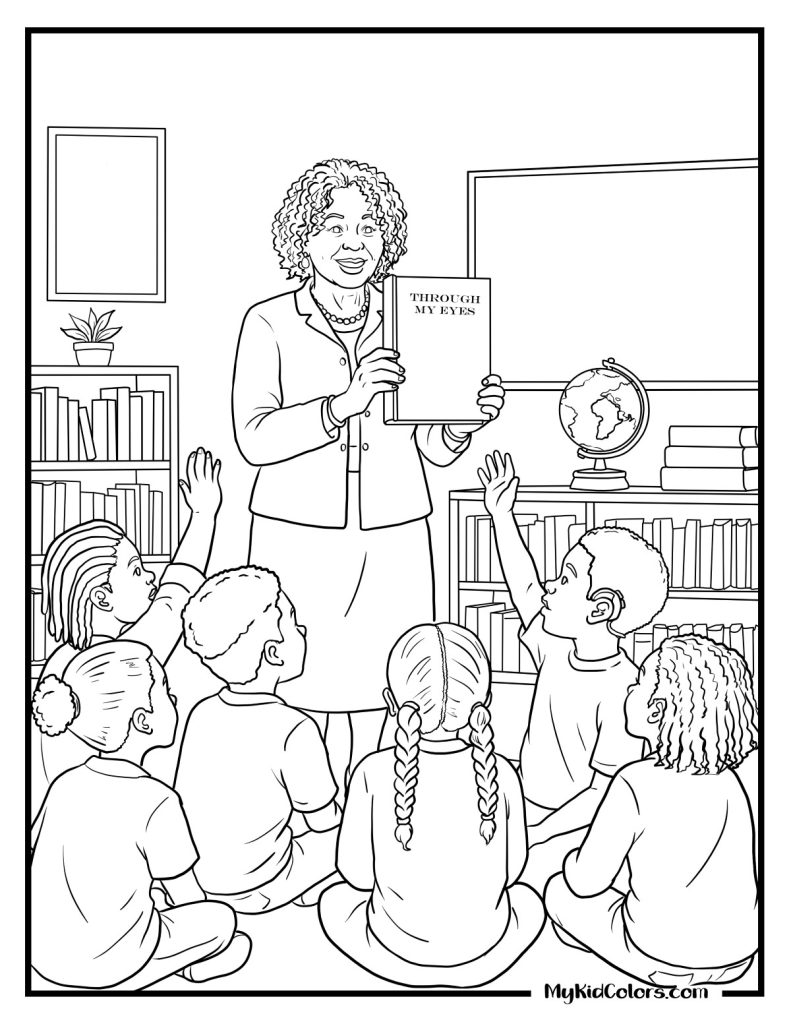
- Pages 12 and 13 show a family reading together and an illustration of adult Ruby sharing a book with children. These scenes connect learning about history with listening to the person whose story is being told.
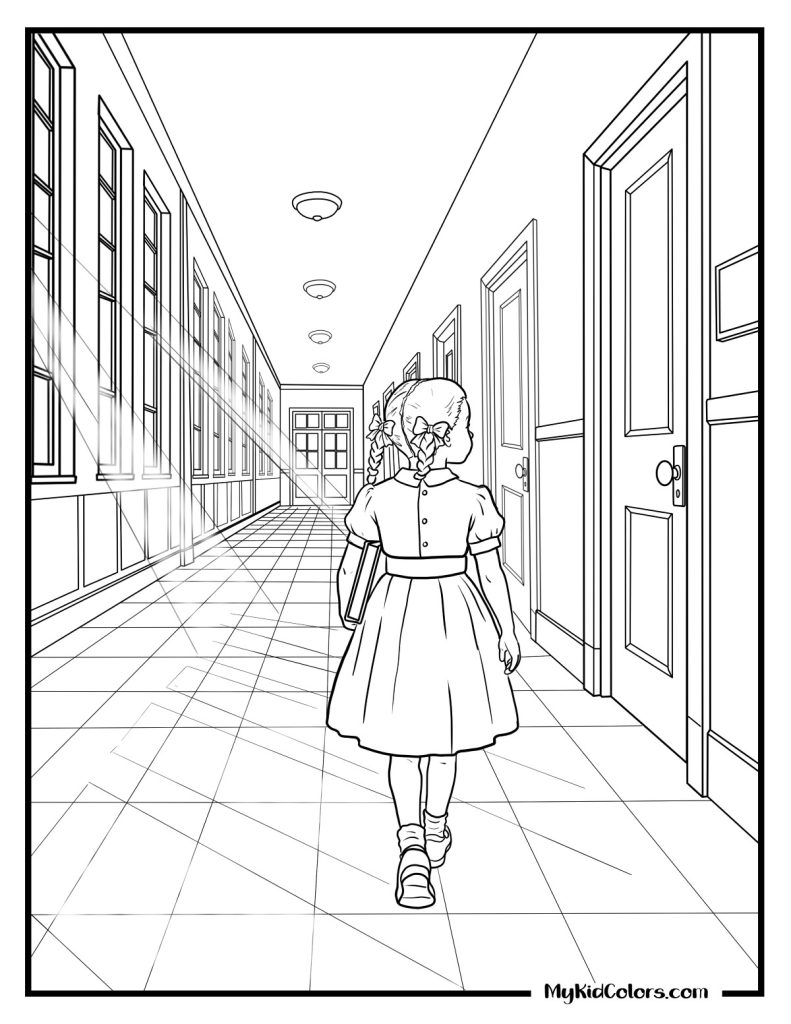
- Pages 14 and 15 return to a school hallway and an illustrated walk toward school. They revisit the setting of her story rather than completing a chronological account of her life.
All 15 pages. One easy download. Get the complete human-drawn, ready-to-print PDF for $1.99, available instantly with a download link emailed to you for easy access anytime.
Prefer free JPGs? Right-click any coloring page and select “Save image as,” or press and hold the image on your phone to save it.
Ways to Use These Pages at Home and School
- Introduce one accurate fact. Before coloring Page 1 or 6, explain that Ruby was six when she helped desegregate her school in New Orleans. Locate the city on a map together.
- Pair coloring with a read-aloud. Choose one scene that connects with the book you’re reading. Ask what the book explains that the picture alone cannot tell you.
- Separate history from present-day connections. Compare Page 6 with Page 9. Explain that one illustrates Ruby’s historic experience and the other shows a classroom today. They are not photographs documenting the same school.
- Make a classroom welcome display. Use Page 11 as inspiration. Invite children to draw or write one action that helps classmates participate, such as making space, listening, or asking an adult for help with unfair treatment.
- Explore another person’s story. Our Harriet Tubman coloring pages offer a separate historical introduction. Explain that Tubman and Bridges lived in different periods and confronted different circumstances.
For younger children, keep the explanation brief and concrete. Older children may have questions about segregation, the courts, and the adults who resisted or supported change. Follow those questions with a reliable book or historical source.
Why Human Hands Matter in This Collection
Ruby’s story asks us to look closely at a child whose right to learn was challenged. We want the artwork to keep her humanity in view, with room for learning, family support, and her life beyond that school walk.
MyKidColors works with human illustrators of color to create these pages. They are drawn by people, not generated by AI. Our commitment is to give Black history the same care we bring to everyday scenes of Black and brown childhood.
That also means being honest about what a picture can tell us. An imagined family moment can start a conversation, but it cannot stand in for a historical record. Paired with accurate context, these pages give you something concrete to share while your child learns who Ruby is and why her story matters.
Frequently Asked Questions
How do I explain why Ruby needed U.S. Marshals?
You can say: “Some white adults did not want Black children attending the same school as white children. That was racist and unfair. Federal marshals were sent to protect Ruby so she could attend.”
For older children, explain that a federal court had ordered school desegregation. Make clear that Ruby had done nothing wrong and that adults were responsible for her safety. home.nps.gov
Can I use these Ruby Bridges coloring pages with kindergarten children?
Yes, with an adult guiding the historical explanation. Begin with a simpler page and a short statement about Ruby’s right to attend school.
You don’t need to describe every threat she faced. You can name racism clearly, explain why the treatment was wrong, and leave room for questions.
Can I pair the pages with Through My Eyes?
Yes. Use a scene that connects with the passage you’re reading, then discuss what children learned from Ruby’s account.
The illustration of adult Ruby sharing a book can introduce a conversation about hearing her own words. The collection can also support Black History Month and Women’s History Month lessons without limiting her story to either observance.
Download Your Free Ruby Bridges Coloring Pages
Ruby walked forward anyway. May our kids learn to do the same.
Choose a page, share a little context, and make room for your child’s questions. You don’t have to cover Ruby’s whole story in one afternoon.
Get the free PDF below and use the pages alongside your read-aloud or history lesson. Optional contributions support our human-drawn collections.
All 15 pages. One easy download. Get the complete human-drawn, ready-to-print PDF for $1.99, available instantly with a download link emailed to you for easy access anytime.
Prefer free JPGs? Right-click any coloring page and select “Save image as,” or press and hold the image on your phone to save it.
You might also like:
- 15 Harriet Tubman Coloring Pages That Teach Kids Courage and Leadership
- 15 Free African American Coloring Pages Celebrating Natural Hair
- 30 Women in STEM Coloring Pages — 15 Free Hidden Figures Printables for Kids

